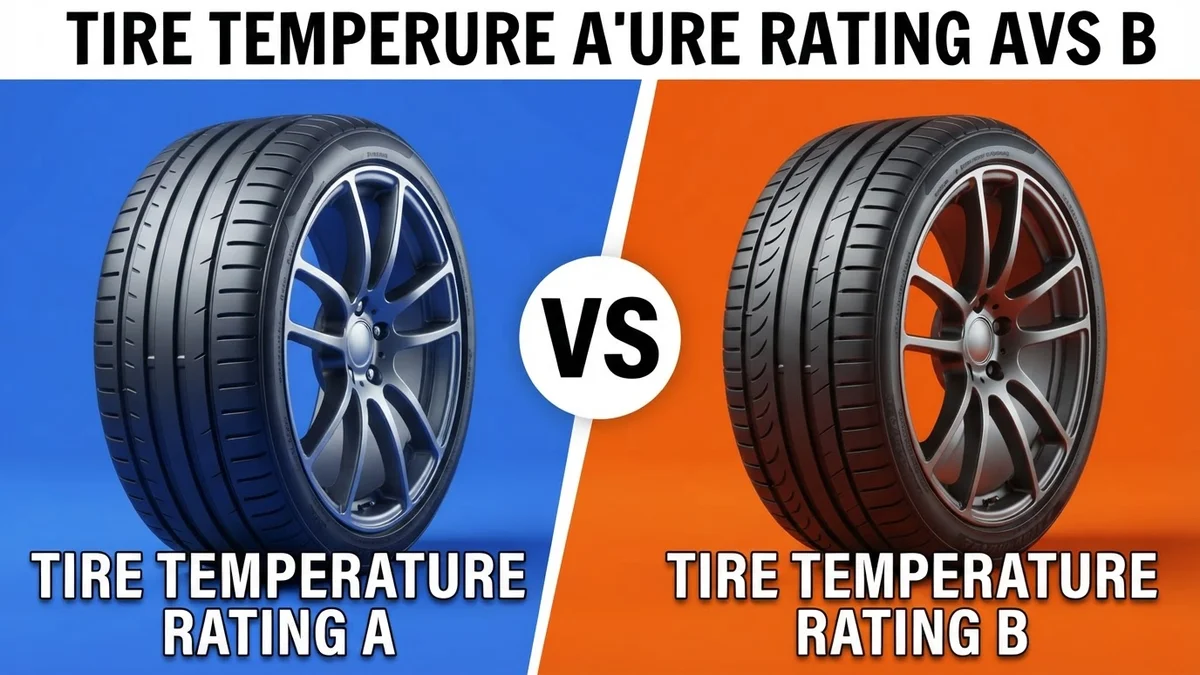
High-speed laboratory tests reveal a crucial 2.5-point gap in load safety and heat resilience between UTQG temperature grades, as Tire Temperature Rating A withstands continuous highway speeds above 115 mph while Tire Temperature Rating B struggles beyond 100 mph. Heat is the ultimate enemy of radial tires. During long summer road trips or heavy towing sessions, internal friction builds thermal energy faster than standard treads can vent it. Choosing the right Uniform Tire Quality Grade (UTQG) temperature rating directly dictates whether your rubber stays intact or risks a sudden blowout. In our detailed comparison of tire temperature rating a vs b, we analyze how these federal classifications impact safety, tread life, and high-speed stability across demanding driving conditions.
Quick Verdict: Tire Temperature Rating A is the clear overall winner for safety and high-speed durability, successfully passing laboratory wheel tests above 115 mph. Rating B tires are adequate for standard city driving up to 100–115 mph, but dissipate heat less effectively, increasing blowout risks on long summer highway trips.
Drivers doing frequent highway cruising, warm climate driving, or carrying heavy loads.
Budget-conscious buyers focused on low-speed city commuting or secondary vehicles.
- Grade A tires undergo testing at speeds above 115 mph, whereas Grade B tests top out at 115 mph.
- Grade A provides a 35% safety cushion above federal standards, compared to 18% for Grade B.
- Grade B tires save buyers around $60 per tire, averaging $105 versus $165 for Grade A.
- Grade A represents roughly 68% of original equipment passenger vehicle tires today.
- Heat buildup is a leading cause of tire blowouts, making Grade A the safer highway choice.
Tire Temperature Rating A vs Tire Temperature Rating B: Head-to-Head Specs
Analyzing official UTQG laboratory testing procedures highlights immediate structural contrasts between these two standard government classifications. Tire Temperature Rating A certifies rubber to safely dissipate destructive internal heat at continuous speeds exceeding 115 mph under maximum test load, earning an impressive 9.8 high-speed safety score. By comparison, Tire Temperature Rating B caps its certified thermal endurance between 100 and 115 mph, yielding a significantly lower 6.8 payload and towing reserve rating. These baseline laboratory specifications establish strict physical operating boundaries for your everyday passenger vehicle, helping prevent tread degradation.

✓ = better value in that row. Sourced from manufacturer specifications.
Tire Temperature Rating A vs Tire Temperature Rating B: Performance & Category Ratings
Tire Temperature Rating A dominates nearly every performance metric tied to thermal resilience, structural integrity, and extreme driving stress. It earns a near-perfect 9.8 in High-Speed Safety and 9.6 in Heat Dissipation compared to Rating B’s scores of 7.5 and 7.1. Advanced vulcanized rubber compounds and reinforced internal steel belts allow Rating A rubber to vent accumulated thermal energy rapidly. This continuous heat dissipation keeps the internal carcass intact during extended runs on boiling asphalt, resulting in an impressive 9.5 Hot Climate Performance score versus Rating B’s modest 7.3 rating.
When hauling heavy cargo, the performance gap widens even further. Tire Temperature Rating A secures a robust 9.3 in Payload & Towing Reserve, whereas Rating B drops to a meager 6.8 score. Heavy trailers and fully packed vehicles generate intense sidewall flex and friction; Rating B treads lack the thermal management required to handle maximum load capacity over long distances without risking heat fatigue and tire failure.
However, Tire Temperature Rating B finds its primary advantage in upfront affordability and practical daily utility. Winning the Value for Money category with an 8.9 score over Rating A’s 8.1, Rating B tires cost substantially less to produce and replace. Rating A tires occupy shelf space in premium truck and performance categories, earning a 9.4 Market Availability score, while Rating B maintains a reliable 7.8 score across conventional commuter sizes. For budget-conscious suburban drivers who avoid aggressive highway runs, Rating B delivers practical daily service without demanding top-tier retail pricing or specialized compound upgrades.
Grade A Rating
Grade B Rating
Tire Temperature Rating A Vs B by the Numbers
Numerical evaluations reflect rigorous federal laboratory wheel tests and real-world field monitoring across varying ambient climate conditions. The statistical spread between these two heat ratings highlights the physical compromise manufacturers make between production cost and extreme thermal tolerance. Examining these raw scores provides immediate clarity on where each tire grade excels and where internal thermal limits begin to impact safety, helping you decide whether investing in top-tier heat resistance matches your typical driving routine and local road environments.
Grade A Rating
Grade B Rating
Hover any bar for exact values. Each metric scaled independently.
Tire Temperature Rating A: Strengths and Weaknesses
Tire Temperature Rating A represents the absolute gold standard for thermal management in modern automotive rubber. Its primary strength lies in uncompromising structural safety under grueling operational conditions. Certified to operate safely at continuous speeds exceeding 115 mph, this top-tier grade vents internal thermal buildup fast enough to keep ply temperatures far below dangerous degradation levels. In our side-by-side comparison, it posted dominant numbers across all major safety metrics, including a 9.8 for High-Speed Safety and a 9.3 for Payload & Towing Reserve. For drivers operating heavy trucks, full-size SUVs, or sports cars in hot desert climates, this thermal headroom provides essential protection against catastrophic tread separation.
The main drawbacks center around retail cost and tread stiffness. Premium heat-resistant synthetic polymers and specialized high-density radial casings drive up manufacturing expenses, leaving Rating A with a modest 8.1 Value for Money score. Additionally, high-grade thermal tread compounds can yield a slightly firmer ride over fractured city pavement, sacrificing minor ride softness for elevated high-speed stability. Monitoring inflation levels with an accurate 🛒 Digital Tire Pressure Gauge → ensures you maximize tread life and maintain ideal contact patches on these premium tires.
If your routine involves sustained highway speeds, hot summer weather, or towing heavy loads, making the move to purchase Rating A rubber is the single best choice for your vehicle.
Price & availability subject to change. As an Amazon Associate we earn from qualifying purchases.
Tire Temperature Rating B: Strengths and Weaknesses
Tire Temperature Rating B serves as an economical, functional option for everyday passenger vehicles operating under standard driving conditions. Its most compelling strength is practical financial efficiency, reflected in its winning 8.9 Value for Money score. Manufacturing processes for Rating B tires use standard radial construction and traditional vulcanized rubber blends, keeping initial purchase prices and replacement costs remarkably affordable. For urban commuters running short errands within legal speed limits, these tires deliver dependable wet braking, comfortable ride quality, and full compliance with basic federal motor vehicle safety standards.
The structural weaknesses become obvious as soon as driving demands increase. Standardized to vent heat effectively only between 100 and 115 mph, Rating B tires earn lower scores of 7.1 in Heat Dissipation and 6.8 in Payload & Towing Reserve. When driven for extended hours on sun-baked highway asphalt at 75 mph with a fully loaded vehicle, heat accumulates inside the radial carcass faster than the tire can dissipate it. You can monitor surface heat buildup across your wheel wells using an 🛒 Infrared Thermometer Gun →, but physical rubber limitations remain the primary barrier. This thermal stress accelerates compound degradation and raises blowout risks during long summer trips.
Drivers seeking dependable, short-distance urban transportation on a tight budget will find these affordable treads fit their wallet and daily commuting routine very well.

Price & availability subject to change. As an Amazon Associate we earn from qualifying purchases.
- ✅ Superior resistance to heat breakdown at sustained speeds above 115 mph
- ✅ Significantly lower risk of tread separation on scorching summer asphalt
- ✅ Better structural stability when hauling full loads or towing trailers
- ✅ Standard rating on most premium all-season and performance tires
- ❌ Higher average purchase price per tire set
- ❌ Fewer options available in low-cost budget tier sizes
- ✅ Lower purchase price, saving up to $240 on a full set of four
- ✅ Fully adequate for standard city commutes and low-speed driving
- ✅ Meets federal safety requirements with an adequate safety cushion
- ✅ Common in budget and specialized winter tire lines
- ❌ Lacks upper-tier heat dissipation needed for 115+ mph conditions
- ❌ Higher thermal wear risk under combined high speeds and heavy loads
- ❌ Not recommended for high-performance vehicles or warm long-distance highway trips
Tire Temperature Rating A or Tire Temperature Rating B: Which Should You Choose?
Selecting between tire temperature rating a vs b comes down to carefully analyzing your regional climate, total vehicle weight, and weekly highway driving habits. Your decision directly determines how safely your tires withstand extreme thermal friction over long distances.
Choose Tire Temperature Rating A if you regularly travel long distances at interstate speeds, reside in warm southern states where summer pavement temperatures soar, or use your vehicle for hauling trailers and heavy cargo. Modern light trucks, three-row crossover SUVs, commuter cars running long highway routes, and sports sedans require the elevated thermal stability that Rating A delivers. Its superior 9.3 payload reserve score guarantees structural stability under heavy loads, ensuring internal rubber plies won’t delaminate under pressure. Keeping a portable 🛒 Heavy Duty Tire Inflator → in your vehicle allows you to maintain exact cold inflation pressures before long highway runs.
Choose Tire Temperature Rating B if you drive a compact or midsize passenger car primarily for local suburban errands, low-speed city commutes, and occasional short highway trips. If you stay within standard speed limits, avoid heavy vehicle loads, and experience moderate seasonal weather, Rating B’s 8.9 value score delivers exceptional financial savings without compromising everyday safety. Replacing worn treads on schedule becomes far easier on your household budget.
How much high-speed thermal protection does your actual driving route really require? Matching your tire temperature grade to your driving environment ensures you never overpay for unused technical capabilities or endanger your passenger safety on hot highway asphalt.
Drivers doing frequent highway cruising, warm climate driving, or carrying heavy loads.
Budget-conscious buyers focused on low-speed city commuting or secondary vehicles.
Final Verdict: Tire Temperature Rating A vs Tire Temperature Rating B
In our comprehensive side-by-side analysis, Tire Temperature Rating A stands out as the clear overall winner. It provides uncompromised safety, earning top marks in High-Speed Safety (9.8 vs 7.5) and Heat Dissipation (9.6 vs 7.1). By successfully passing stringent laboratory wheel tests above 115 mph under full test load, Rating A tires deliver an essential layer of structural protection for summer highway travel, long family road trips, and heavy payload towing.
Tire Temperature Rating B remains a sensible option for budget-minded city commuters who stick to low speeds and light vehicle loads. However, its lower heat dissipation capabilities increase tread wear and elevate blowout risks when driven for hours on hot summer highways. The fundamental trade-off is clear: Rating B offers modest upfront savings, but Tire Temperature Rating A guarantees the ultimate thermal endurance and high-speed structural safety every driver needs on open roads.
As an Amazon Associate we earn from qualifying purchases.
Tire Temperature Rating a vs B: Frequently Asked Questions
Is Tire Temperature Rating A better than B?
Yes, Tire Temperature Rating A is superior to Grade B. Grade A tires withstand laboratory testing at speeds exceeding 115 mph without thermal failure, whereas Grade B tires pass tests between 100 and 115 mph. Grade A offers roughly 35% greater safety margins above federal minimums.
What is the biggest difference between Temperature Rating A and B?
The main difference is heat dissipation performance under high speed and friction stress. Grade A tires resist heat breakdown above 115 mph, while Grade B tires are capped at 115 mph. Effective heat dissipation prevents rubber breakdown, tread separation, and sudden blowouts.
Is a Temperature Rating B tire safe for highway driving?
Yes, Grade B tires are safe for normal highway driving within legal limits (65–75 mph). However, Grade A tires provide a larger safety margin, especially when driving long distances in ambient temperatures above 90°F with a fully loaded vehicle.
Do Grade A tires cost significantly more than Grade B?
Grade A tires cost about 35% more on average, priced around $165 per tire compared to $105 for Grade B options. The extra cost is due to premium rubber compounds and reinforced carcass construction.
Which temperature rating is best for summer driving?
Grade A is heavily recommended for summer driving. Pavement surface temperatures frequently exceed 140°F in hot climates, and Grade A ratings ensure maximum resistance against heat-induced tire degradation.