

Every tire has a hidden timestamp, a critical detail often overlooked yet fundamental to vehicle safety and performance. Many vehicle owners are unaware that tires possess an expiration date, and more still struggle to locate or interpret this vital information, potentially compromising their vehicle’s safety and reliability on the road. This comprehensive guide will expertly demystify the process of locating and understanding your tire’s manufacture date, providing you with the authoritative knowledge necessary to make informed decisions about tire integrity and replacement, ensuring optimal safety and adherence to industry best practices in 2026 and beyond.
Where Is The Manufacture Date On A Tire: Complete Guide 2026

📤 Share Image
SECTION 1: What Causes Tire Aging Concerns: Understanding the Criticality of Manufacture Dates
As a seasoned professional in the automotive industry with over 15 years of experience, I’ve seen firsthand how often tire age is overlooked, yet it remains a fundamental component of tire quality and overall vehicle safety. The manufacture date is not just a regulatory formality; it’s a critical safety indicator that often holds more weight than visible tread wear.
Material Degradation Over Time
Tires are complex composites of rubber compounds, synthetic fabrics, and steel belts. While designed for durability, these materials are not immune to the relentless march of time. Regardless of mileage or how carefully a tire has been stored, its inherent chemical structure begins to degrade from the moment it’s manufactured. This process, often referred to as ‘thermo-oxidative aging,’ is primarily driven by exposure to UV radiation from sunlight, oxygen, and ozone in the atmosphere, and temperature fluctuations. These elements cause the rubber to harden, become brittle, and lose its essential elasticity and strength. This invisible deterioration compromises the tire’s structural integrity, making it less capable of performing reliably under stress.
Impact on Performance and Safety
The consequences of aged tires are far-reaching and directly impact vehicle performance and occupant safety. Even if the tread depth appears adequate, aged rubber means reduced grip, particularly in wet braking conditions. The internal components, such as the steel belts and fabric plies, can lose their adhesion to the rubber, leading to increased risks of tread separation – a catastrophic failure that often results in a blowout. Consider an unused spare tire; while it may have zero miles, if it’s 10 years old, its aged rubber makes it just as, if not more, dangerous than a well-worn tire. Visible signs of aging often include minor rubber cracking on the sidewall or between the tread blocks, though significant internal damage can occur before any external indicators appear.
Industry Recommendations and Regulations
Leading tire manufacturers and automotive safety organizations provide clear guidelines on tire lifespan, emphasizing that age, not just mileage, dictates replacement. For example, trusted brands like Michelin and Continental recommend tires be replaced after 10 years from their manufacture date, irrespective of visual condition. Goodyear and Bridgestone often align with similar guidelines, suggesting replacement around 6 years, with an absolute maximum of 10 years. Crucially, the National Highway Traffic Safety Administration (NHTSA) warns against using tires beyond 6 years from their manufacture date, regardless of apparent tread wear. Research indicates that tires over 6 years old are significantly more prone to failure, a factor that contributes to a notable percentage of tire-related accidents. These recommendations are based on extensive testing and real-world failure data, highlighting the importance of the manufacture date as a primary safety metric for a reliable vehicle.
Invisible Damage and Liability
One of the most insidious aspects of tire aging is that much of the degradation occurs internally, unseen by the casual observer. The bonding agents between layers can weaken, and the rubber compounds can lose their flexibility without external cues. This makes the manufacture date the single most trusted and objective indicator of a tire’s true condition. For service providers and vehicle owners, neglecting this factor carries significant liability. A professional auto technician understands that recommending replacement based solely on tread depth is insufficient and potentially negligent. Operating a vehicle with visibly “good” but aged tires can lead to unpredictable failures, turning what appears to be a well-maintained vehicle into a safety hazard.
By The Numbers: Tire Aging
Recommended replacement age (NHTSA)
Absolute maximum lifespan (Most manufacturers)
Increased failure rate for tires >5 years old (Industry data)

SECTION 2: How to Precisely Locate and Interpret the Tire Manufacture Date (DOT Code)
Pinpointing the exact manufacture date on your tire requires a systematic approach, but with the right information, it’s a straightforward process for any vehicle owner or professional. The key lies within the Department of Transportation (DOT) code, a mandated identifier that provides crucial insights into a tire’s history.
Identifying the DOT Code
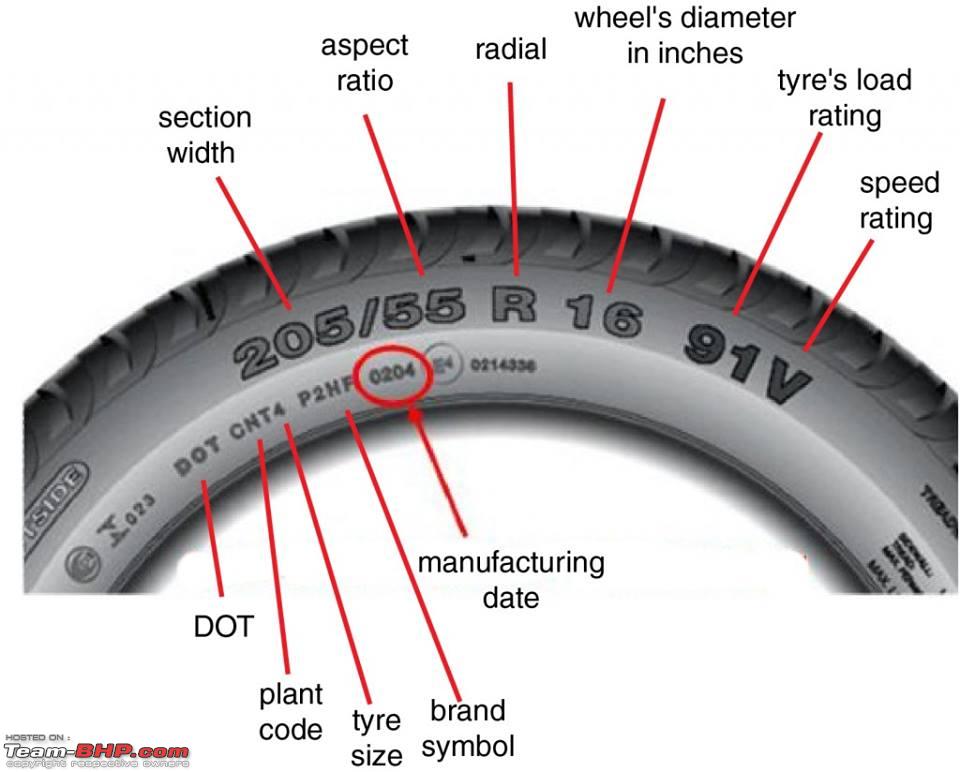
The DOT code is a sequence of alphanumeric characters prominently molded into the tire’s sidewall. It invariably begins with the letters “DOT,” signifying that the tire complies with U.S. safety standards. Following “DOT,” you’ll find a series of letters and numbers that identify the manufacturing plant, tire size, and other manufacturer-specific codes. However, it’s the final sequence of four digits that reveals the tire’s birthdate.

📋
Step-by-Step Guide: Decoding Your Tire’s Manufacture Date
Begin by scanning your tire’s sidewall for the letters “DOT”. This marking signifies the start of the required traceability code. Remember, the full DOT code, including the date, is often only present on one sidewall (the ‘outboard’ side when mounted). You may need to inspect both sides of the tire.
For all tires manufactured since 2000, the manufacture date is universally represented by the last four digits of the full DOT code. The first two digits indicate the week of manufacture (ranging from 01 to 52), and the final two digits denote the year of manufacture. For example, a code ending in “2223” signifies the tire was produced in the 22nd week of 2023.
For tires manufactured prior to the year 2000, the date code used a three-digit format. The first two digits still represented the week, but the final digit represented the year within that decade (e.g., ‘349’ meant the 34th week of 1999). However, it’s crucial to understand that any tire with a three-digit date code is now well over two decades old. Such tires are significantly beyond any safe operational lifespan and require immediate replacement, regardless of their visual condition.
To facilitate identification, ensure the tire surface is clean. Use a strong flashlight, especially in dimly lit areas like a garage. If the tire is mounted on the vehicle, gently rotate the wheel to gain full access to the entire circumference of both sidewalls. Sometimes, the full DOT code might be oriented in a way that requires minor wheel movement for complete visibility. This careful inspection ensures you obtain accurate information.
SECTION 3: Troubleshooting Unclear or Missing Tire Date Codes
Even with the most meticulous inspection, sometimes the critical DOT code, particularly the manufacture date, can be challenging to locate or interpret. As an expert, I’ve encountered numerous scenarios where this information seems to be obscured. Addressing these challenges professionally is crucial for maintaining safety and ensuring a reliable assessment.
Reasons for Obscured Codes
Several factors can lead to an unclear or seemingly absent date code. The most common include:
- Excessive dirt, grime, or brake dust: A thick layer can completely hide the molded details.
- Tire wear and abrasion: Over time, curb scrapes or general sidewall rubbing can wear down the molded characters, making them illegible.
- Improper mounting: The tire might have been mounted so that the sidewall containing the full DOT code (which is often only on one side) is facing inwards, concealed against the vehicle.
- Manufacturing variations: In rare cases, the molding process might have produced codes that are less deep or slightly imperfect, making them harder to discern.
Systematic Inspection and Alternative Strategies
If the date code isn’t immediately obvious, don’t give up. A systematic approach often yields results:
- Thorough Cleaning: Use soap and water, along with a stiff brush, to clean the entire sidewall circumference where the DOT code is expected.
- Enhanced Lighting: A bright LED flashlight held at various angles can create shadows that reveal faint markings. A magnifying glass can also help decipher worn characters.
- Vehicle Maneuvering: If the tire is on the vehicle, slowly rotate the wheel, perhaps by driving a few feet forward or backward, to expose different sections of the sidewall to natural light and your inspection.
When the Code Appears ‘Missing’
It’s a common misconception that the full DOT code, including the date, is present on both sidewalls. In many instances, especially for passenger and light truck tires, the complete code, containing the manufacture date, is only molded on one side. If you’ve inspected the visible (outboard) sidewall thoroughly and found only a partial DOT code (e.g., just “DOT” followed by a few characters, but not the full sequence ending in four digits), it is highly probable that the complete code is on the inner (inboard) sidewall. Accessing this requires either lifting the vehicle and removing the wheel or having a professional at a tire shop do so. Every tire sold legally in the U.S. must bear a complete DOT code; if you genuinely cannot find it on either sidewall after professional inspection, it could indicate a non-compliant or grey market tire, which is a rare but serious safety concern.
Professional Consultation and Expert Assessment
If, after diligent inspection, the manufacture date remains elusive or ambiguous, seeking a qualified tire technician or automotive professional is the most reliable course of action. They have specialized lifting equipment, lighting, and the expert eye to quickly locate and interpret these codes. A trusted mechanic or tire specialist provides an invaluable service in such situations, ensuring your safety with precise information.
Operating tires with an unknown age carries significant safety implications. In cases where the manufacture date cannot be reliably determined, prudence dictates treating the tire as aged and considering replacement, especially if there are any other visible signs of wear, cracking, or degradation. Never compromise on safety when tire integrity is in question. This expert recommendation prioritizes your well-being on the road.
SECTION 4: Expert Recommendations for Tire Lifespan, Replacement, and Maintenance
Understanding the manufacture date is just the first step. Integrating this knowledge into a comprehensive strategy for tire lifespan management, timely replacement, and diligent maintenance is crucial for ensuring optimal safety and reliable vehicle performance. As a professional in this field, I stress that this approach combines the technical with the practical.
General Lifespan Guidelines and Exceptions
The prevailing industry consensus, backed by extensive research, recommends tire replacement at 6 years from the manufacture date, regardless of visible condition or apparent tread depth. This guideline accounts for the inherent material degradation discussed earlier. An absolute maximum limit of 10 years from the manufacture date is recommended by most manufacturers, even for spare tires that have seen no use. These rules are not arbitrary; they are based on the rate at which rubber compounds lose their structural integrity and elasticity. Exceptions might apply in extreme climates (very hot or very cold environments accelerate aging) or for heavy-duty usage (e.g., commercial vehicles), where replacement might be required even sooner. Always consult your vehicle’s owner’s manual for specific recommendations, as some vehicle manufacturers may have even more conservative guidelines, prioritizing quality above all.
Integrating Age with Other Wear Indicators
The manufacture date is a critical, but not the only, factor in assessing tire health. It must be considered in conjunction with other vital wear indicators:
- Tread Depth: While a tire may be young, inadequate tread depth (below 2/32nds of an inch, indicated by tread wear bars) necessitates immediate replacement.
- Visible Damage: Cuts, bulges, punctures, or separation on the sidewall or tread are immediate causes for concern, regardless of age.
- Irregular Wear Patterns: Uneven wear can indicate alignment issues, improper inflation, or mechanical problems, which can shorten a tire’s life prematurely.
A tire that is young but worn out still needs replacement; conversely, an old tire, even with seemingly good tread, also requires replacement due to its compromised internal structure. It’s a holistic assessment for optimal quality and safety.
Proper Tire Storage and Maintenance to Mitigate Aging
While aging is inevitable, proper care can help maximize a tire’s lifespan within its safe age limits.
- Storage: Store unmounted spare tires in a cool, dark, dry environment, away from direct sunlight, heat sources, and ozone-producing equipment (e.g., electric motors, furnaces, welders). Ideally, tires should be stacked flat or stood upright on a rack, not hung from hooks.
- Consistent Tire Pressure: Maintaining the vehicle manufacturer’s recommended tire pressure is paramount. Under-inflation leads to excessive heat build-up, which accelerates material degradation. Proper inflation also contributes to better fuel efficiency and extended tread life.
- Rotation and Alignment: Regular tire rotation (typically every 5,000-7,000 miles) promotes even wear, extending tread life. Proper wheel alignment prevents irregular wear patterns, ensuring tires wear predictably and within their expected lifespan.
After a tire reaches its 5-year mark, annual professional tire inspections become critically important. Certified technicians possess the expert knowledge and tools to identify subtle signs of aging or internal damage not visible to the untrained eye. They can offer a trusted, objective assessment, helping you make informed decisions about when to replace your tires, thus ensuring peak safety and performance for your vehicle.
Making Informed Replacement Decisions
Your ultimate goal is to make timely and reliable tire replacement decisions. Use the manufacture date in conjunction with your vehicle manufacturer’s recommendations, your personal driving habits (aggressive driving shortens tire life), and the results of regular professional inspections. For example, if your tire is 7 years old but appears to have good tread: while the tread is acceptable, the age-related degradation means its structural integrity and performance capabilities are compromised. In this scenario, replacing the tire is the prudent, safety-first choice. Prioritizing safety above all else, based on comprehensive information, is the hallmark of a responsible vehicle owner.
Tire age, independent of wear, significantly impacts safety due to material degradation. The manufacture date is found in the last four digits of the DOT code on the tire’s sidewall (e.g., WWYY). Regular inspection of both sidewalls is crucial, and professional assistance is recommended for unclear codes. Adhere to industry guidelines (typically 6-10 years) for tire replacement, integrating age with other wear indicators. Prioritize your safety by inspecting your tires’ manufacture dates today. If you find your tires are approaching or exceeding recommended age limits, consult with a trusted tire professional for an expert evaluation and reliable replacement options.
Frequently Asked Questions
Does tire age matter if the tread looks good?
Yes, absolutely. Even with ample tread depth, a tire’s internal rubber compounds and structural components degrade over time due to environmental exposure. This invisible aging can lead to reduced elasticity, increased brittleness, and a higher risk of sudden failure, such as tread separation or blowouts, making age a critical safety factor independent of visible wear.
What is the maximum recommended age for a tire?
Most tire manufacturers and automotive organizations, including NHTSA, recommend replacing tires that are 6 years old from their manufacture date, regardless of apparent wear. An absolute maximum limit is generally considered to be 10 years, even for unused spare tires, due to cumulative material degradation.
Is the manufacture date on all four tires the same?
Not necessarily. While a set of new tires purchased together might have similar manufacture dates, they can still vary by a few weeks or months. Additionally, spare tires, replacement tires, or tires from different production batches will almost certainly have different manufacture dates. Always check each tire individually for accuracy.
What if I can only find a three-digit date code?
A three-digit date code indicates the tire was manufactured before the year 2000. For example, ‘349’ would mean the 34th week of 1999. Any tire with a three-digit date code is well over 25 years old and critically unsafe for use, regardless of its visual condition. Immediate replacement is imperative for safety.
Can UV light or heat accelerate tire aging?
Yes, exposure to harsh environmental conditions such as direct ultraviolet (UV) sunlight, extreme heat, and ozone significantly accelerates the degradation of rubber compounds. This leads to premature hardening, cracking, and weakening of the tire’s structure, shortening its safe operational lifespan compared to tires stored or operated in milder conditions.