The unassuming grooves on your tires are far more than just aesthetics; they are your primary contact with the road, directly influencing your vehicle’s safety and performance. Many drivers are unaware of what constitutes a ‘good’ tire tread depth, often mistaking the legal minimum for a safe operating standard, which can lead to hazardous driving conditions and compromised vehicle control, especially in adverse weather. This expert guide will demystify tire tread depth, explaining its critical importance, how to accurately measure it, what constitutes optimal depth for various conditions in 2026, and how to maintain it for maximum safety and tire longevity.
Understanding Tire Tread Depth: An Essential Overview
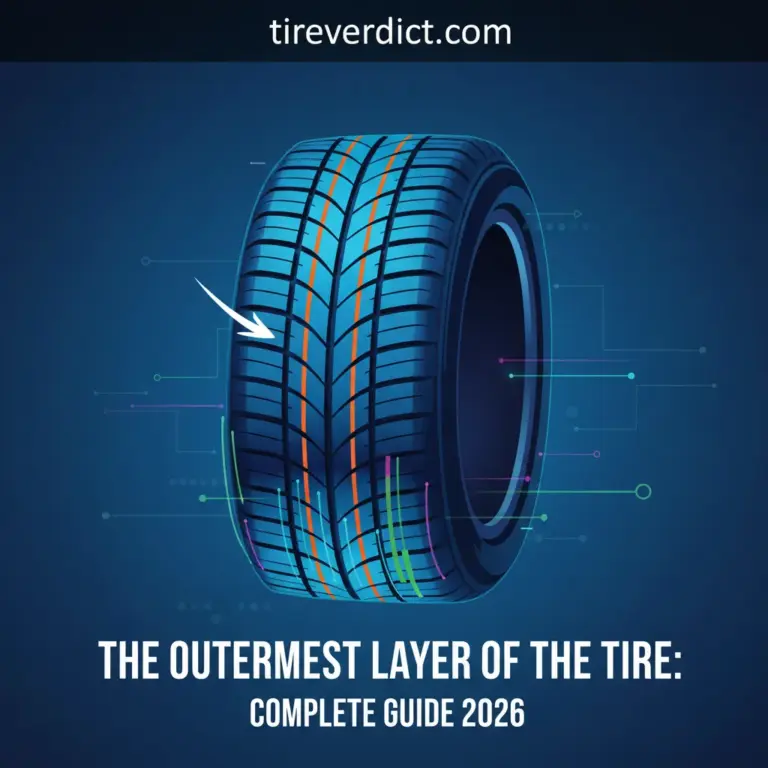
Tire tread depth is a crucial aspect of vehicle safety, representing the vertical measurement from the top of the tire’s tread block down to the base of its deepest grooves. This measurement is fundamental to understanding a tire’s ability to perform its most critical functions on the road.
📤 Share Image
The primary function of tire treads is multifaceted. Firstly, they are engineered to efficiently channel water away from the tire’s contact patch, effectively preventing dangerous hydroplaning, where a layer of water separates the tire from the road. Secondly, the intricate patterns and sipes within the tread blocks significantly enhance grip on various road surfaces, from dry asphalt to loose gravel, providing the necessary friction for control. Lastly, and perhaps most critically, adequate tread depth directly correlates with improved braking performance, allowing your vehicle to stop safely and predictably, especially in adverse conditions.
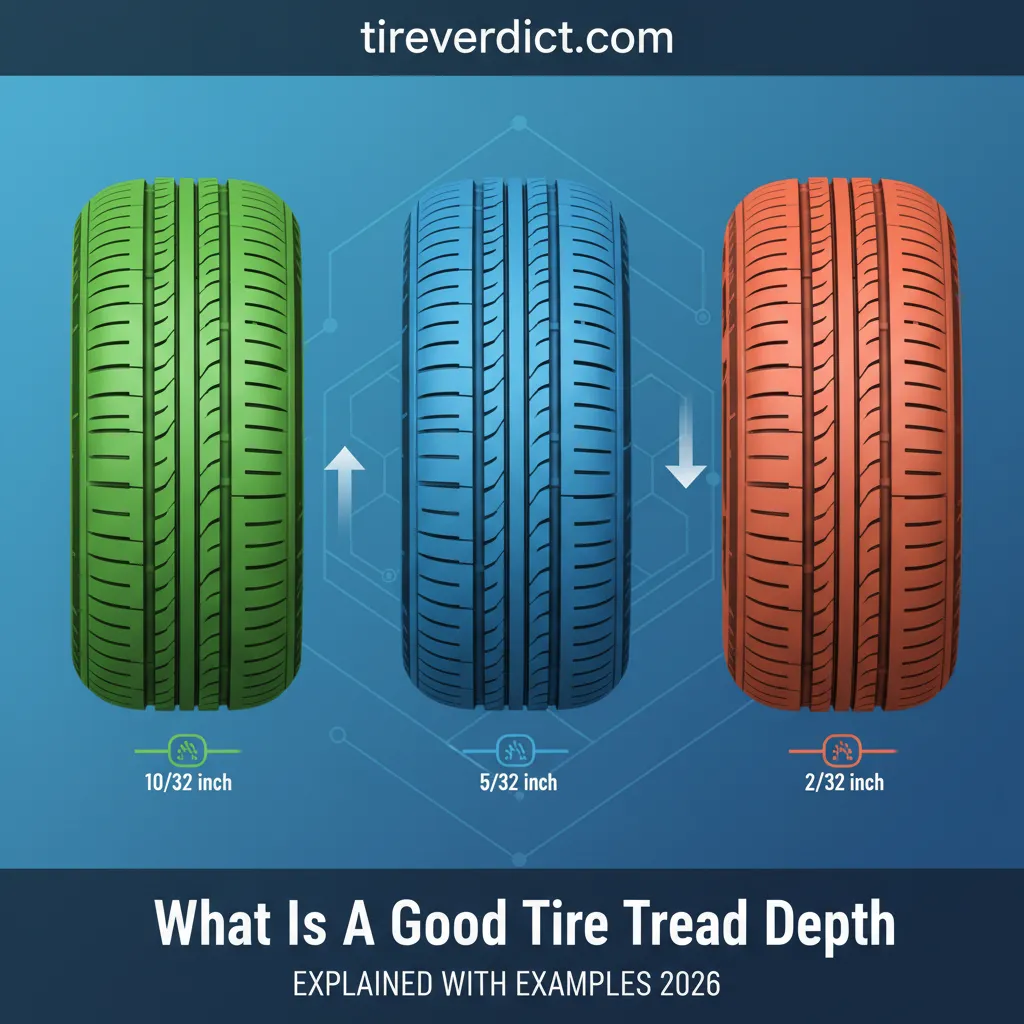
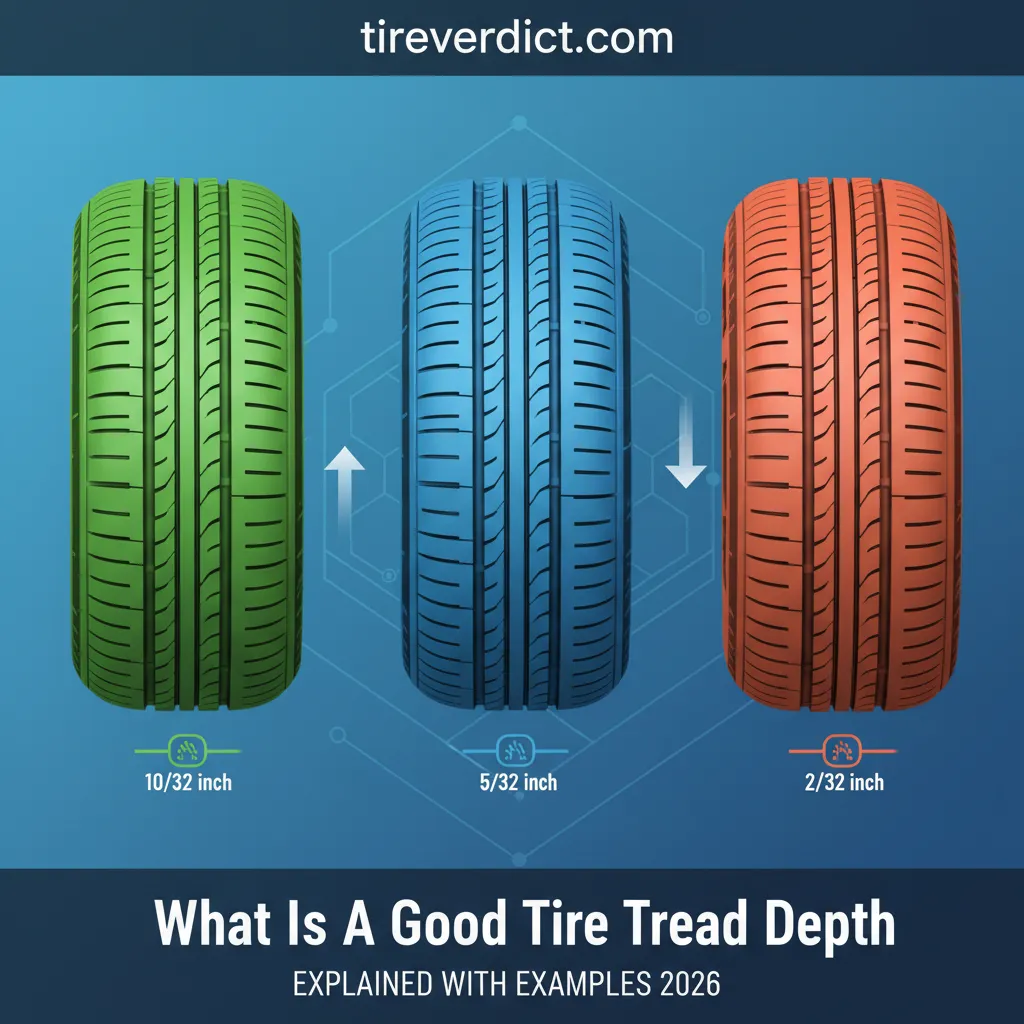
When discussing measurements, consistency is key. In the United States, tread depth is commonly expressed in 32nds of an inch. For instance, a new passenger car tire typically features a tread depth of 10/32 to 12/32 inches. In contrast, light truck and off-road tires, designed for more demanding conditions, can start with a robust 15/32 inches (approximately 12 mm) of tread. Globally and within scientific contexts, millimeters (mm) are the standard unit, with 1/32 inch equating to approximately 0.8 mm. Understanding these units is foundational for accurate assessment.
It is vital to distinguish between a tire’s new tread depth, its safe operating depth, and the legal minimum depth. A new tire, with its full complement of tread (e.g., 11/32″), offers peak performance. A safe operating depth, which we will delve into, provides reliable performance under typical conditions. The legal minimum, however, is often a bare threshold, indicating a tire that is functional but significantly compromised in safety, especially in wet or snowy environments. These three figures are not synonymous; relying solely on the legal minimum is a common and dangerous misconception.
How to Accurately Measure Tire Tread Depth Yourself
As an expert with hands-on experience, I consistently advocate for drivers to perform regular self-assessments of their tire tread depth. This proactive approach is a cornerstone of vehicle maintenance and road safety. Fortunately, several reliable methods exist, from simple household items to dedicated tools.

📋
Step-by-Step Guide
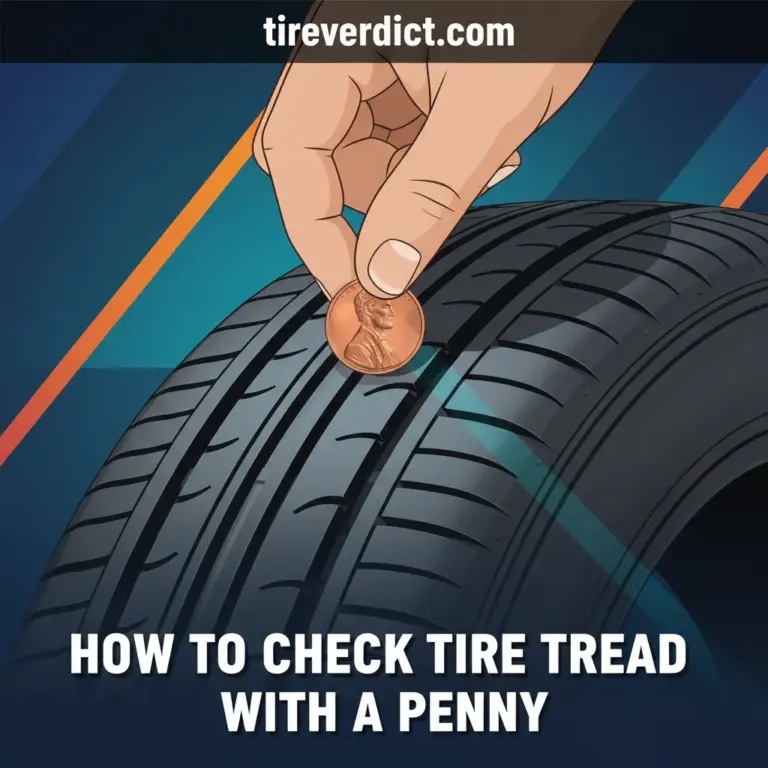
This is a quick, albeit informal, indicator for the legal minimum. Insert a U.S. penny into a tire tread groove with Abraham Lincoln’s head upside down and facing you. If you can see the very top of Lincoln’s head, your tread depth is approximately 2/32 of an inch or less, indicating it’s time for new tires. Remember, the top of Lincoln’s head to the edge of a penny measures approximately 2/32 of an inch.
A more relevant assessment for modern safety standards, especially for wet conditions. Insert a U.S. quarter into a tread groove with George Washington’s head upside down and facing you. If the tread covers Washington’s head, you have at least 4/32 of an inch of tread. If you can see the top of his head, your tires are approaching a critical safety threshold. The top of Washington’s head to the edge of a quarter measures approximately 4/32 of an inch.
For the most precise measurement, a dedicated tread depth gauge is indispensable. These are available in analog (slide ruler) and digital formats.
Proper Placement: Press the top flat edge of the gauge firmly against the tire’s tread, ensuring the probe extends into the deepest part of a main tread groove, avoiding the raised wear bars.
Reading Technique: For analog, read the number exposed on the shaft. For digital, simply read the display. Measure at multiple points around the tire’s circumference and across the tread face (inner, middle, outer) to identify any irregular wear. For example, if you measure 4/32″ on the inner groove and 6/32″ on the outer, it indicates potential alignment issues.
All modern tires are manufactured with built-in Tread Wear Indicators (TWIs). These are small, raised rubber bars molded horizontally into the main tread grooves. They are strategically placed to become flush with the surrounding tread when the depth reaches the critical 2/32 inch (1.6 mm) mark. When you observe these bars appearing flush with the tread, it serves as a clear visual alert that your tires have reached their legal minimum and require immediate replacement.
Interpreting Tread Depth: What Constitutes a “Good” Reading in 2026
Defining what constitutes a “good” tire tread depth extends far beyond merely meeting the legal minimum. As a seasoned professional, I emphasize that optimal safety and performance in 2026 demand a more proactive stance, especially with evolving vehicle technologies and driver expectations.
Defining ‘Good’ Tread Depth for Optimal Performance
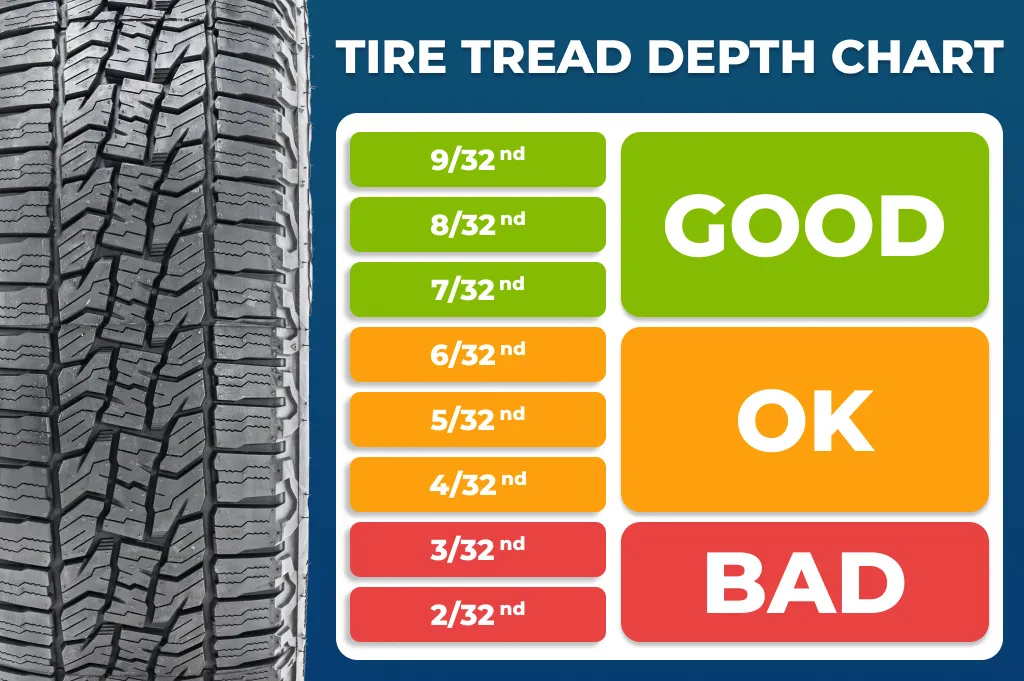
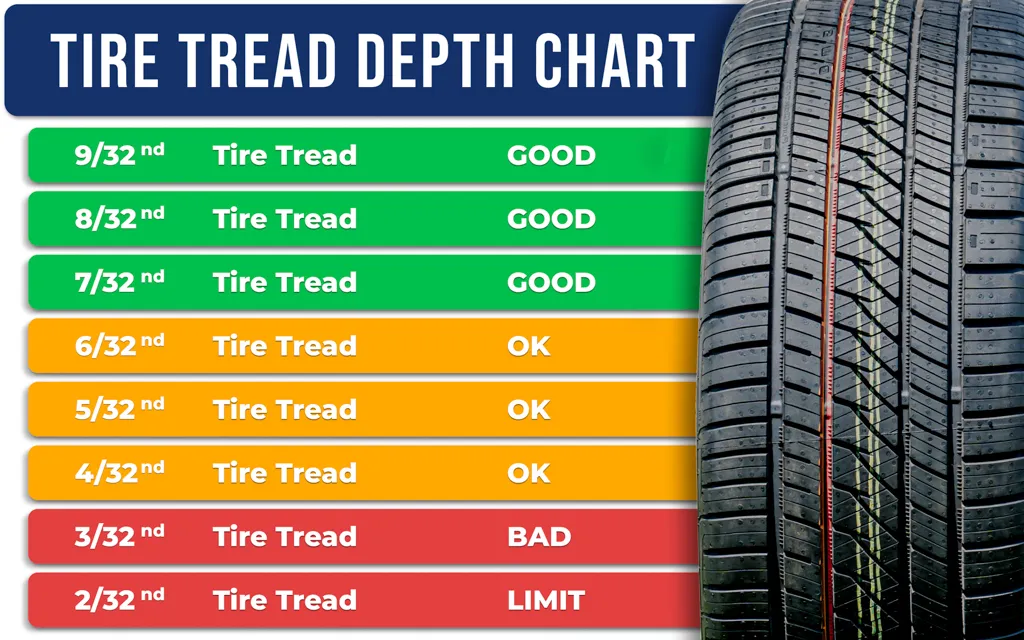
For new tires, the typical tread depth ranges from 10/32″ to 12/32″ (approximately 8-10 mm). This is where tires offer their maximum performance, grip, and water displacement capabilities. While tires deliver acceptable performance below this, an ‘excellent’ safety range, particularly for conditions frequently encountered, is generally considered 6/32″ (4.8 mm) and above.
Recommended Thresholds for Varying Conditions
- Wet Weather Performance: For effective wet weather traction and significantly reduced hydroplaning risk, a tread depth of at least 5/32″ (4 mm) is strongly recommended. Below this, a tire’s ability to evacuate water rapidly diminishes.
- Snow and Ice Performance: For optimal grip and safety in snow and ice, experts recommend 6/32″ (4.8 mm) and above. Winter tires, for instance, are designed with deeper treads and specialized compounds to maintain flexibility and bite in cold conditions.
- General Safety Recommendation: Industry experts, including tire manufacturers and safety organizations, often recommend replacing tires when they reach 4/32″ (3.2 mm) for safety, particularly in regions prone to frequent rain or snow.
The Legal Minimum vs. Safety Minimum
The legal minimum tread depth in many jurisdictions, including most U.S. states and European countries, is 2/32″ (1.6 mm). This is often indicated by the Tread Wear Indicators becoming flush with the tire surface. It is critical to understand that this is a bare minimum to avoid a fine, not a safety recommendation. A tire at 2/32″ tread depth is significantly compromised, particularly in wet conditions. For instance, a scenario might involve a tire at 4/32″ which technically passes a legal inspection but will perform significantly worse in rain compared to a tire at 8/32″.
How Tire Design Interacts with Tread Depth
Tire design elements such as siping (small cuts in the tread blocks) and block shape are intricately linked to tread depth. These features work synergistically with the depth to enhance performance. As tread wears down, these subtle features that provide extra biting edges in snow or help channel water are diminished, directly impacting the tire’s efficacy in adverse conditions.
Don’t wait until your tires hit 2/32″ (the legal minimum) to consider replacement. Proactively plan for new tires when you reach 4/32″ for passenger cars, and even 5/32″ or 6/32″ for SUVs/trucks and those who frequently drive in heavy rain or snow. This ensures you maintain a robust safety margin, especially considering the performance degradation on wet roads. Your safety in 2026 largely depends on anticipating, not reacting, to tire wear.
By The Numbers: Tread Depth & Safety
Recommended Replacement for Wet Safety
Legal Minimum / Wear Bar Visibility
Increase in Wet Braking Distance (4/32″ to 2/32″)
Typical New Passenger Tire Tread Depth
The Critical Implications of Insufficient Tire Tread Depth
Ignoring inadequate tire tread depth is akin to neglecting your vehicle’s brakes; the consequences are severe and directly impact safety. My 15+ years in the industry have shown me countless instances where worn tires were a contributing factor to preventable accidents. It’s not merely about “passing” a minimal inspection; it’s about real-world performance and the integrity of your vehicle’s safety systems.
Increased Risk of Hydroplaning
One of the most immediate and dangerous consequences of reduced tread depth is the significantly increased risk of hydroplaning. As tread wears down, the channels designed to evacuate water from beneath the tire become shallower and less effective. This diminishes the tire’s ability to cut through the water film on a wet road, causing the tire to ride on top of the water like a water ski, leading to a complete loss of steering and braking control. Even a slight decrease in tread depth from 6/32″ to 4/32″ can drastically increase the potential for hydroplaning at highway speeds.
Degraded Braking Performance
The ability of your vehicle to stop effectively is inextricably linked to tire tread depth. Stopping distances dramatically increase as tread depth diminishes, a fact that is particularly stark in wet and snowy conditions. Research by organizations like AAA consistently highlights this danger: studies show that tires with 4/32″ tread depth take an average of 87 feet longer to stop from 60 mph on wet pavement than new tires. At the legal minimum of 2/32″, this stopping distance can extend to over 100 feet longer. Imagine needing an extra football field length to stop your vehicle – that’s the difference adequate tread depth makes. Real-world examples of accidents linked to worn tires frequently involve vehicles unable to stop in time or maintain control on wet roads.
Reduced Traction and Handling
Beyond braking, insufficient tread depth compromises overall vehicle dynamics. You’ll experience reduced traction during acceleration, making it harder to get up to speed efficiently and safely, especially on loose or wet surfaces. Cornering stability is also significantly impacted, leading to a ‘floaty’ or less responsive feel when navigating turns. The grip required for precise handling and overall vehicle responsiveness on various road types is diminished, making the vehicle feel less predictable and less safe to drive.
Potential for Legal Penalties and Compromised Insurance Claims
Driving on tires below the legal minimum tread depth (typically 2/32″) can result in fines and legal penalties. More critically, in the unfortunate event of an accident, the condition of your tires can directly affect your liability. Insurance companies may investigate tire tread depth, and if your tires are found to be below the legal limit, your claim could be compromised, or you might even face increased liability. This adds a financial and legal dimension to the already dire safety implications.
Never equate the legal minimum tread depth of 2/32″ with a safe operating standard. This figure represents the absolute limit where tire performance is severely degraded, especially in wet conditions. Driving on tires at or below this depth dramatically increases the risk of accidents, compromises your vehicle’s safety features, and can lead to legal and insurance complications. Prioritize your safety above all else.
Extending Tire Life and Maintaining Optimal Tread for Safety
While tire wear is inevitable, its rate can be significantly influenced by proper maintenance and driving habits. As an expert, I can confirm that proactive care directly translates to extended tire life, consistent optimal performance, and enhanced safety for years to come, including through 2026 and beyond. Adhering to these fundamentals will ensure you get the most out of your tire investment.
Importance of Regular Tire Rotation
Regular tire rotation is perhaps one of the simplest yet most effective ways to promote even wear across all four tires. Since each wheel position experiences different stresses and wear patterns (e.g., front tires typically wear faster due to steering and braking), rotating them periodically helps equalize wear. It is generally recommended to rotate tires every 5,000 to 8,000 miles, or as specified by your vehicle manufacturer. Research indicates that regular rotation can extend a tire’s overall lifespan by up to 20%, maximizing the utility of its original tread depth.
Maintaining Correct Tire Pressure
The correct tire pressure, as specified in your vehicle’s owner’s manual or on a placard inside the driver’s side door jamb, is paramount. Under-inflation leads to excessive wear on the outer edges (shoulders) of the tire, while over-inflation concentrates wear in the center of the tread. Both scenarios lead to premature and uneven tread wear, significantly reducing tire life and compromising handling. A mere 5-7 PSI deviation from the recommended pressure can reduce a tire’s lifespan by up to 15% and even increase fuel consumption by 1-2%. Check your tire pressure at least once a month, including the spare.
Wheel Alignment and Balancing
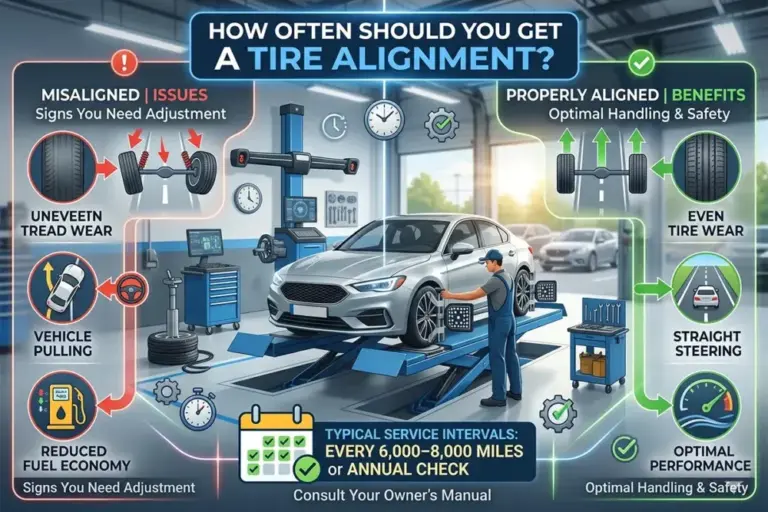
Proper wheel alignment ensures that your wheels are correctly oriented relative to each other and the road. Misalignment can cause tires to drag, leading to rapid and uneven wear patterns such as feathering (tread blocks worn diagonally) or excessive wear on one side of the tire. Similarly, wheel balancing ensures that the weight of the wheel and tire assembly is evenly distributed. Unbalanced wheels cause vibrations, leading to irregular wear patterns like cupping (scalloped wear) and premature tread loss. Have your alignment checked annually and balancing performed whenever new tires are installed or significant vibrations are noticed.
Mindful Driving Habits
Your driving style significantly impacts how quickly your tires wear down. Aggressive driving behaviors contribute to accelerated tread wear:
- Harsh Braking: Slamming on the brakes causes excessive friction and heat, rapidly wearing down the tread.
- Rapid Acceleration: “Peeling out” or quick acceleration grinds away rubber unnecessarily.
- High-Speed Cornering: Taking turns at high speeds puts immense stress on tire shoulders, leading to premature wear.
- Speeding: Generally, higher speeds generate more heat and friction, accelerating overall wear.
Practicing smooth acceleration, gentle braking, and moderate cornering not only improves fuel economy but also dramatically extends the life of your tires, maintaining optimal tread depth for longer.
Extended Tire Lifespan
Regular maintenance like rotation and proper inflation can extend tire life by 15-20%.
Optimal Safety & Grip
Consistent tread depth ensures maximum water displacement and road adhesion.
Improved Fuel Efficiency
Correct tire pressure and even wear reduce rolling resistance, saving fuel.
Optimal tire tread depth is crucial for vehicle safety, particularly 4/32″ to 6/32″ for reliable wet and snow performance, surpassing the 2/32″ legal minimum. Regular self-assessment using simple tools like a penny, quarter, or a dedicated gauge is essential for proactive tire maintenance. Maintaining proper tire pressure, performing rotations, and ensuring correct alignment are key strategies to preserve tread depth and extend tire life. Prioritize your safety by regularly checking your tire tread depth. If your tires are approaching 4/32 of an inch, consider replacement to ensure optimal performance and safety on the road. Consult with a certified tire professional for further assessment and recommendations.
Frequently Asked Questions
What is the absolute legal minimum tire tread depth?
In many regions, including most of the United States and parts of Europe, the absolute legal minimum tire tread depth is 2/32 of an inch (1.6 mm). This measurement is typically indicated by built-in tread wear indicator bars (TWIs) within the tire’s main grooves. Driving with tread depth below this limit is illegal and unsafe, leading to potential fines and increased accident risk.
Why is 4/32 inch often recommended over the legal minimum?
While 2/32 inch is the legal minimum, 4/32 inch (3.2 mm) is widely recommended by tire experts and safety organizations because tire performance, especially on wet or snowy roads, significantly degrades below this point. At 4/32 inch, a tire still retains sufficient capability to effectively channel water and provide necessary grip, greatly reducing the risk of hydroplaning and improving braking distances.
How often should I check my tire tread depth?
It is recommended to check your tire tread depth at least once a month, concurrently with checking tire pressure. Regular checks allow you to monitor wear patterns and address potential issues early, ensuring your tires remain within safe operating parameters and helping you plan for timely replacements before they become critically worn.
Does tread depth affect fuel efficiency?
Indirectly, yes. While tread depth itself doesn’t directly impact fuel efficiency as much as tire pressure, excessively worn tires can affect handling and stability, potentially prompting drivers to compensate in ways that are less fuel-efficient. More importantly, maintaining proper tire pressure, which also affects tread wear, is a direct factor in optimizing fuel efficiency.
Can different tires on the same vehicle have different tread depths?
Ideally, all tires on a vehicle should have similar tread depths, especially on AWD/4WD vehicles, to maintain balanced handling and prevent undue stress on the drivetrain. While minor differences are acceptable, significant variations can compromise vehicle stability, braking, and activate traction control systems unnecessarily. It’s best to replace tires in pairs or sets.