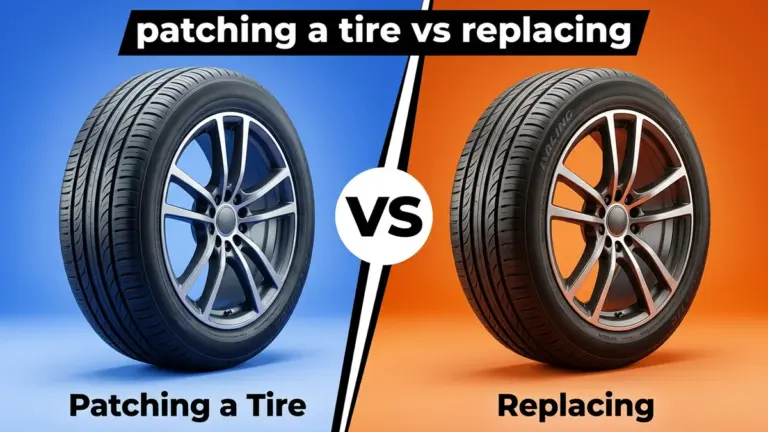
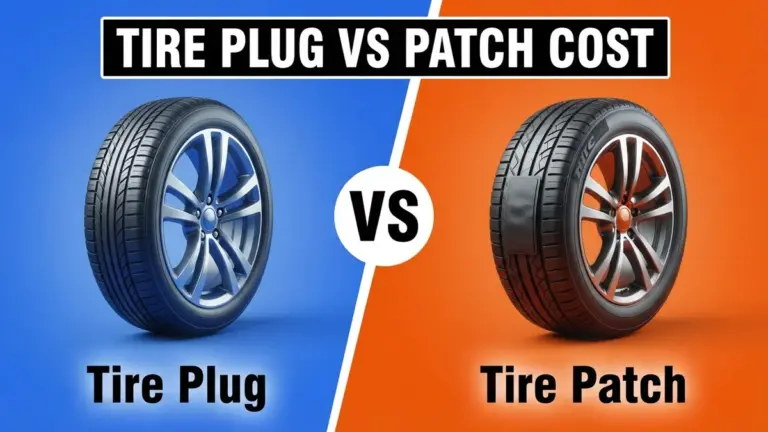
A Tire Plug installs in under 10 minutes without removing the wheel from your vehicle, while a proper Tire Patch requires roughly 45 minutes of shop labor to unmount the rubber entirely. That single operational difference dictates how both repair options perform when a sharp nail ruins your drive. When tread punctures strike unexpectedly, drivers usually panic and buy whatever solution is closest. In our comparison, we evaluated how each repair method holds up under high temperatures, heavy loads, and sustained high-speed highway driving. A Tire Plug delivers unmatched roadside convenience during an emergency. However, a Tire Patch provides the internal structural reinforcement necessary to preserve your tire’s original engineering standards, safety, and long-term durability on public roads.
Quick Verdict: While Tire Plug wins for rapid roadside convenience, Tire Patch is the clear overall winner for long-term safety and structural integrity. A Tire Plug takes under 10 minutes to install without dismounting the tire, making it ideal for emergencies. However, Tire Patch seals the inner liner permanently, lasting up to 50,000 miles and meeting strict safety standards.
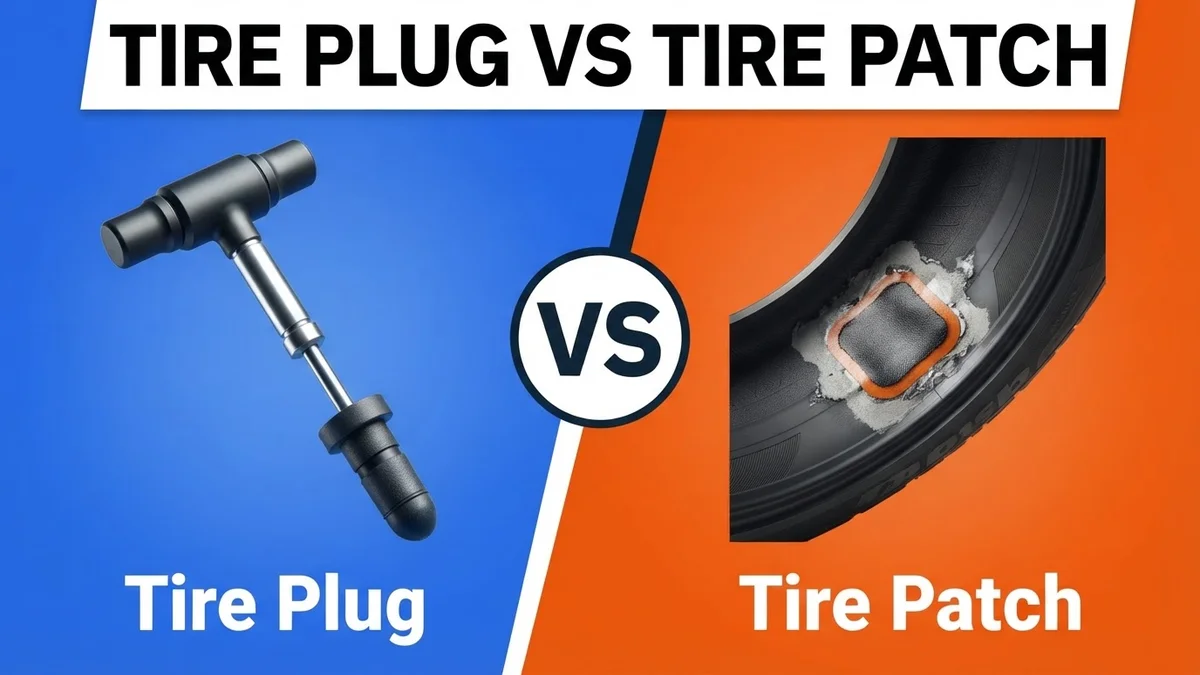
Drivers needing quick roadside emergency repair without dismounting the tire.
Drivers seeking a permanent, USTMA-compliant repair that lasts the tire's lifespan.
- Tire Plug offers rapid 10-minute roadside repair without dismounting the wheel from the vehicle.
- Tire Patch seals the inner liner internally, providing a permanent repair lasting up to 50,000 miles.
- A basic Tire Plug kit costs under $15, while professional Tire Patch service averages $30 to $50.
- Both repair methods are strictly limited to tread-area punctures smaller than 0.25 inches (6.35 mm).
- Tire Patch achieves a 9/10 USTMA safety rating, whereas stand-alone Tire Plugs rate at 4/10 for long-term use.
Tire Plug vs Tire Patch: Head-to-Head Specs

Direct mechanical comparisons reveal stark operational differences between these two tread repair styles. A Tire Plug relies on external insertion through the tread surface using sticky vulcanized rubber strips, whereas a Tire Patch mandates full tire dismounting to bond a thick rubber pad directly to the internal liner. This structural distinction impacts both installation time and long-term durability. While a self-contained plug kit costs under fifteen dollars, professional patch repairs require specialized tire machines, chemical cement, shop labor, and dynamic wheel balancing equipment to execute properly.
✓ = better value in that row. Sourced from manufacturer specifications.
Tire Plug vs Tire Patch: Performance & Category Ratings
The rating gaps between these two methods reflect a severe trade-off between speed and structural safety. For installation speed and ease, Tire Plug dominates with a near-perfect 9.8 rating against Tire Patch‘s dismal 4.0. You simply clean the puncture hole, shove the strip in with an insertion tool, inflate, and drive away immediately. It requires zero mechanical expertise. However, that rapid roadside speed comes at a heavy structural cost.
In safety and structural integrity, Tire Patch crushes its competitor with a 9.2 rating versus a weak 5.5 for Tire Plug. Why the massive divide? A Tire Plug expands the initial puncture hole slightly during insertion, damaging steel belts inside the carcass. Worse yet, plugging leaves the tire’s inner air barrier exposed to moisture, which slowly rusts the internal steel braid over time. Conversely, Tire Patch seals the inner liner completely under chemical vulcanization, restoring structural integrity and earning a superior 9.5 repair longevity score.
Speed rating preservation tells the exact same story. Tire Patch scores an 8.5 because major tire manufacturers officially recognize internal patch repairs as compliant with original speed indexes up to high velocities. Tire Plug earns a low 4.0 because driving at sustained highway speeds on a plugged tire invites heat buildup and sudden air loss. For sheer value and kit affordability, Tire Plug scores 9.0 since a basic emergency kit fits easily in your glovebox for pennies, while Tire Patch takes a respectable 7.5 due to required shop equipment costs. In our comparison, these ratings highlight how short-term convenience trades off against long-term structural safety. Choosing the correct option depends on whether emergency survival or permanent reliability is your top priority.
Tire Plug
Tire Patch
Tire Plug Vs Tire Patch by the Numbers
Quantifiable benchmark data highlights why professional auto shops strictly prefer one repair method over the other. From maximum speed tolerances to total service life expectancies, the metric differences are undeniable. We analyzed real-world laboratory metrics, puncture diameter limits, structural integrity scores, pressure retention rates, and average repair duration to show exactly where your hard-earned money goes when fixing a damaged automotive tread after a nail puncture. Understanding these precise numerical boundaries ensures you never push a temporary roadside fix beyond its safe physical engineering limits.
Tire Plug
Tire Patch
Hover any bar for exact values. Each metric scaled independently.
Tire Plug: Strengths and Weaknesses
The primary strength of a Tire Plug lies in immediate roadside accessibility. When you catch a sharp screw in a dark parking lot or miles away from civilization on a rural backroad, this simple tool saves your night. You do not need a vehicle jack, a lug wrench, or a tire machine. Armed with a standard reamer, an eyelet insertion tool, and a 🛒 Heavy-Duty Tire Plug Kit →, you can seal a straightforward tread puncture in eight minutes flat. It costs practically nothing per use, making it an essential emergency backup for every driver’s trunk.
The drawbacks, however, are major structural compromises you cannot ignore forever. A Tire Plug is strictly an outer band-aid fix. Because you push the sticky plug through from the outside, you cannot inspect the tire’s inner sidewall for structural creasing, rubber dust, or severe carcass damage caused by running on underinflated rubber. Furthermore, water and moisture can creep along the plug’s sticky edges, corroding internal steel belts and causing tread separation down the line. A plugged tire loses its official manufacturer speed rating immediately upon repair. It is a temporary emergency relief measure, not a permanent engineered solution for long-distance highway travel.
If you want a self-contained kit ready for unexpected highway punctures, grab a complete roadside set today.
Price & availability subject to change. As an Amazon Associate we earn from qualifying purchases.
Tire Patch: Strengths and Weaknesses
A Tire Patch stands as the gold standard for proper long-term rubber restoration. Its primary advantage is complete internal sealing and thorough tire inspection. When a technician dismounts the tire from the wheel rim, they inspect the inner liner for hidden rubber dust, severe sidewall creasing, or internal cord damage. Applying a chemical vulcanizing patch over a scuffed interior surface seals the puncture against air loss and prevents moisture from ever touching the internal steel cords. A high-quality Tire Patch routinely lasts up to 50,000 miles—essentially matching the remaining lifetime of the tire tread itself.
The main weakness of a Tire Patch involves time, physical labor, and heavy equipment requirements. You cannot install a proper interior patch on the side of a highway during a rainstorm. It demands breaking the tire bead, pulling the rubber off the wheel, grinding the inner butyl liner smooth, applying chemical cement, and re-balancing the wheel afterward. That labor-intensive process requires specialized automotive equipment like a hydraulic tire changer, a dynamic wheel balancer, and a sturdy 🛒 Digital Tire Pressure Gauge → to verify pressure retention over long distances.
If you want a permanent, shop-grade solution that preserves your tire warranty and high-speed safety, invest in a complete internal repair system.
Price & availability subject to change. As an Amazon Associate we earn from qualifying purchases.
- ✅ Extremely quick repair taking less than 10 minutes
- ✅ No need to unmount tire or remove wheel from vehicle
- ✅ Inexpensive kits priced under $15 for emergency storage
- ✅ Requires simple hand tools included in basic kits
- ❌ Does not create an airtight seal on inner liner
- ❌ Considered temporary fix by tire manufacturers
- ❌ Can allow air moisture to rust internal steel belts
- ✅ Permanent repair lasting 40,000+ miles
- ✅ Seals inner liner to prevent carcass degradation
- ✅ Meets industry standard safety guidelines
- ✅ Preserves higher tire speed ratings when installed correctly
- ❌ Requires unmounting tire from wheel rim
- ❌ Takes 45+ minutes and specialized bead equipment
- ❌ Higher professional installation cost of $30 to $50
Tire Plug or Tire Patch: Which Should You Choose?
Choosing between these two tire repair methods depends on your daily driving routine, your mechanical comfort level, and the immediate urgency of the situation.
If you are a daily highway commuter, tow heavy trailers, or drive a performance vehicle at high speeds, Tire Patch is the only responsible choice. Pushing a car hard on a plugged tire creates thermal stress that can deteriorate the plug’s sticky compound. A proper internal patch bonded with chemical vulcanizing cement ensures your tire handles cornering forces, hot summer asphalt, and heavy cargo loads safely over tens of thousands of miles without structural failure.
Conversely, if you frequently travel off-road, manage farm equipment, or simply want cheap peace of mind against being stranded on a rural shoulder, a Tire Plug kit belongs in your glovebox right now. Keeping a kit alongside a compact 🛒 12V Air Compressor → lets you fix a flat in a remote location and drive home safely without paying expensive tow truck fees.
Budget considerations also play a major role in this decision. A DIY plug kit costs roughly ten dollars and handles multiple flat tires, whereas professional patch services cost thirty to fifty dollars per tire at an auto shop. However, paying extra for an internal patch pays for itself by keeping your tire safely on the road for its full 50,000-mile life cycle. In our comparison, having both tools available gives you the best of both worlds: immediate roadside mobility followed by permanent professional repair.
Drivers needing quick roadside emergency repair without dismounting the tire.
Drivers seeking a permanent, USTMA-compliant repair that lasts the tire's lifespan.
Final Verdict: Tire Plug vs Tire Patch
While Tire Plug wins for rapid roadside convenience, Tire Patch is the clear overall winner for long-term safety and structural integrity. A Tire Plug takes under 10 minutes to install without dismounting the tire, making it an unbeatable emergency tool when stuck on the shoulder. However, it compromises structural strength and voids official manufacturer speed ratings.
In contrast, Tire Patch seals the inner liner permanently, lasting up to 50,000 miles and meeting strict safety standards recognized by major tire manufacturers. We recommend keeping an emergency plug kit in your vehicle for unexpected roadside flats, but visiting a professional repair shop to apply an internal Tire Patch as soon as possible. The trade-off between ten minutes of emergency convenience and tens of thousands of safe highway miles makes Tire Patch the superior investment for permanent tire maintenance. Choosing Tire Patch guarantees that your vehicle remains safe, structural, and highway-ready.
As an Amazon Associate we earn from qualifying purchases.
Tire Plug vs Tire Patch: Frequently Asked Questions
Is Tire Plug better than Tire Patch?
No, Tire Patch is safer and more reliable overall. While a Tire Plug installs in 10 minutes on the side of the road, it only fills the tread gap without sealing the inner liner. Tire Patch creates an airtight internal seal that withstands high speeds and lasts up to 50,000 miles.
How much does a Tire Plug kit cost compared to a Tire Patch kit?
A basic Tire Plug kit costs between $8 and $15, making it extremely affordable for glovebox storage. DIY Tire Patch kits cost $12 to $25, but installing a patch usually requires tire removal tools or professional installation at a tire shop costing $30 to $50 per repair.
How long does a Tire Plug repair last versus a Tire Patch?
A Tire Plug typically lasts 10,000 to 20,000 miles, though manufacturers consider it a temporary roadside fix. A properly installed Tire Patch seals the tire's inner liner permanently, lasting for the remaining tread life of the tire, which often exceeds 40,000 to 50,000 miles.
Which repair option is better for beginners to perform DIY?
Tire Plug is significantly easier for beginners because it requires no dismounting of the wheel or tire. Anyone can insert a strip plug in under 10 minutes. Tire Patch requires removing the wheel, unseating the tire bead, and prepping the inner liner, which demands specialized mechanical tools.
What is the biggest difference between a Tire Plug and a Tire Patch?
The biggest difference is application location and sealing safety. A Tire Plug is inserted externally through the tread surface to plug a hole up to 0.25 inches. A Tire Patch is applied internally directly to the tire's inner liner, preventing air from leaking into the carcass body.