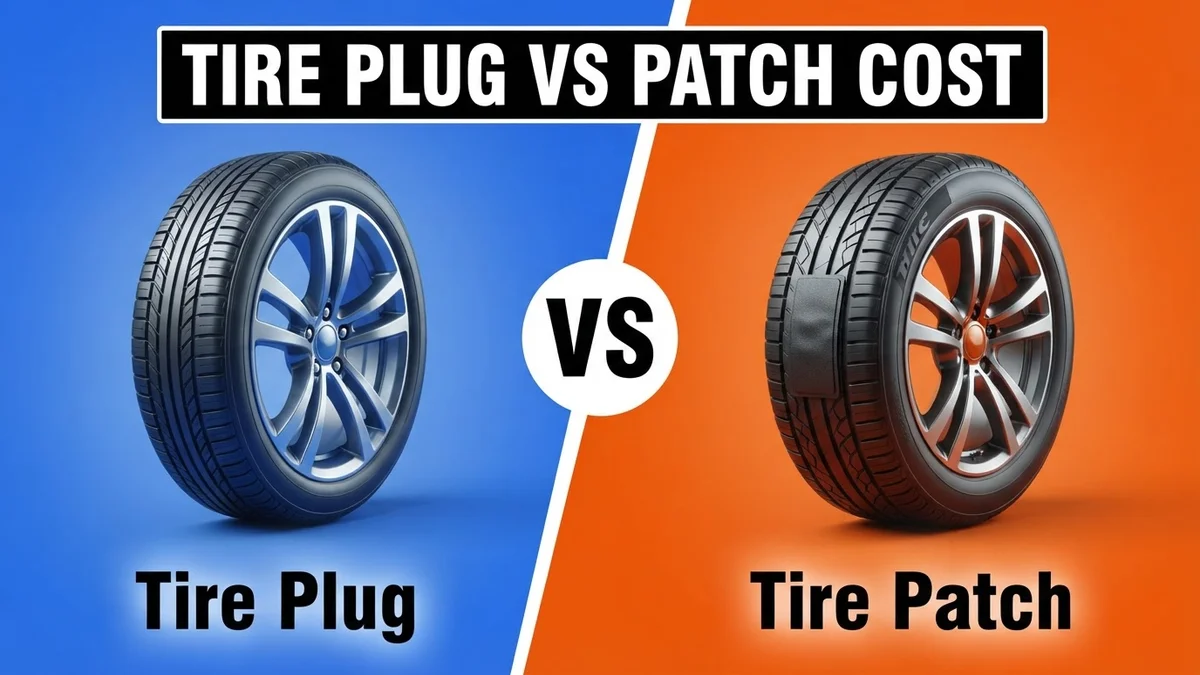
Most drivers assume inserting a sticky rubber string into a punctured tire fixes it permanently, but industry testing shows a standalone plug voids your tire’s speed rating instantly and drops structural integrity down to a 6.8 rating. A screw or nail piercing your tread requires a quick decision under pressure. Do you cram a sticky rope into the tread on the shoulder of a highway, or do you tow the car to a garage for a complete internal repair? The tire plug vs patch cost debate isn’t just about spending $15 versus $45. It represents a fundamental trade-off between 10-minute roadside convenience and highway-speed survival. We compared both repair methods across critical safety, endurance, and financial metrics to determine which fix truly belongs on your wheels.
Quick Verdict: Tire Patch is the overall winner for long-term safety and structural integrity, as it inspects internal tire damage and preserves speed ratings. However, Tire Plugs win on convenience and immediate cost, serving as an unbeatable roadside quick-fix for $15 compared to a $45 professional patch.
Drivers needing a fast, low-cost emergency roadside fix without dismounting the tire.
Drivers seeking a permanent, USTMA-certified repair that preserves tire speed ratings.
- Tire Plug DIY kits average $15 for 10 repairs, while professional Patch services cost $35-$60 per tire.
- A professional Tire Patch preserves 100% of the tire's original speed rating and manufacturer warranty.
- Tire Plugs can be installed in under 15 minutes without removing the wheel from the vehicle.
- Tire Patch repairs last over 50,000 miles, making them permanent for the lifespan of the tread.
- Both repair methods are strictly limited to puncture diameters of 1/4 inch (6mm) or smaller in tread center.
Tire Plug vs Tire Patch: Head-to-Head Specs


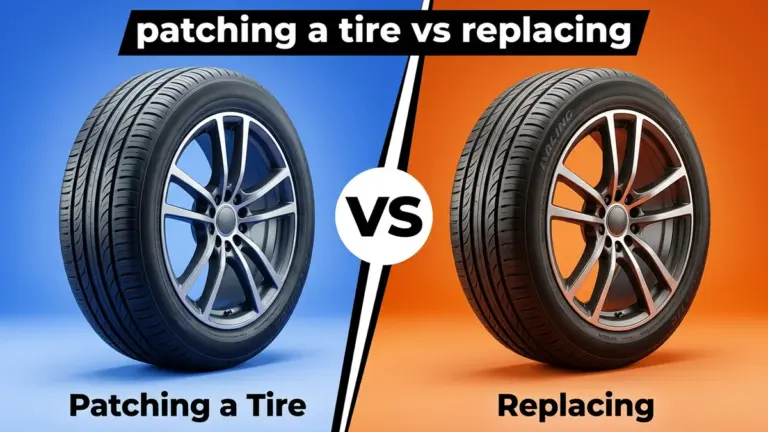
Direct comparison reveals stark performance and engineering differences between these two repair philosophies. A basic Tire Plug takes under 10 minutes to install directly on the vehicle without wheel removal, but it leaves hidden internal structural belt damage completely unchecked. Conversely, a professional Tire Patch demands roughly 45 minutes of intensive shop labor to dismount the tire from the rim, thoroughly buff the inner liner, and seal the breach chemically from the inside out. While a plug costs just $15 upfront, a $45 patch restores structural integrity to 9.5 and preserves factory speed ratings.
✓ = better value in that row. Sourced from manufacturer specifications.
Tire Plug vs Tire Patch: Performance & Category Ratings
In our detailed category analysis, the established ratings highlight two drastically different tools designed for handling tread punctures. The Tire Plug dominates Value & Initial Cost (9.5 vs 7.2) as well as Speed & Convenience (9.7 vs 5.8). It requires zero wheel removal, rim unbeading, or specialized garage machinery. You simply extract the puncturing debris, ream the hole, insert the sticky butyl rubber strip, re-inflate, and drive off. For an urgent roadside emergency, its 9.2 Ease of Installation rating remains completely unmatched by traditional shop methods.
However, once we evaluate real-world highway safety over thousands of commuter miles, the Tire Patch takes over completely. It earns a near-perfect 9.9 in Safety Compliance compared to the Tire Plug’s dismal 5.0 rating. Major tire manufacturers and federal safety agencies do not recognize an external sticky plug as a safe, permanent repair. Forcing a rough rasp tool blindly through steel belts can sever delicate internal wire strands, degrading Structural Integrity down to 6.8. Conversely, a modern Tire Patch achieves a 9.5 rating in Structural Integrity and an impressive 9.8 in Long-Term Reliability. The chemical vulcanization process fuses the rubber patch directly to the tire’s inner butyl liner, permanently sealing the air chamber against pressurized leaks and preventing water from rusting internal steel belts.
If you frequently travel at interstate speeds, carry heavy cargo, or value absolute structural peace of mind behind the wheel, the patch’s massive lead in safety, endurance, and engineering compliance makes it the clear technical winner in our category testing.
Tire Plug
Tire Patch
Tire Plug Vs Patch Cost by the Numbers
Analyzing the true tire plug vs patch cost requires looking far beyond the initial checkout counter price tag. A basic DIY plug kit costs under $15 and contains enough material to handle multiple tread punctures, making it highly attractive for budget-conscious drivers. Professional patch services average $45 per tire, factoring in certified technician labor, mechanical wheel rebalancing, and valve stem inspection. However, choosing an improper repair can cause slow air leaks that ruin a $200 tire prematurely, dramatically shifting the long-term financial equation in favor of professional shop vulcanization.
Tire Plug
Tire Patch
Hover any bar for exact values. Each metric scaled independently.
Tire Plug: Strengths and Weaknesses
The primary strength of a Tire Plug lies in its raw convenience, speed, and minimal upfront cost. When you suffer a sudden nail puncture on an isolated backroad, an external plug kit paired with a 🛒 Portable Tire Inflator → saves you from stranded isolation or an expensive tow truck bill. You do not need to lift the heavy vehicle frame, unbolt lug nuts, or break the rubber bead off the wheel rim. The entire repair process takes mere minutes, and the initial financial investment is practically negligible for any vehicle owner.
The engineering trade-offs, however, are severe and impossible to ignore. Pushing an insertion tool into a tread puncture is a completely blind repair procedure. You cannot see whether the puncturing object shredded internal steel plies, created inner carcass delamination, or scorched the inner liner during low-pressure driving. Over time, constant road vibration and seasonal thermal expansion cause raw sticky butyl plugs to harden, shrink, and slowly leak pressurized air. Moisture can easily seep past an external plug, rusting the internal steel cords until the tire suffers catastrophic tread separation at high speeds. Furthermore, commercial tire centers will refuse to perform a proper patch on a casing that has already been plugged, forcing an expensive early tire replacement.
If you are looking for an affordable, self-contained quick-fix kit to keep in your trunk for emergency rescue, this roadside solution delivers instant peace of mind.
Price & availability subject to change. As an Amazon Associate we earn from qualifying purchases.
Tire Patch: Strengths and Weaknesses
Choosing a Tire Patch gives you maximum structural safety, long-term casing endurance, and unmatched engineering peace of mind. To install a proper patch—or a full combination patch-plug stem—a certified technician completely unmounts the tire from the wheel rim. This essential labor step allows a thorough 360-degree visual and tactile inspection of the inner rubber liner. If driving on low inflation pressure damaged the delicate sidewall structure, the technician identifies the hidden internal failure before you put your family back on the highway. The chemical vulcanization compound fuses the thick rubber patch directly to the inner liner, creating an airtight seal that fully preserves factory speed ratings.
The main drawbacks come down to time, mechanical requirements, and financial overhead. You simply cannot install a vulcanized patch on the shoulder of an interstate using basic hand tools. It demands a pneumatic tire machine, a bead breaker, a mechanical die grinder, chemical vulcanizing cement, and dynamic wheel rebalancing equipment. The $45 average shop fee is triple the cost of a self-installed plug kit, and waiting in a service bay lobby for 45 minutes can disrupt a busy workday. Always verify tire pressure after any repair using a reliable 🛒 Digital Tire Pressure Gauge → to confirm zero micro-leaks exist.
When long-term reliability, highway safety compliance, and maximum casing longevity are your primary priorities, paying for a professional patch service is worth every dollar invested.
Price & availability subject to change. As an Amazon Associate we earn from qualifying purchases.
- ✅ Inexpensive kits cost $10-$20 and fix multiple tires
- ✅ No tire removal or wheel balancing equipment needed
- ✅ Fast 10-15 minute fix right on the roadside
- ✅ Compact tools fit easily in a car glove box or trunk
- ❌ Voids tire manufacturer warranty and speed rating
- ❌ Cannot detect hidden internal belt damage
- ❌ Prone to slow air leaks over thousands of miles
- ✅ Permanent repair that lasts 50,000+ miles
- ✅ Meets strict USTMA and DOT safety standard guidelines
- ✅ Preserves original manufacturer speed rating and warranty
- ✅ Full internal inspection catches hidden sidewall or belt tears
- ❌ Costs $35-$60 per tire at professional repair shops
- ❌ Requires unmounting the tire from the wheel rim
- ❌ Takes 30 to 60 minutes plus shop service waiting time
Tire Plug or Tire Patch: Which Should You Choose?
Your decision between these two repair options depends entirely on your specific driving habits, vehicle demands, and emergency context. If you are a daily highway commuter, tow heavy trailered loads, or drive a high-performance sports vehicle, the Tire Patch is completely mandatory. High speeds generate intense friction and internal thermal heat that rapidly weaken temporary sticky plugs. A professional patch maintains structural integrity up to a 9.5 rating and preserves factory speed ratings, ensuring your tires endure extreme thermal cycles and heavy braking forces without experiencing sudden air loss.
Conversely, if you manage a farm fleet, operate off-road utility vehicles, or find yourself stranded on a remote trail miles from cellular service, a Tire Plug is an indispensable survival tool. It gets your vehicle moving again without requiring hours of waiting for an expensive roadside tow truck. Off-road enthusiasts frequently handle small tread punctures where dismounting a heavy tire on a muddy trail is completely impractical.
For urban commuters operating on a tight budget, use a Tire Plug strictly as a short-term temporary bridge. Plug the hole on-site to reach a service station safely, then request a permanent internal patch repair from a certified mechanic. Routinely monitor your tread wear using a precise 🛒 Tread Depth Gauge → to verify that your tire has sufficient rubber left to warrant a $45 repair investment. Never attempt to plug or patch sidewall punctures under any circumstances, as continuous sidewall flex guarantees catastrophic blowout.
Drivers needing a fast, low-cost emergency roadside fix without dismounting the tire.
Drivers seeking a permanent, USTMA-certified repair that preserves tire speed ratings.
Final Verdict: Tire Plug vs Tire Patch
The Tire Patch emerges as the definitive overall winner in our head-to-head comparison, securing top ratings in long-term reliability (9.8), structural integrity (9.5), and safety compliance (9.9). By requiring complete tire unmounting and full internal casing inspection, it eliminates hidden rubber damage and permanently seals tread punctures without compromising manufacturer speed ratings.
The core trade-off comes down to immediate roadside convenience versus long-term structural safety. The Tire Plug remains an unbeatable $15 emergency quick-fix when you are stranded on a highway shoulder and need a 10-minute solution to reach safety. But for permanent daily driving, spending $45 on a professional Tire Patch protects your vehicle investment, extends tire casing life, and guarantees maximum safety over thousands of highway miles.
As an Amazon Associate we earn from qualifying purchases.
Tire Plug vs Patch Cost: Frequently Asked Questions
Is Tire Plug better than Patch Cost?
A Tire Patch is safer and more permanent than a Tire Plug, justifying its $45 average shop cost. While a $15 Tire Plug kit is faster for roadside emergencies, only a combination Tire Patch meets USTMA standards and preserves tire speed ratings.
How long does a tire plug last compared to a patch?
A Tire Plug typically lasts 10,000 to 20,000 miles as a temporary fix, whereas a professional Tire Patch lasts 50,000+ miles—matching the remaining life of the tire tread.
Why do auto shops charge $45 or more for a tire patch?
The $45 cost covers dismounting the tire from the wheel, performing a full internal safety inspection, preparing the inner rubber liner, applying a vulcanized patch-stem combination, and rebalancing the wheel.
Can a tire plug fail while driving at highway speeds?
Yes, standalone Tire Plugs can blow out under extreme heat and high speeds above 80 mph because they do not seal the inner airtight liner, which is why tire manufacturers void speed ratings for plugged tires.
Which repair method preserves my tire warranty?
A rubber combination Tire Patch applied from the inside by a certified technician preserves tire manufacturer warranties. Inserting an external Tire Plug immediately voids major tire brand warranties.