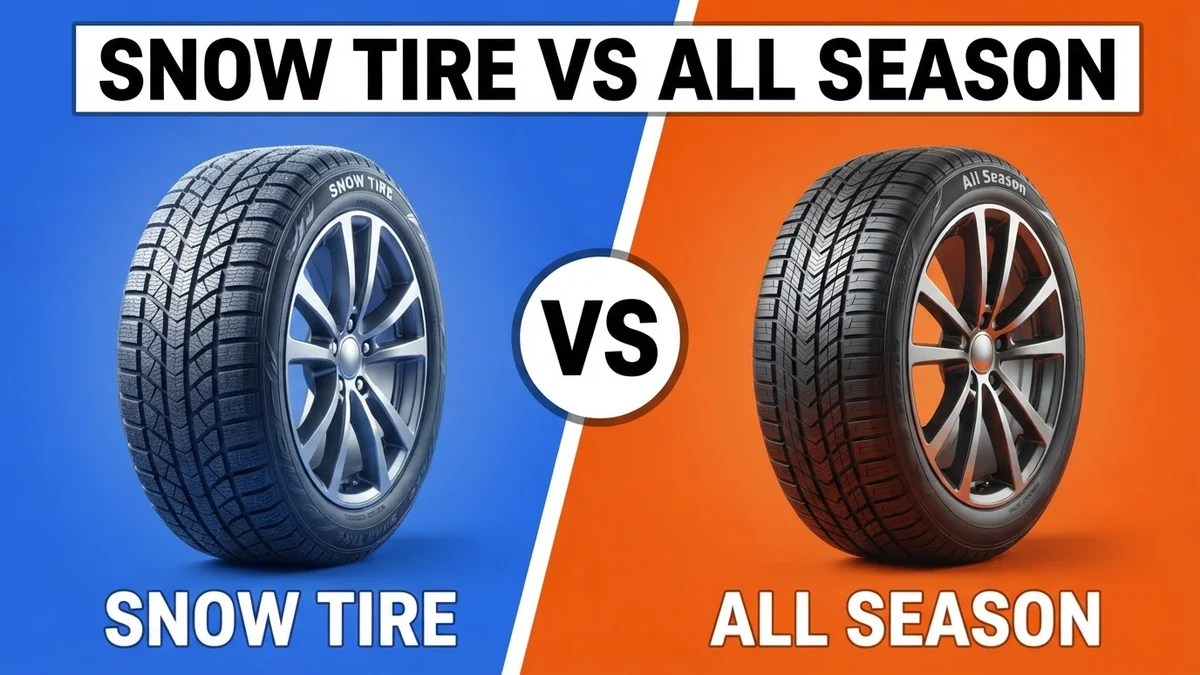
Most drivers believe four-wheel drive keeps them safe on frozen roads, but drivetrain power means nothing when your tires harden into slick plastic. Standard All Season rubber turns rigid when ambient temperatures drop below 45°F, dramatically increasing your stopping distance. In controlled test conditions on pure ice, a dedicated Snow Tire stops up to 37 feet shorter than a premium All Season model—the entire length of a city bus. That massive safety delta highlights a simple reality: rubber compound matters far more than driven wheels when winter hits. We put these two rubber philosophies head-to-head to determine which setup earns a spot on your wheels.
Quick Verdict: All Season tires win for most drivers due to year-round convenience and a 65,000-mile treadlife. However, if you regularly drive in freezing temperatures below 45°F or face severe ice, Snow Tires are essential safety equipment, stopping up to 37 feet shorter on ice despite higher long-term maintenance costs.
Drivers facing severe freezing winters, frequent ice, or snow accumulations over 3 inches.
Drivers in temperate regions seeking single-set convenience, long treadlife, and lower costs.
- Snow Tire sets stop up to 37 feet shorter than All Season tires on ice from 30 mph.
- All Season tires deliver up to 75,000 miles of tread life versus 30,000 miles for winter rubber.
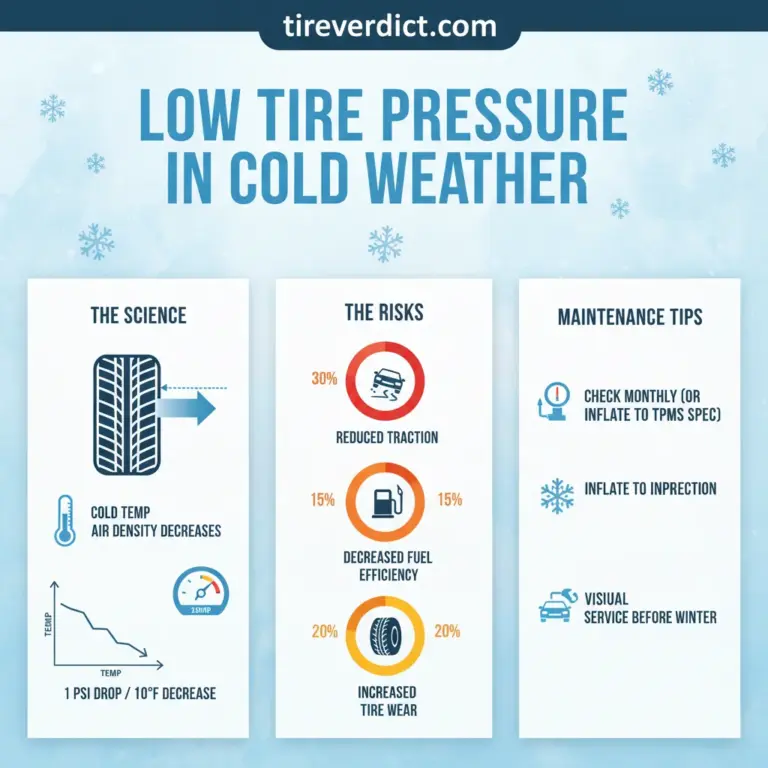
- Below 45°F, All Season tire compounds harden and lose critical road contact friction.
- Opting for All Season tires saves owners $150 to $300 annually in mounting and storage costs.
- Snow Tire tread starts at 11/32-inch depths featuring thousands of micro-biting sipes.
Snow Tire vs All Season: Head-to-Head Specs
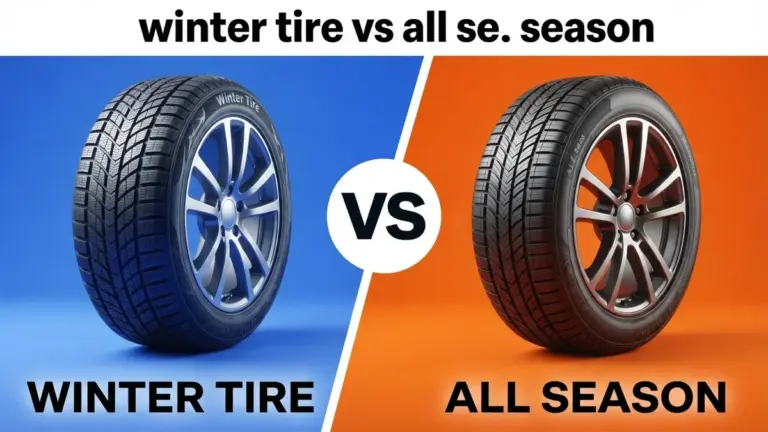
Choosing between these rubber compounds comes down to physical tread design and chemical engineering. A dedicated Snow Tire features thousands of microscopic sipes and soft, silica-rich compounds tailored specifically for sub-freezing asphalt. Conversely, an All Season tire relies on harder tread compounds engineered to survive a 65,000-mile treadlife warranty while handling intense summer heat. Comparing these tread depth geometries and thermal operating ranges reveals why neither option can truly master every single month of the year.
✓ = better value in that row. Sourced from manufacturer specifications.
Snow Tire vs All Season: Performance & Category Ratings
Our comparison ratings highlight a stark trade-off between warm-weather efficiency and cold-weather survival. In extreme winter conditions, the Snow Tire dominates easily. It scored a dominant 9.6 in Ice & Hard Snow Traction alongside a 9.8 in Sub-Freezing Safety. Soft hydrophilic rubber stays pliable when temperatures drop into the single digits, allowing thousands of deep tread sipes to bite into slick surfaces. The All Season tire crumbles here, managing a dangerous 5.2 rating on ice and a 5.5 in sub-freezing safety because its rubber hardens below 45°F.
Flip the thermostat above 45°F, and the baseline shifts completely. The All Season tire takes control with an 8.8 in Dry Warm Performance and an 8.7 in Wet Performance (>45°F). Its rigid tread blocks maintain structural integrity during high-speed emergency maneuvers, while the soft, pliable blocks of a Snow Tire squirm under heavy load, sinking its dry performance score to a dismal 5.8.
Long-term economics also favor year-round rubber. The All Season earns a superior 9.0 in Overall Cost Value thanks to its stellar 9.1 Tread Longevity score. A Snow Tire wears rapidly on warm asphalt, stumbling to a 6.0 in longevity. Add in lower cabin noise with an 8.6 Ride Comfort rating for the All Season compared to the 7.2 of the chatter-prone Snow Tire, and daily driver convenience sways toward year-round rubber whenever ice is absent.
Snow Tire
All Season
Snow Tire Vs All Season by the Numbers
Raw performance metrics reveal exactly how temperature changes transform tire physics. The test numbers below showcase the massive divergence in winter braking distances, tread life expectations, and operational safety scores between these tire categories. Examining these precise figures helps isolate which tire design delivers the exact grip, longevity, and cabin comfort level your regional climate demands throughout the calendar year.
Snow Tire
All Season
Hover any bar for exact values. Each metric scaled independently.
Snow Tire: Strengths and Weaknesses
When winter delivers packed powder, black ice, and sub-zero squalls, nothing touches a dedicated Snow Tire. The soft, silica-infused rubber compound remains elastic in deep freezes where other tires turn rigid. Combined with deep tread voids and high sipe densities, it digs into slippery pack to score a phenomenal 9.8 in Sub-Freezing Safety and a 9.6 in Ice & Hard Snow Traction. Stopping nearly four car lengths shorter on frozen roads isn’t a minor perk—it prevents expensive collisions.
However, that hyper-focused winter design comes with heavy compromises. Drive a Snow Tire on dry pavement above 50°F, and the squishy tread blocks feel vague and unresponsive, resulting in a low 5.8 Dry Warm Performance rating. Tread wear accelerates dramatically in warm weather, dragging its Tread Longevity score down to 6.0. You must also budget for biannual mounting fees and set aside garage space for off-season storage.
Keeping your off-season tires clean during storage requires proper gear, like a set of 🛒 Heavy-Duty Tire Storage Bags → to protect the rubber compound from degrading UV rays and garage dirt.
If you live where winter roads stay white for months, investing in dedicated winter rubber is an easy decision to protect your vehicle.
Price & availability subject to change. As an Amazon Associate we earn from qualifying purchases.
All Season: Strengths and Weaknesses
For drivers in mild or variable climates, an All Season tire offers unmatched convenience and economic value. You install them once and forget about them for years. Thanks to durable tread compounds, these tires deliver a stellar 9.1 in Tread Longevity, often carrying warranties up to 65,000 miles. In spring, summer, and fall temperatures, they excel across the board, earning an 8.8 in Dry Warm Performance and an 8.7 in warm wet conditions. They also offer a quieter, smoother ride with an 8.6 score in Ride Comfort.
The flaw lies directly in the name. An All Season tire is really a three-season tire in northern latitudes. Once ambient temperatures dip below 45°F, the rubber compound stiffens, dropping its Sub-Freezing Safety rating to 5.5 and Ice & Hard Snow Traction to 5.2. On frozen pavement, emergency braking distances expand dangerously compared to specialized rubber.
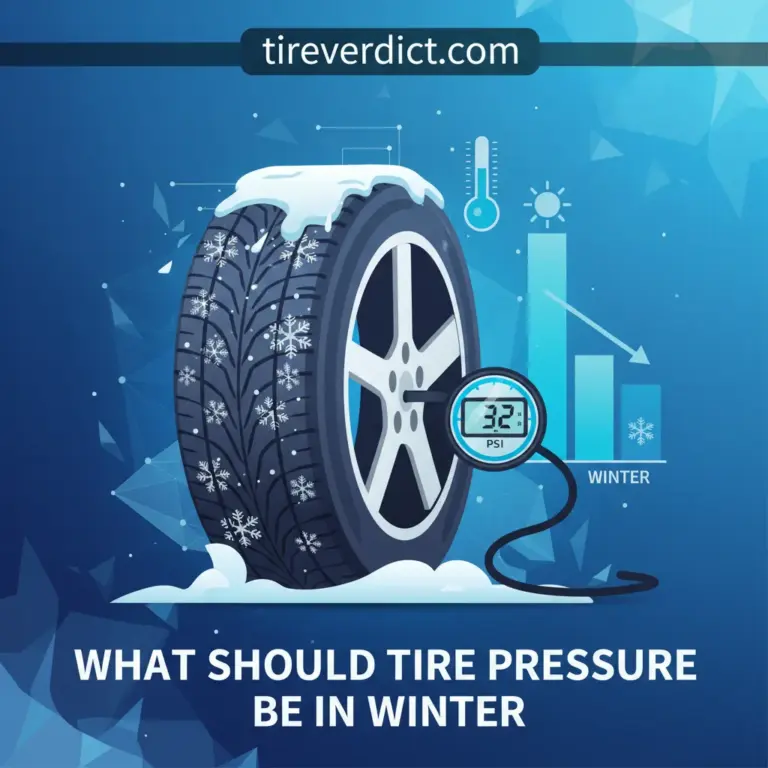
To monitor tread degradation and sudden pressure loss as cold weather approaches, keep a reliable 🛒 Digital Tire Pressure Gauge → in your glovebox to stay informed on ambient pressure drops.
If your local winter mostly brings light rain and occasional frost, this multi-talented option remains the most practical purchase you can make.
Price & availability subject to change. As an Amazon Associate we earn from qualifying purchases.
- ✅ 35% to 40% shorter braking distances on black ice and packed snow
- ✅ Flexible silica compound stays soft in sub-freezing temperatures below 45°F
- ✅ Standard 3PMSF rating guarantees tested severe snow performance
- ✅ Deep tread grooves and high siping density channel slush efficiently
- ✅ Superior cornering grip prevents lateral sliding during sudden evasive turns
- ❌ Accelerated treadwear when driven in temperatures above 45°F
- ❌ Requires bi-annual tire swapping fees and off-season storage space
- ❌ Reduced steering feel and longer stopping distance on dry warm roads
- ❌ Higher annual total ownership expense due to maintenance labor
- ✅ Year-round driving convenience without bi-annual mounting and balancing
- ✅ Long tread life supported by warranties up to 75,000 miles
- ✅ Quieter cabin ride quality with minimized pavement noise
- ✅ Lower rolling resistance provides better fuel economy during warm weather
- ✅ Saves $150 to $300 every year in seasonal swap labor costs
- ❌ Tread rubber hardens and loses traction in ambient temps under 40°F
- ❌ Braking distances on ice can double compared to winter-specific rubber
- ❌ Prone to slipping in deep snow accumulations exceeding 3 inches
- ❌ Lacks specialized siping density required for micro-biting cold grip
Snow Tire or All Season: Which Should You Choose?
Deciding between these options requires a realistic look at your winter climate and daily driving route. Do you encounter frequent snowpack, lake-effect storms, or black ice on your morning commute? If you live in northern belt states or mountain corridors where temperatures consistently linger below freezing, the Snow Tire is an indispensable piece of safety gear. The ability to stop up to 37 feet shorter on icy roads easily justifies the hassle of biannual tire swaps. Pairing your vehicle with a quality 🛒 Windshield Snow Cover → will further speed up those freezing morning routines.
On the other hand, if you reside in the Mid-Atlantic, Midwest, or Southern regions where snow falls only a few times per year and roads melt clear within hours, an All Season tire is the smarter pick. You save hundreds of dollars in mounting fees while enjoying sharp warm-weather handling and an impressive 65,000-mile treadlife.
Budget-conscious commuters living in moderate climates will appreciate the high 9.0 Overall Cost Value of year-round rubber. However, high-mileage highway drivers who must travel regardless of winter weather advisories should prioritize safety over convenience. If staying home during a blizzard isn’t an option for your job, run a set of dedicated winter tires from November to April.
Drivers facing severe freezing winters, frequent ice, or snow accumulations over 3 inches.
Drivers in temperate regions seeking single-set convenience, long treadlife, and lower costs.
Final Verdict: Snow Tire vs All Season
In our head-to-head comparison, this matchup ends in an official tie. The right winner depends entirely on your local thermometer. The All Season tire claims victory for the vast majority of drivers by offering year-round simplicity, superior warm handling, and an outstanding 65,000-mile treadlife. It provides incredible value and quiet cruising whenever road conditions remain moderate.
However, convenience cannot replace physical traction in sub-freezing weather. When temperatures drop below 45°F and roads glaze over with ice, the Snow Tire becomes essential safety equipment. Stopping up to 37 feet shorter on frozen surfaces easily outweighs higher long-term maintenance costs and seasonal swap hassles. Choose All Season rubber for hassle-free year-round value in temperate climates, but equip dedicated Snow Tire rubber if sub-zero commutes are a non-negotiable part of your winter.
As an Amazon Associate we earn from qualifying purchases.
Snow Tire vs All Season: Frequently Asked Questions
Is Snow Tire better than All Season?
Snow Tire models significantly outperform All Season options in cold weather below 45°F, stopping up to 37 feet shorter on ice. However, All Season tires excel in warm conditions, lasting over 65,000 miles and eliminating seasonal swap costs, making them better for mild climates without harsh freezing winters.
Do I need a Snow Tire set if I have All-Wheel Drive?
All-wheel drive assists vehicle acceleration in snow, but it does not aid braking or cornering. A dedicated Snow Tire reduces sub-zero stopping distances by up to 40 percent regardless of drive layout, whereas All Season tires lose rubber elasticity and traction whenever ambient temperatures drop below 45°F.
How long does a Snow Tire last versus an All Season tire?
Snow Tire tread typically lasts between 20,000 and 30,000 miles due to soft, cold-weather rubber compounds. Conversely, All Season tires use harder rubber polymers and routinely offer 50,000 to 75,000-mile treadwear warranties, providing double the functional lifespan under traditional multi-season highway driving.
At what temperature should I switch from All Season to Snow Tire?
The recognized industry threshold is 45°F (7°C). When average daily temperatures fall below 45°F, All Season tire rubber hardens and loses surface grip. Dedicated Snow Tire compounds stay pliable down to -30°F, ensuring optimal braking traction and cornering control throughout harsh winter seasons.
Can you safely drive a Snow Tire all year round?
Running a Snow Tire during warm summer months is not advised. At temperatures above 45°F, soft winter rubber wears down up to 50 percent faster, degrades emergency dry handling, increases wet stopping distances, and reduces fuel economy by 2 to 4 percent due to higher rolling resistance.