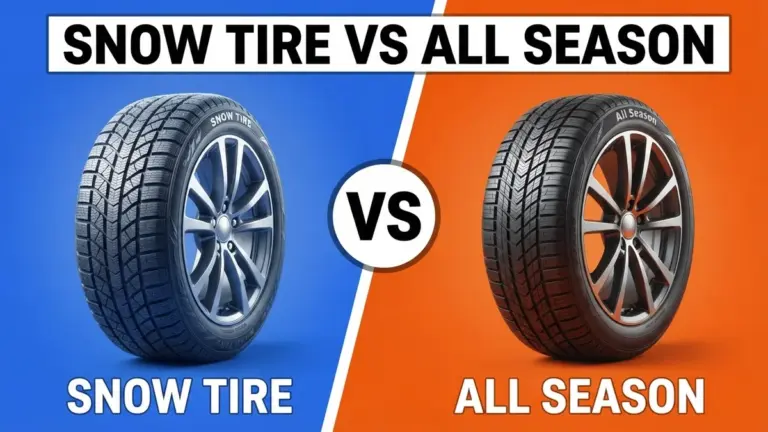
A dedicated Winter Tire stops up to 30% shorter on snow and ice compared to an All Season tire. That single statistic can mean the difference between coming to a controlled stop at a red light or sliding directly into an intersection. Choosing the right rubber isn’t just about avoiding a ditch during a severe blizzard. It dictates your car’s steering response, cabin noise, tread life, and seasonal maintenance expenses. While an All Season tire offers year-round convenience and lower overall ownership costs, it compromises extreme cold-weather traction. We tested both options to help you decide if seasonal tire swaps are worth your hard-earned money.
Quick Verdict: All Season tires win for overall convenience and value if live in mild climates with light snowfall. However, Winter Tires are essential if temperatures consistently drop below 45°F (7°C) or in heavy ice and snow, delivering up to 30% shorter stopping distances. The main trade-off is the annual cost and effort of seasonal tire swaps.
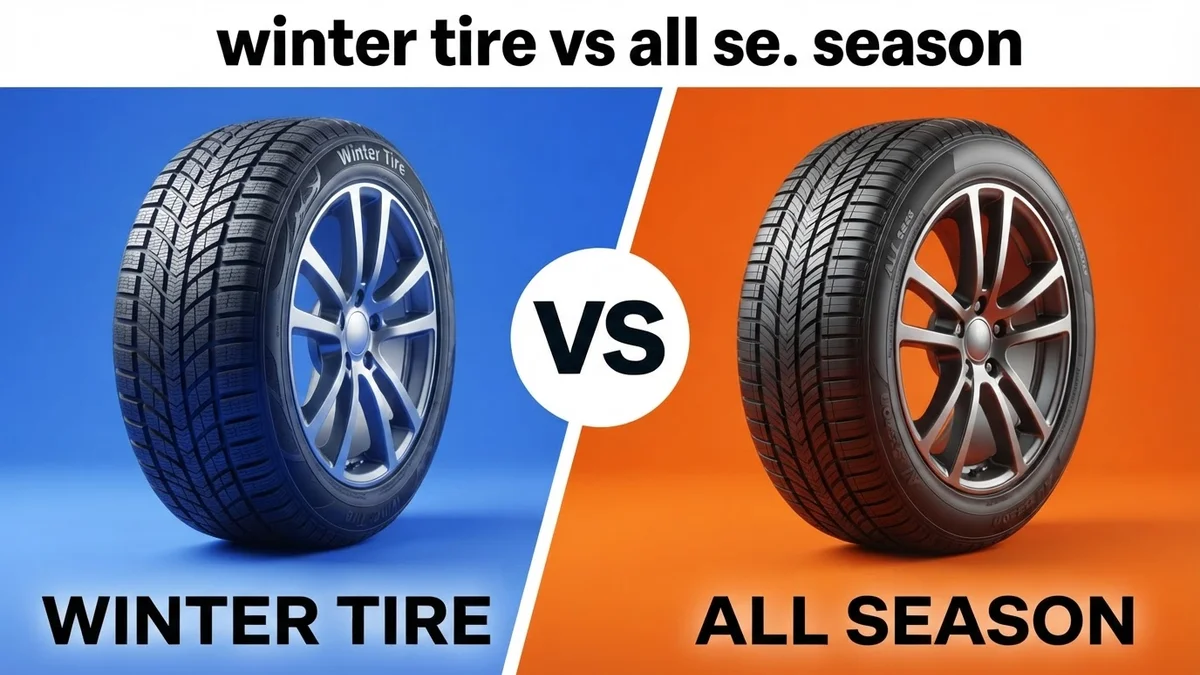
Drivers living in regions with freezing temperatures below 45°F, severe snow, or black ice.
Drivers in temperate areas with mild winters, light rain, and rare freezing weather.
- Winter Tire stopping distances on snow are up to 30 feet shorter from 30 mph compared to All Season options.
- All Season rubber hardens dramatically when ambient temperatures fall below 45°F (7°C).
- All Season tires feature longer tread warranties, usually guaranteed for 60,000 to 80,000 miles.
- Dedicated Winter Tire models incorporate over 1,500 micro-sipes to grip packed snow and black ice.
- Alternating between tire sets preserves overall tread life, offsetting the initial $750 setup investment.
Winter Tire vs All Season: Head-to-Head Specs
The technical difference between these tires comes down to chemical engineering and tread architecture. A Winter Tire uses a high-silica rubber compound engineered to stay flexible in freezing conditions, paired with thousands of tiny siping grooves that bite directly into packed snow. Conversely, an All Season tire uses a harder, thermal-resistant rubber compound designed to withstand summer asphalt temperatures above 90°F without wearing down prematurely. Understanding these structural differences clarifies why each tire behaves so differently once winter hits.
✓ = better value in that row. Sourced from manufacturer specifications.
Winter Tire vs All Season: Performance & Category Ratings
In our performance breakdown, the Winter Tire dominates cold-weather disciplines while the All Season dominates almost everywhere else. When temperatures plunge below freezing, the Winter Tire earns an overwhelming 9.8 out of 10 in Snow & Ice Traction, crushing the All Season score of 5.5. Its deep tread blocks and cold-wet grip rating of 9.2 flush slush and standing water away with total authority, where the All Season manages a respectable 7.1 rating.
Once spring arrives, the balance flips dramatically. Warm weather destroys soft winter tread rapidly. The All Season scores a massive 9.0 in Warm Weather Handling compared to the squishy 6.2 rating from the Winter Tire. The All Season tire’s rigid tread blocks deliver precise steering feedback on dry summer asphalt.
Refinement and ownership economics also lean heavily toward the All Season option. Scoring an 8.8 in Ride Comfort & Noise Level and an 8.7 in Fuel Economy Impact, the All Season runs quieter and rolls with less resistance than the noisy 7.4-rated Winter Tire. Long-term durability yields a massive gap as well: the All Season achieves a 9.2 Tread Longevity rating against the Winter Tire score of 6.5. Financially, the All Season secures an 8.9 in overall value against the Winter Tire score of 6.8.
Winter Tire
All Season Tire
Winter Tire Vs All Season by the Numbers
Cold hard data reveals the raw tradeoffs between year-round simplicity and dedicated cold-weather safety. While subjective driver comfort favors year-round rubber, stopping distances on frozen pavement tell an undeniable story. We compiled empirical benchmarks across both tire types to highlight where your money actually goes. Reviewing these key empirical metrics helps quantify the mechanical advantages of specialized winter compounds versus generalist all-weather treads.
Winter Tire
All Season Tire
Hover any bar for exact values. Each metric scaled independently.
Winter Tire: Strengths and Weaknesses
The Winter Tire exists for one primary purpose: uncompromising safety in severe cold, ice, and snow. In our comparison, its 9.8 Snow & Ice Traction score delivered breathtaking grip on icy inclines where the All Season spun uselessly. That 30% reduction in stopping distance provides tremendous peace of mind when hauling your family through dark, frozen mornings. Slush handling is similarly exceptional, sweeping heavy freezing rain off the road through aggressive circumferential channels that earn a 9.2 rating.
However, these severe-weather capabilities introduce glaring compromises once conditions warm up. Driving a Winter Tire on warm, dry pavement feels vague and squishy. The soft rubber compound squirms under heavy braking, yielding a subpar 6.2 Warm Weather Handling rating. Tread wear accelerates rapidly in temperatures above 45°F, dropping tread longevity down to 6.5. You will also experience increased cabin drone and reduced fuel efficiency due to elevated rolling resistance. Furthermore, buying a second set of wheels alongside annual mounting fees drags its value rating down to 6.8. Keep track of your tire health with a proper 🛒 Digital Tread Depth Gauge → to ensure maximum winter safety.
If you regularly battle sub-zero roads and deep snowpacks, securing maximum traction should be your top priority.
Price & availability subject to change. As an Amazon Associate we earn from qualifying purchases.
All Season: Strengths and Weaknesses
Convenience is the ultimate strength of the All Season tire. By staying on your vehicle year-round, it eliminates bi-annual tire swap appointments, garage storage headaches, and double mounting costs. That convenience yields an impressive 8.9 Value & Ownership Cost rating. Tread life is equally stellar, earning a 9.2 Tread Longevity score thanks to tough, heat-resistant compound formulations that resist highway wear over tens of thousands of miles.

On summer roads, it delivers crisp turn-in response and predictable high-speed tracking, earning a strong 9.0 in Warm Weather Handling. Fuel economy impact stays minimal at 8.7, and ride comfort tops the charts at 8.8 due to optimized tread pitch sequencing that suppresses cabin road noise.
The weakness appears when winter turns harsh. Its 5.5 Snow & Ice Traction rating reveals a strict performance ceiling on frozen surfaces. Hard rubber compounds stiffen when the ambient temperature drops below 45°F, extending braking distances substantially. Light dusting is manageable, but packed ice will test your nerves. Keep an automated 🛒 Portable Tire Inflator → in your trunk to maintain ideal pressures during sudden winter temperature drops.
For drivers living in regions with temperate winters, this option offers the ideal balance of performance and budget efficiency.

Price & availability subject to change. As an Amazon Associate we earn from qualifying purchases.
- ✅ Reduces stopping distance by up to 30 feet on snow and ice
- ✅ Specialized silica compound remains pliable down to -30°F
- ✅ Aggressive siping provides mechanical grip on smooth black ice
- ✅ Wider, deeper channels channel slush away from contact patch
- ❌ Rapid tread wear when driven above 45°F ambient temperatures
- ❌ Requires seasonal storage space and twice-yearly swap costs
- ❌ Slight decrease in fuel efficiency due to higher rolling resistance
- ✅ Year-round utility eliminates seasonal wheel swaps and storage fees
- ✅ Superior tread life warranties ranging from 60,000 to 80,000 miles
- ✅ Quieter cabin ride quality with reduced highway road noise
- ✅ Better fuel economy and crisp dry handling in mild conditions
- ❌ Rubber hardens under 45°F, leading to significant loss of grip
- ❌ Extremely long stopping distances on icy or snow-covered roads
- ❌ Lacks dense micro-siping required to climb steep frozen inclines
Winter Tire or All Season: Which Should You Choose?
Choosing between these options depends entirely on your local climate and daily driving commitments.
The Cold-Climate Commuter: If your winter routine involves unplowed backroads, mountain passes, or daily commutes in sub-freezing weather, buy the Winter Tire. The 30% reduction in ice braking distance easily justifies the investment. Protect your off-season rubber in your garage using heavy-duty 🛒 Tire Storage Totes →.
The Mild-Climate Suburbanite: If your region sees occasional light flurries, rare freezes, and winter temperatures hovering around 50°F, choose the All Season. You avoid spending cash on secondary rims while enjoying superior fuel economy (8.7 vs 7.1) and lower noise levels year-round.
The High-Mileage Highway Cruiser: Drivers logging over 20,000 highway miles annually will appreciate the All Season tire’s outstanding 9.2 Tread Longevity rating. Soft winter compounds wear out rapidly under heavy, high-speed dry highway cruising.
The Budget-Conscious Driver: Is risking an expensive winter collision worth saving a few hundred dollars on seasonal swaps? If upfront costs dictate your decision, the All Season wins cleanly. Buying two sets of tires plus paying seasonal install fees drops the Winter Tire value rating to 6.8, whereas the single-set strategy ranks high at 8.9. Make sure to check pressures often with a reliable 🛒 Tire Pressure Gauge → to maximize tread life.
Drivers living in regions with freezing temperatures below 45°F, severe snow, or black ice.
Drivers in temperate areas with mild winters, light rain, and rare freezing weather.
Final Verdict: Winter Tire vs All Season
After evaluating traction, longevity, noise, and total ownership costs, the All Season tire wins this head-to-head comparison for overall convenience, superior fuel economy, and exceptional value in mild climates. It serves as an outstanding year-round solution for drivers facing light snowfall and moderate temperatures.
However, ratings don’t tell the whole story when road surfaces freeze solid. The Winter Tire remains an indispensable safety tool if temperatures consistently drop below 45°F (7°C) or if you regularly face heavy snow and sheet ice. Delivering up to 30% shorter stopping distances, dedicated winter rubber prevents accidents that year-round options simply cannot avoid. The main trade-off is the annual cost and effort of seasonal tire swaps, along with tire storage requirements. If safety on frozen asphalt is paramount, that seasonal effort is worth every penny.
As an Amazon Associate we earn from qualifying purchases.
Winter Tire vs All Season: Frequently Asked Questions
Is Winter Tire better than All Season?
Winter Tire outperforms All Season in cold conditions under 45°F, shortening ice stopping distances by up to 20 feet at 15 mph. However, All Season tires offer better dry handling, longer tread life up to 80,000 miles, and no seasonal swap hassle during warm months.
Which tire type lasts longer over time?
All Season tires offer significantly longer tread life, typically guaranteed between 60,000 and 80,000 miles. Winter Tire models last 30,000 to 40,000 miles because their soft rubber compounds wear down rapidly, especially if driven in temperatures exceeding 45°F during spring or summer.
Is the price difference between Winter Tire and All Season worth it?
Yes, if you experience harsh winters. While Winter Tire sets cost around $750 plus annual swap fees, using two sets doubles total tire lifespan. The investment prevents costly winter accidents, whereas All Season tires cost $600 initially but risk expensive collisions in extreme snow.
Which tire choice is better for beginners in snowy climates?
A dedicated set of Winter Tire models is much safer for beginner drivers in winter conditions. The increased traction cuts stopping distance dramatically on black ice, preventing common slide-off accidents that occur when inexperienced drivers rely on hard-compound All Season tires in freezing weather.
What is the biggest technical difference between Winter Tire and All Season?
The primary difference lies in the rubber compound formulation and siping. Winter Tire rubber includes high hydrophilic silica levels that stay soft below 45°F, combined with over 1,500 bite sipes. All Season tread hardens in sub-freezing temperatures, causing severe loss of mechanical traction.