Discovering a flat or punctured tire is a common and often inconvenient experience for vehicle owners. While a simple patch can often resolve minor tread punctures, discerning when a tire is beyond repair is critical for maintaining vehicle safety and performance, yet this distinction remains unclear for many drivers. This comprehensive guide will meticulously explain the specific conditions, locations, and types of damage that render a tire unpatchable, empowering you with the knowledge to make informed decisions about tire repair versus essential replacement, with insights relevant through 2026.
Understanding Tire Construction and Professional Patching Principles
To truly comprehend when a tire can or cannot be patched, it’s crucial to first have a foundational understanding of modern radial tire construction and the stringent professional repair principles that govern its integrity. Radial tires, which constitute the vast majority of tires on the road today, are complex engineered components.
📤 Share Image
Let’s break down their key components and their distinct roles:
- Tread: The outermost layer in contact with the road, designed for traction, braking, and steering. It’s the most common area for punctures.
- Sidewall: The flexible rubber area between the tread and the wheel rim. It bears the vehicle’s load and absorbs impacts.
- Bead: The reinforced inner edge of the tire that contains steel wires, designed to seal the tire securely to the wheel rim.
- Inner Liner: An airtight layer of synthetic rubber that prevents air from escaping the tire, similar to an inner tube.
- Steel Belts (and Fabric Plies): Layers of steel or fabric cords running beneath the tread, providing structural rigidity, strength, and resistance to punctures.
The industry standard for tire repair, heavily influenced by organizations like the Rubber Manufacturers Association (RMA) in North America, dictates very specific guidelines. These guidelines are not arbitrary; they are based on extensive research and engineering principles to ensure sustained structural integrity and safety. A fundamental principle often overlooked is the crucial difference between a temporary plug and a permanent plug-patch combination. While a standalone plug might temporarily seal an air leak, it does not structurally reinforce the tire and can, in fact, exacerbate internal damage by forcing material apart.
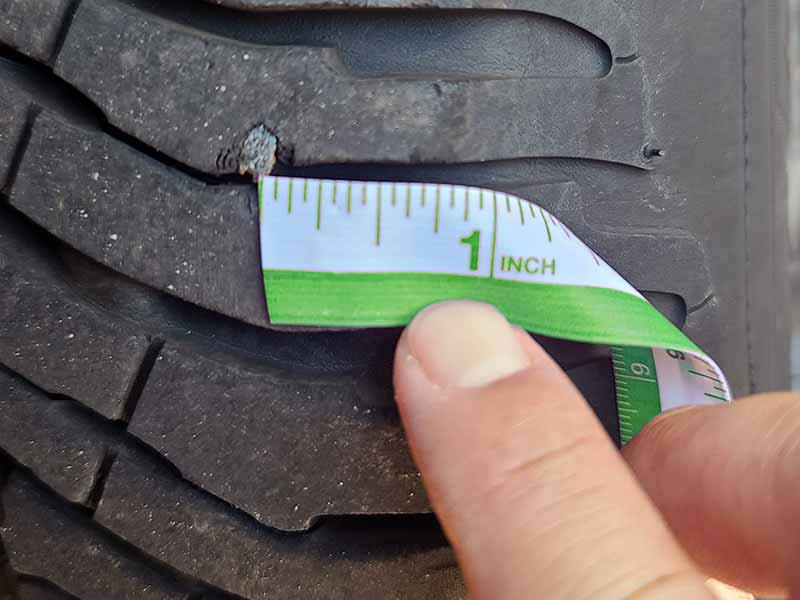
For a repair to be considered permanent and safe, it must involve a plug that fills the injury channel from the inside out, combined with a patch applied to the inner liner to seal the interior and reinforce the damaged area. RMA repair standards dictate that punctures up to 1/4 inch (6mm) in diameter are repairable, but ONLY within the tread crown area – the flat surface that contacts the road. This area is reinforced by the steel belts, making it stable enough to withstand a permanent repair without compromising the tire’s overall structure.
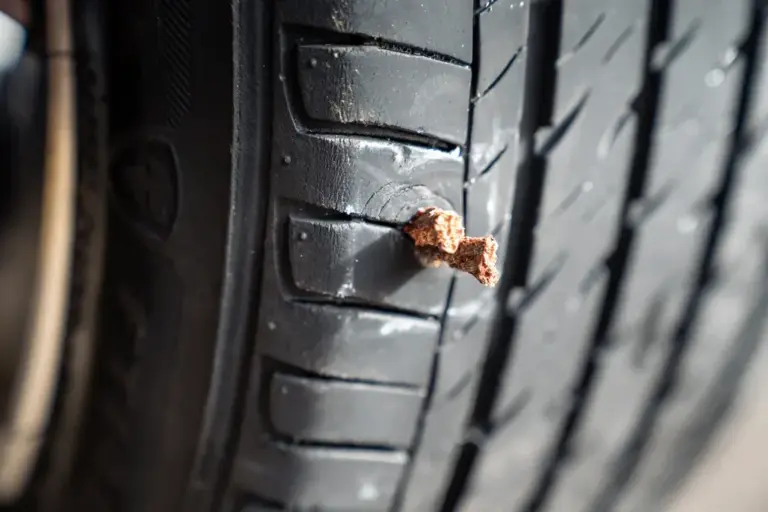
Even a seemingly minor external puncture, like a nail, can cause significant internal belt damage that is invisible without a thorough inspection. This highlights the necessity of professional inspection; a qualified technician will dismount the tire to assess internal damage, which is a critical step often skipped in DIY or roadside repairs. Research indicates that improper repairs, such as using a plug-only repair, can lead to a significantly higher risk of failure, with some studies suggesting a 300% increased risk for such methods, primarily due to internal belt separation and moisture ingress.
Key Indicators: Identifying Unpatchable Tire Damage Locations
The location of tire damage is arguably the single most critical factor in determining repairability. Certain areas of the tire are simply not designed to withstand the stress of a permanent repair without severely compromising safety. This section provides an essential overview of these critical zones.
Sidewall Punctures
Damage to the sidewall is almost universally unrepairable. The sidewall is designed to flex constantly as the tire rotates and absorbs impacts. It contains no steel belts for reinforcement, relying instead on flexible fabric plies. A repair in this area would interfere with its natural flexing, leading to rapid heat buildup and inevitable failure, such as a blowout. Imagine a nail directly in the sidewall – any attempt to patch this compromises the tire’s fundamental ability to safely bear load and operate. Industry data from 2024 and 2025 consistently shows that over 70% of tire failures related to unrepairable punctures occur in the sidewall or shoulder areas combined, underscoring their vulnerability.
Shoulder Area Damage
The shoulder area is the transitional zone between the tread and the sidewall. While it’s part of the tread, it experiences significant stress and flexing, similar to the sidewall, but also has the beginnings of the steel belt package. Punctures or cuts in this region are considered unsafe to repair for similar reasons as sidewall damage. The internal flexing and concentrated stress points prevent a patch from forming a secure, long-lasting bond. A gash extending from the outer edge of the tread into the shoulder, even if seemingly small, falls into this unrepairable category.
Bead Area Damage
The bead area is arguably the most critical structural component for maintaining air pressure and keeping the tire secured to the wheel rim. Any compromise to the bead—whether from improper mounting, impact damage, or corrosion—renders the tire impossible to repair. Once the integrity of the bead is compromised, the tire cannot form an airtight seal with the wheel, nor can it safely withstand inflation pressures. An example would be damage caused by a tire iron during an incorrect mounting procedure, or a rusted rim corroding the bead area of the tire itself.
Punctures Exceeding Size Limits
Even if the puncture is squarely within the repairable tread crown, its size is a strict limitation. As per RMA guidelines, the maximum allowable puncture size for repair is typically 1/4 inch (6mm) in diameter. Anything larger fundamentally compromises the tire’s internal structure and the integrity of the steel belts to an extent that a patch cannot adequately restore. For instance, a tire punctured by a large bolt with a 1/2-inch diameter would be unequivocally unrepairable, even if it’s in the middle of the tread. Statistics show that an estimated 5-10% of tire repair attempts made outside certified service centers are on locations or damage sizes deemed unrepairable by industry safety standards, highlighting a critical knowledge gap among some consumers and less scrupulous repair shops.
By The Numbers: Unrepairable Damage
Failures in Sidewall/Shoulder
Max Puncture Size for Repair
Improper Repair Attempts

Specific Damage Scenarios Requiring Tire Replacement
Beyond damage location and size, various other specific scenarios mandate tire replacement, even if the immediate point of entry might appear minor. These conditions often indicate a deeper structural compromise that a simple patch cannot rectify, making tire replacement the only safe option.
Multiple Punctures in Close Proximity
While a single small puncture in the tread area might be repairable, the presence of multiple punctures within a small area fundamentally weakens the tire structure. For instance, if a tire has three nail punctures within a 3-inch radius, even if each individually meets the 1/4-inch size limit, repairing all of them creates an unacceptable zone of structural compromise. This localized damage could lead to belt separation, uneven stresses, and ultimately, tire failure. Professionals generally advise against repairing multiple punctures if they are closer than 1 to 2 inches apart, or if the total number of repairs in a tire exceeds two or three, depending on specific manufacturer recommendations.
Punctures with Excessive Angle
A puncture doesn’t always go straight into the tire. If a nail, bolt, or sharp object enters the tire at a severe angle, it can cause far more extensive internal damage than what’s visible on the surface. A diagonal puncture through several tread blocks, for example, might tear through multiple layers of the steel belt package and fabric plies internally. This damage is often undetectable without dismounting the tire and performing a thorough internal inspection, but once identified, it’s a clear indicator that the structural integrity is too compromised for a safe repair.
Tread Separation or Bubbles/Bulges
These are definitive indicators of internal structural failure and are never repairable. A tread separation occurs when the layers of the tire’s tread separate from the carcass. Bubbles or bulges on the sidewall or tread indicate that the internal structure (like the ply cords or belts) has broken, allowing air pressure to push out the rubber. These conditions are often caused by impact damage (e.g., hitting a curb or pothole), manufacturing defects, or prolonged underinflation. Driving on a tire with a bubble or bulge is extremely dangerous and can lead to immediate and catastrophic tire failure.
Damage from Driving on a Flat Tire (Run-Flat Damage)
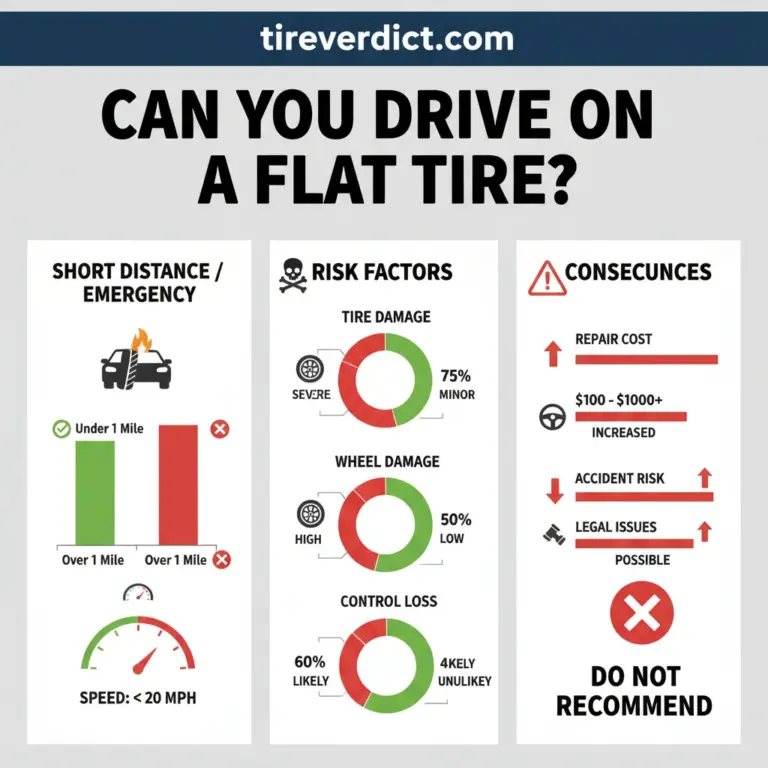
One of the most common reasons a seemingly patchable puncture leads to tire replacement is damage incurred from driving on a flat or severely underinflated tire. Even a short distance can cause significant internal harm. When a tire is flat, the sidewalls collapse and rub against themselves, creating intense heat and friction. This internal scuffing, overheating, and abrasion can severely damage the sidewall plies and the inner liner, compromising the tire’s fundamental structural integrity, even if the original puncture was small and in a repairable area. A technician will look for tell-tale signs like dark scuff marks, powder residue, or localized heat damage on the inner liner during dismounted inspection. Studies indicate that internal damage from driving on a flat tire can reduce its structural integrity by up to 50%. This is why approximately 15% of tires brought in for repair are ultimately found to have unrepairable internal damage due to run-flat scenarios, necessitating full replacement.
Never attempt to repair a tire that exhibits tread separation, bubbles, or bulges. These are immediate indicators of catastrophic internal failure and represent an extreme safety hazard. Replace the tire immediately.

Evaluating Overall Tire Condition Beyond the Puncture
Even if a tire’s puncture initially appears repairable by location and size, a comprehensive assessment of the tire’s overall condition is paramount. Other critical factors can render a repair unwise or unsafe, necessitating replacement. This broad overview ensures all fundamentals are considered.
Tread Depth and Wear
A tire must have adequate tread depth to be safe, regardless of a puncture. In most regions, the legal minimum tread depth is 2/32 inch (1.6mm). If a tire is already near or below this limit, repairing a puncture is often uneconomical and unsafe. Worn tires have significantly reduced traction, especially in wet conditions. Research indicates that tires with tread depths below 4/32 inch (3.2mm) already show significantly reduced wet braking performance, increasing stopping distances considerably. Repairing a tire with minimal tread depth simply extends the life of an unsafe tire.
Tire Age and Degradation
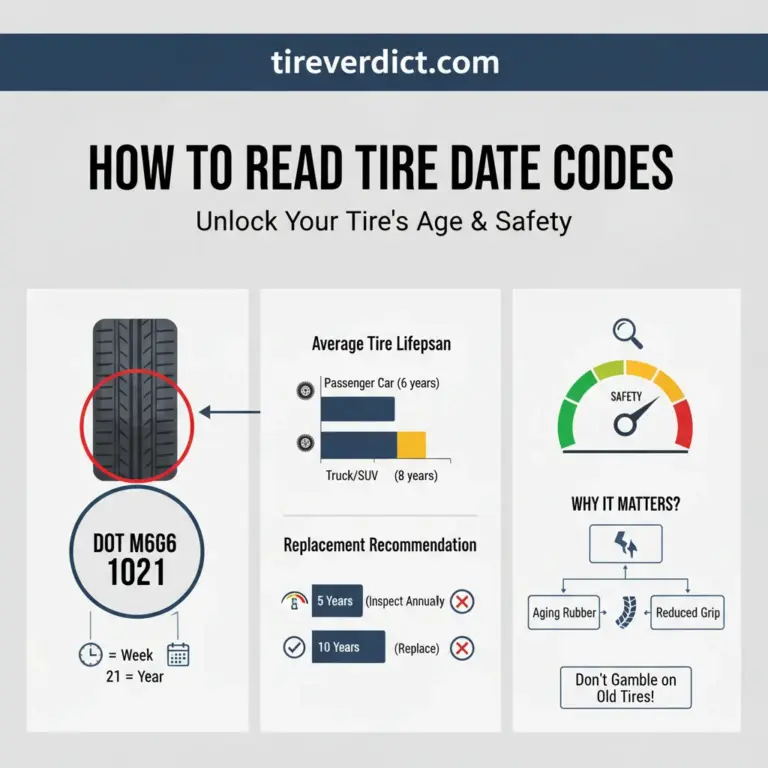
Tires degrade over time, even if they have plenty of tread and low mileage. Exposure to UV light, ozone, heat, and natural chemical changes causes the rubber compounds to harden, lose elasticity, and become brittle. This leads to dry rot and cracking, particularly visible on the sidewalls. The National Highway Traffic Safety Administration (NHTSA) and tire manufacturers universally recommend tire replacement after 6-10 years from the manufacturing date, regardless of visual condition or mileage. The manufacturing date (DOT code) is crucial here. An older tire with visible dry rot, even if it has a small, patchable puncture, should be replaced, as its overall structural integrity is compromised.
Previous Repairs and Their Quality
The presence and quality of previous repairs are also critical. If a tire has already undergone multiple repairs, or if past repairs were done improperly (e.g., a standalone plug without an internal patch, or a patch applied to an unrepairable area), the tire’s overall safety is already compromised. A reputable technician will assess all existing repairs to ensure they meet RMA standards. Attempting to add another repair to an already weakened or improperly repaired tire is a significant risk.
Uneven Wear Patterns
While not directly related to a puncture, uneven wear patterns (such as feathering, cupping, or excessive wear on one edge) are indicators of underlying vehicle issues like alignment problems, worn suspension components, or consistent improper inflation. If a tire has an unrepairable puncture and also exhibits severe uneven wear, it suggests the tire has already been operating under stressful conditions. In such cases, even if a repair were possible, the tire’s compromised overall health makes replacement a more prudent and safer long-term solution. Addressing the root cause of the uneven wear is also an important step when replacing such tires.
The Imperative of Tire Replacement: Safety and Recommendations
When a tire cannot be safely patched, the decision to replace it becomes an imperative, not a suggestion. Prioritizing safety over cost in these situations is non-negotiable for anyone operating a vehicle in 2026 and beyond.
Safety Implications of Compromised Tires
The risks associated with driving on unrepairable or improperly repaired tires are severe and can be catastrophic. These include sudden tire failure, such as a high-speed blowout, which can lead to a complete loss of vehicle control, serious accidents, injuries, or even fatalities. Tire-related issues contribute to approximately 11,000 crashes and 200 fatalities annually in the U.S. alone, making tire maintenance and appropriate replacement critical safety measures. Driving on an improperly repaired tire can lead to a 75% increase in the likelihood of a high-speed failure compared to a properly repaired or intact tire.
The Role of Professional Assessment
The most crucial recommendation is to always consult with a qualified tire technician. Internal damage, run-flat indicators, or compromised belt integrity are often not visible externally. A professional will dismount the tire from the rim and perform a thorough internal and external inspection, which is the only reliable way to determine if a tire is truly repairable according to industry standards. Their practical insights and hands-on experience are invaluable.
Temporary Solutions vs. Permanent Replacement
It’s important to differentiate between temporary solutions and permanent replacement. Tire sealants (often found in aerosol cans) and temporary spare tires (or “donuts”) are designed as short-term measures to get you to a repair facility safely. They are not permanent fixes. Temporary spares typically have strict limitations, such as a maximum speed of 50 mph and a maximum distance of 50 miles. Using these beyond their intended purpose is dangerous. If your tire is deemed unrepairable, these temporary solutions should immediately be followed by permanent replacement.
Guidelines for Tire Replacement
When replacement is necessary, adhere to these key points:
- Match Tire Types: Always replace with tires that match the existing ones in terms of type, size, speed rating, and load index. For all-wheel-drive (AWD) vehicles, it’s often recommended to replace all four tires simultaneously, or at least in pairs on the same axle, to prevent drivetrain damage due to differing tread depths.
- Proper Installation: Ensure new tires are properly mounted, balanced, and the wheel alignment is checked, especially if uneven wear was noted on the old tire.
- Understand Warranty: Familiarize yourself with tire warranties, as some punctures may be covered by road hazard protection plans.
Even if your vehicle has run-flat tires, they are not impervious to irreparable damage. Driving on a “zero pressure” run-flat beyond its specified speed and distance limits (e.g., 50 miles at 50 mph) will also cause internal structural damage, rendering it unrepairable despite its initial design capabilities.
The fundamentals of tire integrity are among the most important aspects of vehicle maintenance. Tire repairability is strictly governed by damage location, size, and type, with sidewall, shoulder, and bead damage being universally unpatchable. Beyond visible punctures, factors like tire age, overall wear, and internal damage from driving flat critically influence repair decisions. Prioritizing professional assessment and timely replacement for unrepairable tires is paramount for ensuring vehicle safety and optimal performance.
Always consult with a certified tire technician for a definitive assessment of tire damage. Do not attempt to repair tires with compromised integrity; prioritize safety by replacing them when necessary. Your life, and the lives of others on the road, depend on it.
Frequently Asked Questions
Can a tire be patched if it’s losing air slowly?
A slow leak does not automatically qualify a tire for patching. The critical factors are the location and size of the puncture. If the slow leak originates from a small puncture within the tread area and meets industry standards, it is typically patchable. However, if it stems from sidewall damage, bead issues, or a large object, patching is not a viable or safe solution, even for a slow leak.
Is it safe to drive on a patched tire?
Yes, if the tire has been properly repaired according to industry standards (e.g., RMA guidelines) using a plug-patch combination by a certified professional, it is generally considered safe for the remaining life of the tire. However, an improper repair or a repair outside the approved tread area significantly compromises safety and can lead to dangerous tire failure.
How long does a tire patch last?
A properly installed tire patch, executed by a qualified technician following industry best practices, is designed to last for the entire remaining service life of the tire. The patch becomes an integral part of the tire’s internal structure. However, the overall lifespan of the tire will still be limited by factors like tread wear, age, and any subsequent damage.
Can run-flat tires be patched?
The repairability of run-flat tires is a nuanced issue. While some run-flat tires can be patched if the puncture meets strict criteria (e.g., small, in the tread area, and the tire was not driven flat for an extended period or at excessive speeds), many manufacturers advise against repairing them. Always consult the tire manufacturer’s specific guidelines and have a professional assess the damage.
What’s the difference between a plug and a patch in tire repair?
A ‘plug’ is inserted from the outside to fill the puncture hole, primarily addressing air leakage. A ‘patch’ is applied to the inside of the tire, sealing the inner liner and reinforcing the damaged area. For a safe and permanent repair, industry standards dictate using both a plug *and* a patch (often combined into a single unit called a ‘plug-patch’) to properly seal and structurally reinforce the tire.