For many vehicle owners, the terms ‘tire balancing’ and ‘wheel alignment’ often get conflated, leading to confusion about their distinct purposes and critical roles in vehicle maintenance. Despite both being essential for optimal vehicle performance, handling, and safety, a significant misunderstanding persists regarding whether these two procedures are interchangeable or address the same underlying issues. This lack of clarity can result in delayed or incorrect service, impacting your vehicle’s longevity and your driving experience. This comprehensive guide will meticulously clarify the differences between tire balancing and wheel alignment, detailing their individual functions, diagnostic symptoms, and the crucial benefits of each. By the end, you’ll possess expert knowledge to ensure your vehicle receives the precise care it needs, safeguarding your investment and ensuring a reliable, smooth journey into 2026 and beyond.
Understanding Tire Balancing: Precision for Smooth Rides and Tire Longevity
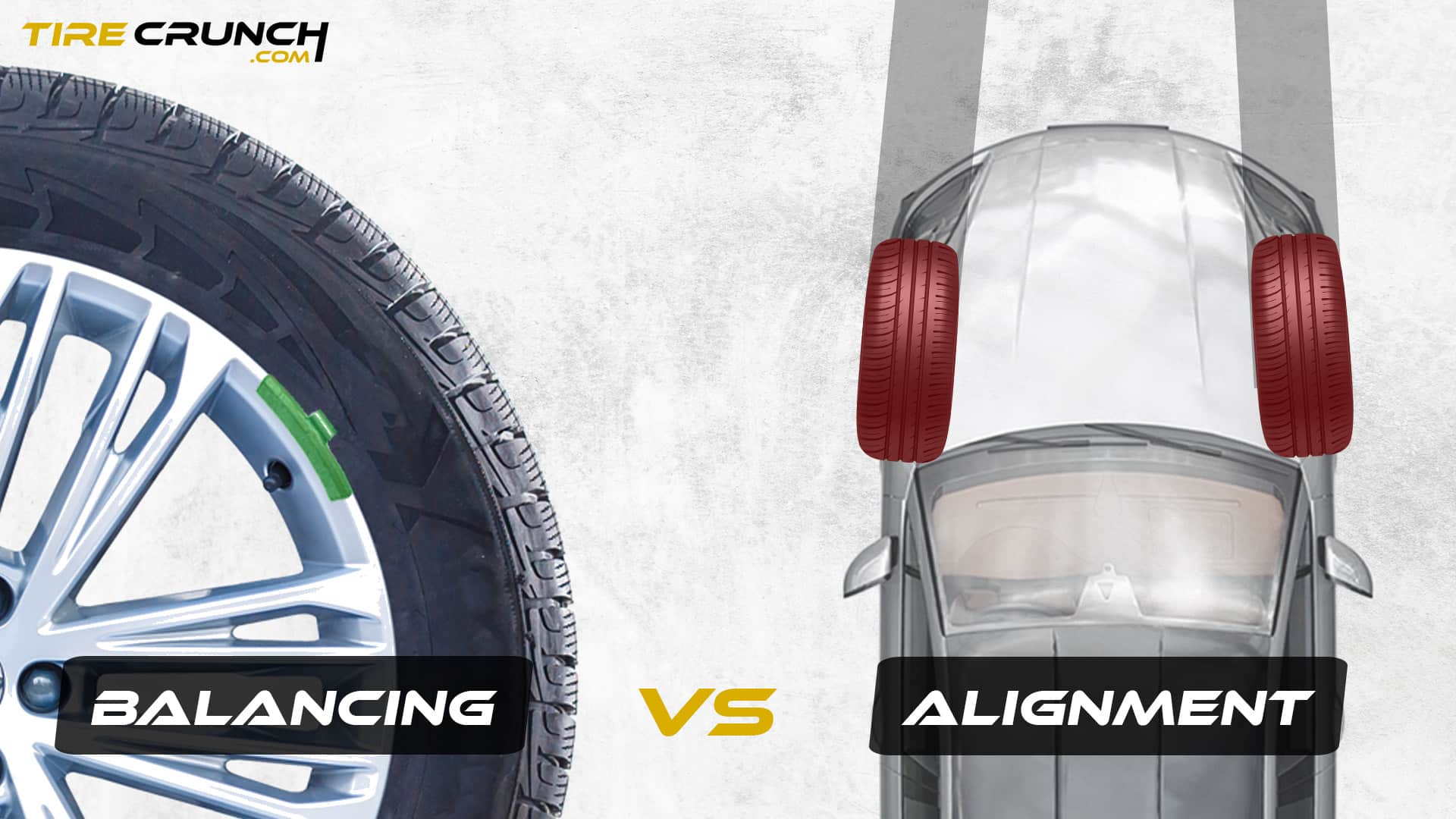
Tire balancing is a fundamental aspect of professional vehicle maintenance, focusing on the rotational dynamics of your wheels. It is the precise process of equalizing the weight distribution around the entire circumference of a tire and wheel assembly. Even the slightest imbalance can lead to significant issues, impacting both driving comfort and vehicle longevity.
Why is this so crucial? Consider that a tire spinning at highway speeds is subjected to immense centrifugal force. Research indicates that a weight discrepancy of just 1/4 ounce on a 27-inch diameter tire can create an imbalance equivalent to 5 pounds of force at 60 mph. This seemingly minor imperfection translates into a constant, pounding force on your vehicle’s suspension and steering components, directly affecting ride quality and component wear.
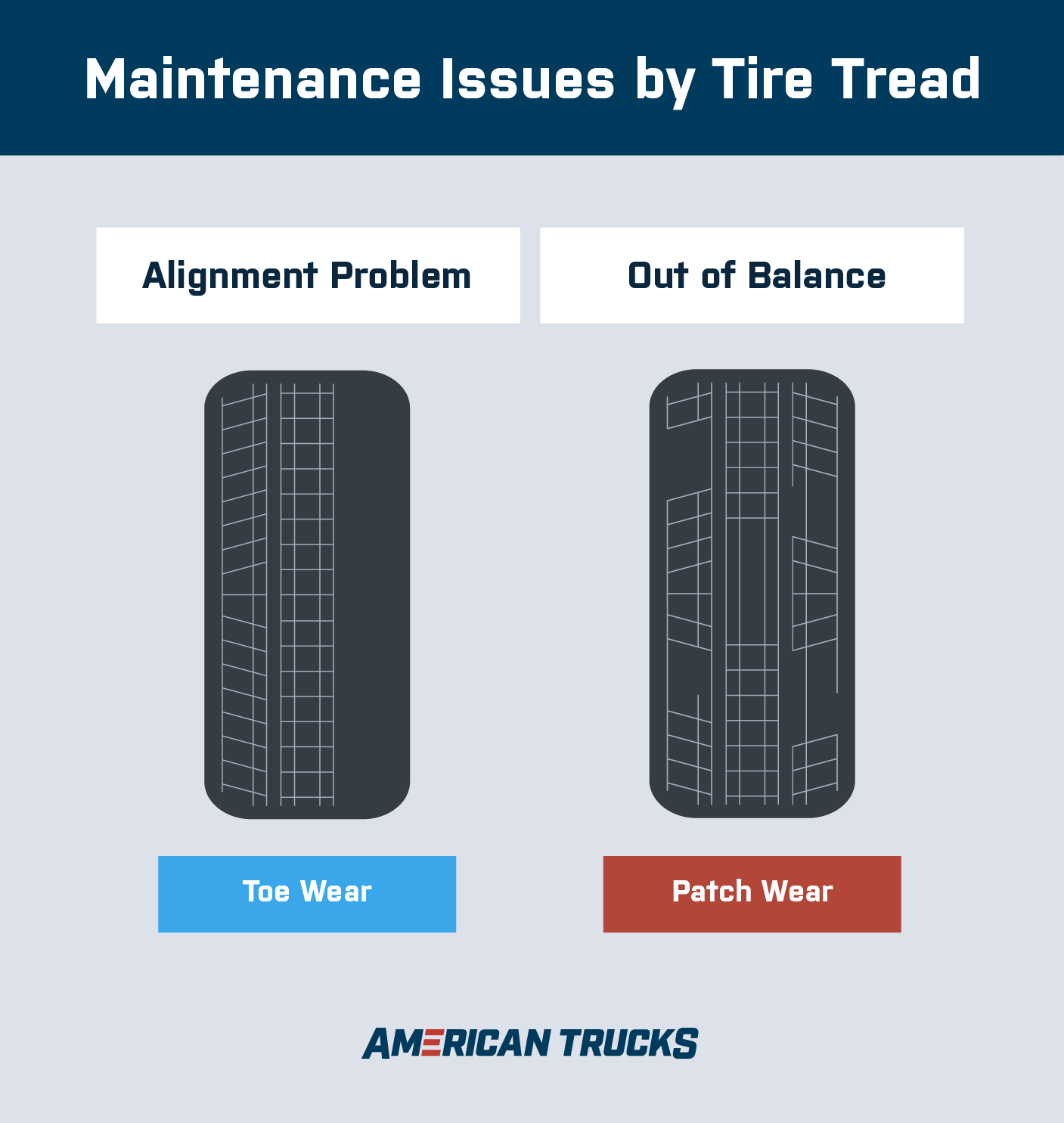
The primary symptoms of unbalanced tires are often unmistakable: a vibration felt primarily in the steering wheel, which intensifies with speed, or a vibration through the floorboard or seat. Left unaddressed, this vibration not only detracts from your driving comfort but also leads to premature, irregular tire wear, often appearing as cupping or scalloping patterns on the tire tread. Such wear compromises tire integrity and can necessitate early replacement.
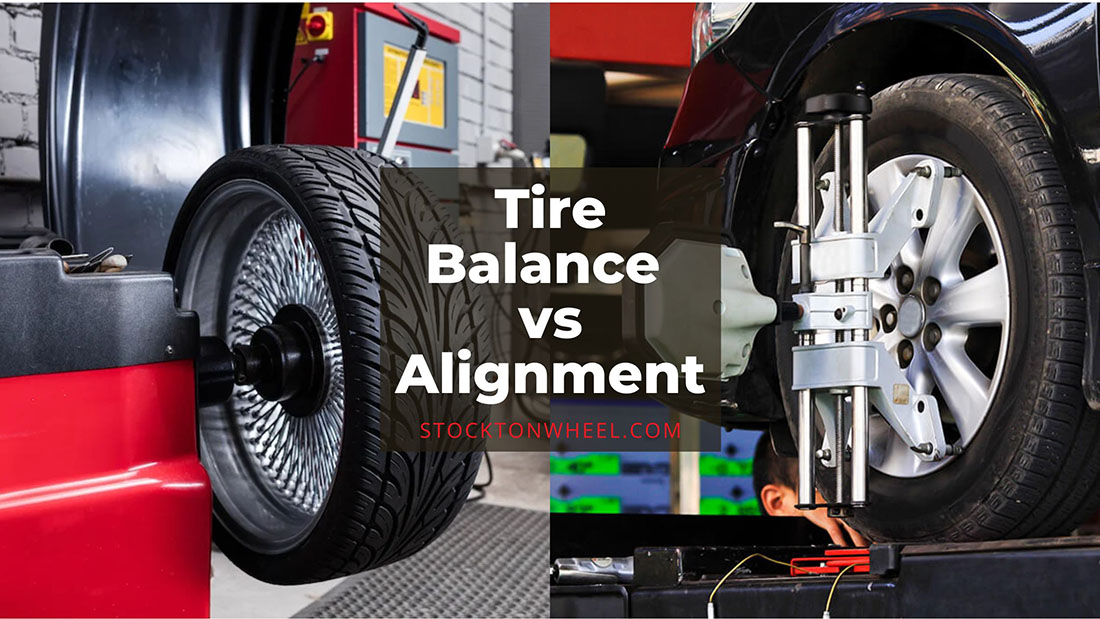
The balancing process is straightforward yet requires specialized, trusted equipment. A technician mounts the tire and wheel assembly onto a wheel balancer machine. This machine spins the wheel rapidly to detect any heavy spots. Once identified, small, corrective weights are applied to the rim’s opposite side to counteract the imbalance, achieving a perfectly balanced rotation. For instance, any new tire installation, even with modern manufacturing tolerances, requires balancing. Similarly, a tire repaired after a puncture typically needs re-balancing to account for changes in weight distribution or the addition of a patch.
The benefits of proper tire balancing are substantial: enhanced ride comfort, extended tire life, and reduced strain on expensive suspension components like shocks, struts, and bearings. It’s an investment in your vehicle’s quality and your driving experience, providing a reliable foundation for smooth operation.
Understanding Wheel Alignment: Optimizing Vehicle Dynamics and Steering Precision
In contrast to balancing, wheel alignment is a comprehensive service that focuses on the geometric orientation of your vehicle’s wheels relative to each other and the road. It is the adjustment of the vehicle’s suspension components to ensure the wheels are precisely oriented according to manufacturer specifications. This intricate process is critical for maintaining optimal vehicle control, handling, and tire longevity.
Expert technicians meticulously adjust three primary alignment angles:
- Camber: This refers to the inward or outward tilt of the wheel when viewed from the front of the vehicle. Incorrect camber can lead to uneven tire wear on one side of the tread.
- Caster: This is the forward or backward tilt of the steering axis when viewed from the side. Caster profoundly influences steering stability and the wheel’s ability to return to a straight-ahead position after turning. Insufficient caster can make the steering feel “loose,” for example.
- Toe: This is the most critical angle affecting tire wear and refers to how much the front of the tires points inward (toe-in) or outward (toe-out) relative to the vehicle’s driving direction. Incorrect toe settings are often responsible for rapid, feathered tire wear.
How does incorrect alignment impact your driving? Beyond accelerated and uneven tire wear patterns like feathering or cupping, misalignment can significantly compromise steering response and straight-line stability. For instance, a vehicle with incorrect camber or toe settings might consistently pull to one side, requiring constant steering correction from the driver. This not only causes driver fatigue but also reduces safety and control.
Several factors necessitate a wheel alignment check. Common culprits include hitting potholes, impacts with curbs, replacement of suspension components (e.g., tie rod ends, control arms), or simply the natural wear and tear that accrues over time. Any of these events can shift the precise angles of your suspension, requiring immediate professional attention.
The alignment process involves specialized, laser-guided equipment that measures these angles with extreme precision. Trained technicians then make delicate adjustments to various suspension components to bring the vehicle’s wheel geometry back within the manufacturer’s specified range. This ensures a professional, reliable setup. Indeed, proper wheel alignment can improve fuel efficiency by up to 10% by reducing rolling resistance, and extend tire life by thousands of miles, making it a reliable investment for vehicle owners looking for quality performance.
Key Distinctions: Balancing vs. Alignment – Addressing Different Aspects of Performance
It’s imperative to understand that while both tire balancing and wheel alignment are vital for your vehicle’s performance and safety, they address fundamentally different issues. They are not interchangeable procedures, nor does one inherently “fix” the other.
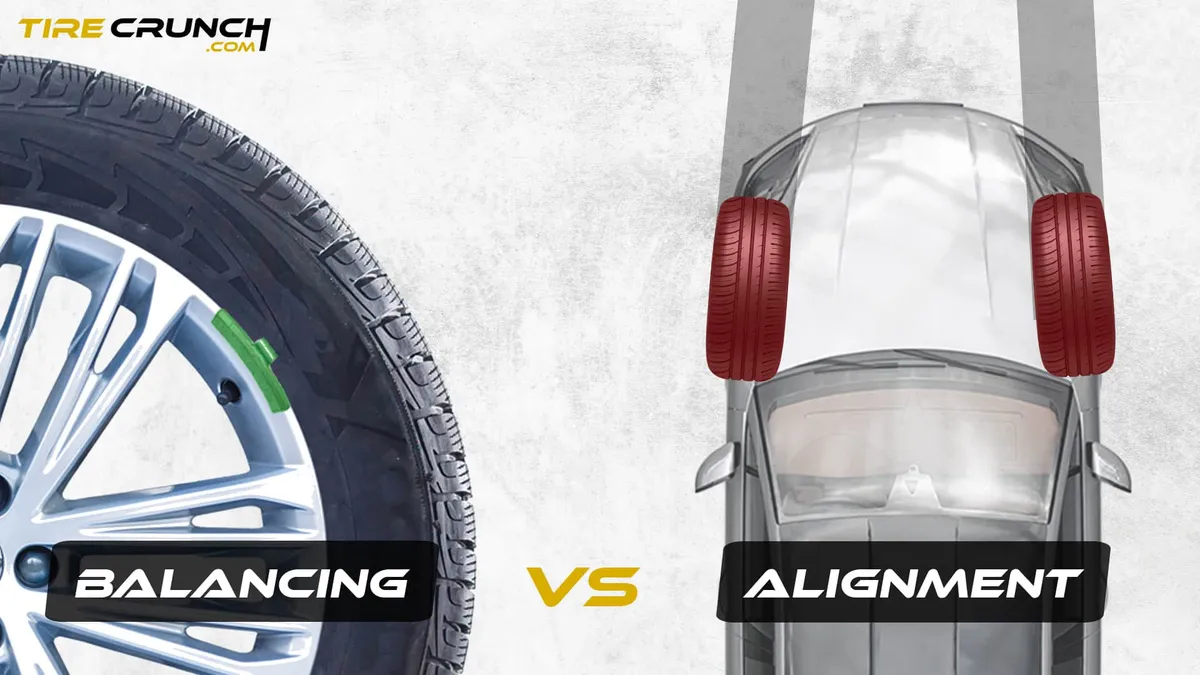
The core distinction lies in their focus: tire balancing addresses issues within the wheel and tire assembly itself, primarily concerning its rotational dynamics and uniform weight distribution. Conversely, wheel alignment addresses the geometric angles of the entire wheel/suspension system relative to the vehicle chassis and the road surface. In simpler terms, balancing corrects weight distribution, whereas alignment corrects angle positioning.
Consider the symptoms each procedure targets. If a customer complains of a vibration at highway speeds, particularly felt in the steering wheel or floorboard, this is a classic indicator of an unbalanced tire. The solution is balancing. However, if the concern is a car pulling to one side, a crooked steering wheel when driving straight, or specific irregular tire wear patterns like feathering, these point directly to an alignment issue.
This critical difference means that one cannot compensate for the other. A perfectly balanced tire mounted on a misaligned suspension will still experience uneven wear and compromise handling. Conversely, perfectly aligned wheels with unbalanced tires will still cause irritating vibrations and premature component wear. To expect alignment to fix a vibration, or balancing to stop a vehicle from pulling, is a common but incorrect assumption. Experts emphasize that both services are distinct, each playing a unique, irreplaceable role.
Therefore, stressing the importance of performing both services as part of a comprehensive tire and suspension maintenance regimen is paramount for optimal performance, safety, and longevity. Industry standards recommend tire balancing with every new tire installation or repair, given the manufacturing tolerances and the impact of road debris. Wheel alignment, however, is generally recommended every 1-2 years or after specific impactful events like suspension repairs, ensuring a trusted setup.
Symptoms and Solutions: When to Balance, When to Align Your Vehicle
Diagnosing vehicle issues can be tricky, but understanding the root causes and their tell-tale signs helps determine the correct professional solution. Here’s how to discern whether your vehicle needs tire balancing, wheel alignment, or potentially both.
What Causes Issues Requiring Balancing?
- Out-of-Spec Manufacturing: Even new tires or wheels can have slight weight variances.
- Uneven Tire Wear Over Time: As tires wear down, their weight distribution can subtly change.
- Loss of Balancing Weights: Weights can fall off due to impacts or improper installation.
- Tire Repairs: Patches or plugs can alter the internal weight of a tire.
- Accumulation of Debris: Mud, snow, or even hardened brake dust can stick to the inner rim, causing imbalance.
What Causes Issues Requiring Alignment?
- Impacts: Hitting potholes, curbs, or other road hazards can jar suspension components out of their precise angles.
- Worn or Damaged Suspension Components: Components like ball joints, tie rods, control arm bushings, or shock absorbers wear out or bend, altering wheel angles.
- Vehicle Modifications: Lifting or lowering a vehicle, or installing aftermarket suspension parts, often necessitates realignment.
- Normal Wear and Tear: Over time, components naturally settle and wear, gradually shifting alignment angles.
How to Diagnose: A Detailed Checklist
- Vibrations (Balancing): If you feel a vibration primarily in the steering wheel at certain speeds (e.g., 50-70 mph), it’s highly indicative of an imbalance in the front wheels. If the vibration is felt through the floorboard, seat, or entire vehicle, it often points to an imbalance in the rear wheels.
- Steering & Handling Issues (Alignment):
- Vehicle Pulling: The car consistently drifts to the left or right, requiring you to constantly steer to keep it straight.
- Uneven Tire Wear: Inspect your tires for abnormal patterns. For example, ‘cupping’ or ‘feathering’ (a saw-tooth edge on the tread blocks) are classic signs of alignment issues, often incorrect toe or camber.
- Crooked Steering Wheel: When driving straight on a level road, your steering wheel is not centered.
- Poor Handling: The vehicle feels loose, wanders, or doesn’t respond precisely to steering inputs.
How to Fix/Do: Professional Solutions
For both services, it’s crucial to consult a professional technician for precise diagnosis and execution. While you might identify the symptoms, the sophisticated equipment and specialized training required for accurate balancing and alignment make DIY attempts impractical and potentially detrimental to achieving quality results. Reputable service centers utilize state-of-the-art machinery to ensure trusted, expert care.
It’s common for both services to be required concurrently, especially after new tire installation or significant suspension work. When new tires are mounted, balancing is mandatory. If old tires showed signs of uneven wear, an alignment check is prudent to prevent similar issues with the new set. This proactive approach ensures a comprehensive and reliable solution.
By The Numbers
Vehicles with improper alignment
Imbalance causing 5 lbs force at 60 mph
These figures underscore the prevalence of alignment issues and the significant impact even minor imbalances have. Approximately 70% of vehicles on the road may be operating with improper alignment, directly contributing to compromised safety and increased operating costs.
Synergistic Maintenance: The Interplay for Optimal Performance and Safety
While tire balancing and wheel alignment are distinct services, their combined effect is greater than the sum of their parts. A vehicle with correctly balanced tires and properly aligned wheels achieves a profound synergy, leading to peak performance, superior handling, and optimal fuel efficiency. This holistic approach to tire care is the hallmark of professional vehicle maintenance.
Regular adherence to both maintenance schedules contributes significantly to the overall reliability and safety of your vehicle. Imagine a scenario where a vehicle, after receiving a professional balancing service, enjoys a wonderfully smooth, vibration-free ride. However, if its alignment is neglected, that smooth ride might still be plagued by a persistent steering drift, undermining the benefits of the balancing. This illustrates the critical need for both services.
The benefits of integrated service are extensive:
- Reduced Driver Fatigue: A vehicle that tracks straight and vibrates minimally makes for a much less tiring journey.
- Enhanced Directional Stability: The car maintains its intended path with minimal input, improving safety and control.
- Maximum Tire Lifespan: Even wear across all tires, preventing premature replacement and maximizing your investment.
- Protection of Suspension and Steering Components: Reduced stress and vibrations translate to longer life for costly parts.
We recommend a comprehensive approach to tire care, which includes regular tire rotations, pressure checks, balancing, and alignment checks as part of routine vehicle service. Ignoring one aspect inevitably undermines the benefits of addressing the other, leading to suboptimal vehicle health, compromised safety, and increased costs in the long run. The average cost of new tires for a passenger vehicle can range from $100-$300 per tire, making proactive maintenance like balancing and alignment a highly cost-effective strategy to protect this substantial investment.
For optimal quality and reliable performance, always have both your tire balancing and wheel alignment checked by a certified professional, especially after any major tire service, suspension repair, or significant road impact. This ensures your vehicle’s steering and handling remain in peak condition.
Consequences of Neglect: Why Proper Tire Balancing and Alignment are Crucial
Ignoring the routine maintenance of tire balancing and wheel alignment can lead to a cascade of negative effects that impact not only your wallet but also the safety and overall quality of your driving experience. The initial vibrations or slight pulls are often early warnings of more significant, and more expensive, problems to come.
Foremost among the consequences is accelerated and uneven tire wear. This leads directly to premature tire replacement, significantly increasing your operational costs. For instance, a driver who neglects severe, misaligned tire wear might experience a premature blowout, a dangerous situation that could have been avoided with proper, professional attention. Driving on severely misaligned tires can shorten their lifespan by up to 50%, representing a significant financial loss over the vehicle’s ownership.
Beyond cost, neglecting these services critically compromises vehicle handling and stability. A car that pulls or vibrates excessively is harder to control, especially in adverse conditions like rain, snow, or emergency maneuvers. This directly increases the risk of accidents, posing a serious safety concern for you and other road users.
Economically, misaligned wheels contribute to increased fuel consumption due to higher rolling resistance. Your engine has to work harder to propel the vehicle, leading to poorer gas mileage and more frequent trips to the pump. This seemingly minor issue adds up over time, affecting your overall budget.
Furthermore, the constant strain from unbalanced tires or misaligned wheels causes damage and premature wear to steering and suspension components. This includes shock absorbers, struts, ball joints, and tie rods. What starts as a simple balancing or alignment issue can escalate into needing costly component replacements. A vehicle might even fail a safety inspection due to worn suspension parts, all stemming from chronic neglect of these essential services.
Finally, the reduced driving comfort due to persistent vibrations and poor steering response detracts significantly from the overall professional driving experience. Your vehicle is a major investment; ensuring its proper maintenance guarantees a reliable, pleasant, and safe journey.
Ignoring symptoms like persistent vibrations or vehicle pulling does not just affect comfort; it actively degrades critical components, jeopardizes safety, and will inevitably lead to more expensive and extensive repairs down the line. Act proactively for a quality and trusted driving experience.
In conclusion, the question, “Is tire balancing the same as alignment?” is definitively answered with a resounding no. Tire balancing corrects weight imbalances in the tire-wheel assembly to eliminate vibrations, ensuring a smooth ride and preventing irregular wear. Wheel alignment, on the other hand, adjusts the precise geometric angles of the wheels and suspension for proper steering, straight-line stability, and even tire wear. Both services are distinct but synergistically crucial for vehicle safety, performance, and tire longevity.
To ensure your vehicle’s peak performance and extend the life of your tires, adhere to a professional maintenance schedule that includes regular tire balancing and wheel alignment. Consult a trusted, expert service center for reliable diagnosis and precise execution of these essential procedures. Your commitment to quality maintenance ensures a safer, more comfortable, and more economical driving experience for years to come.
Frequently Asked Questions
How often should I have my tires balanced and wheels aligned?
As a reliable guideline, tires should be balanced every time new tires are installed, a tire is repaired, or at the first sign of vibration. Wheel alignment is generally recommended every 1-2 years or 15,000-25,000 miles, and always after replacing steering or suspension components, or if you notice uneven tire wear or steering issues. Regular checks by a professional are part of quality vehicle care.
Can an unbalanced tire cause steering issues similar to misalignment?
While an unbalanced tire primarily causes vibrations that can be felt through the steering wheel, severe imbalance can indirectly affect steering stability, making the vehicle feel ‘wandery’ or unstable at higher speeds. However, it will not cause the vehicle to consistently pull to one side or result in the specific irregular tire wear patterns indicative of true alignment problems. A professional evaluation is key.
What’s the difference in cost between balancing and alignment services?
Typically, tire balancing is a less extensive procedure than wheel alignment. Balancing a set of four tires often ranges from $40-$80, sometimes included with new tire purchases. A full wheel alignment, which involves adjusting multiple suspension angles, generally costs between $80-$150, depending on the vehicle type and service provider. It’s a professional investment in your vehicle’s performance.
Are ‘dynamic balancing’ and ‘static balancing’ the same thing?
No, they are distinct methods. Static balancing measures imbalance on only one plane (up and down motion) and is suitable for narrower tires. Dynamic balancing, the modern, professional standard, measures imbalance on two planes (up/down and side-to-side motion) using a sophisticated machine that spins the tire. This provides a more precise and comprehensive correction for all tire types, ensuring a smoother ride.
If my car pulls to one side, will tire balancing fix it?
No, if your car consistently pulls to one side, it is almost certainly an indication of a wheel alignment issue, not a tire balancing problem. Tire balancing addresses vibrations caused by uneven weight distribution. A pull indicates that the wheels are not tracking straight relative to each other or the vehicle’s center line, requiring precise adjustments to the suspension angles by a trusted, expert technician.