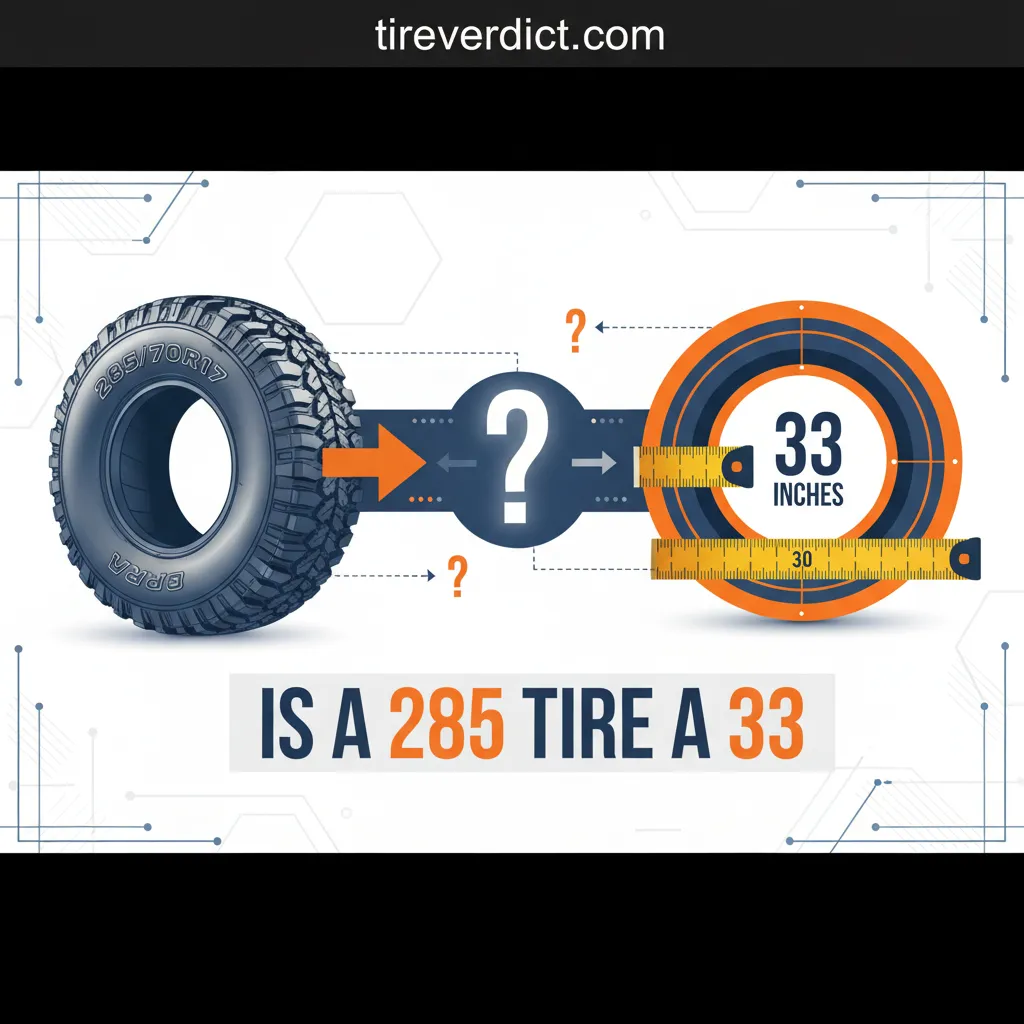
The world of automotive tires often presents a complex array of numbers and letters, leading to common questions about their true dimensions. One prevalent query among enthusiasts and vehicle owners is whether a ‘285 tire’ directly translates to a ’33-inch’ tire. This can be confusing when upgrading or selecting new tires, as precise measurements are crucial for vehicle compatibility and performance. This expert guide will demystify metric tire sizing, perform the precise calculations to determine if a 285 tire is indeed a 33-inch equivalent, and provide authoritative insights into the practical implications for your vehicle, ensuring you make informed and reliable decisions.
Understanding Metric Tire Sizing: Deconstructing the 285/70R17
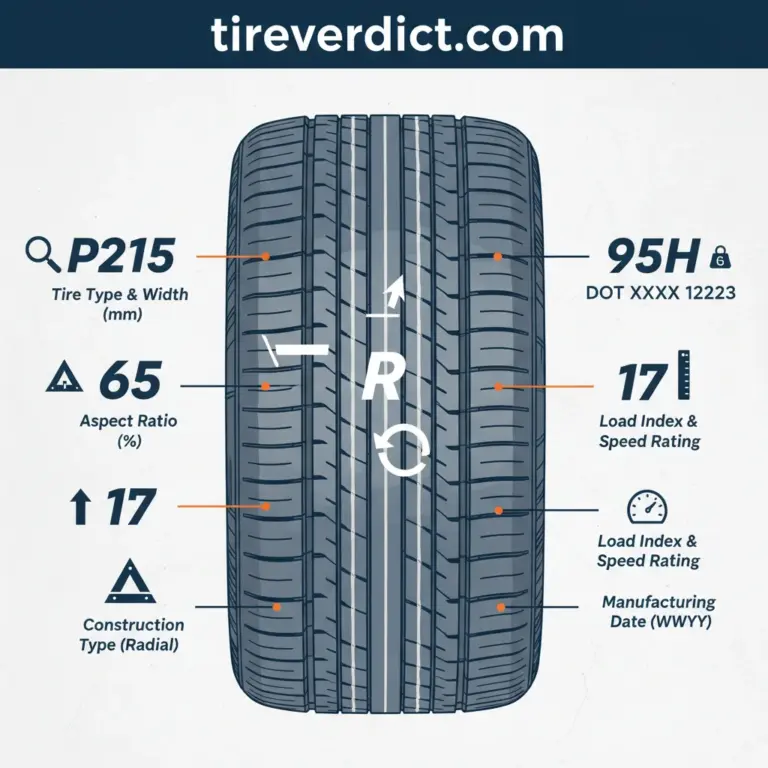
The metric tire sizing system, which largely replaced older imperial systems for greater precision and standardization, provides a detailed blueprint of a tire’s dimensions. When you encounter a tire designation like 285/70R17, each component conveys critical information about its physical characteristics and construction. As a professional, understanding this nomenclature is fundamental.
📤 Share Image
Decoding Each Element
- The ‘285’ represents the section width of the tire in millimeters. This is the measurement of the tire from its widest point of the outer sidewall to the widest point of the inner sidewall when mounted on a specified rim and inflated to a specific pressure, without any load. To put this into a more familiar context, 285 millimeters is approximately 11.2 inches (285 mm / 25.4 mm/inch = 11.22 inches).
- The ’70’ denotes the aspect ratio. This is the height of the tire’s sidewall as a percentage of its section width. In this case, the sidewall height is 70% of the 285mm width. A higher aspect ratio generally indicates a taller sidewall, which can influence ride quality, often providing more cushion, and changes the aesthetic profile of the tire.
- The ‘R’ signifies the tire’s internal construction, standing for Radial. Radial tires are the most common type today, characterized by plies that run radially across the tire, from bead to bead, under the tread. This construction offers superior handling, ride comfort, and tread life compared to older bias-ply designs.
- Finally, the ’17’ indicates the wheel diameter in inches that the tire is designed to fit. This is a critical measurement for proper fitment, ensuring the tire seats correctly and safely onto the wheel rim.
Understanding these individual components is crucial for anyone looking to swap or upgrade tires. For instance, comparing a 285/70R17 with a 265/75R16 reveals immediate differences. While the 285 is wider, the 265/75R16, despite having a smaller wheel diameter, might have a comparable or even slightly taller sidewall due to its higher aspect ratio (75% of 265mm vs. 70% of 285mm). This foundational knowledge is key to making informed decisions, as even small variations can significantly impact vehicle dynamics and fitment.
Always remember the standard conversion factor: 1 inch = 25.4 millimeters. This is the cornerstone for all tire dimension conversions and will be foundational in our calculations.
The Conversion Process: Calculating a 285 Tire’s Diameter in Inches
One of the most frequent questions from vehicle owners pertains to converting metric tire sizes into a more intuitive imperial diameter. While many refer to tires by their approximate inch size, a precise calculation provides a reliable benchmark. Let’s walk through the exact methodology for a 285/70R17 tire.

📋
Step-by-Step Calculation for Tire Diameter
The sidewall height is determined by the section width and aspect ratio. For a 285/70R17 tire:
Sidewall Height (mm) = Section Width (mm) (Aspect Ratio / 100)
Sidewall Height = 285 mm (70 / 100) = 285 0.70 = 199.5 mm.
Since the wheel diameter is in inches, we need to convert the sidewall height to inches.
Sidewall Height (inches) = Sidewall Height (mm) / 25.4
Sidewall Height = 199.5 mm / 25.4 mm/inch = 7.85 inches.
The total diameter is the sum of the two sidewall heights (top and bottom) plus the wheel diameter.
Total Diameter (inches) = (2 Sidewall Height in Inches) + Wheel Diameter in Inches
Total Diameter = (2 * 7.85 inches) + 17 inches = 15.7 inches + 17 inches = 32.7 inches.
Based on these precise calculations, a 285/70R17 tire has an approximate diameter of 32.7 inches. It’s common practice in the industry and among enthusiasts to round this up to “33 inches” for marketing and general discussion purposes. While not precisely 33.0 inches, it falls well within the accepted range for that classification, especially given that actual tire dimensions can vary slightly from these nominal calculations.
To illustrate how different aspect ratios affect the overall diameter, consider this data:
This table clearly demonstrates that while the 285/70R17 is very close, other 285 width tires can vary significantly in overall diameter based on their aspect ratio and wheel size. This is why a trusted guide like this is essential.
Factors Influencing Actual Tire Diameter and Why it Matters
While calculations provide a theoretical diameter, real-world factors introduce variability that can lead to slight discrepancies. Understanding these nuances is critical for precise fitment and performance, distinguishing an expert’s approach from a casual estimation.
Manufacturing Tolerances and Brand Variations
Tire manufacturing is a complex process with inherent tolerances. Different brands may interpret “nominal” sizes slightly differently, leading to small variations in actual measured dimensions. For example, a BFGoodrich All-Terrain T/A KO2 in 285/70R17 might be advertised with an overall diameter of 32.7 inches, while another brand’s equivalent might state 32.5 or 32.8 inches. These differences, while seemingly minor, can impact vehicle clearance and the overall stance.
Tread Depth and Design
The tread depth significantly contributes to a tire’s overall diameter. A brand-new tire will naturally have a larger diameter than a worn tire nearing the end of its life. Research indicates that even a 1/32″ difference in tread depth can subtly alter the effective rolling diameter, influencing speedometer accuracy over time. Aggressive tread patterns, common in off-road tires, can also add to the overall height compared to a street-oriented tire of the same nominal size.
Inflation Pressure
The tire’s internal air pressure plays a crucial role in its shape and effective rolling diameter. An underinflated tire will “bulge” at the bottom, slightly reducing its effective height, while a properly inflated tire maintains its intended profile. This directly affects the speedometer calibration, as the vehicle’s computer relies on an accurate rolling circumference to calculate speed and distance. Maintaining correct tire pressure is not just about safety and wear; it’s also about maintaining measurement accuracy.
Manufacturer Specifications and Industry Standards
For the most precise dimensions, always consult the tire manufacturer’s official specifications. Most reputable manufacturers list the “overall diameter” and “revolutions per mile” for each tire size on their websites or spec sheets. These figures account for the real-world manufacturing and design factors. Organizations like the Tire & Rim Association (TRA) in North America and the European Tyre and Rim Technical Organisation (ETRTO) set standards for tire dimensions and tolerances, which manufacturers adhere to. Relying on these professional sources provides the most reliable information.
In summary, while a 285/70R17 is calculated to be approximately 32.7 inches, which is commonly rounded to 33 inches, an expert understands that actual measurements can vary. Always check specific product data sheets for the exact tire you are considering to ensure optimal fitment and to avoid potential issues.
Practical Considerations for Installing 33-Inch Equivalent Tires on Vehicles
Upgrading to larger tires, such as a 33-inch equivalent like the 285/70R17, is a common modification for many truck and SUV owners, particularly those engaged in off-roading. However, this seemingly straightforward change carries several critical implications that require careful consideration to ensure safety, performance, and vehicle longevity. As a seasoned industry expert, I’ve observed firsthand the common pitfalls and necessary precautions.
Vehicle Clearance and Potential Rubbing
One of the primary concerns is vehicle clearance. Larger tires demand more space within the wheel wells. Without adequate clearance, tires can rub against fenders, suspension components (like control arms or sway bars), or inner wheel wells. This is especially problematic during turns, when the suspension articulates (e.g., during off-roading), or when hitting bumps. A common scenario involves installing 285/70R17s on vehicles like a Jeep Wrangler JK or Toyota Tacoma. While some might fit with minor modifications on certain trims, many require a 2-inch lift or leveling kit to prevent rubbing, particularly at full steering lock or during heavy compression. In some cases, fender trimming or cutting of plastic liners may be necessary, underscoring the need for careful measurement and professional advice.
Speedometer and Odometer Accuracy
Increasing tire diameter directly alters the effective rolling circumference of the wheel. This means the vehicle will travel further with each wheel rotation than the factory settings anticipate. Consequently, your speedometer will read lower than your actual speed, and your odometer will under-report distance traveled. A good rule of thumb is that a 5% increase in tire diameter typically necessitates speedometer recalibration. For a 32.7-inch tire compared to a factory 30-inch tire, this is a significant difference. A professional alignment shop or specialty off-road installer can recalibrate your vehicle’s computer to correct these discrepancies, ensuring accurate speed readings and mileage tracking, which is crucial for legal compliance and vehicle maintenance schedules.
Changes in Gearing and Performance
Larger tires also act as a larger lever, effectively changing your vehicle’s final drive ratio. This means the engine has to work harder to turn the larger wheels. The result is a perceptible loss of acceleration, increased strain on drivetrain components (transmission, differentials), and typically reduced fuel efficiency. If your vehicle was designed for 30-inch tires and you install 33-inch tires, the effective gear ratio decreases, making it feel like you’re starting in a higher gear. For optimal performance, especially for towing or serious off-roading, a re-gearing of the differentials might be necessary to restore lost power and reduce stress on the drivetrain.
Wheel Backspacing and Offset
Proper wheel backspacing and offset are critical for accommodating wider and taller tires. Backspacing measures the distance from the wheel’s mounting surface to the back edge of the wheel, while offset measures the distance from the wheel’s mounting surface to the wheel’s centerline. Incorrect backspacing or offset can cause tires to rub on suspension components, the frame, or extend too far outside the fender, potentially leading to rubbing and legality issues. Often, aftermarket wheels with a different offset are required to push the tire out slightly, providing necessary clearance from inner components.
Neglecting these practical considerations can lead to dangerous situations, premature wear of vehicle components, and costly repairs. Always prioritize safety and proper fitment over aesthetic preferences alone.
Expert Recommendations for Selecting and Maintaining Your Tires
As an expert in the field, I emphasize that selecting and maintaining 33-inch equivalent tires (like the 285/70R17) goes beyond simple aesthetics. It’s about optimizing vehicle performance, ensuring safety, and maximizing your investment. Follow these professional recommendations for a quality and reliable experience.
Consultation and Professional Installation
Before making any purchase, always consult your vehicle manufacturer’s guidelines and, more importantly, a trusted professional installer. While a general mechanic can mount tires, upgrading to significantly larger sizes often requires specialized knowledge. An expert off-road shop, for instance, can provide reliable advice on clearance, suspension modifications, and necessary recalibrations. They possess the practical insights from hands-on experience to recommend the best setup for your specific vehicle and intended use, whether it’s daily driving, towing, or aggressive trail use.
Load Rating and Speed Rating
Do not overlook the load rating and speed rating of the tires. The load rating indicates the maximum weight a single tire can support, which is crucial for trucks and SUVs, especially when towing or carrying heavy loads. The speed rating specifies the maximum safe speed for the tire. Always choose tires that meet or exceed your vehicle’s factory specifications and your anticipated usage. For off-road applications, tires often have lower speed ratings but higher load capacities and tougher construction, like those from reputable brands such as Goodyear, Cooper, or Michelin.
Regular Maintenance Practices
Proper maintenance is paramount for extending tire life and ensuring consistent performance. This includes:
- Proper Inflation: Check tire pressure regularly (at least once a month and before long trips) according to the recommended pressures for your specific tires and vehicle load. Incorrect pressure severely impacts wear and handling.
- Rotation Schedules: Follow manufacturer guidelines for tire rotation, typically every 5,000-8,000 miles, to ensure even wear across all four tires.
- Alignment Checks: Have your vehicle’s wheel alignment checked annually or after any significant suspension work or impact. Proper alignment prevents uneven tire wear and improves handling.
By The Numbers
Fuel Efficiency Loss (per 1 PSI drop)
Miles for Tire Rotation
Tread Depth Can Alter Diameter
Warranties and Manufacturer Support
Familiarize yourself with the warranty information for your chosen tires. Specialty and larger tire sizes can sometimes have specific warranty conditions. Understand what is covered for treadwear, defects, and road hazards. Manufacturers of premium off-road tires, for example, often offer robust support due to the demanding applications of their products. Always retain your purchase receipts and maintenance records, as they are crucial for any warranty claims.
By adhering to these professional recommendations, you ensure that your investment in 33-inch equivalent tires yields the desired performance, longevity, and safety for your vehicle. This guide provides the information needed for an informed decision process.
In summary, a 285/70R17 tire is mathematically approximately 32.7 inches in diameter, commonly rounded to 33 inches. However, actual tire diameter can vary due to manufacturing processes, tread design, and inflation, making verification vital. Upgrading to 33-inch equivalent tires necessitates careful consideration of vehicle clearance, speedometer calibration, and potential drivetrain impacts. Consulting professional installers and adhering to expert recommendations ensures proper fitment and safe operation. Ensure optimal performance and safety for your vehicle by utilizing precise tire information. Consult with a trusted tire specialist today to confirm compatibility and professional installation for your next tire upgrade.
Frequently Asked Questions
What does 285/70R17 mean in tire sizing?
The ‘285’ denotes the tire’s section width in millimeters. ’70’ is the aspect ratio, meaning the sidewall height is 70% of the width. ‘R’ indicates radial construction, and ’17’ is the diameter of the wheel in inches. This metric system provides a professional and precise way to define tire dimensions.
How accurate is the ’33-inch’ approximation for a 285 tire?
The ’33-inch’ approximation for a 285/70R17 tire is quite accurate, with the calculation yielding about 32.7 inches. However, real-world measurements can fluctuate slightly due to manufacturer specifications, tread patterns, and inflation levels. Always refer to expert technical data from the tire manufacturer for the most reliable dimensions.
Will I need a lift kit to install 33-inch tires like a 285/70R17?
For many vehicles, installing 33-inch equivalent tires like 285/70R17 will necessitate a suspension lift or leveling kit to ensure adequate clearance, especially during suspension articulation or turning. Without proper clearance, rubbing on fenders or suspension components can occur, compromising vehicle safety and tire longevity. Professional advice is always recommended.
Does installing 33-inch tires affect my speedometer reading?
Yes, installing tires with a larger diameter, such as 33-inch equivalents, will directly impact your vehicle’s speedometer and odometer accuracy. The vehicle’s computer is calibrated for the original tire size; larger tires will cause the speedometer to read lower than your actual speed. Recalibration by a qualified technician is essential for trusted and reliable readings.
What are the common challenges when upsizing to 33-inch tires?
Upsizing to 33-inch tires can present challenges including insufficient fender or suspension clearance, requiring modifications like lift kits or trimming. It may also affect fuel efficiency, alter effective gearing, and necessitate speedometer recalibration. Professional installation and detailed pre-assessment are crucial to mitigate these potential issues and ensure a quality outcome.