Is your vehicle experiencing subtle vibrations at speed, hinting at an underlying issue with your wheels? Many drivers overlook the critical role of tire balancing, often wondering about its necessity and the associated professional costs. Understanding the investment required and its value can be complex, especially with varying service options. This comprehensive 2026 guide will demystify tire balancing costs, detailing influencing factors, average prices, and the significant benefits of this essential maintenance, ensuring your vehicle remains safe and performs optimally with a trusted, smooth ride.
Understanding Tire Imbalance: Causes, Symptoms, and the Need for Professional Balancing
📤 Share Image
Tire imbalance occurs when the weight of a tire and wheel assembly is not evenly distributed around its circumference. This seemingly minor issue can lead to significant problems for your vehicle’s performance and safety. Fundamentally, there are two types: static imbalance, where there’s a heavy spot that causes the tire to hop up and down, and dynamic imbalance, which involves uneven weight distribution across the width of the tire, leading to a side-to-side wobble. Common root causes include manufacturing variations in the tire or wheel, uneven tire wear (such as cupping or scalloping), or even improper mounting of the tire on the wheel during installation. These discrepancies, even as slight as a mere 1/4 ounce, can translate into considerable rotational forces at speed.
Drivers often experience several tell-tale symptoms of an imbalanced tire, which necessitate immediate action for a quality ride. The most common is a vibration in the steering wheel, particularly noticeable between 50-70 mph. This can evolve into a broader seat or floorboard vibration. Other indicators include persistent humming noises or unusual and uneven tire wear patterns, such as ‘cupping’ or ‘scalloping’ across the tread. Mechanically, even minor discrepancies in weight distribution affect rotational forces; at highway speeds, an imbalanced tire essentially acts like a hammer repeatedly striking the road and your vehicle’s components.
Neglecting tire imbalance carries significant long-term consequences. Firstly, it leads to accelerated and uneven tire wear, substantially reducing the tire’s lifespan. Research indicates that uncorrected imbalance can reduce average tire lifespan by 10-20%, forcing premature and costly replacements. Beyond the tires themselves, the constant vibrations place increased strain on crucial suspension components like shocks, struts, and ball joints, as well as steering parts. This can lead to premature wear and expensive repairs. More critically, uncorrected imbalance poses potential safety hazards due to reduced vehicle control and stability, especially during braking or cornering. This is why the role of professional diagnostic tools and expert technicians is paramount in accurately identifying and rectifying imbalance as the root cause of these symptoms, ensuring a reliable and safe driving experience.
Deconstructing Tire Balancing Expenses: Key Factors Impacting Your Professional Service Cost
Understanding the factors that influence the cost of tire balancing is crucial for navigating service options effectively. The price for this professional service is not static and varies significantly based on several key elements.
Vehicle Type and Tire Size
One of the primary determinants is your vehicle type and the size of its tires. Larger or specialized tires, such as those found on heavy-duty trucks, SUVs, or high-performance vehicles, typically require more time and effort to handle. Low-profile or run-flat tires, often found on luxury or sports cars, can also demand specialized mounting and balancing techniques. These tires often necessitate more balancing weights and specialized equipment, leading to higher costs. For instance, balancing a set of 15-inch sedan tires will almost always be less expensive than balancing 20-inch truck tires due to the difference in labor and material requirements.
Geographic Location
Where you live or get your service done plays a significant role. Regional labor rates, operational overheads, and local market competition directly influence pricing. Urban areas, for example, frequently see higher costs due to increased rent, utilities, and wages compared to rural or suburban regions. Research indicates that average hourly labor rates for automotive technicians in the U.S. can range from $80 to $150 per hour, directly impacting the final service cost.
Service Provider Type
The choice of service provider also impacts the bill. Independent tire shops often offer competitive pricing, aiming to attract customers with cost-effectiveness. Franchised automotive service centers (like large chain stores) might have standardized pricing, sometimes offering package deals. Dealership service departments, while potentially pricier, may offer specialized expert knowledge for specific vehicle makes, original equipment parts, and comprehensive warranties. Each offers a different perceived value proposition in terms of expertise, equipment, and customer experience, contributing to the overall trusted service.
Included Services and Package Deals
Balancing can be a standalone service or bundled. Many retailers include free balancing when you purchase a new set of tires, making the initial outlay more economical. Similarly, it’s frequently part of a comprehensive tire rotation package. Opting for a package that includes both rotation and balancing, such as for $80-$120, can often be more cost-effective than scheduling separate services, highlighting the value of a planned maintenance approach.
Technology and Equipment Used
The technology employed by the service center influences cost and quality. Modern, professional-grade balancing machines, especially road force balancers, offer superior precision and advanced diagnostic capabilities. While these machines provide a more reliable and trusted result, especially for persistent vibrations or specialized wheels, they may come at a slightly higher cost, often adding $5-$15 per tire due to the advanced technology and the expert skill required to operate them.
2026 Cost Snapshot: What to Expect to Pay for Expert Tire Balancing Services
As of 2026, understanding the current cost landscape for tire balancing services is essential for budgeting and evaluating professional offerings. These figures represent general ranges, as exact prices will always depend on the factors discussed previously.
Standard Spin Balancing Service
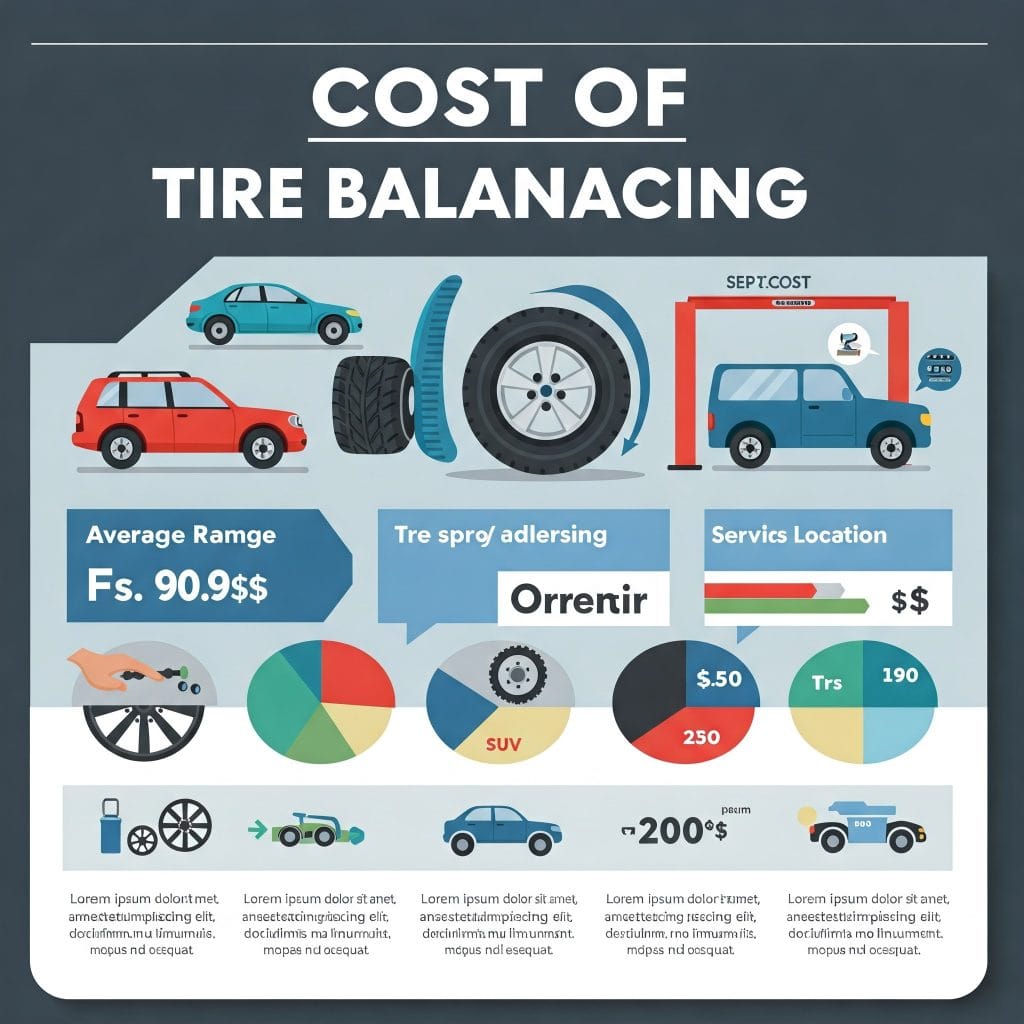
For conventional static and dynamic balancing, which suffices for most everyday vehicles, expect to pay approximately $15 to $30 per tire. This translates to a full set of four tires costing anywhere from $60 to $120. This service typically involves using a standard spin balancer to identify heavy spots and apply corrective weights, ensuring a quality balance for the majority of vehicles.
Road Force Balancing Costs
When dealing with persistent vibrations, specialized wheel/tire setups, or luxury vehicles, road force balancing is often recommended. This advanced service, which simulates the weight of the vehicle and road forces, provides a superior diagnosis and more precise balance. The cost for road force balancing is typically higher, ranging from $25 to $50 per tire, or $100 to $200 for a full set. The added expense reflects the use of more sophisticated equipment and the expert skill required to interpret its detailed readings, offering enhanced benefits in ride comfort and problem resolution.
Bundled Services and New Tire Purchases
It’s important to remember that tire balancing is frequently included when you purchase a new set of tires from a reputable professional retailer. This inclusion can effectively save you $60-$120 on the service itself, making the initial tire investment more cost-effective. Many shops also offer tire rotation and balancing packages at a reduced rate compared to purchasing each service separately.
Potential Hidden Costs and Upcharges
While the primary balancing cost is straightforward, be aware of potential additional fees. These might include charges for new valve stem replacement (if not included with new tire installation), removal of old balancing weights, or tire disposal fees if you’re also replacing old tires. Always ask for a detailed estimate to ensure full transparency of the total service package.
Cost Comparison: Expert Tire Balancing Services (2026 Estimates)
By The Numbers: Tire Balancing Costs & Impact (2026)
Cost Per Tire (Avg.)
Tire Lifespan Increase with Balance
Avg. Labor Rate Per Hour
Time for 4-Tire Service
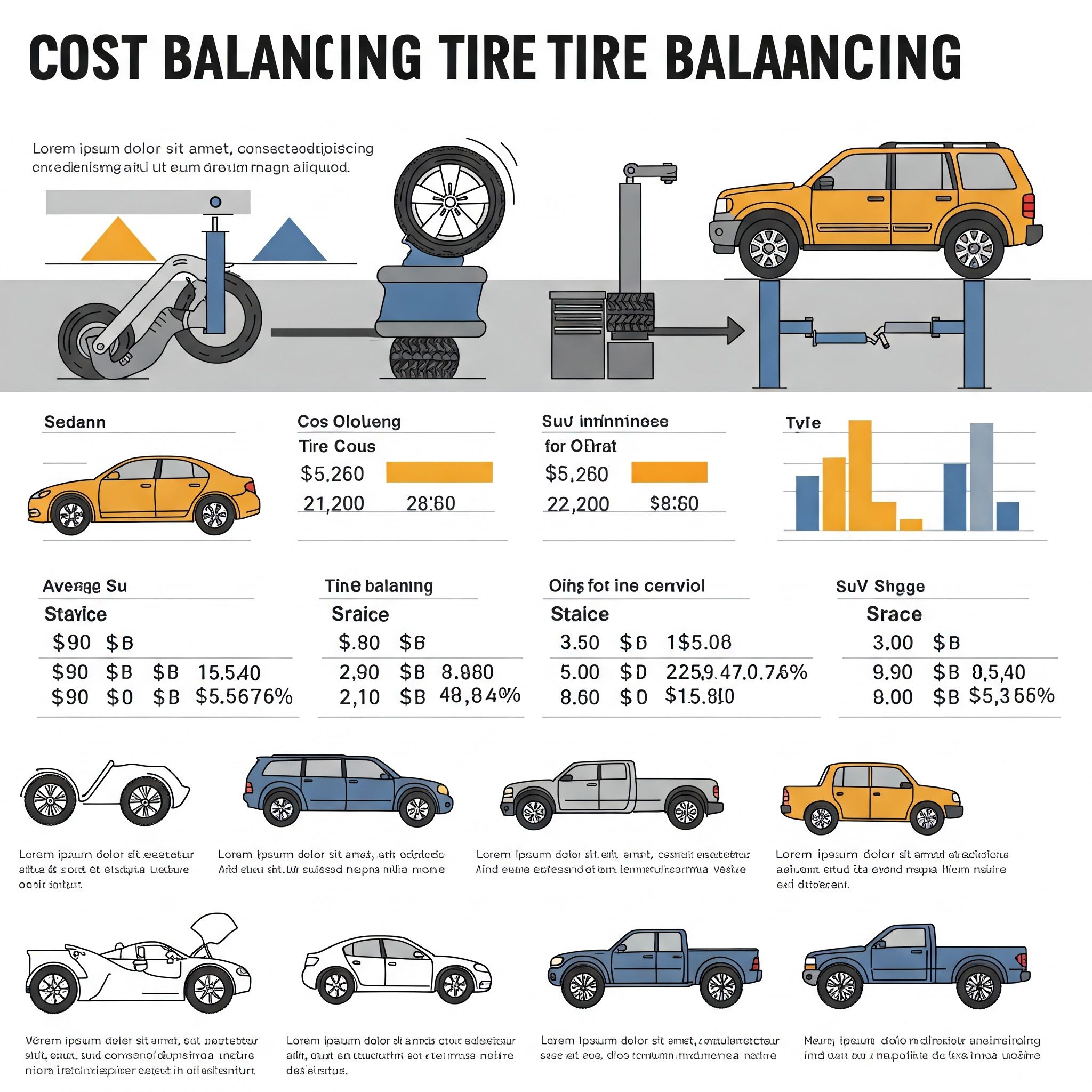
Beyond the Price Tag: A Look Inside the Professional Tire Balancing Process for Quality Results
The cost of tire balancing is an investment in precision and expertise. Understanding the process demystifies the service and highlights the expert value you receive. A typical professional balancing procedure, aimed at delivering quality results, involves several critical steps:
📋
Step-by-Step Guide to Professional Tire Balancing
An expert technician begins with a thorough visual inspection of the tire and wheel for any signs of damage, such as bends, cracks, or excessive wear. All existing balancing weights are carefully removed, and the wheel assembly is cleaned to ensure accurate readings from the balancing machine. This foundational step is crucial for achieving a reliable balance.
The wheel and tire assembly is then securely mounted onto a specialized, high-precision balancing machine. Correct mounting, ensuring the wheel is perfectly centered and seated, is paramount. Improper mounting can lead to inaccurate readings and a compromised balance, negating the entire professional effort.
The machine spins the wheel at various speeds, precisely measuring any static and dynamic imbalances. Through advanced sensors, it identifies the exact location and magnitude of heavy spots. The digital display on a modern balancer provides the expert technician with precise readings, indicating where and how much corrective weight is needed to achieve a perfectly balanced assembly. Modern balancers are accurate to within 1/4 ounce or less.
Based on the machine’s instructions, the technician accurately applies the correct type and amount of balancing weights (e.g., clip-on weights for steel wheels or adhesive weights for alloy wheels). An expert ensures these are neatly and securely attached. The wheel is then re-spun to verify that the assembly is now perfectly balanced. This re-check confirms the quality of the service, ensuring a reliable outcome.
For a superior balance, especially for drivers experiencing subtle vibrations after a standard balance, a road force balancer applies a roller to the tire, simulating real-world driving conditions. This identifies non-uniformity in the tire or wheel that standard balancers miss. This advanced procedure results in an even more precise, trusted balance, optimizing ride quality and eliminating virtually all vibration. The entire process for a set of four tires typically takes 30-60 minutes when performed by a skilled professional.
The Undeniable Value of Expert Tire Balancing: Protecting Your Investment and Enhancing Performance
While tire balancing involves a cost, its benefits far outweigh the expense, representing a crucial investment in your vehicle’s safety, performance, and longevity. The value derived from expert tire balancing is truly undeniable.
Enhanced Safety and Control
Properly balanced tires significantly improve steering responsiveness and stability, reducing driver fatigue on long journeys. By preventing uneven wear, they mitigate risks like sudden blowouts or compromised handling, functioning as a professional safety measure that directly impacts your ability to control the vehicle, especially in critical situations.
Extended Tire Lifespan
Perfectly balanced tires wear evenly across their tread, maximizing their service life. This means you replace your tires less frequently, translating to substantial savings over time. Data confirms that tires can last 10-20% longer with regular, proper rotation and balancing, making the balancing cost a wise, long-term investment that defers costly replacements.
Improved Fuel Efficiency
While subtle, reduced rolling resistance from properly balanced tires can lead to marginal but measurable improvements in fuel efficiency. Over the thousands of miles you drive, these small savings accumulate, contributing to the overall economic benefit and making your vehicle’s operation more reliable.
Optimal Ride Comfort and Performance
Perhaps the most immediately noticeable benefit is the significant reduction in vibrations and road noise. This results in a smoother, quieter, and more enjoyable driving experience, reinforcing the quality and reliability of your vehicle’s performance. It’s a key factor in maintaining the luxurious feel of a well-maintained car.
Protection of Vehicle Components
Balanced tires minimize undue strain and wear on critical suspension components (shocks, struts), steering parts (tie rods, ball joints), and wheel bearings. This expert preventative maintenance prevents premature failure and expensive repairs. For example, replacing worn tie rods or wheel bearings can easily cost hundreds of dollars per axle, a cost often avoided by regular balancing. Investing $80 in balancing can easily save you $200-$800 on premature tire replacement and potentially thousands on suspension repairs over the life of your vehicle.
Beyond Balancing: Diagnosing Persistent Vibrations and Related Professional Service Needs
While tire balancing is a crucial maintenance step, it’s essential to clarify a common misconception: it’s not a universal fix for all vibration issues. If vibrations persist even after a professional balancing service, it signals an underlying problem that requires further diagnostic attention from an expert. Other issues can mimic imbalance symptoms, necessitating a thorough inspection by a trusted technician.
Wheel Alignment Issues
Misaligned wheels can cause vibrations, a vehicle pulling to one side, and accelerated uneven tire wear. If your car pulls significantly to one side after a fresh balance, it strongly indicates a need for a professional wheel alignment. A four-wheel alignment typically costs $80-$150 and is often necessary after new tire installation, suspension work, or if you’ve hit a significant pothole.
Worn or Damaged Suspension/Steering Components
Worn components such as shocks, struts, ball joints, control arm bushings, or tie rods can introduce vibrations, clunking noises, and negatively impact handling. These issues require precise diagnosis and replacement by a qualified professional mechanic to restore vehicle integrity and a reliable ride.
Bent Wheels or Damaged Tires
A physically bent wheel (often from hitting curbs or potholes) or a tire with internal damage (e.g., separated belts, flat spots from prolonged parking) cannot be corrected by balancing. If an expert identifies these issues, the wheel may need repair or replacement, or the tire will need to be replaced. A bent rim repair or replacement can range from $100 to $500+, depending on the wheel type, highlighting the importance of a thorough inspection.
Brake System Irregularities
If your steering wheel or vehicle vibrates specifically during braking, the culprit is likely warped brake rotors. This requires assessment and potential resurfacing or replacement of the rotors and pads by a professional brake technician. For example, if a steering wheel vibrates only during braking, it’s almost certainly warped rotors, not an imbalance.
Never ignore persistent vibrations in your vehicle. While a minor annoyance, they can be symptomatic of serious underlying issues that compromise safety and lead to far more expensive repairs down the line. A prompt diagnostic check by an expert is always the safest and most economical approach.
In conclusion, tire balancing is a vital, cost-effective maintenance procedure for ensuring vehicle safety, optimal performance, and extending tire lifespan. Our guide for 2026 illustrates that professional costs typically range from $15-$45 per tire, varying based on vehicle type, geographic location, and the specific service provider or package. Investing in expert balancing provides undeniable value by improving fuel efficiency, enhancing ride comfort, and protecting critical vehicle components from premature wear, offering a quality return on investment. For the safety of your vehicle and passengers, consult with a trusted, professional automotive service provider to assess your vehicle’s specific needs and ensure expert tire balancing is performed when necessary. Prioritize quality and reliability for a smooth driving experience and long-term vehicle health. This information is crucial for any discerning vehicle owner.
Frequently Asked Questions
How often should I get my tires balanced?
It’s generally recommended to have your tires balanced every 5,000 to 6,000 miles, or whenever you rotate your tires. You should also consider balancing if you notice new vibrations, hit a significant pothole, or have a tire repaired. Regular, professional balancing ensures a reliable and optimal driving experience.
Is tire balancing the same as tire alignment?
No, they are distinct professional services. Tire balancing addresses weight distribution around the wheel-tire assembly, preventing vibrations. Tire alignment adjusts the angles of the wheels to ensure they are parallel to each other and perpendicular to the ground, preventing pulling and uneven wear. Both are crucial for overall vehicle health and safety.
Can I balance my tires myself to save money?
While DIY balancing kits exist, professional tire balancing requires specialized, precision equipment and expert training for accurate results. Improper balancing can cause more harm than good, leading to continued vibrations and accelerated component wear. For quality, safety, and reliable performance, it’s highly recommended to use a professional service.
Does road force balancing cost more, and is it worth it?
Yes, road force balancing typically costs slightly more than standard spin balancing, often an additional $5-$15 per tire. It’s often worth the extra cost, especially for persistent vibration issues, specialized tires, or luxury vehicles. This expert service provides a more comprehensive, trusted diagnosis by simulating real-world driving conditions, leading to a superior balance.
Are new tires always balanced when purchased?
In most reputable, professional establishments, the cost of mounting, balancing, and new valve stems is included when purchasing a new set of tires. Always confirm this with your service provider upfront. This ensures your new tire investment starts with optimal performance, ensuring a smooth, reliable ride from day one and contributing to the tire’s full lifespan.