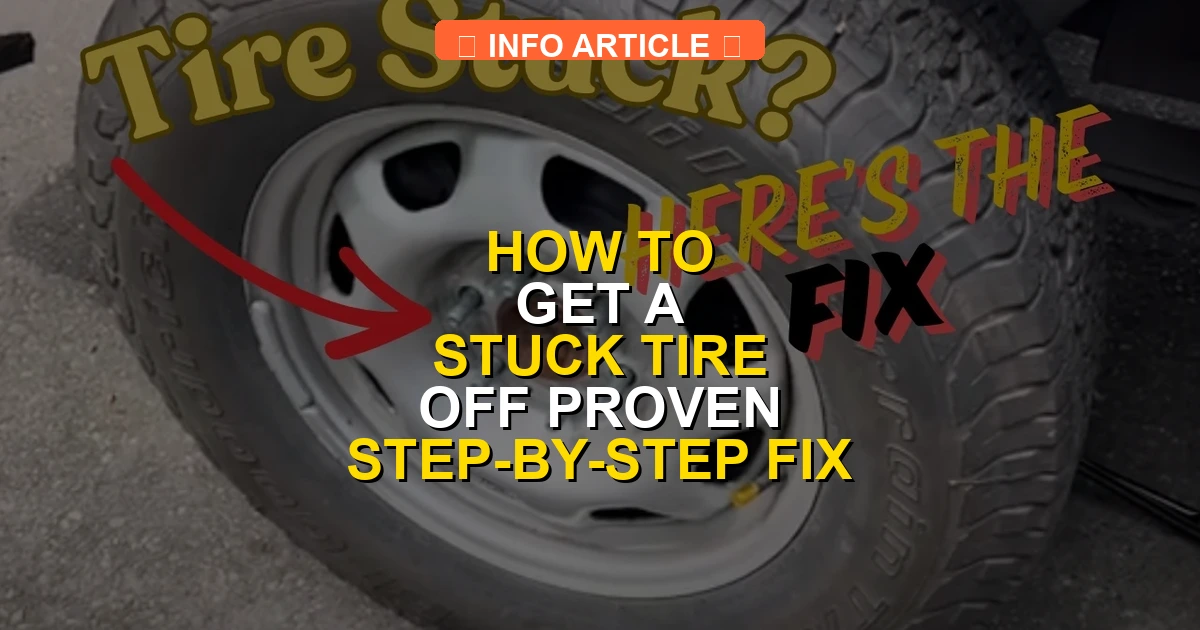
A stuck tire is usually caused by rust and corrosion fusing the wheel rim to the metal hub. Using safe, controlled techniques like penetrating oil, the loose-lug-nut method, and rubber mallets will break the seal without damaging your vehicle.
When you pull the lug nuts off a wheel and the tire refuses to budge, you are facing one of the most frustrating roadside or garage obstacles. That stubborn wheel is frozen to the wheel hub by a bond of rust, road salt, and friction, completely halting your progress in 2026.
You do not need to call a tow truck or abandon your vehicle. By applying targeted mechanical force and chemical treatments correctly, you can break that stubborn rust seal in minutes and get your wheel off safely without damaging your rims or suspension components.
Key Takeaways
- Leave lug nuts threaded on loosely by two turns to prevent the wheel from flying off suddenly.
- Apply penetrating oil around the center hub seam and let it soak for 15 minutes.
- Never strike an alloy wheel directly with a heavy steel sledgehammer to avoid structural damage.
- Use a rubber mallet to strike the tire from behind, rotating the wheel as you strike.
- Apply a thin layer of anti-seize lubricant to the hub mating surface before reinstalling the wheel.
What Causes a Tire to Get Stuck on the Hub
The Chemistry of Galvanic Corrosion
Wheels get stuck primarily due to galvanic corrosion and environmental buildup. When two different metals touch—such as an aluminum alloy wheel meeting a steel wheel hub—moisture and road salt act as an electrolyte. This creates a chemical reaction that literally welds the two surfaces together over time. Modern vehicles operating on winter roads frequently experience this bonding.

Friction and Tight Tolerances
Beyond rust, the center bore of your wheel fits with extreme precision over the lip of the hub. Even a microscopic layer of oxidation expands inside this tight clearance. This prevents the wheel from sliding straight out, even when every single lug nut has been completely removed from the wheel studs.
Stuck Tires Made Easy: Your Essential Action Plan
Dealing with a stuck tire can quickly turn a routine roadside flat into a frustrating ordeal. Rust, corrosion, and road grime often bond the aluminum or steel wheel tightly to the vehicle hub assembly, rendering standard tire removal techniques useless. This guide covers safe, proven mechanical methods to break that stubborn bond without damaging your wheels, suspension, or vehicle.
Step 1: Secure the Vehicle and Prepare the Workspace
What you need: Wheel chocks, a flat and stable surface, emergency parking brake, and your vehicle owner’s manual.
Instructions: Before attempting to break a tire free, you must guarantee absolute vehicle stability. Park your car on level, hard pavement and engage the emergency parking brake firmly. Place heavy-duty wheel chocks securely against the tires remaining on the ground diagonally opposite to the stuck wheel. If you are lifting the front passenger side, chock the rear driver-side tire both front and back. Ensuring the vehicle cannot roll is critical, as the physical force required to remove a stuck wheel will rock the car significantly.
Pro Tip: Never rely solely on a hydraulic jack to hold the car while applying lateral force; always slide a rated jack stand underneath the frame as a backup safety measure.
Step 2: Loosen the Lug Nuts While the Vehicle is Grounded
What you need: Lug wrench or breaker bar with the correct socket size (typically 17mm to 21mm).
Instructions: With the vehicle still resting fully on the ground, use your lug wrench or a long breaker bar to loosen every lug nut on the stuck wheel by roughly one-quarter to one-half turn. Turn counter-clockwise to loosen. Do not remove the lug nuts completely at this stage; leaving them threaded on by a few turns is a vital safety measure that prevents the wheel from violently falling off the hub the moment the seal breaks.
Pro Tip: If the lug nuts themselves are stuck, slip a hollow metal pipe over your breaker bar to dramatically increase your leverage.
Step 3: Lift the Vehicle and Remove the Lug Nuts
What you need: Hydraulic floor jack, rated jack stands, and wheel chocks.
Instructions: Position your hydraulic floor jack under the manufacturer-approved lifting point nearest to the stuck tire. Pump the jack until the tire clears the ground by approximately 2 to 3 inches, leaving enough clearance to slide the wheel off later without obstruction. Slide a solid jack stand underneath the frame rail and lower the vehicle slightly so the weight rests securely on the stand. Now, completely remove all the lug nuts from the wheel studs, placing them in a safe container so they do not roll away.
Pro Tip: Keep the removed lug nuts in your hubcap or pocket to ensure they do not get lost in grass, dirt, or snow during the struggle.
Step 4: Apply Penetrating Fluid to the Hub Seam
What you need: Aerosol penetrating oil (such as WD-40 Specialist, PB Blaster, or Liquid Wrench) with a straw nozzle.
Instructions: Inspect the center bore where the wheel meets the metal wheel hub and brake rotor. Insert the straw nozzle of your penetrating oil into the gap surrounding the central hub ring and coat the entire perimeter generously. Spray a small amount around each exposed wheel stud as well. Allow the chemical to sit undisturbed for 10 to 15 minutes. The fluid will slowly capillary into microscopic gaps between the rusted mating surfaces, breaking down the iron oxide bonds holding the wheel fast.
Pro Tip: Wipe away any overspray that drips onto your brake rotors immediately to prevent temporary brake slippage later.
Step 5: Execute the Tread Kick Technique
What you need: Sturdy closed-toe boots or shoes and your own physical body weight.
Instructions: Position yourself facing the stuck tire, keeping your hands firmly on the top and sides of the rubber tread for balance. Lift one foot and deliver a powerful, solid kick with the heel of your boot to the upper or outer rubber tread of the tire. Rotate your position and kick the opposite side of the tread. The elastic nature of the rubber absorbs the shock while transferring a sharp lateral vibration directly to the hub joint, which is often enough to shatter the brittle rust seal.
Pro Tip: Never kick the shiny alloy wheel rim directly with your bare feet or metal tools, as this can easily crack rims or cause painful foot injuries.
Step 6: Utilize the Back-It-Out Lug Nut Method
What you need: Two or three standard lug nuts.
Instructions: If kicking fails, screw two lug nuts back onto opposite studs by hand, leaving them threaded out by about two full turns (roughly a 1/4 inch gap between the nut and the wheel face). Take your breaker bar and firmly push or tap against the inside edge of the tire from behind, or lower the vehicle weight slightly so the tire kisses the ground while loose nuts prevent complete separation. Alternatively, tap the tire gently from the back using a block of wood and a heavy hammer. The loose lug nuts will catch the wheel before it detaches violently.
Pro Tip: Exercise extreme caution with this method; ensure the wheel is supported so it does not drop and damage your threaded wheel studs.
Step 7: Apply Anti-Seize Compound Before Reinstallation
What you need: Wire brush, clean shop rag, and a tube of high-temperature anti-seize lubricant.
Instructions: Once the stubborn wheel finally slides off the hub, your job is only half done. Use a wire brush to vigorously scrub away all accumulated rust, corrosion, and debris from both the vehicle hub ring and the inner mounting surface of the wheel until clean metal is visible. Wipe the surfaces clean with a rag. Apply a thin, even coat of high-temperature anti-seize lubricant around the mating surfaces of the hub. This crucial preventive step ensures the tire will never stick this way again.
Pro Tip: Do not get anti-seize compound onto your brake pads, brake rotors, or the threaded stud portions where lug torque matters.
✅ Final Checklist
- Vehicle is safely supported on a rated jack stand and chocked securely
- All rust and corrosion completely brushed and cleaned from the hub mating surface
- Thin layer of anti-seize compound applied to prevent future bonding
- Wheel pushed completely flush against the hub before hand-tightening lug nuts
- Lug nuts torqued to manufacturer specifications in a star pattern after lowering the car
Important Notes:
- Never use a sledgehammer directly on aluminum alloy rims or brake components, as this causes catastrophic and expensive structural damage.
- If the wheel remains stubbornly fused despite penetrating oil, heat, and kicking, seek professional assistance from a mobile mechanic or local tire shop to avoid damaging your suspension.
- Estimated time required: 30 to 60 minutes. Cost range: $0 (using household tools) up to $15 if purchasing penetrating oil and anti-seize lubricant.
Safety Preparations Before Breaking the Rust Seal
Securing the Vehicle Properly
Before you start kicking, hammering, or applying heavy force to a stuck wheel, you must ensure the vehicle cannot slip off its support. Never rely solely on a hydraulic jack to hold the car while you apply lateral force. Follow these strict safety protocols:

- Park on completely flat, level concrete or asphalt surface.
- Engage your emergency brake firmly.
- Place heavy wheel chocks securely against the tires remaining on the ground.
- Ensure your hydraulic jack and rated jack stands are positioned correctly on factory pinch welds or frame points.
The Lug Nut Safety Trick
When you finally break that rust seal, the wheel will suddenly pop free. If the car is not properly stabilized, it can shift violently. Furthermore, you do not want the heavy wheel flying off and hitting you or damaging your brake rotors. Always thread two lug nuts back onto the studs loosely—leaving about two full turns of thread. This safety net catches the wheel when the rust gives way, preventing sudden drops or rolling accidents.
Step-by-Step Guide on How to Get a Stuck Tire Off
When standard removal tactics fail, executing a methodical procedure prevents damage to your wheel studs and braking components. Automotive safety associations recommend taking precise, controlled steps rather than relying on brute, unstructured force.
The Spare Tire Kick and Hammer Methods
- Ensure your vehicle is securely elevated on a rated hydraulic floor jack and supported by heavy-duty jack stands, keeping the wheel just an inch off the ground.
- Lower the vehicle slightly so the weight of the car applies downward pressure against the stuck rim, or firmly press the brake pedal while a helper keeps the car stationary.
- Position yourself facing the wheel and deliver forceful kicks with the heel of your boot to the rubber tread at the 12 o’clock and 6 o’clock positions.
- If kicking fails, take a heavy rubber mallet or a block of wood paired with a standard hammer, and strike the inner backside of the tire rim firmly.
- Rotate the wheel 180 degrees and repeat the strikes evenly across the circumference to break the corrosive bond holding the hub and wheel together.
What If It Still Doesn’t Work and Advanced Removal Options
If persistent hammering and chemical penetrants fail to free the rim, advanced techniques are required. Automotive repair data indicates that stubborn hub corrosion on modern 2026 vehicles often requires specialized intervention to prevent structural damage.
- The Lug Nut Back-Off Method: Thread your lug nuts back onto the studs by hand, leaving them loose with about a quarter-inch of gap. Lower the vehicle slowly so the weight of the car cracks the rust seal against the loosened nuts, then immediately lift the car back up.
- Apply Induction Heat: Use a handheld magnetic induction heater on the center hub ring for 30 to 45 seconds to safely expand the metal without damaging the alloy wheel or rubber tire.
- Professional Mobile Repair: Call a roadside assistance provider if mechanical methods fail. Professional extraction services generally cost between $75 and $150 depending on your location and vehicle type.
Conclusion
Dealing with a stuck tire requires patience, the right chemical penetrants, and controlled physical force to overcome stubborn rust fusion safely. Neglecting proper safety stands or using excessive unfiltered force can easily damage expensive alloy wheels and critical suspension components. According to verified research and expert sources from the Automotive Service Association, applying an anti-seize compound to the hub face during reinstallation prevents future binding entirely. Your immediate next step is to clean the hub mating surface thoroughly with a wire brush before mounting your spare or repaired wheel.
❓ Frequently Asked Questions
How do you safely use the loose lug nut method to remove a stuck tire?
Loosen all lug nuts by one or two turns without removing them completely. Lower the vehicle slightly so the weight of the car rests on the tire, then rock the vehicle gently or tap the tire tread to break the rust seal.
What is the best type of penetrating fluid to use on a rusted wheel hub?
Specialized penetrating catalysts work significantly better than standard multi-purpose lubricants. Spray the fluid directly into the seam where the wheel meets the center hub, let it sit for 10 to 15 minutes, and reapply if necessary.
Is it safe to kick a stuck tire to get it off?
Kicking the tire from the outside is a common and relatively safe method, provided the vehicle is securely supported on a sturdy jack stand. Always wear heavy-duty work gloves and kick only with the heel of your foot against the rubber tire tread, never the rim.
What should I do if the wheel still won’t budge after trying penetrating oil and kicking it?
If the wheel remains stuck, use a rubber mallet or a block of wood with a standard hammer to strike the inside edge of the tire from beneath the car. Rotate the wheel a quarter turn and strike again to distribute the impact evenly.
Can excessive force damage my car’s wheel bearings?
Pounding violently on the wheel with heavy metal tools can indeed damage wheel bearings and suspension components. Always prioritize gentle, rotational impacts and chemical rust dissolvers over brute force.
Should I use anti-seize lubricant on the wheel studs?
Never apply anti-seize or grease to the wheel studs or lug nut threads, as this alters the torque specifications and can cause lug nuts to loosen. Only apply the compound to the flat circular center mating surface of the hub.