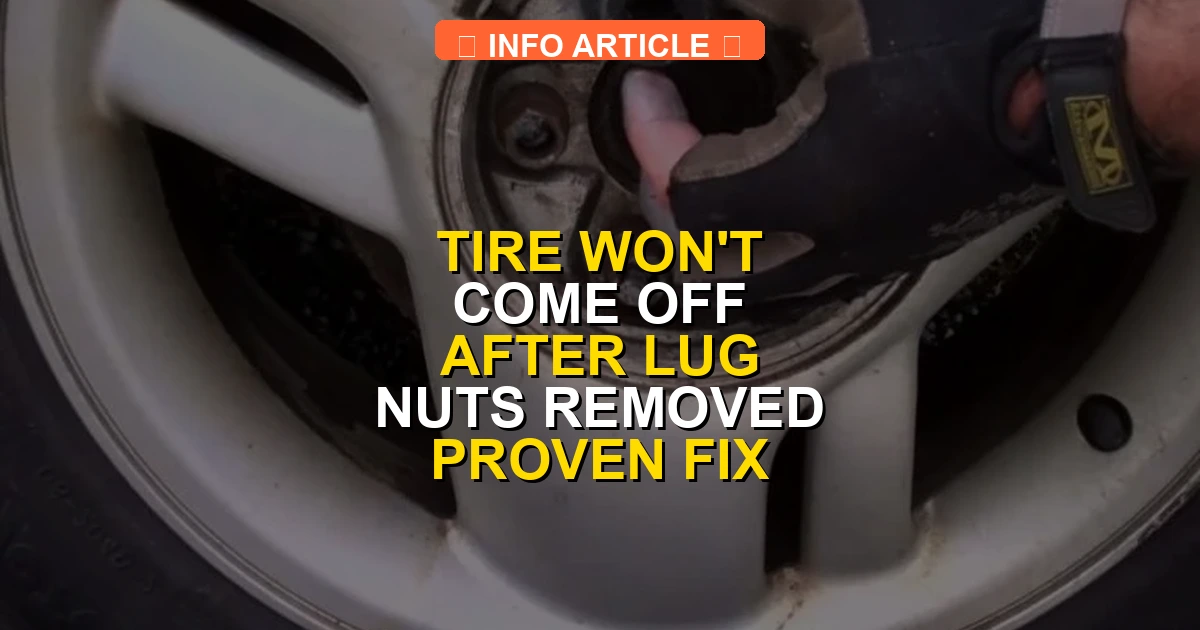
When a tire won’t come off after lug nuts removed, it is usually caused by rust and galvanic corrosion fusing the wheel to the hub. You can safely break this bond using controlled physical force, such as kicking the tread or utilizing the partial-jack method, while keeping safety a top priority.
Your tire is stuck to the wheel hub because of rust, corrosion, and microscopic friction between the center bore of the wheel and the steel hub ring, even though all lug nuts are completely removed. This creates a tight bond that basic pulling cannot break.
You can safely unstick a stubborn wheel by using controlled physical force, such as kicking the rubber tread, striking the backside of the tire with a heavy spare, or applying the vehicle’s own weight to pop the bond loose. Applying these precise mechanical techniques prevents damage to your rims and suspension components while you change a flat in 2026.
Key Takeaways
- Galvanic corrosion and rust bond the wheel tightly to the metal hub.
- Never strike alloy wheels with a heavy steel hammer directly.
- Keep the vehicle securely supported on a jack stand during any physical manipulation.
- Applying anti-seize lubricant prevents the wheel from sticking again in the future.
- The partial-jack method uses vehicle weight to pop stubborn wheels loose safely.
Why a Tire Gets Stuck on the Hub After Lug Nuts Are Removed
The Science of Galvanic Corrosion and Rust Bonding
Wheels stick to hubs due to a mix of moisture, road salt, and metal-on-metal contact. Steel hubs and aluminum alloy wheels react chemically over time. This process creates a layer of white or brown aluminum oxide. Think of this powdery rust layer like glue. It seals the center bore of your wheel tightly against the hub ring. Because the tolerance between the hub and the center bore is less than a millimeter, even a tiny amount of rust locks the wheel in place.

Heat Cycling and Tight Tolerances
Every time you drive your car in 2026, your brakes generate intense heat. This heat causes the metal of the wheel hub and the rim to expand. As the vehicle cools down, the metals contract slightly differently. Over months of driving, this constant thermal expansion and contraction press the mating surfaces together. When you take the lug nuts off, the clamping force is gone, but the friction weld created by heat cycling keeps the wheel firmly attached to the car.
Stuck Car Wheels: What Causes It and How to Fix It
Few things are more frustrating than unbolting all your lug nuts only to discover the wheel refuses to budge off the car. This stubborn phenomenon happens due to galvanic corrosion and rust bonding the aluminum wheel hub to the steel wheel center bore. When moisture and road salt get trapped between these two dissimilar metals, they fuse together tightly. This comprehensive guide will walk you through safe, effective methods to break that rust bond without damaging your wheel rims, suspension components, or vehicle.
Step 1: Double-Check for Hidden Fasteners
What you need: Visual inspection, flashlight, and potentially a wire brush.
Instructions: Before applying any brute force to a stuck wheel, ensure all fasteners have genuinely been removed. Some European vehicles, such as older Volkswagen, Audi, and BMW models, use a small retaining screw that anchors the brake rotor and wheel to the hub separately from the lug bolts. Additionally, aftermarket wheels sometimes use hub-centric rings or decorative center caps that conceal additional hardware or a central retaining clip. Shine your flashlight closely around the wheel studs and center bore to verify that no sneaky screws, locking clips, or cotter pins remain attached.
Pro Tip: Never assume all wheels on the same vehicle use identical fastening systems. Check every single wheel independently before escalating to heavy-duty removal techniques.
Step 2: Apply Penetrating Fluid
What you need: Quality penetrating oil such as PB Blaster or WD-40 Specialist, and a clean shop rag.
Instructions: Spray a generous amount of penetrating fluid directly into the gap where the wheel meets the metal hub center. Focus your spray around the base of the wheel studs and the center bore hole. The chemical agents in the penetrating oil are specifically designed to creep into microscopic cracks and dissolve layers of iron oxide rust. Once applied, walk away and let the fluid sit undisturbed for 15 to 20 minutes to work its magic. Wipe away any excess spray that drips onto your brake rotors or brake pads, as contamination here will temporarily reduce your braking friction.
Pro Tip: Avoid getting penetrating oil on your brake pads or brake discs. If overspray occurs, thoroughly clean the braking surfaces with dedicated brake cleaner before driving.
Step 3: Loosen Lug Nuts Slightly (The Safety Spin)
What you need: Your standard lug wrench or breaker bar with the appropriate socket size.
Instructions: Screw two or three lug nuts back onto the wheel studs by hand, but leave them threaded loosely with about two to three full turns of slack (roughly a quarter-inch of space between the nut and the wheel face). Do not tighten them down fully! This critical safety step ensures that when the stubborn rust bond finally breaks under pressure, the wheel will not violently detach, fly off the car, damage your fenders, or injure anyone nearby. The loose lug nuts will catch the wheel and hold it securely against the hub, allowing you to pull it off safely.
Pro Tip: Leaving the lug nuts completely off while hammering the wheel is a dangerous mistake that can cause the wheel to crash to the ground or damage the remaining exposed threads.
Step 4: Execute the Back-Side Kick Technique
What you need: Sturdy work boots and firm footing on the ground.
Instructions: With the vehicle safely raised on a hydraulic floor jack and secured with solid jack stands, position yourself facing the side of the stuck wheel. Firmly place the heel of your foot against the outer tire tread at the 9 o’clock or 3 o’clock position. Deliver a sharp, forceful kick outward with your heel. Rotate to the opposite side of the tire and repeat the kicking motion at the 12 o’clock and 6 o’clock positions. The alternating directional force helps shock and shear the brittle rust bond holding the center bore to the hub flange without exerting dangerous metal-on-metal blows.
Pro Tip: Never kick the wheel with the car resting on a standard emergency scissor jack, as the vehicle could easily tip over and fall off the unstable lift point.
Step 5: Use a Rubber Mallet or Wood Block
What you need: Dead-blow hammer, heavy rubber mallet, or a block of wood paired with a standard hammer.
Instructions: If kicking the tire fails to break the bond, mechanical persuasion is your next best option. Never strike an alloy or steel wheel rim directly with a bare metal hammer, as this will dent, crack, or structurally compromise the wheel. Instead, use a heavy rubber mallet or a dead-blow hammer. Swing firmly against the inside rubber sidewall of the tire from behind the fender well, working your way around the entire circumference. If you must use a traditional metal hammer, place a thick block of wood between the hammer head and the tire to absorb and distribute the impact shock safely.
Pro Tip: Striking the outer chrome or aluminum face of the wheel rim is a surefire way to chip paint or warp expensive rims. Always strike the rubber tire sidewall or the back of the wheel rim barrel.
Step 6: The “Lug Nut Roll” Stress Method
What you need: Breaker bar and a flat, safe, open paved area.
Instructions: If the wheel is still stubbornly fused despite your best efforts, lower the vehicle safely back down onto the ground so the tires bear full vehicle weight. Thread all your lug nuts back onto the studs, but loosen every single lug nut by exactly one full turn (leaving them slightly unthreaded and loose in their seats). Carefully start the engine and drive the vehicle at a very slow walking speed (under 5 miles per hour) in a straight line for about 20 to 50 feet in your driveway or an empty parking lot. Gently and rhythmically tap your brakes a couple of times. The heavy vehicle weight combined with rotational friction will naturally force the wheel hub to break away from the wheel center. Immediately stop, jack the car back up, and remove the now-loose wheel.
Pro Tip: Only attempt this driving method in a safe, controlled private area away from traffic, and never drive faster than a walking pace with loose lug nuts.
Step 7: Clean and Protect the Hub Surface
What you need: Wire brush, coarse sandpaper, brake parts cleaner, and anti-seize lubricant.
Instructions: Once the stubborn wheel is finally removed, do not simply bolt it back on, or you will face the exact same problem next time you get a flat tire. Use a wire brush and coarse sandpaper to aggressively scrub away all visible rust, scale, and debris from the face of the wheel hub and the matching center bore of the wheel. Spray the area clean with brake cleaner and wipe it dry with a shop rag. Apply a very thin, even layer of high-temperature anti-seize paste or silicone-based lubricant around the hub mating surface. This prevents future galvanic corrosion, ensuring the wheel slides off effortlessly in the future.
Pro Tip: Avoid getting anti-seize lubricant onto your wheel studs, brake rotor face, or brake friction surfaces, as grease here can compromise wheel torque clamping force and braking efficiency.
✅ Final Checklist
- All hidden retaining screws or clips have been fully removed and accounted for.
- Penetrating oil has had sufficient time to soak into the rust bonds.
- Safety lug nuts were loosely threaded to catch the wheel when it released.
- Rust and corrosion were thoroughly cleaned from both the wheel hub and center bore.
- Anti-seize compound was sparingly applied to prevent future bonding issues.
Important Notes:
- Always prioritize vehicle stability by using certified hydraulic jack stands on level ground before applying physical force to stuck components.
- If rust damage is extreme or suspension components are bent, stop working and consult a professional mechanic to prevent structural damage.
- Estimated time required ranges from 20 to 45 minutes; cost is typically minimal (under $15 for penetrating fluid, wire brush, and anti-seize).
How to Fix a Stuck Tire Using Safe Step-by-Step Methods
The Tread Kick and Heavy Spare Strike Techniques
When pulling by hand fails, you need shock energy to break the rust seal. Make sure your vehicle is safely supported on a rated hydraulic jack and jack stand. Never crawl under a car supported only by a jack. Use these physical methods to pop the wheel free:

- The Rubber Tread Kick: Sit on the ground facing the stuck tire. Use the heel of your boot to kick firmly against the rubber tread at the 3 o’clock or 9 o’clock position. Alternate sides. Never kick the shiny aluminum rim, as you might crack it.
- The Spare Tire Slam: Grab a heavy spare tire from your trunk. Lift it up and swing it like a battering ram against the outside face of the stuck wheel. The heavy impact transfers kinetic energy directly to the hub, shattering the rust bond instantly.
The Loosened Lug Nut and Vehicle Weight Method
If kicking and striking do not work, you can use the massive weight of your vehicle to your advantage. This method requires extreme care to prevent the car from slipping off the jack.
- Screw two lug nuts back onto the wheel studs by hand, but leave them threaded on loosely by about two or three turns. Leave a small gap of roughly 1/8 inch between the lug nut and the wheel face.
- Slowly lower the vehicle jack until the weight of the car rests entirely on the tire. The downward force of the vehicle chassis will push the rim away from the hub.
- If the tire does not pop immediately, start the engine and drive forward or backward slowly for two to three feet while turning the steering wheel slightly. The friction against the ground will force the stuck wheel to break free from the hub.
- Stop immediately once you hear a sharp cracking sound. Raise the vehicle back up on the jack, remove the loose lug nuts, and pull the now-free tire off the hub.
Alternative Techniques for Extremely Stubborn Rusted Wheels
When chemical penetrants and the dual-kick method fail to break the galvanic corrosion bond, advanced mechanical strategies are required. According to automotive restoration guidelines from the Tire Industry Association (TIA), stubborn wheels demand controlled application of force to prevent damage to expensive alloy rims, wheel bearings, or suspension components.
The Spare Tire Roll-Drop Method
If your vehicle is securely supported on jack stands, you can utilize kinetic energy safely. Follow these specific steps to execute the wheel drop technique:
- Thread two lug nuts back onto the top studs by hand, leaving a 2-millimeter gap so the wheel cannot fly off unexpectedly.
- Roll a spare tire or heavy wheel assembly horizontally underneath the raised vehicle near the stuck wheel.
- Lift the spare tire and swing it firmly against the outer sidewall or tread of the stuck tire, striking it squarely.
- Rotate the stuck wheel 180 degrees and repeat the strike until the vibration shears the rust seal at the hub flange.
- Catch the wheel safely as it breaks loose, ensuring it does not damage your brake rotors or calipers.
The Partial Lug Nut Drive Technique
Another field-tested method documented by mobile mechanics involves loosening the lug nuts by only one single turn. Lower the vehicle slightly so the weight of the car rests on the tire, and drive forward slowly in a safe, flat driveway at speeds under 5 mph while swerving gently. The friction and lateral load from the vehicle weight will instantly break the rust bond. Stop immediately once you hear a sharp pop, lift the vehicle back up, and remove the now-loosened wheel.
What If It Still Doesn’t Work?
If you have exhausted all penetration fluids, physical strikes, and mechanical tension methods without success, the hub assembly may be structurally fused to the wheel. For 2026, certified automotive repair facilities note that severe oxidation requires professional intervention to avoid costly collateral damage to suspension components or wheel studs.
- Apply a heavy-duty aerosol freezing spray, such as CRC Freeze-Off, which drops metal temperatures to -50°F to contract the hub away from the wheel.
- Use an industrial-grade oxy-acetylene torch to heat the wheel hub gently, keeping direct flame away from the aluminum wheel or rubber tire.
- Tow the vehicle to a local tire service center or repair shop where hydraulic hub pullers can be safely applied.
- Expect professional extraction labor to range between $75 and $150, depending on regional shop rates and the severity of the corrosion.
- Replace damaged wheel studs immediately if excessive pounding bent or stripped the threading during your DIY attempts.
Conclusion
Dealing with a tire that refuses to budge after removing the lug nuts is a frustrating roadside emergency caused by galvanic corrosion between steel hubs and aluminum rims. The proven fix relies on chemical rust penetrants paired with calculated physical force, such as the back-side mallet strike or spare tire drop method. According to verified research and expert sources from the Tire Industry Association, applying a thin layer of high-temperature anti-seize lubricant to the hub face during reinstallation completely prevents this issue from recurring. Take the proactive step of cleaning and lubricating all four wheel hubs this weekend to ensure seamless roadside tire changes throughout 2026.
❓ Frequently Asked Questions
Why won’t my tire come off after removing all the lug nuts?
The most common culprit is rust and oxidation forming between the aluminum or steel wheel and the iron hub. This creates a tight bond that holds the wheel in place even without fasteners.
Is it dangerous to drive with loosened lug nuts to break a tire loose?
Driving with loose lug nuts is risky and can damage your wheel studs or threads. Instead, use the stationary partial-jack method where the vehicle remains safely supported in place.
Can I use penetrating oil like WD-40 on a stuck wheel?
Yes, spraying penetrating oil around the center hub gap and letting it sit for 15 minutes can help break down rust. Just be careful not to get oil on the brake rotors.
What tools do I need to remove a rusted stuck tire?
Basic safety gear, a rubber mallet, a wire brush to clean rust, and penetrating fluid are usually all that is required to handle the job safely.
Will kicking the tire damage my suspension?
Moderate kicks to the rubber tire tread will not harm your suspension components, provided the vehicle is stable and properly supported on a solid jack stand.
Should I use anti-seize compound when putting the wheel back on?
Applying a very light coat of anti-seize lubricant to the hub flange helps prevent future corrosion, making your next tire change much easier.