For automotive enthusiasts and daily drivers alike, the aesthetic appeal of a well-maintained vehicle often culminates with the tires – the very foundation of its stance. The deep, rich black of a freshly dressed tire provides a stark, appealing contrast to polished wheels and paintwork, signifying meticulous attention to detail.
However, achieving that coveted, long-lasting deep black or rich satin finish on tires can be elusive. With a myriad of products promising disparate results, many are left questioning: ‘What is the best tire shine?’ Fading, browning, and inconsistent finishes are common frustrations, often leading to a cycle of reapplication that yields unsatisfactory longevity. Moreover, the choice between purely cosmetic enhancement and crucial rubber protection frequently goes unaddressed.
This authoritative guide for 2026 meticulously dissects the science behind tire care, curates the top-performing products, and details expert application techniques to ensure your tires consistently exhibit a showroom-quality finish while benefiting from crucial protection. Our goal is to provide a must-know resource, empowering you to make informed decisions for superior tire aesthetics and longevity.
Understanding Tire Shine: Beyond Surface Aesthetics and the Need for Protection
While often perceived as a mere cosmetic enhancement, the role of a high-quality tire shine extends far beyond a glossy finish. Tires, the sole point of contact between your vehicle and the road, are under constant assault from environmental factors that lead to premature degradation and unsightly dullness.
📤 Share Image
Primary Causes of Tire Dullness and Fading
- UV Radiation: Prolonged exposure to sunlight’s ultraviolet rays breaks down the rubber compounds, leading to a gray, faded appearance. Research indicates that UV exposure can reduce tire lifespan by 5-10% without proper protection, accelerating the aging process.
- Ozone Exposure: Ground-level ozone, a pervasive atmospheric pollutant, reacts with the polymer chains in rubber. This chemical reaction causes the rubber to become brittle, leading to micro-cracks and a dull, chalky look. Statistics on ozone’s impact highlight its significant role in accelerating the oxidation of rubber, weakening its structural integrity over time.
- Road Contaminants: Brake dust, road grime, salt, and various chemicals encountered during driving cling to tire surfaces, creating a grimy film that obscures the natural black finish.
- ‘Blooming’ or Browning: This phenomenon, where tires develop a brown or reddish-brown tint, is caused by anti-ozonant waxes in the rubber migrating to the surface to provide protection. While essential for tire health, these waxes oxidize when exposed to air and UV, leading to an unattractive discoloration.
Protective Qualities of Advanced Formulations
A truly effective tire shine is an essential protective layer. Modern formulations are engineered with several key benefits:
- UV Inhibitors: These agents act as a sunscreen for your tires, blocking harmful UV rays and significantly slowing down the photodegradation process. This helps maintain the tire’s color and structural integrity.
- Rubber Conditioning Agents: Ingredients like specialized polymers and emollients penetrate the rubber, keeping it pliable and preventing it from drying out. This directly combats sidewall cracking and helps maintain the tire’s original elasticity, extending its operational life.
- Hydrophobic Barriers: Many high-quality shines create a barrier that repels water and prevents contaminants from adhering to the tire surface, making subsequent cleaning easier and extending the shine’s durability.
Addressing Common Misconceptions
There’s a prevailing myth that tire shine products can harm tire integrity or make them dangerously slippery. This is largely unfounded with modern, reputable formulations. While older, petroleum-based products could potentially leach plasticizers from the rubber over extended periods, today’s advanced, particularly water-based, options are specifically designed to be rubber-safe. As for slipperiness, proper application techniques ensure the product remains on the sidewall and does not transfer to the tread, negating any safety concerns during normal driving conditions. It’s a must-know that a good tire shine is a form of maintenance, not just aesthetics.

Deciphering Tire Shine Formulations: Water-Based vs. Solvent-Based Solutions
The foundation of understanding tire shine lies in distinguishing between its two primary formulation categories. This choice significantly impacts finish, longevity, and long-term tire health.
Water-Based Formulations
Water-based tire shines use water as their primary carrier, often incorporating natural oils, polymer emulsions, and conditioners. These products are known for their gentle interaction with rubber and environmental friendliness.
✅ Pros
- Tire Safe: Less likely to dry out or damage rubber over time.
- Eco-Friendly: Generally biodegradable and contain lower VOC (Volatile Organic Compound) content.
- Natural Finish: Tend to provide a satin or matte finish, which can be layered for more gloss.
- Reduced Sling: Their thicker consistency often means less product “sling” onto body panels.
- Versatility: Many can be diluted for different shine levels or used on other exterior plastics.
❌ Cons
- Shorter Longevity: Typically don’t last as long as solvent-based products, especially in wet conditions.
- Less Gloss: May not achieve the extreme “wet look” some users desire without multiple applications.
- Higher Cost: Some advanced formulations can be pricier per ounce.
Solvent-Based Formulations
Solvent-based products utilize petroleum distillates or other harsh solvents as their carrier. These solvents evaporate quickly, leaving behind silicones and other shine agents. These are often the go-to for a deep, high-gloss finish.
✅ Pros
- High Gloss: Known for delivering an intense, “wet look” shine.
- Excellent Durability: Often last longer than water-based alternatives, particularly in adverse weather.
- Quick Drying: Solvents evaporate rapidly, reducing initial tackiness.
❌ Cons
- Potential for Damage: Can dry out rubber over time, leading to cracking if used improperly or excessively.
- Environmental Concerns: Higher VOC content and harsher chemicals.
- High Sling Risk: Thinner consistency and rapid drying can lead to product flinging onto paintwork.
- “Greasy” Feel: Can leave a slick residue that attracts dust.
The crucial role of silicone compounds (dimethicones) exists in both types of formulas. Silicones are responsible for the shine and protective barrier. In water-based products, they are typically emulsified, offering a more controlled release. In solvent-based versions, they are dissolved directly, allowing for higher concentrations and thus more intense gloss. Fact: Water-based products generally have a lower VOC (Volatile Organic Compound) content, making them a preferred choice for environmental responsibility. Conversely, some potent solvent-based products can contain up to 50% petroleum distillates, which underscores the importance of choosing wisely, particularly for classic car tires or those exposed to harsh conditions.
The Best Tire Shine Options for 2026: A Curated and Ranked Selection
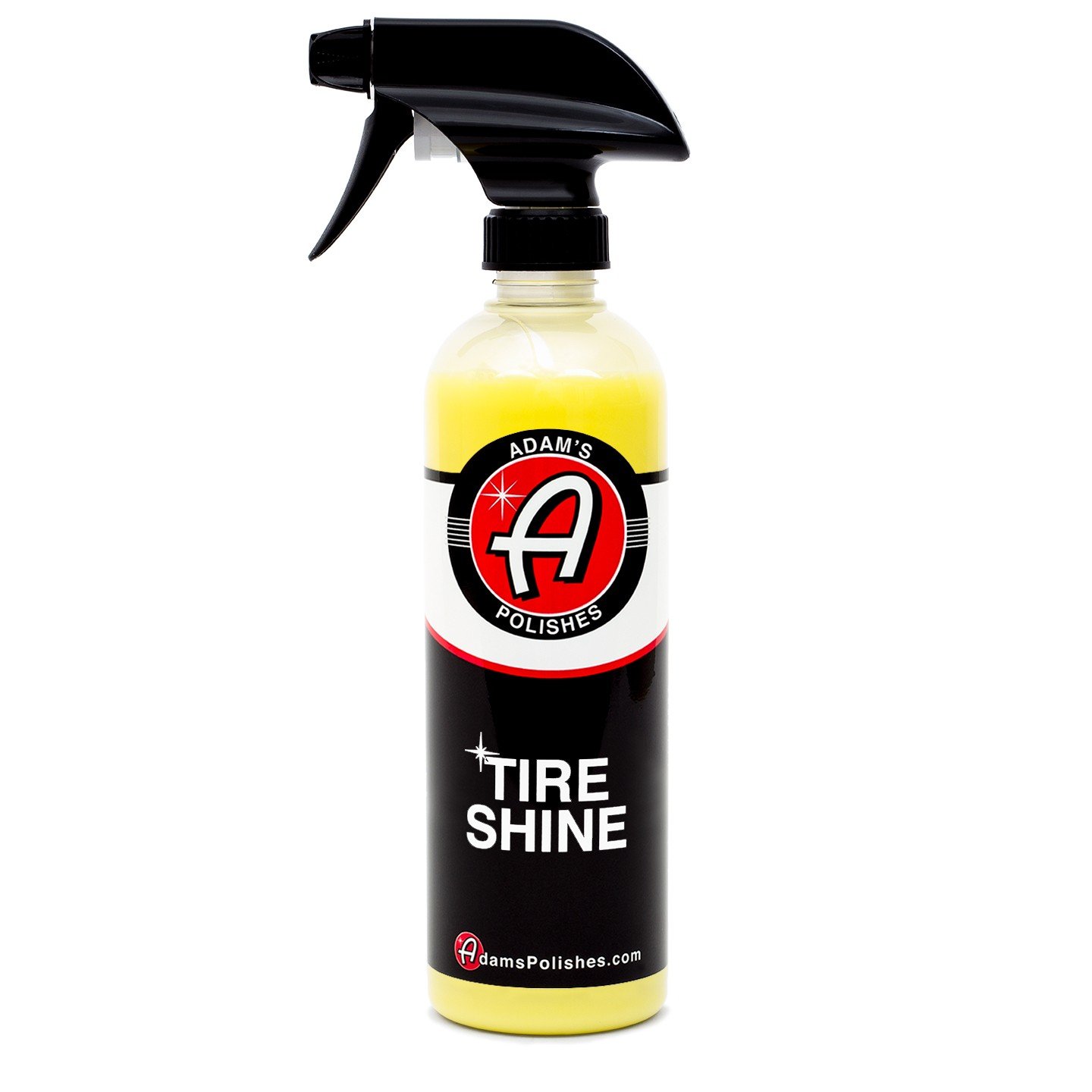
Navigating the vast market of tire care products can be daunting. Our curated selection for 2026 cuts through the noise, offering ranked choices based on performance, durability, user experience, and long-term tire health. This is an essential collection for any detailer or enthusiast.
#1 Overall Best Tire Shine for 2026: CarPro PERL
CarPro PERL (Plastic, Engine, Rubber, Leather) earns our top spot due to its incredible versatility, concentrated formula, and outstanding protective qualities. It’s a water-based, SiO2-infused (ceramic) dressing that offers a flexible finish.
- Formulation: Advanced water-based, concentrated, with UV inhibitors and SiO2.
- Longevity: Exceptional, often lasting 3-4 weeks on tires due to ceramic properties, significantly outperforming many traditional gels.
- Finish Options: Highly adaptable. Can be diluted 1:1 for high gloss, 1:2 for satin, or 1:3 for a natural matte finish.
- Ease of Application: Applied via an applicator pad after dilution, it spreads easily and evenly without streaking.
- Unique Features: Restores the blackness of plastic trim, prevents fading, and its hydrophobic properties shed water effectively. It’s a truly must-know product for comprehensive exterior care.
Additional Top-Tier Selections:
Best for High-Gloss & Longevity: Meguiar’s Endurance Tire Gel
Formulation: Solvent-based gel with advanced polymers. This popular choice delivers a deep, long-lasting wet look. Average product longevity comparison: Gels like Endurance often last 2-3 weeks, significantly longer than many spray-on dressings which might only last 3-7 days.
- Durability: Excellent, resisting wash-off and maintaining gloss for weeks.
- Application: Best applied thinly with a foam applicator to avoid sling.
Best for Natural/Satin Finish & Trim: Chemical Guys VRP Dressing
Formulation: Water-based, versatile protectant for vinyl, rubber, and plastic. Delivers a clean, non-greasy satin finish. Average cost per application is highly competitive due to its broad utility.
- Durability: Good for a water-based product (1-2 weeks), excellent for interior/trim.
- Application: Wipes on easily with an applicator, buffs to desired sheen.
Best for Ease of Use & Matte Finish: Griot’s Garage Black Shine Tire Gel
Formulation: Water-based gel, designed for a rich, deep black look without excessive gloss. It’s recommended for those seeking a sophisticated, understated aesthetic.
- Durability: Solid, generally 1-2 weeks, with strong browning resistance.
- Application: Spreads effortlessly and buffs to a clean, non-greasy matte finish.
Critical Considerations for Selection:
- Tire Type: Performance tires often benefit from water-based options that don’t dry out the rubber or attract excessive brake dust. For classic car tires, gentler water-based products are strongly advised to preserve vintage rubber.
- Environmental Conditions: If you live in a rainy climate, a more durable, often solvent-based or ceramic-infused product, might be preferable. For dusty environments, avoid overly sticky or greasy formulas that will attract dirt.
- Desired Finish: Are you aiming for a mirror-like wet shine or a subtle, factory-fresh matte look? This preference will guide your choice between solvent and water-based, or products that offer adjustable finishes.
Mastering Tire Shine Application: Techniques for Optimal Finish and Durability
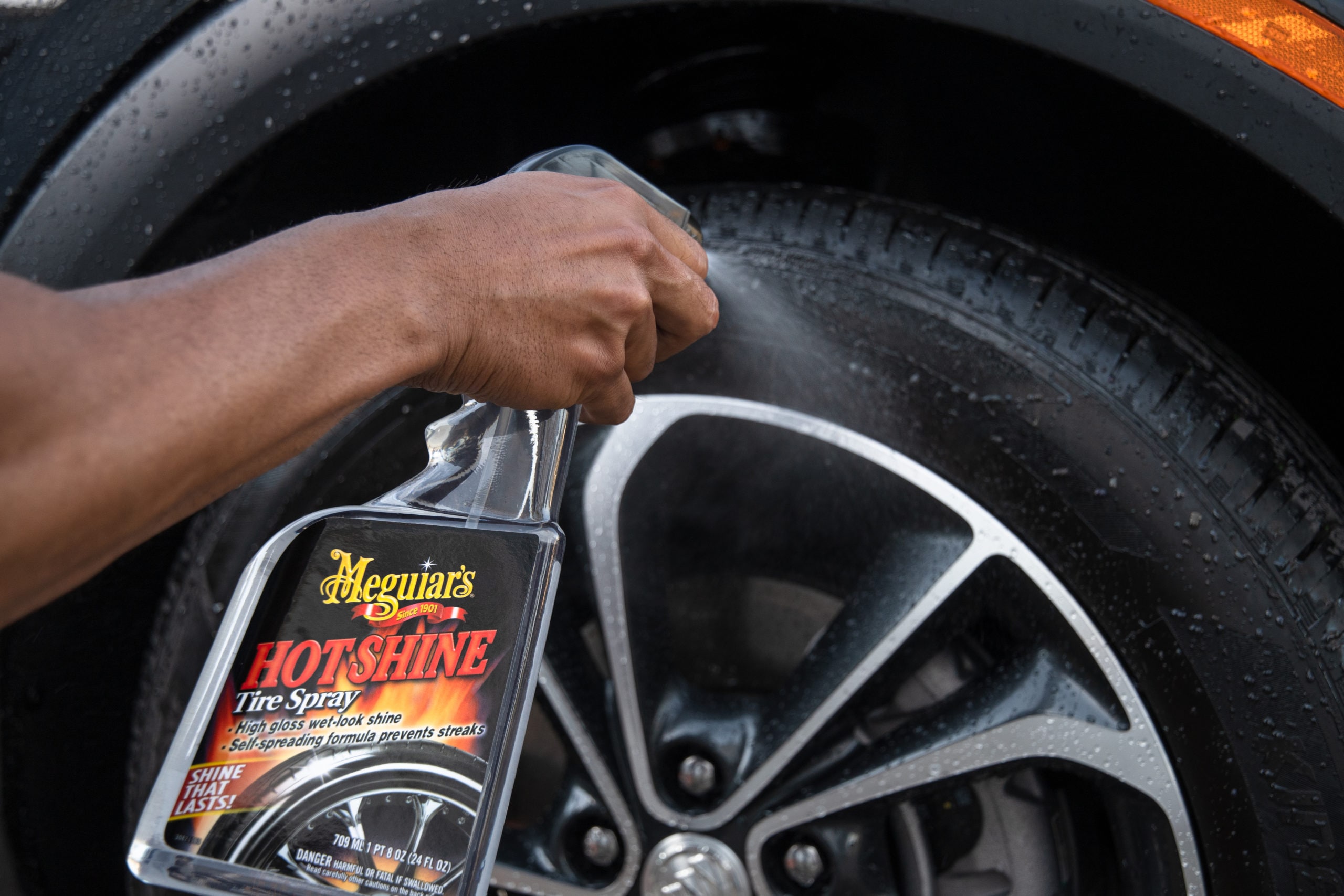
The secret to a professional-grade tire shine isn’t just the product; it’s the application. Poor technique can lead to disappointing results, regardless of how good your chosen product is. This essential guide provides the steps for perfection.
📋
Step-by-Step Guide
This is the most critical step. Use a dedicated tire cleaner (e.g., Meguiar’s D143 Non-Acid Tire & Wheel Cleaner) and a stiff bristle brush. Spray the cleaner generously, agitate thoroughly, and rinse until all brown foam (‘blooming’ agents) disappears. Repeat until the foam remains white. Research shows that 80% of shine durability comes from proper preparation.
Before applying any product, ensure the tires are completely dry. Water can dilute the dressing and lead to an uneven finish or reduced longevity. Use a clean microfiber towel or an air blower.
Gather your chosen applicator pads (foam for gels, microfiber for thin dressings). For sprays, consider masking off your wheels and painted surfaces with painter’s tape or a detailing shield to prevent overspray. This is especially crucial for aerosol products.
For Gels: Apply a small amount (a pea-sized drop for a medium tire) onto a foam applicator pad. Work it into the tire’s sidewall in an even, circular motion, ensuring full coverage. Less is often more; you can always add another thin layer. For Sprays/Aerosols: Mist lightly and evenly over the tire. Immediately spread and level the product with an applicator pad or microfiber towel. This prevents drips and ensures a uniform finish.
After initial application, allow the product to dwell for 10-15 minutes. This is crucial for penetration and adhesion. For a higher gloss, apply a second thin coat after the first has cured. For a satin or matte look, gently buff off any excess with a clean, dry microfiber towel after the cure time. Fact: Allowing 10-15 minutes of cure time can reduce sling by up to 90%.
After applying and allowing for initial cure, take a clean, dry microfiber towel and gently wipe around the circumference of the tire, particularly focusing on the outermost edge where the tire meets the wheel. This removes any potential excess product that could sling. Additionally, for the first few miles after application, avoid high speeds to allow the product to fully set and bond to the rubber.
Troubleshooting Common Tire Shine Issues: When Expectations Aren’t Met
Even with the best products and application techniques, issues can arise. Knowing how to diagnose and rectify them is a must-know for consistent, flawless results.
Persistent Issue: Tire Sling
This common frustration manifests as black specks or streaks flung onto your vehicle’s side panels, fenders, or even painted calipers after driving. The average driver experiences sling at least once, making it a prevalent concern.
- Causes:
- Over-application: Too much product, especially with thinner solvent-based sprays.
- Insufficient Cure Time: Not allowing the product to properly dry and bond to the rubber before driving.
- Product Viscosity: Thinner products are more prone to sling.
- Remediation:
- Immediate Wipe-off: If sling occurs, gently wipe off the product from painted surfaces with a quick detailer and a clean microfiber towel.
- Preventative Action: After applying, wait at least 15-30 minutes for curing, especially for solvent-based gels. Lightly buff off any excess with a dedicated tire towel. When driving for the first time after application, keep speeds moderate for the initial few miles.
If you frequently experience sling on performance tires with aggressive tread patterns, consider switching to a water-based gel or a ceramic-infused dressing. These tend to have less fling potential and offer better adhesion, preventing product from migrating into the tread blocks and being thrown off at speed.
Uneven Application, Streaking, or Blotches
- Causes: Inadequate cleaning, dirty applicator, rushing application, or applying too much product in one spot.
- Solutions: If wet, quickly re-level with a fresh applicator. If dry, clean the affected area with a tire cleaner and reapply thinly. Ensure your applicator is clean and evenly loaded with product.
Premature Fading or Lack of Desired Longevity
- Causes: Insufficient preparation, heavy rain or road spray, using a product not suited for local conditions, or applying too thin a coat (for layering products).
- Solutions: Re-evaluate your cleaning process. Consider a product with higher durability ratings for your climate, such as a ceramic-infused or solvent-based option. For products like CarPro PERL, ensure you’re using the appropriate dilution ratio for longevity, and don’t hesitate to apply a second thin coat after the first has cured.
Rectifying Tire Browning (Blooming)
This unsightly brown discoloration can sometimes re-emerge even after initial cleaning. This indicates that anti-ozonants are still migrating to the surface.
- Rectification: Perform an aggressive deep cleaning. Use a strong dedicated tire cleaner (or an All-Purpose Cleaner diluted 4:1) and a stiff brush, scrubbing vigorously. Rinse thoroughly and repeat until the suds are completely white. Re-cleaning with an APC can resolve up to 70% of browning issues.
- Preventative Measures: Consistent use of a high-quality tire shine with UV inhibitors and rubber conditioners will help condition the rubber and encapsulate these migrating agents, reducing future blooming. Regular cleaning before reapplying shine is key.
By The Numbers
Tire Lifespan Reduction from UV (without protection)
Shine Durability from Proper Prep
Sling Reduction with 10-15 Min Cure
Browning Issues Resolved by APC Cleaning
Achieving the “best” tire shine for 2026 is a nuanced journey, balancing aesthetic preference with the crucial need for rubber protection against relentless environmental aggressors. Our exploration has revealed that optimal tire shine balances aesthetics with critical rubber protection against environmental stressors, particularly UV radiation and ozone. The choice between water-based and solvent-based formulations is a curated decision, depending on your desired finish, longevity expectations, and long-term tire health priorities.
Remember, proper tire preparation and precise application techniques are paramount for preventing common issues like sling and ensuring maximum durability. The truly best tire shine for you in 2026 is a selection that thoughtfully considers finish, longevity, your vehicle’s specific needs, and your willingness to implement meticulous application practices.
Elevate your vehicle’s presentation and extend the life of your tires by implementing these expert-vetted strategies. Explore our recommended products and transform your tire care routine today, ensuring your vehicle always stands on perfectly dressed rubber.
Frequently Asked Questions
How long does tire shine typically last?
The longevity of tire shine varies significantly based on its formulation (gels generally outlast sprays), application technique, and environmental exposure. High-quality solvent-based gels can last 2-4 weeks, while water-based dressings often last 1-2 weeks. Factors like rain, road conditions, and frequency of washing directly impact durability.
Can tire shine damage my tires or wheels?
Poor quality or excessive application of some solvent-based tire shines can potentially dry out tire rubber over time, leading to browning or cracking. Additionally, product ‘sling’ can stain painted or plastic wheel components. Using reputable water-based products or applying solvent-based shines sparingly and buffing off excess minimizes these risks.
What is ‘tire blooming’ or ‘browning’ and how do I prevent it?
Tire blooming, or browning, is when a brownish residue appears on tire sidewalls. It’s caused by antioxidants within the rubber migrating to the surface to protect against ozone. To prevent it, thoroughly clean tires with a dedicated tire cleaner and brush before applying shine, which helps remove surface contaminants and trapped blooming agents.
Is it better to use a tire shine spray or gel?
Both sprays and gels have their merits. Gels typically offer longer lasting shine, more control during application to prevent sling, and a deeper finish. Sprays are faster to apply but often have shorter durability and a higher risk of overspray. The choice depends on personal preference for application ease versus durability and finish quality.
How can I prevent tire shine from ‘slinging’ onto my car’s paint?
To prevent sling, always apply tire shine thinly and evenly, avoiding over-saturation. Allow adequate curing time (15-30 minutes) before driving, especially with solvent-based products. Wiping off any excess product with a microfiber towel after application is also crucial. Some advanced formulas feature anti-sling technology.