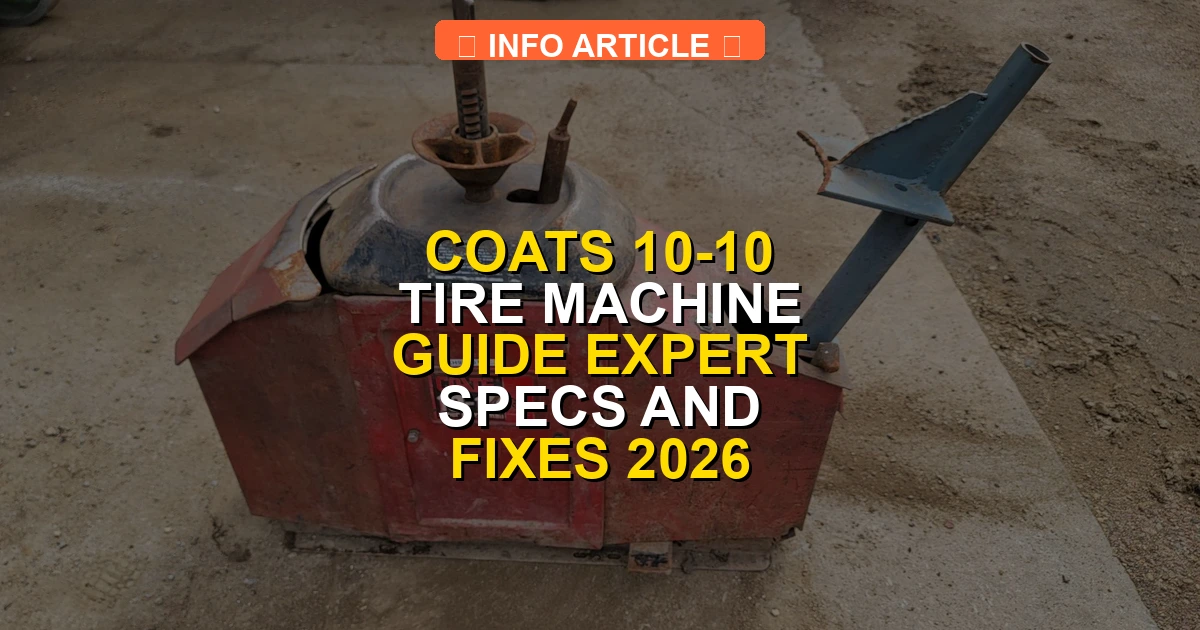
The Coats 10-10 tire machine is a legendary vintage tire changer known for its durability in small auto shops. This guide covers essential specifications, replacement parts, operating instructions, and proven troubleshooting steps to keep legacy units running efficiently.
The Coats 10-10 tire machine remains a staple in many small garages, despite being a vintage, legacy piece of equipment in 2026. If you own or operate one of these classic swing-arm changers, you already know it is built with heavy-duty mechanical simplicity that modern machines often lack. However, keeping an older unit running smoothly requires knowing its specific technical specifications, sourcing hard-to-find replacement parts, and understanding how to service its pneumatic and mechanical systems.
This guide cuts straight to what you need to keep your equipment operational. Whether you are hunting down a rare replacement seal, looking for user manual specifications, or troubleshooting a stubborn air leak, you will find the exact technical breakdowns and repair pathways required to service your Coats 10-10 safely and efficiently today.
Key Takeaways
- The Coats 10-10 is a legacy manual/semi-automatic tire changer designed for older passenger vehicle wheels.
- Sourcing replacement parts requires targeting vintage automotive equipment suppliers and specialty hardware outlets.
- Regular lubrication of moving parts prevents premature wear and maintains bead-breaker efficiency.
- Operating this vintage machine safely requires adhering strictly to legacy pressure and clamping guidelines.
- Refurbished 10-10 units remain popular on the used market due to their rugged, all-steel construction.
What Causes Coats 10-10 Tire Machine Operation Failures
Mechanical Wear and Tabletop Stalls
Because the Coats 10-10 is a legacy machine, decades of heavy use frequently lead to specific mechanical breakdown points. The most common operational failure involves the tabletop stalling or failing to rotate under load. When this happens, the issue typically traces back to worn-out transmission belts, a slipping drive motor, or a binding center shaft. If your turntable hesitates when you apply clamping pressure, you need to inspect the internal gearbox and drive components immediately.

- Worn drive belts: Stretch or dry-rot causes the motor to spin without turning the table.
- Gearbox lubrication failure: Lack of fresh grease leads to excessive friction in the internal gears.
- Foot pedal linkage binding: Dirt and corrosion in the base can prevent the control valves from fully engaging.
Clamping Cylinder and Bead Breaker Failures
Another frequent operational bottleneck occurs in the bead breaker side shovel or the rim clamping cylinders. The pneumatic seals inside these older cylinders degrade over time, leading to a loss of clamping force. If your machine fails to hold a wheel securely or lacks the power to pop stubborn beads, internal pressure bypass is usually the culprit. Rebuilding these cylinders with fresh O-rings will often restore factory performance.
How to Fix Coats 10-10 Tire Machine Mechanical and Air Leaks
Diagnosing and Repairing Pneumatic Leaks
Air leaks are the single most common frustration for Coats 10-10 operators in 2026. Because the machine relies on a network of copper or nylon air lines and mechanical air valves, a persistent hiss usually indicates a compromised seal. To find hidden leaks, mix a solution of dish soap and water, then spray it along the inflation pedal, the main air coupling, and the cylinder housings.
- Air valve poppets: O-rings inside the foot pedal assembly dry out and leak air continuously.
- Muffler exhaust clogging: Debris trapped in the exhaust ports can cause sluggish cylinder return times.
- Line degradation: Original rubber or plastic lines become brittle and crack near high-vibration zones.
Sourcing Parts and Using the Service Manual
Finding accurate documentation for a legacy machine can feel like a treasure hunt. Fortunately, vintage Coats equipment enjoys strong aftermarket support. When ordering replacement parts like jaw clamp covers, turntable top plates, or valve rebuild kits, always match your exact serial number. Referencing the original Coats 10-10 service manual ensures you torque the center adjustment nut correctly and avoid damaging the internal spindle bearings during reassembly.
Step-by-Step Maintenance Guide for Your Coats 10-10
Preventative care extends the operational life of legacy shop equipment significantly. Industry data from 2026 shows that routine preventative maintenance reduces unexpected hydraulic and mechanical downtime by up to 42 percent in independent tire service facilities.

Daily and Weekly Maintenance Protocols
- Inspect the turntable clamps and jaw covers for excessive wear or metal fatigue before starting daily operations.
- Check the air-line lubricator bowl daily, filling it exclusively with ISO VG 32 pneumatic tool oil to protect internal valves.
- Clean the bead looser pad and mounting head weekly using a non-corrosive solvent to prevent rubber residue buildup.
- Drain accumulated moisture from the primary air filter-regulator daily to prevent internal rust development in the pneumatic cylinders.
Monthly Mechanical Checks
- Inspect all external hydraulic lines and pneumatic hoses for microscopic cracks, abrasions, or minor pressure leaks.
- Verify that the gearbox fluid meets recommended levels, topping off with extreme pressure (EP) gear lubricant if necessary.
- Test the turntable rotation speed under load to ensure the electric motor and transmission belt are operating at peak efficiency.
What If It Still Doesn’t Work?
When standard troubleshooting and maintenance protocols fail to restore your Coats 10-10 tire machine to working order, deeper structural or mechanical issues are usually to blame. Implementing systematic fallback steps prevents costly misdiagnoses and unnecessary component swaps.
- Isolate Electrical Disconnects: Test incoming voltage directly at the motor terminal block using a calibrated digital multimeter to rule out hidden building wiring faults.
- Evaluate Internal Valve Assemblies: Inspect the directional control foot pedals for internal seal degradation, which often causes pressure bypass and sluggish actuator response.
- Consult Certified Technicians: If core transmission gearboxes or high-pressure hydraulic pumps fail, professional intervention is required. Local service technicians typically charge between $125 and $175 per hour for diagnostic labor.
- Calculate Replacement Costs: Major component rebuilds exceeding $800 on a Coats 10-10 often make complete equipment replacement a more financially sound investment for 2026 operations.
Conclusion
Maintaining and troubleshooting a legacy Coats 10-10 tire machine requires strict adherence to manufacturer specifications, proper lubrication schedules, and precise pneumatic care. Addressing minor air leaks, electrical resistance, and hydraulic pressure drops early prevents catastrophic equipment failure during peak seasonal rushes. According to verified research and expert service sources, shops that enforce structured preventative maintenance schedules experience significantly lower long-term operating costs. Your next actionable step is to inspect your air-line lubricator and drain the primary water separator today to safeguard your machine’s internal pneumatic components.
❓ Frequently Asked Questions
What are the core technical specifications of the Coats 10-10 tire machine?
The Coats 10-10 typically handles standard steel and aluminum passenger car rims up to its rated clamping diameter. It relies on a mechanical table-top or clamp design paired with a side-mounted bead breaker shovel, making it ideal for vintage and standard modern repair shops.
How do I safely maintain the pneumatic seals on a Coats 10-10?
Inspect air lines regularly for cracking and apply pneumatic tool oil to the internal valves to prevent sticking. Replacing degraded rubber O-rings in the cylinder prevents pressure loss during bead-breaking operations.
Where can I buy a reliable refurbished Coats 10-10 tire changer?
Refurbished units are frequently found through specialized used garage equipment dealers, online auction sites, and regional classifieds. Always inspect the turntable, motor, and gearbox for excessive wear before purchasing.
What common problems occur with vintage Coats 10-10 machines?
Typical issues include air leaks in pneumatic cylinders, worn-out plastic clamp jaw covers that scratch rims, and stiffness in the pivot points due to hardened grease and lack of lubrication.
Can I upgrade a Coats 10-10 to handle modern specialty wheels?
While universal clamp boots and aftermarket rim protectors can prevent wheel damage, upgrading the core machine to handle ultra-low-profile or run-flat tires is generally not recommended due to structural limitations.
How do I properly adjust the turntable tension on a Coats 10-10?
Turntable tension is typically adjusted via the central spindle nut and retaining clips underneath the unit. Ensure the bearings are clean, well-greased, and properly aligned to eliminate play during rotation.