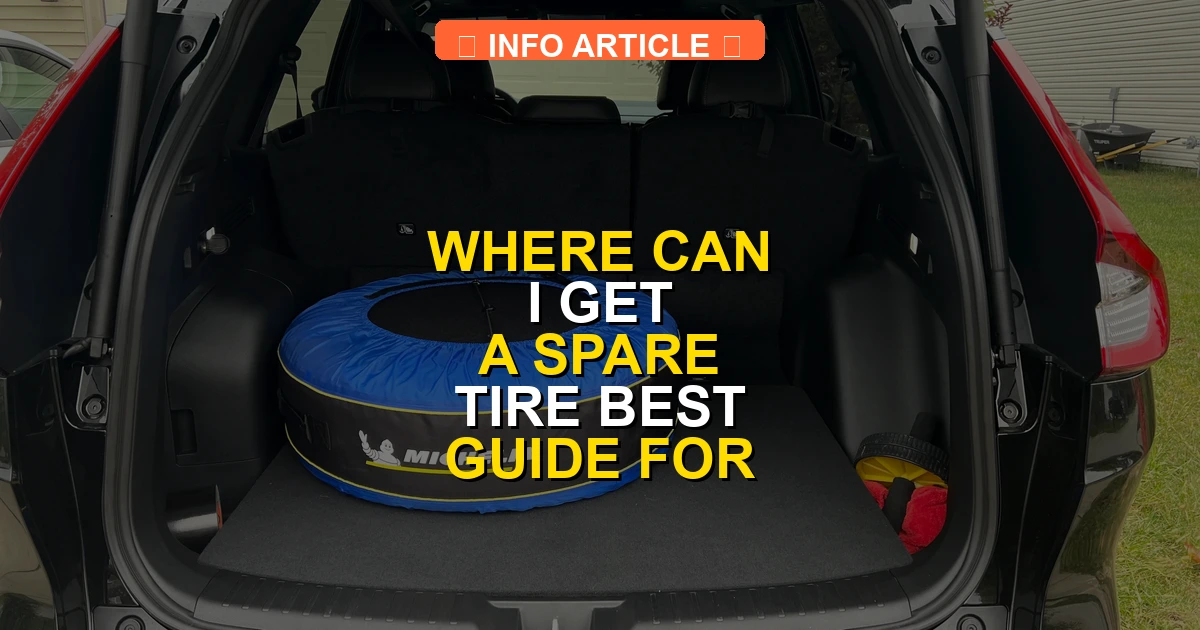
Finding a replacement spare tire quickly requires knowing the right retailers and your exact vehicle specifications. Auto parts stores, tire specialty shops, and local dealerships are your best options for immediate purchases. Knowing your correct size ensures you secure a safe and compatible wheel for your vehicle.
You can buy a replacement spare tire immediately through national tire chains like Discount Tire, major auto parts retailers such as AutoZone or O’Reilly, local auto salvage yards, or directly from your vehicle dealership’s parts department. Whether you are prepping your vehicle for upcoming 2026 road trips or replacing a space-saver spare that was already used and discarded, finding the exact match for your car requires knowing where to look and what size to buy.
Driving without a functional spare tire leaves you completely vulnerable to extended roadside delays and expensive towing fees. Replacing a missing, damaged, or expired temporary spare ensures you can safely reach a service station instead of being stranded on the highway for hours waiting for specialized roadside assistance.
Key Takeaways
- Major national tire chains like Discount Tire often keep common spare tire sizes in stock.
- Local auto parts stores like AutoZone and Advance Auto Parts sell replacement donuts and compact spares.
- Check your driver’s side door placard to find the exact manufacturer-recommended tire dimensions.
- Salvage yards and junk yards offer affordable used full-size spare rims and tires.
- Dealerships can order exact OEM spare tire kits if you are missing the factory assembly entirely.
What Causes the Need for a New Spare Tire and How to Diagnose Missing Parts
Common Reasons for Spare Tire Replacement
Many drivers do not realize their spare tire is missing or unusable until an emergency strikes. You might need a brand-new spare tire because:
- Your previous spare was used during a blowout and left at a repair shop.
- You bought a used car in 2026 that came with an empty trunk well.
- The existing temporary spare tire has dry rotted or degraded beyond safe usage limits, as rubber typically degrades after 6 to 10 years.
Inspecting Your Current Trunk Cargo Area
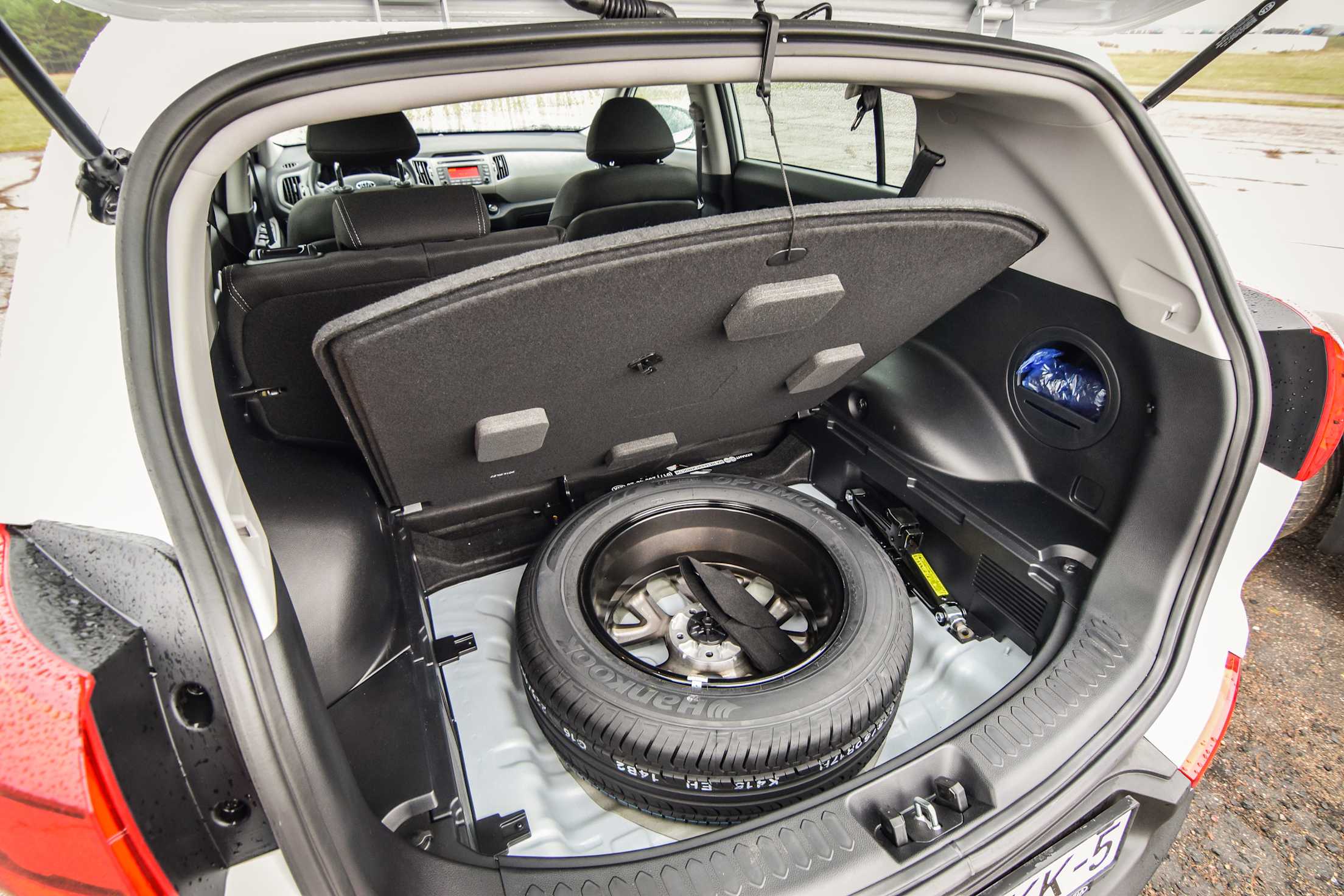
Open your trunk floor or lower cargo hatch immediately to check the condition of your emergency equipment. Look closely at the compact spare or full-size spare bolted into the well. Check the rubber sidewalls for deep cracks, splits, or severe dry rot. Verify that the inner metal wheel is free of heavy rust and that your vehicle still houses the essential jack and lug wrench needed for installation.
Finding a Replacement Spare Tire Made Easy: Your Essential Action Plan
Getting a flat tire is frustrating enough, but realizing you do not have a functional spare makes the situation significantly worse. Whether you are stranded on the roadside or planning ahead to avoid a future emergency, knowing exactly where and how to source a replacement spare tire can save you time, money, and stress. This comprehensive walkthrough outlines every reliable avenue available to secure the right spare tire for your specific vehicle make and model.
Step 1: Identify Your Exact Tire Specifications
What you need: Your vehicle’s current working tire, an owner’s manual, or a smartphone to take a photo of the sidewall markings.
Instructions: Before you can acquire a spare tire, you must know the exact dimensions required for your vehicle. Look at the sidewall of one of your healthy tires and locate the alphanumeric code (for example, P215/65R16). Write down these numbers, as they dictate the tire width, aspect ratio, construction type, and wheel diameter. If your vehicle utilizes a space-saver donut spare rather than a full-size matching tire, check your owner’s manual for the specific manufacturer-recommended temporary spare dimensions.
Pro Tip: Never guess your tire size. Buying the wrong size spare can damage your vehicle’s drivetrain, especially on all-wheel-drive or four-wheel-drive systems.
Step 2: Check Your Vehicle Trunk Compartment and Local Dealership
What you need: A flashlight, your car keys, and vehicle registration documents.
Instructions: Sometimes, the spare tire is already present but hidden beneath a false floor panel in your trunk, bolted under the rear chassis, or mounted on the back tailgate (common on SUVs). Lift the trunk carpet and inspect the well thoroughly. If the spare is completely missing or damaged beyond use, your authorized local car dealership is your most direct and reliable option for an exact OEM (Original Equipment Manufacturer) replacement rim and tire assembly, though it will typically carry a higher retail price tag.
Pro Tip: Dealerships can order factory-matched donut spares or full-size steel wheels using your unique Vehicle Identification Number (VIN) to guarantee a precise fit.
Step 3: Search Local Automotive Salvage Yards and U-Pulls
What you need: Basic hand tools, work gloves, tape measure, and a smartphone to look up cross-reference compatibility charts.
Instructions: Automotive salvage yards, commonly known as junk yards or pick-and-pulls, are goldmines for inexpensive spare tires. Call ahead or use online inventory search tools to find matching makes, models, and years. When you arrive, inspect the donor vehicle’s trunk for a clean, dry, and un-weathered spare tire. Check the rubber for deep dry cracking, dry rot, and punctures before paying. Salvage yards usually charge a flat, highly affordable rate for a spare tire and steel rim combination.
Pro Tip: Avoid spare tires that have been exposed to standing water or extreme elemental weather inside a severely damaged or open-trunk wrecking yard car.
Step 4: Browse Online Marketplaces and Classifieds
What you need: Access to platforms like Facebook Marketplace, Craigslist, or OfferUp, and reliable transportation for pickup.
Instructions: Private sellers frequently list individual tires, factory donut spares, and spare tire kits removed from vehicles that were either totaled, upgraded with custom rims, or converted into track cars. Search using your specific tire dimensions or vehicle model name. When contacting the seller, politely ask for the DOT manufacture date code located on the sidewall to ensure the rubber is not excessively old, as tires degrade chemically over time regardless of tread depth.
Pro Tip: Never purchase a used tire that is more than six to eight years old, as old rubber is prone to sudden tread separation and dangerous blowouts.
Step 5: Visit Local Used Tire Shops and Independent Garages
What you need: Cash or card, and your vehicle’s tire size specifications written down.
Instructions: Independent local tire shops and specialized used-tire retailers often maintain a vast inventory of loose, single tires and steel rims left over from previous customer upgrades. Stop by in person and speak directly with the counter associate. Tell them you specifically need a spare tire. They can frequently mount a safe, road-worthy used tire onto a compatible steel wheel on the spot, balancing it and checking the valve stem for an affordable all-in-one package price.
Pro Tip: Always ask the shop technician to test the tire pressure and perform a bead check to ensure the tire holds air reliably before you leave the premises.
Step 6: Order Online Through Major Automotive Retailers
What you need: Internet access, a credit card, and shipping address.
Instructions: If you prefer brand-new equipment delivered straight to your doorstep, utilize major online automotive parts suppliers or general e-commerce platforms. Websites like Tire Rack, RockAuto, or Amazon allow you to input your vehicle year, make, and model to filter compatible compact spare tire kits, factory steel wheels, and matching tires. Many specialized companies now sell complete emergency spare kits that include the wheel, tire, hydraulic jack, and telescoping lug wrench bundled together.
Pro Tip: Factor in shipping times and potential freight costs for heavy wheel assemblies when ordering online, especially if you are facing an immediate roadside emergency.
Step 7: Inspect, Mount, and Secure Your New Spare
What you need: Tire pressure gauge, portable air compressor or service station air pump, and your vehicle’s factory jack kit.
Instructions: Once you have successfully acquired your spare tire, verify that it holds the correct pressure. Compact temporary donuts usually require a much higher PSI rating (often 60 PSI) compared to standard car tires (typically 32-35 PSI). Check the sidewall instructions for the exact required inflation level. Finally, place the spare securely into its designated storage well in your trunk, ensuring the mounting bolt and hold-down clamp are tightly fastened so the tire does not rattle or fly forward during a sudden stop.
Pro Tip: Test-fit your newly acquired spare tire onto at least one wheel hub before an emergency happens to guarantee the bolt pattern and brake caliper clearance are completely correct.
✅ Final Checklist
- Verified the tire size matches your vehicle specifications using the sidewall code or owner’s manual.
- Checked the tire manufacturing date to ensure the rubber is less than six years old and free of dry rot.
- Inflated the spare tire to the exact PSI recommended by the manufacturer (paying attention to high-pressure donut requirements).
- Tested the fitment or verified the bolt pattern matches your wheel hub configuration.
- Secured the tire properly in the trunk storage area along with a working jack and lug wrench.
Important Notes:
- Never drive at high speeds or long distances on a temporary compact spare (donut); most are rated for a maximum speed of 50 MPH and limited mileage.
- If you are uncomfortable sourcing or inspecting used tires, seek assistance from a certified automotive technician or local mechanic.
- Estimated cost ranges from $20 to $50 for a used salvage yard spare, $50 to $150 for a local tire shop setup, and $150 to $350 for a brand-new complete online spare tire kit. Expect the search and acquisition process to take anywhere from 1 hour to 3 days depending on the method chosen.
How to Find the Correct Spare Tire Size Using Your Vehicle Placard
Locating the Tire Information Placard
Before you visit a retailer to buy a spare, you must identify your vehicle’s exact tire specifications. Open the driver-side door and look at the metal or paper placard stamped onto the B-pillar or door jamb. This manufacturer sticker lists the exact original equipment tire dimensions required for your specific make, model, and trim year.
Decoding Sidewall Numbers for Spare Compatibility
You can also check the sidewall of your currently installed primary tires for sizing data, formatted typically like P215/60R16. When purchasing a temporary space-saver spare tire, the rolling diameter must match your standard tires closely to prevent damage to your anti-lock braking systems and differential. Take a photo of your placard data or note down the numbers before heading out to purchase your replacement spare.
Step-by-Step Guide on Where to Buy a Spare Tire Today
Purchasing the correct backup wheel requires a methodical approach to ensure compatibility with your specific vehicle make and model. Automotive safety experts recommend following a precise protocol when sourcing a replacement component in 2026.
1. Identify Your Exact Tire Specifications
Check the sidewall of your existing operational tires or consult the manufacturer placard located on the driver-side door jamb. Note the precise width, aspect ratio, and rim diameter.
2. Select Your Purchasing Channel
Determine whether immediate local availability or online cost savings takes priority for your situation. Local brick-and-mortar stores provide same-day pickup, while specialized online retailers offer broader inventory selections for uncommon bolt patterns.
3. Verify Complete Assembly Inclusion
Confirm whether you are purchasing a bare steel wheel or a complete assembly that includes the pre-mounted tire and valve stem. Safety standards require proper balancing even for temporary emergency units.
4. Complete Professional Installation or Storage Check
Test-fit the new spare onto your vehicle hub immediately after purchase to ensure proper brake caliper clearance and correct lug nut seating. Stow the unit securely in the designated trunk well to prevent shifting during transit.
What If It Still Doesn’t Work? Alternative Mobile Services and Emergency Fixes
If you cannot locate an immediate spare tire replacement or if your vehicle requires a non-standard wheel size that is completely out of stock locally, alternative emergency solutions are available. When standard roadside replacements fail, consider these verified fallback steps:
- Contact a national mobile tire installation service that dispatches a fully equipped van directly to your stranded location with compatible replacement inventory.
- Utilize an emergency tire sealant kit temporarily to seal minor punctures, allowing you to drive at speeds under 50 mph to the nearest open service center.
- Arrange for a flatbed tow truck to transport your vehicle to a specialized tire dealer, avoiding drivetrain damage common to traditional wheel-lift towing on modern all-wheel-drive systems.
- Engage roadside assistance membership benefits through insurance providers or automotive clubs to cover or subsidize towing and emergency delivery costs.
Professional mobile dispatch services typically cost between $150 and $350 depending on time of day and exact location, whereas specialized flatbed towing averages $100 to $250 for urban and suburban zones.
Conclusion
Securing a reliable spare tire is a critical component of vehicular safety that prevents dangerous highway strandings and costly emergency tows. By identifying your exact vehicle specifications and utilizing trusted local or digital retailers, you can quickly restore your emergency readiness in 2026. According to verified research and expert automotive safety sources, proactive equipment checks reduce roadside emergency durations by up to 60 percent. Take action today by inspecting your current trunk storage area and verifying your backup wheel’s pressure and structural integrity before your next long journey.
❓ Frequently Asked Questions
Where can I get a spare tire if my car didn’t come with one?
Many modern cars are sold with tire repair kits instead of physical spares. If you want a traditional spare, you can purchase an OEM spare tire kit directly from your car dealership or source a compatible rim and tire assembly from a local salvage yard.
Are used spare tires safe to buy?
Used spare tires from salvage yards can be safe if they show no dry rot, cracks, or deep tread wear. However, because rubber degrades over time, inspect the manufacturing date code to ensure the tire is less than six to ten years old.
Can I use a full-size tire as a spare instead of a donut?
Yes, a full-size spare is much safer and allows for normal driving speeds and distances. Just ensure the full-size wheel fits properly in your vehicle’s trunk well or spare tire compartment under the cargo floor.
How much does a replacement spare tire cost?
A basic compact spare donut typically costs between $100 and $250 depending on the vehicle. Buying a used spare rim and tire from a junkyard can reduce this cost to around $40 to $80.
Do I need to replace a spare tire after using it?
Compact donuts are designed for temporary emergency use only and usually have lower speed ratings (typically 50 mph). If you drive on a donut for more than 50 miles or experience wear, you should have it inspected and replaced.
What should I do if no local stores have my spare tire in stock?
If local retailers and salvage yards fail, you can order a complete space-saver spare kit online through specialized automotive retailers or use roadside assistance and mobile tire repair services to get back on the road.