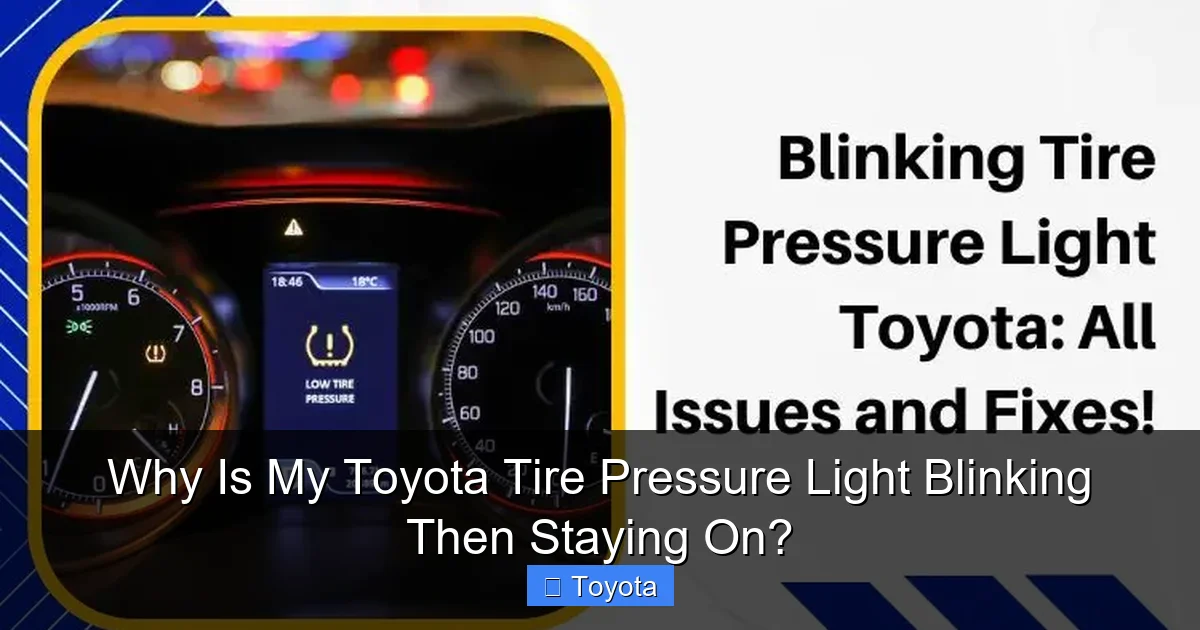
A blinking tire pressure light on a Toyota indicates a system malfunction or sensor failure rather than simply low air pressure. The flashing pattern typically occurs for about one minute after starting the vehicle before turning solid, signaling that the vehicle’s computer cannot communicate with one or more TPMS sensors.
If you just started your Toyota and noticed the tire pressure warning light is flashing or blinking instead of staying solidly lit, you are dealing with a system malfunction. A solid TPMS (Tire Pressure Monitoring System) light simply means one or more of your tires is low on air. However, a blinking light—which typically flashes for about 60 to 90 seconds when you turn the ignition on before staying solid—signals a communication failure or an electrical fault within the monitoring system itself.
For Toyota owners navigating vehicle maintenance in 2026, understanding this distinction saves time and prevents unnecessary trips to the gas station air pump. Pumping air into your tires will not make a blinking light go away because the computer cannot read the sensors. You need to diagnose why the vehicle and the wheel sensors have lost connection or stopped working entirely.
Key Takeaways
- A flashing TPMS light means a system malfunction, not just low tire pressure.
- Dead internal sensor batteries are the most common cause of a blinking light.
- Many Toyota models include a TPMS sensor inside the full-sized spare tire.
- Newly installed sensors require proper programming to sync with the car’s computer.
- You can attempt a manual system reset using the dashboard or glovebox button.
What Causes a Blinking Tire Pressure Light on a Toyota
Dead or Expiring Sensor Batteries
Inside every Toyota wheel is a small, battery-powered sensor attached to the valve stem. These batteries typically last between 5 to 10 years. If your Toyota is entering its later years, a dead sensor battery is the number one culprit behind a blinking TPMS light. When the internal battery dies, the sensor stops broadcasting its pressure data to your dashboard computer. You cannot replace just the battery; the entire physical sensor unit must be swapped out.
Unprogrammed Replacement Sensors
Did you recently buy new tires, rotate your wheels, or get a flat repaired? If a tire shop installed a new TPMS sensor without properly programming its unique ID number into your Toyota’s onboard computer, the car will not recognize it. The system throws a blinking error code because it detects a missing or unrecognized signal from one of the wheel positions.
Physical Damage from Road Hazards
Potholes, curb checks, and aggressive off-roading can physically snap or damage a TPMS sensor inside the tire. Even corrosion around the valve stem can interfere with the electronic components. If a sensor breaks off completely, it will rattle around inside the tire and trigger an immediate system fault light.
How to Troubleshoot Toyota TPMS Sensor and Spare Tire Issues
The Hidden Spare Tire Sensor Problem
Many Toyota models—including the RAV4, Highlander, 4Runner, and Tacoma—feature a full-sized fifth tire mounted underneath the vehicle or on the rear tailgate. Many drivers forget that this spare tire also contains an active TPMS sensor. If the air pressure in your spare tire drops significantly, or if the spare’s sensor battery dies, the vehicle will register a fault and flash the dashboard light. Always check the pressure of your spare tire before assuming the issue is restricted to the four wheels currently on the ground.
Checking Diagnostic Trouble Codes (DTCs)
Unlike basic tire inflation issues, a blinking TPMS light usually generates a specific diagnostic trouble code stored in the body control module. Basic OBD2 scanners might not read chassis or TPMS codes, so you will need a specialized tool or a visit to a local mechanic to scan the system. Common troubleshooting steps include:
- Using a dedicated TPMS activation tool to ping each individual wheel sensor and verify it is transmitting data.
- Checking the dashboard menu to see if your Toyota allows you to manually reinitialize or reset the system via the set button (usually located under the steering wheel or inside the glovebox).
- Inspecting the receiver module wiring if multiple sensors simultaneously stop reporting to the car.
Step-by-Step Guide to Resetting the Toyota TPMS System
Once you have inflated all four tires to the exact psi specifications listed on your Toyota placard, you must reset the Tire Pressure Monitoring System. Modern Toyota vehicles manufactured through 2026 feature an electronic initialization button that recalibrates the baseline pressure.
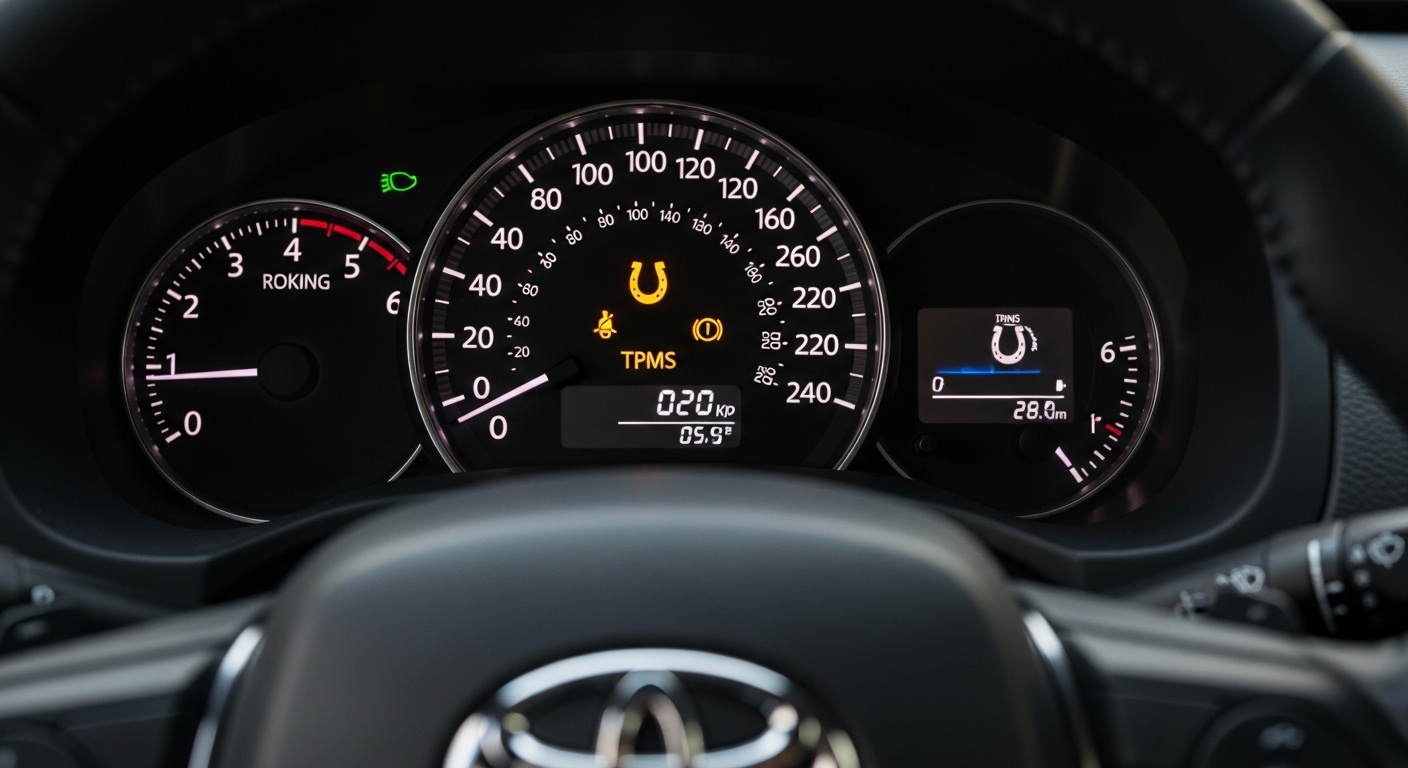
Locating the TPMS Reset Button
Depending on your specific Toyota model and year, the physical set switch is typically located underneath the lower left side of the dashboard near the steering column. Alternatively, newer trims integrate this function directly into the multi-information display screen located on the instrument cluster. Consult your owner manual if the physical button is obscured by lower trim panels.
Executing the Reset Procedure
- Turn the ignition switch to the ON position without starting the engine to power the dashboard electronics.
- Locate and press and hold the TPMS reset button until the indicator light on your instrument cluster blinks slowly three times.
- Keep the ignition turned on and allow the vehicle to sit undisturbed for several minutes to complete the internal sensor handshake.
- Drive your Toyota at speeds above 25 mph for approximately 10 to 20 minutes to allow the sensors to transmit live telemetry data back to the main computer.
What If the TPMS Light Still Flashes After a Reset
If the flashing warning light refuses to turn solid or disappear after completing the initialization steps, underlying mechanical or electronic failures are usually present. Automotive service data indicates that persistent flashing points to components that require physical replacement rather than a simple software recalibration.
Troubleshooting Persistent TPMS Issues
- Inspect the spare tire located underneath the vehicle or in the trunk, as many Toyota models feature a full-functioning TPMS sensor inside the spare assembly.
- Check for dead internal batteries within the tire sensors, which typically have a verified lifespan of 5 to 10 years or roughly 100,000 miles.
- Scan the OBD-II port using a specialized diagnostic tool capable of reading individual sensor identification codes and radio frequency signals.
- Visit a certified tire technician or dealership service center to replace broken valve stems or faulty sensor units, with professional replacement costs ranging from $100 to $250 per wheel including labor.
Conclusion
A blinking tire pressure light on your Toyota signals an electronic system fault or communication breakdown that requires immediate attention beyond basic air inflation. By locating the physical reset switch, executing the proper dashboard calibration sequence, and addressing failing sensor hardware, you restore critical vehicle safety margins. According to verified research and expert automotive studies from the National Highway Traffic Safety Administration, maintaining proper tire pressure prevents dangerous blowouts and optimizes fuel economy by up to 3 percent. Your actionable next step is to verify your tire pressures using a digital gauge today and perform the initialization procedure before scheduling professional diagnostic service.
❓ Frequently Asked Questions
Why did my Toyota tire pressure light start blinking after getting new tires?
This frequently happens if a tire technician accidentally damaged a sensor during installation or if the new sensors were not properly programmed to your vehicle’s computer.
Where is the Toyota TPMS reset button located?
On most Toyota models, the reset button is located underneath the lower left side of the dashboard near the steering column, though some older models place it inside the glove box.
How long do Toyota TPMS sensor batteries last?
Original equipment TPMS sensor batteries typically last between five to ten years. Once the battery dies, the entire sensor unit must be replaced.
Can I use an OBD2 scanner to diagnose a blinking Toyota TPMS light?
Basic code readers will not read tire pressure systems, but an advanced TPMS scan tool can read individual sensor IDs, battery status, and signal transmission.
Will filling my tires with air stop a flashing Toyota TPMS light?
No, adding air only resolves a solid warning light. A blinking light means the computer cannot read the sensors, so air pressure adjustments will not clear the fault.
Is it safe to ignore a blinking Toyota tire pressure light?
While the car remains mechanically drivable, ignoring a system malfunction means you will not receive automated warnings if a tire rapidly loses pressure in the future.