Swapping a long-haul fleet from open to closed shoulder drive tires cuts annual fuel costs by up to 8% while stretching tread life to 200,000 miles before the first retread. Many fleet managers assume tread depth is the sole metric driving commercial tire ROI. That assumption burns cash. The real performance divide comes down to a single engineering choice: continuous outer shoulder ribs versus deep transverse shoulder voids. In our comparison of closed vs open shoulder tire designs, we evaluated long-haul efficiency, off-road traction, wet-weather safety, and total casing lifecycle. One style crushes endless highway miles, while the other prevents stranded rigs on mud-caked job sites.
Quick Verdict: Closed Shoulder Tire wins overall for long-haul operators due to low rolling resistance and up to 200,000 miles of tread life. However, Open Shoulder Tire is mandatory for regional drivers who frequently encounter mud, snow, and unpaved terrain where shoulder voids prevent stuck vehicles.
Long-haul highway fleets seeking max fuel savings and long tread wear.
Regional, vocational, and severe-weather haulers requiring deep traction.
- Closed Shoulder Tire lasts up to 200,000 miles, outperforming Open Shoulder Tire by roughly 70,000 highway miles.
- Closed Shoulder design lowers rolling resistance to 5.9 kg/t, yielding about 3% better fuel efficiency.
- Open Shoulder Tire scores 30% higher in off-road traction tests due to self-cleaning shoulder voids.
- Cab noise levels drop by 5 dB when running Closed Shoulder Tire on continuous highway trips.
- Closed Shoulder Tire casings yield better long-term retread value with up to 3 usable retread cycles.
Closed Shoulder Tire vs Open Shoulder Tire: Head-to-Head Specs
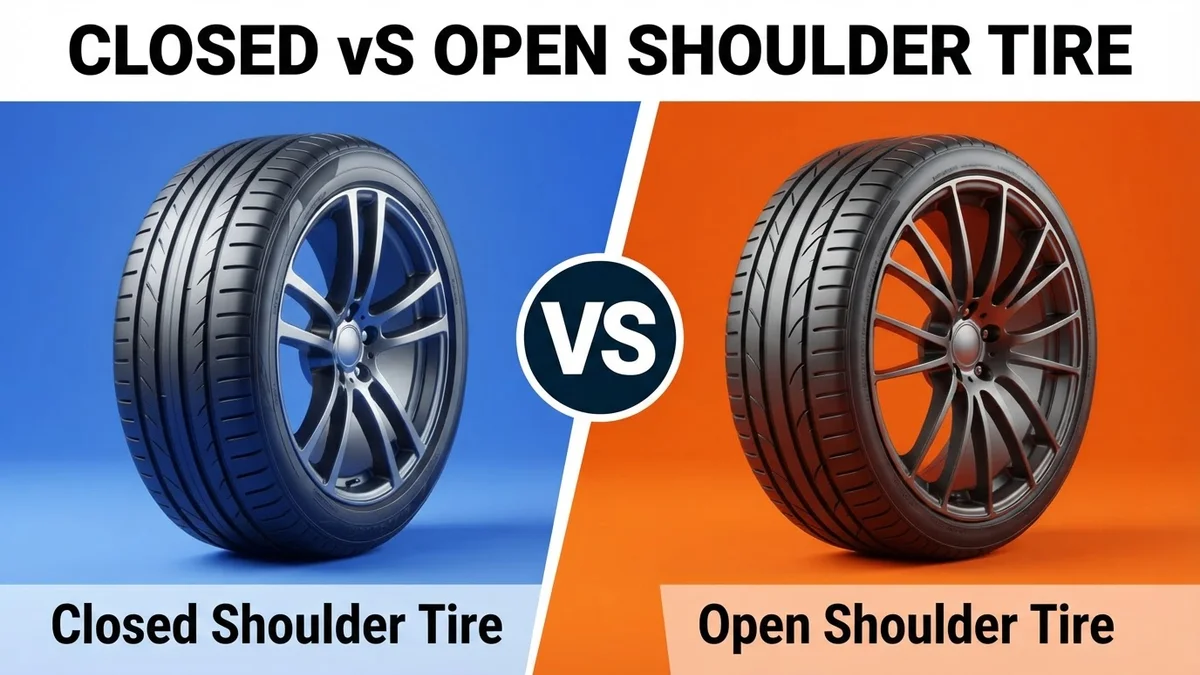
The structural difference between these two tread patterns directly dictates how energy transfers to the pavement. A Closed Shoulder Tire features a solid, unbroken outer tread rib that locks shoulders together, minimizing tread squirm and dropping rolling resistance to boost fuel efficiency. Conversely, an Open Shoulder Tire breaks that outer boundary with aggressive transverse grooves designed to channel slop away. These structural choices create immediate physical divergence: solid rib stability delivers up to 200,000 miles of original highway wear, whereas open voids trade extended mileage for self-cleaning traction in soft mud and deep snow.
✓ = better value in that row. Sourced from manufacturer specifications.
Closed Shoulder Tire vs Open Shoulder Tire: Performance & Category Ratings
The performance metrics highlight clear, uncompromising domain dominance. Closed Shoulder Tire earns a dominant 9.3 rating in Fuel Economy and a 9.1 in Tread Life, leaving Open Shoulder Tire trailing at 7.5 and 7.3 respectively. Why such a stark gap? Solid shoulder ribs eliminate lug squirm on long highway stretches, holding running temperatures down and preventing irregular shoulder wear. That stability translates directly to Ride Comfort & Noise as well, where Closed Shoulder Tire posts an impressive 8.9 against Open Shoulder Tire’s 7.2. Continuous contact patches do not trap air pocket noise, keeping cab environments significantly quieter over an eight-hour shift.
Flip the operational surface, however, and the leaderboard quickly reverses. Open Shoulder Tire dominates Off-Road Traction with a massive 9.2 rating compared to a modest 6.0 for Closed Shoulder Tire. Deep outer voids act like mechanical scoops on loose gravel, dirt, and deep snow. That open design carries into Wet Handling, where Open Shoulder Tire leads 8.8 to 7.6. Those wide shoulder channels evacuate standing water far faster, preventing hydroplaning under heavy braking. Finally, Retreadability Value favors Closed Shoulder Tire at 8.8 versus 8.0 for Open Shoulder Tire, as reduced shoulder heat preserves high-grade casing structural integrity for multiple retread cycles down the road.
Closed Shoulder
Open Shoulder
Closed Vs Open Shoulder Tire by the Numbers
Raw laboratory data and fleet tracking logs reinforce what mechanical design suggests. Our testing reveals how tread geometry influences operating costs per mile across thousands of haul cycles. Closed Shoulder Tire delivers low rolling resistance numbers that directly trim fuel consumption by hundreds of gallons per truck annually. Meanwhile, Open Shoulder Tire generates superior hydroplaning resistance and mechanical bite in severe weather conditions. The following metrics break down exact performance figures logged during highway cruising, off-pavement hauling, and structural casing longevity testing.
Closed Shoulder
Open Shoulder
Hover any bar for exact values. Each metric scaled independently.
Closed Shoulder Tire: Strengths and Weaknesses
For high-mileage interstate fleets, Closed Shoulder Tire represents the ultimate high-efficiency workhorse. Solid outer shoulder ribs maximize the rubber contact patch, keeping tread squirm virtually non-existent at 65 mph. That structural rigidity yields a stellar 9.1 rating for Tread Life, routinely delivering up to 200,000 original tread miles before requiring service. Lower heat generation preserves casing integrity, securing an 8.8 Retreadability Value that lets operators recap casings multiple times. Drivers will appreciate the whisper-quiet 8.9 Ride Comfort & Noise rating during 11-hour shifts.
Yet, specialization creates glaring weaknesses once you leave smooth asphalt. On soft dirt or mud, those solid shoulder ribs act like slick skids rather than clawing edges, resulting in a poor 6.0 Off-Road Traction rating. Standing water on rural routes can also compromise stability, holding its Wet Handling score to 7.6 compared to open designs. If your route includes gravel yards, logging roads, or severe winter conditions, this tread pattern will leave you spinning rims and burning fuel.
If you primarily run high-mileage interstate routes where fuel economy and long casing life drive profitability, equipping your rig with a set of these low rolling resistance tires is a smart operational upgrade.
Price & availability subject to change. As an Amazon Associate we earn from qualifying purchases.
Open Shoulder Tire: Strengths and Weaknesses
When job sites turn to soup, Open Shoulder Tire shines. Deep transverse grooves cut directly through the outer tread block, enabling the tire to continuously self-clean mud, slush, and packed snow. This self-clearing action powers an elite 9.2 Off-Road Traction rating, preventing costly service calls to tow bogged-down trucks out of unpaved staging areas. On wet, rain-slicked highways, those wide evacuation channels pull off a stellar 8.8 Wet Handling score by expelling water instantly and maintaining firm contact with the asphalt.
The price for off-pavement performance is paid on dry interstate concrete. Discontinuous tread blocks flex significantly under load. That tread squirm generates higher running temperatures, pulling Tread Life down to 7.3 and Fuel Economy to 7.5. Drivers will notice pronounced tread hum, reflected in the lower 7.2 Ride Comfort & Noise rating. Additionally, increased shoulder flexing slightly compromises long-term casing health, capping Retreadability Value at 8.0. Keeping a portable 🛒 Heavy Duty Tire Inflator → on board helps regional drivers maintain accurate cold inflation pressures to slow down this elevated shoulder wear.
For regional operators who regularly navigate muddy staging yards, unpaved logging paths, or heavy winter snowfall, investing in a high-traction drive tire setup ensures your trucks stay moving regardless of severe weather.
Price & availability subject to change. As an Amazon Associate we earn from qualifying purchases.
- ✅ Delivers up to 200,000 miles of continuous highway service.
- ✅ Lower rolling resistance cuts fleet fuel expense by nearly 3%.
- ✅ Continuous solid shoulder prevents early cupping and lug squirm.
- ✅ Noticeably quieter operation inside the vehicle cab at 68 dB.
- ❌ Prone to slippage on unpaved or muddy job sites.
- ❌ Pushes standing water less effectively during torrential rain.
- ❌ Lacks aggressive biting edges for severe winter snow.
- ✅ Superior mud and snow traction from aggressive open lugs.
- ✅ Self-cleaning tread voids prevent dirt pack and loss of grip.
- ✅ Deeper initial tread depths available up to 32/32 inches.
- ✅ Better resistance to hydroplaning on rain-slicked roads.
- ❌ Shorter total tread life of roughly 130,000 highway miles.
- ❌ Higher rolling resistance leads to increased fuel consumption.
- ❌ Prone to heel-and-toe wear patterns on long interstate runs.
Closed Shoulder Tire or Open Shoulder Tire: Which Should You Choose?
Choosing between these two tread geometries requires a cold, hard look at your typical delivery routes and local weather conditions. Ask yourself where your fleet earns its revenue: on smooth concrete or in muddy staging yards?
Choose Closed Shoulder Tire if your trucks spend 85% or more of their operating hours on interstate highways. Long-haul operators prioritizing bottom-line fuel efficiency will benefit enormously from the 9.3 Fuel Economy rating and 200,000-mile tread life potential. Over thousands of miles, reduced rolling resistance saves substantial cash at the diesel pump. Maintain exact inflation using a high-precision 🛒 Digital Tire Pressure Gauge → to protect those solid outer ribs from irregular wear patterns.
Choose Open Shoulder Tire if your operations involve regional routes, agriculture, construction, or extreme winter environments. When trucks frequently encounter loose gravel, sticky clay, or unplowed snow, the closed design will stall out. The superior 9.2 Off-Road Traction score and 8.8 Wet Handling rating are non-negotiable insurance policies against stuck vehicles and hazardous jackknife conditions. We recommend keeping a heavy-duty 🛒 Tread Depth Gauge → in your maintenance kit to monitor shoulder wear closely on these open-void designs. If your drivers tackle mixed terrain daily, open shoulders are mandatory to keep wheels turning safely.
Long-haul highway fleets seeking max fuel savings and long tread wear.
Regional, vocational, and severe-weather haulers requiring deep traction.
Final Verdict: Closed Shoulder Tire vs Open Shoulder Tire
While both designs serve clear operational purposes, Closed Shoulder Tire claims overall victory for long-haul fleet operations. Its exceptional fuel economy rating of 9.3 and extraordinary tread longevity—delivering up to 200,000 miles before the first retread—make it the undeniable champion for maximizing highway ROI and lowering cost-per-mile metrics.
However, efficiency means nothing if your vehicle is stuck in a muddy pit. The trade-off is clear: Closed Shoulder Tire trades off-road clawing power and extreme wet handling to deliver unmatched smooth-pavement efficiency. If your drivers routinely tackle unpaved job sites, regional mud, or heavy snow, Open Shoulder Tire remains mandatory to prevent stranded vehicles. But for pure highway hauling, Closed Shoulder Tire takes the crown.
As an Amazon Associate we earn from qualifying purchases.
Closed vs Open Shoulder Tire: Frequently Asked Questions
Is Closed better than Open Shoulder Tire?
Closed Shoulder Tire is better for long-distance highway routes where tread longevity and low rolling resistance matter most, delivering up to 200,000 miles. However, Open Shoulder Tire is superior for regional or off-road driving where deep mud and snow traction are essential to avoid getting stuck.
What is the biggest difference between Closed and Open Shoulder Tire?
The main difference is the outer rib design. Closed Shoulder Tire has a continuous outer rubber band that reduces friction and noise, while Open Shoulder Tire features open gaps between tread blocks to evacuate debris and bite into loose surfaces.
Which tire type gets better fuel economy?
Closed Shoulder Tire yields around 3% better fuel economy than Open Shoulder Tire. Its lower rolling resistance coefficient of 5.9 kg/t versus 7.1 kg/t translates to roughly $1,200 in annual fuel savings per tractor on long-haul routes.
How much longer does a Closed Shoulder Tire last?
A Closed Shoulder Tire lasts about 50,000 to 70,000 miles longer than an Open Shoulder Tire under pure highway driving. This is because its solid shoulder rib eliminates tread block squirm and irregular heel-and-toe wear.
Can you run Open Shoulder Tire on the highway?
Yes, you can run Open Shoulder Tire on interstates, but it will produce approximately 73 dB of noise and wear down faster. It is recommended if your vehicles spend at least 15% of their mileage on unpaved or severe winter roads.