Discovering an unexpected bulge or ‘bubble’ on your tire’s sidewall can be alarming, and for good reason: it signals a serious structural compromise. Many drivers are unaware of what precisely causes these critical tire failures, the immediate dangers they pose, or the appropriate course of action once identified. This comprehensive guide for 2026 will expertly detail the underlying causes of tire bubbles, how to identify them, the severe safety implications, and the professional remediation required to ensure your vehicle’s ongoing reliability and safety.
Understanding Tire Bubbles: What Are They and Why Do They Form?
📤 Share Image
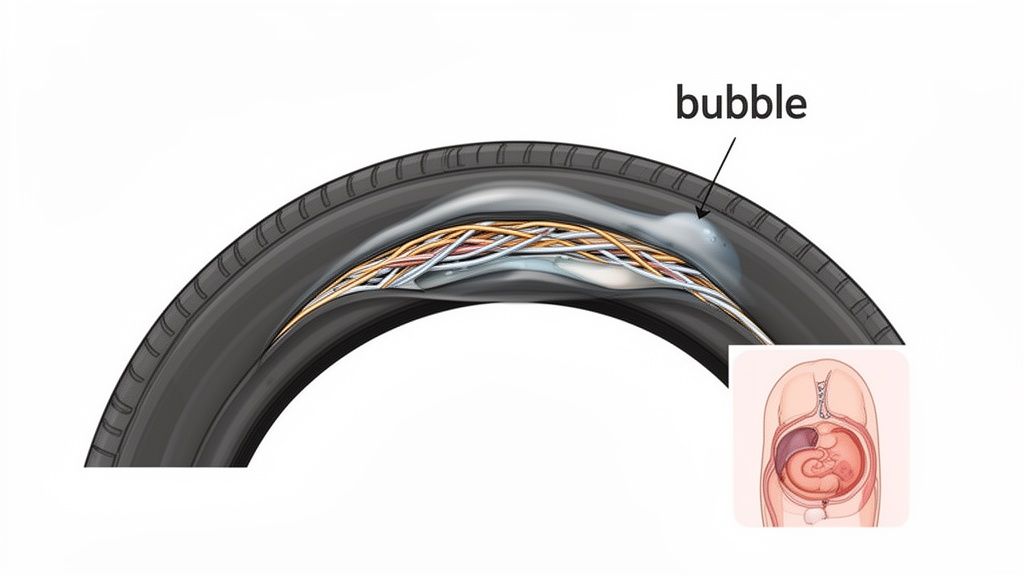
A tire bubble, often observed as a localized protrusion or bulge on the tire’s surface, most commonly on the sidewall, is an unambiguous indicator of internal structural failure. Think of it as a tire hernia, where the inner structural layers have failed, allowing the pressurized air within to push the outer rubber outward. This phenomenon represents a significant compromise to the tire’s structural integrity, transforming it from a reliable component into a severe safety risk.
The Intricate Structure of a Modern Tire
To fully grasp why bubbles form, one must first appreciate the sophisticated, multi-layered construction of a radial tire. It’s far more than just a rubber ring. At its core, a tire features an inner liner (a synthetic rubber layer designed to retain air), followed by multiple body plies. These plies, typically made of strong materials like polyester or nylon cords, run radially from bead to bead, forming the tire’s main load-bearing structure. Above these are steel belts, laid at angles to provide rigidity and puncture resistance for the tread. Finally, the tread compound grips the road, and the sidewalls protect the plies and flex during operation. The body plies are paramount for maintaining structural integrity, distributing load, and containing the internal air pressure, which typically ranges from 30 to 40 PSI for passenger vehicles.
The Mechanism of Delamination and Cord Separation
A tire bubble forms when the delicate balance of these internal layers is disrupted. The process begins with internal delamination or cord separation. This occurs when the robust cords within the body plies are fractured, severed, or detach from their surrounding rubber matrix. Once this critical structural damage occurs, the air pressure, which could be 32-35 PSI in a standard car tire, can no longer be contained uniformly by the weakened structure. Instead, it finds the path of least resistance, forcing the pliable outer rubber outwards at the point of damage, creating the visible bulge or “bubble.” This is why a bubble is never merely cosmetic; it signifies a profound failure of the tire’s internal engineering designed to withstand significant forces and maintain stability.
Distinguishing Genuine Structural Bubbles
It’s essential to distinguish between minor cosmetic irregularities and a genuine structural bubble. A healthy sidewall is smooth and uniform, designed to flex under normal loads. Conversely, a tire with a prominent bulge, often soft to the touch, unequivocally signals internal damage. While some minor surface imperfections might be manufacturing artifacts, any outward protrusion caused by internal air pressure is a severe safety risk. Modern tire manufacturing adheres to stringent ISO 9001 quality control standards, making true manufacturing defects rare but not impossible. Therefore, any visible bubble should be treated as a critical issue.
Primary Causes of Tire Bubbles: Impact Damage and Manufacturing Defects Explained
The formation of a tire bubble typically stems from two principal factors: severe external impact from road hazards or, less commonly, inherent flaws originating from the manufacturing process. Both scenarios compromise the tire’s foundational structure, leading to delamination.
Road Hazard Impacts: The Silent Killer of Tire Integrity
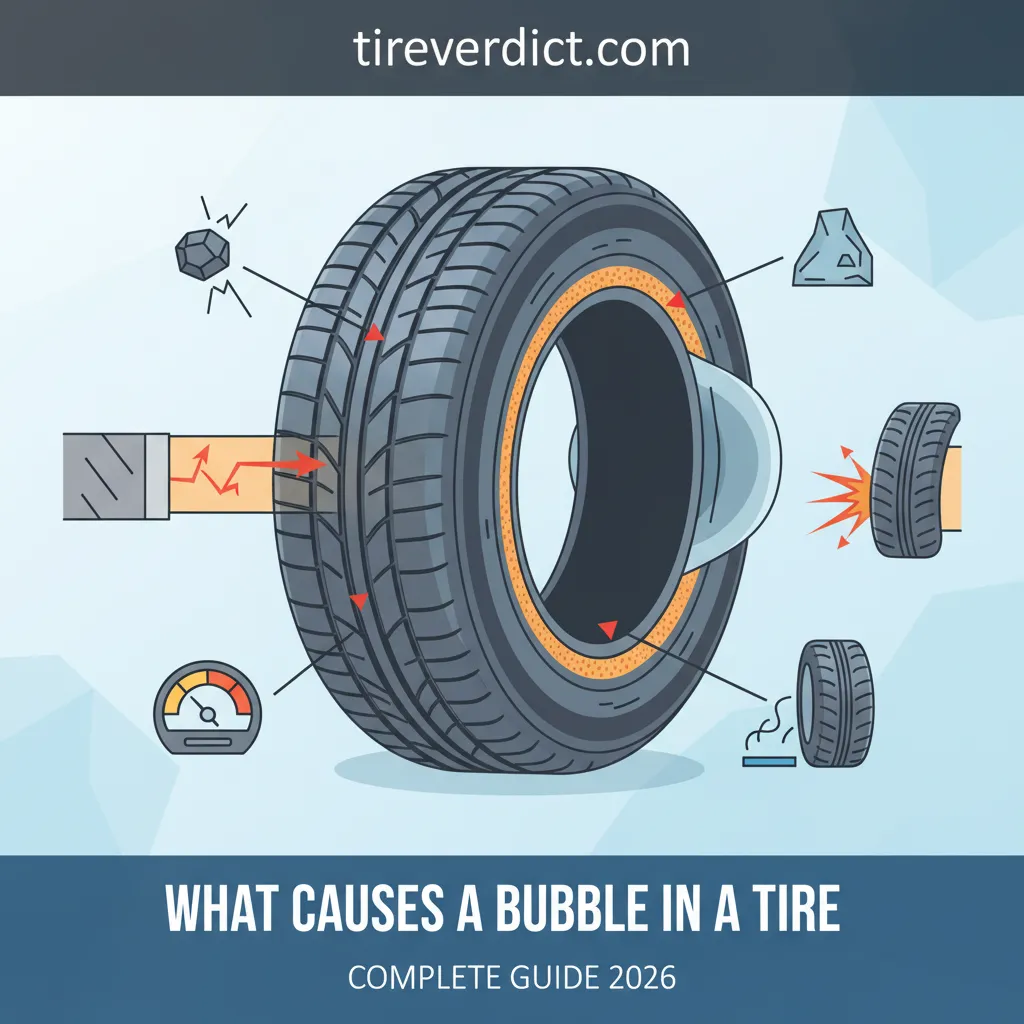
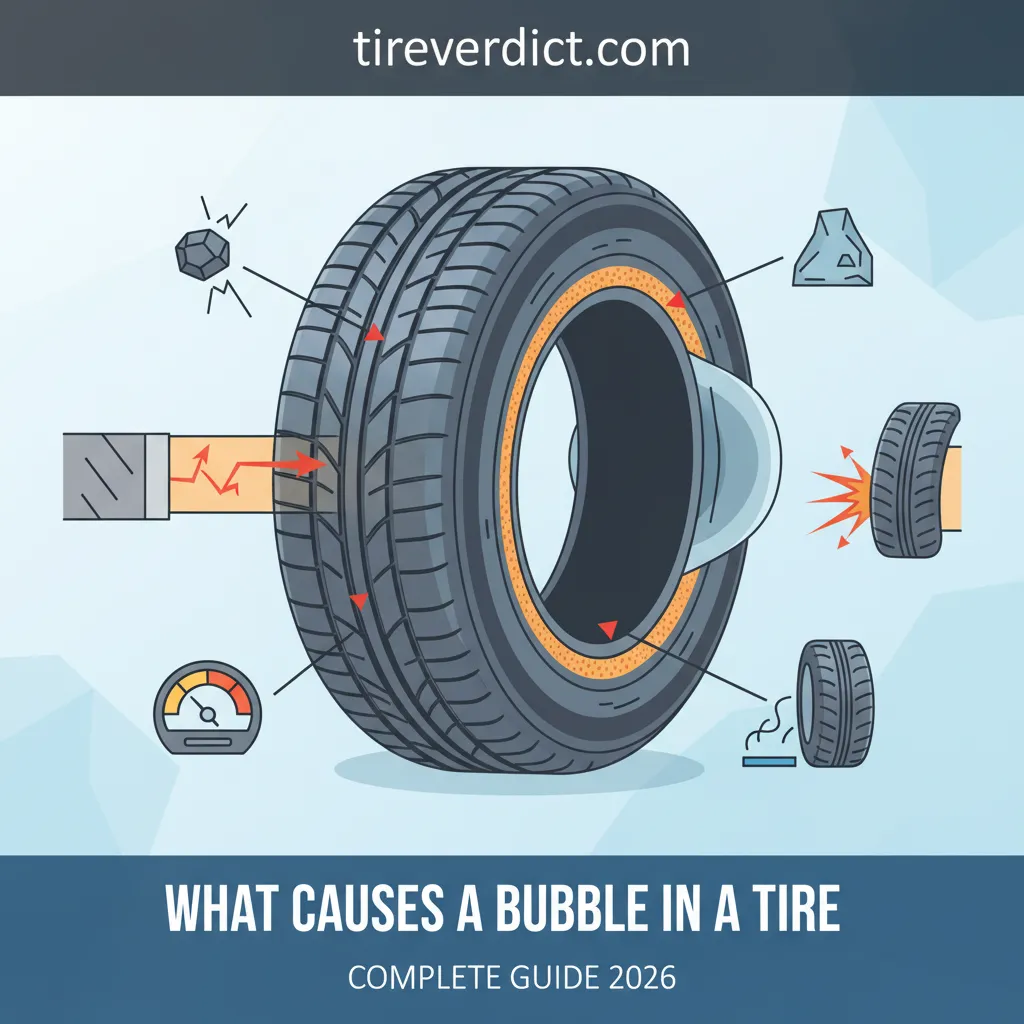
The most frequent cause of tire bubbles is road hazard impact. When a tire strikes an object with significant force, such as a deep pothole, a curb (curbing), or even traverses uneven railway crossings, the tire’s flexible sidewall is momentarily compressed between the road surface and the wheel rim. This severe compression can cause the internal body plies to pinch, stretch beyond their elastic limit, or even cleanly sever the cords. For instance, a vehicle hitting a pothole aggressively can experience an instantaneous force that tears the polyester or nylon cords that form the tire’s internal skeleton. Research indicates that approximately 3% of tire failures are attributed to road hazards, a statistic that underscores the prevalence of this issue.
The Vulnerability of Low-Profile Tires
Modern vehicle aesthetics often favor low-profile tires, characterized by a shorter sidewall. While these offer enhanced handling and responsiveness, their reduced sidewall height provides less material and flexibility to absorb impact forces. This makes them inherently more susceptible to impact damage leading to bubbles compared to tires with taller sidewalls. A specific impact that a high-profile tire might shrug off could easily cause cord severance in a low-profile equivalent. Many expert technicians routinely observe instances where vehicles with low-profile tires develop bubbles after seemingly minor curb strikes.
Manufacturing Defects: Rare but Critical
While far less common thanks to rigorous tire construction standards (e.g., SAE, ECE regulations), manufacturing defects can also lead to tire bubbles. These flaws typically compromise the tire’s structural integrity from its inception. Examples include improper ply bonding, where internal layers fail to adhere correctly, material inconsistencies that create weak points, air pockets trapped during vulcanization (the curing process), or misaligned cord layers. Such defects create areas where the internal structure is inherently weak, making it prone to delamination even under normal operating conditions. Most reputable tire manufacturers offer warranties covering manufacturing defects, typically up to 6 years from the DOT date, reflecting the expectation of lasting quality.
The Role of Tire Age and Wear
Beyond direct impacts and manufacturing flaws, the overall age and wear of a tire play a significant role. Over time, rubber compounds degrade, and the bonds between internal layers can weaken. An older tire, particularly one with significant tread wear, has less material to cushion impacts and its internal structure is simply less robust. Even without a singular, severe impact, the cumulative stresses of normal driving can eventually cause the weakened cords to separate, leading to a bubble. This underscores the importance of adhering to recommended tire replacement schedules, even if tread depth seems acceptable.
By The Numbers
Tire Failures from Road Hazards
Typical Warranty for Mfg. Defects (from DOT)
Common Passenger Car Tire Pressure
Avg. Lifespan of Well-Maintained Tire

Identifying and Assessing a Tire Bubble: Symptoms, Types, and Immediate Safety Concerns
Prompt and accurate identification of a tire bubble is paramount for safety. Knowing what to look for and how to assess it can prevent a dangerous situation from escalating into catastrophic tire failure.
Visual and Tactile Inspection Techniques
The first line of defense is a thorough and regular inspection. Follow these expert recommendations for effective detection:
- Visual Inspection: Park your vehicle on a level surface in good lighting. Rotate each tire slowly, meticulously scanning the entire sidewall for any outward protrusion, lump, or unevenness. Pay close attention to both the inner and outer sidewalls. A healthy tire sidewall should be relatively uniform, whereas a bubble will appear as a distinct, often smooth, bulge.
- Tactile Inspection: Many subtle bulges are not immediately visible. With the tire cool, carefully run your hand over the entire sidewall surface, feeling for any localized swelling, soft spots, or irregularities. A scenario where a driver only notices a slight vibration that eventually leads to a visual confirmation of a bulge after a recent curb impact is common. This tactile check is particularly effective for detecting nascent damage.
Driving Symptoms Indicating Internal Damage
Sometimes, your vehicle will provide clues of internal tire damage before a visible bubble manifests. Be vigilant for:
- New Vibrations: A persistent vibration, especially at certain speeds, that wasn’t present before.
- Steering Wheel Pull: A subtle or noticeable pull to one side, which could indicate an imbalanced or damaged tire structure.
- Change in Ride Quality: The vehicle may feel less stable, harsher, or exhibit unusual noises.
These symptoms, particularly after a known impact event, should prompt an immediate and thorough tire inspection.
Categorization of Bubbles by Location and Severity
Tire bubbles primarily occur in two locations, with varying implications:
- Sidewall Bubbles: These are the most common and dangerous type. The sidewall is the thinnest and most flexible part of the tire, designed for repeated flexing but not for internal structural failure. When a bubble appears here, it signifies that the body plies – the primary load-bearing components – have been compromised. Such damage drastically weakens the tire’s ability to contain air pressure and withstand cornering forces. Statistics show a high correlation between unaddressed sidewall damage and catastrophic tire failure (blowouts), given the immense forces exerted on this area under normal driving conditions.
- Tread Bubbles: Far rarer, a bubble on the tread often indicates a separation of the steel belts beneath the tread surface. While still a serious defect, it is less common than sidewall damage from impacts. Regardless of location, any bubble indicates internal structural damage that cannot be ignored.
A tire bubble is not a minor defect; it is a ticking time bomb. The compromised structural integrity means the tire could fail explosively at any moment, especially at highway speeds or during cornering. Drivers experiencing a tire blowout often have only a fraction of a second to react, making the risk of loss of control extremely high. Do NOT continue driving on a bubbled tire.

Professional Remediation: What to Do When a Tire Bubble Appears and Why Repair Is Not an Option
Upon discovering a tire bubble, immediate and decisive action is critical. The professional consensus is unequivocal: a tire bubble renders the tire irreparably damaged, and replacement is the only safe and reliable solution.
Immediate Safety Protocols
If you detect a tire bubble, follow these steps to prioritize safety:
- Reduce Speed: Immediately slow down to minimize stress on the compromised tire.
- Avoid Aggressive Maneuvers: Refrain from hard braking, sharp turns, or rapid acceleration.
- Drive Cautiously: Navigate gently to the nearest safe location, such as a rest stop, parking lot, or, ideally, a professional tire service center. If a spare tire is available and safe to install, consider replacing the damaged tire immediately.
- Contact Assistance: If you’re unsure or unable to change the tire safely, contact roadside assistance. A scenario where a driver pulls over safely and contacts roadside assistance, describing the issue, is the safest approach.
The Impossibility of Safe Repair
Unlike a simple puncture in the tread area that can often be safely repaired, internal structural damage indicated by a bubble cannot be reliably fixed. Here’s why:
- Cord Severance/Delamination: The core problem is broken or separated cords within the body plies. These structural components are under constant tension and are fundamental to the tire’s ability to maintain its shape and contain pressure.
- Irreversible Damage: Once these cords are compromised, they cannot be ‘repaired’ or reattached in a way that restores the tire to its original strength and integrity. Patching the outer rubber or attempting to ‘fill’ the bubble is a critically dangerous practice that addresses only the symptom, not the underlying failure.
- Industry Guidelines: Leading tire organizations like the Tire and Rim Association (TRA) explicitly prohibit the repair of sidewall damage, which includes bubbles. Major tire manufacturers’ warranties also clearly stipulate that tires with sidewall bubbles are considered non-repairable.
An expert technician will explain that once the cord structure is compromised, the tire’s ability to safely carry load and withstand forces is permanently impaired. The financial implications of potential vehicle damage or, worse, personal injury from a blowout far outweigh the cost of a new tire.
Professional Assessment and Tire Replacement Strategy
Always seek a certified tire technician to assess the damaged tire. They will confirm the nature of the bubble and provide professional recommendations. The only viable solution for a bubbled tire is replacement.
- Single Tire Replacement: If the other tires are relatively new and have minimal wear difference, a single tire replacement may be feasible.
- Replacing in Pairs: For optimal handling and to prevent accelerated wear on new tires, replacing tires in pairs (axle-matched) is often recommended, especially if the remaining tire on the same axle has significant wear.
- AWD/4WD Considerations: For All-Wheel Drive (AWD) or 4-Wheel Drive (4WD) vehicles, maintaining a consistent tire diameter across all four wheels is crucial to prevent drivetrain stress and damage. If replacing only one tire results in a significant difference in diameter compared to the other tires, it may necessitate replacing all four tires to preserve drivetrain integrity. This is a critical point that a trusted professional will always highlight.
Preventing Tire Bubbles: Best Practices for Tire Longevity and Enhanced Vehicle Safety in 2026
Proactive maintenance and mindful driving habits are your best defense against tire bubbles, contributing significantly to both tire longevity and overall vehicle safety. Adopting these best practices will help you protect your investment and ensure a reliable driving experience well into 2026 and beyond.
Maintaining Optimal Tire Inflation Pressure
Correct tire inflation is the single most critical factor in tire health. Optimal PSI ensures proper load distribution and enhances impact resistance. Both under-inflation and over-inflation compromise tire integrity:
- Under-inflation: Causes excessive sidewall flexing and heat buildup, weakening internal structures and increasing susceptibility to damage from impacts. Research from the National Highway Traffic Safety Administration (NHTSA) highlights that under-inflation is a significant contributor to tire failure and can reduce fuel efficiency by up to 3%.
- Over-inflation: Leads to a stiffer ride and reduces the tire’s ability to absorb impacts effectively, making it more vulnerable to cord damage when hitting road hazards.
Perform a weekly tire pressure check using a trusted gauge, always referring to your vehicle’s manufacturer recommendation (found on the door jamb or in the owner’s manual), not the maximum pressure listed on the tire itself.
Vigilant Driving Habits
Your driving style directly impacts tire health. Cultivate defensive driving techniques to protect your tires:
- Avoid Road Hazards: Actively scan the road ahead for potholes, debris, railway crossings, and uneven surfaces. A driver successfully avoiding a hazardous road obstacle not only saves their tires but also enhances overall safety.
- Mindful Curbing: Be extremely cautious when parking or turning close to curbs. Hitting curbs at an angle or with speed is a leading cause of sidewall damage.
- Smooth Driving: Avoid harsh acceleration, braking, and sharp turns, which can prematurely wear tires and stress their structure.
Routine Tire Inspection and Maintenance
Consistent maintenance is crucial for early detection and extending tire life:
- Regular Visual & Tactile Checks: Integrate the inspection techniques described in Section 3 into your routine.
- Prompt Tire Rotations: Rotate your tires every 5,000-7,000 miles (or as recommended by your vehicle manufacturer) to ensure even wear across all four tires. This helps distribute stress and prolongs the lifespan of each tire.
- Professional Balancing: Ensure tires are balanced during rotation. Imbalance can cause vibrations that stress tire components. Scheduling these services with a trusted service center is a mark of a professional approach to vehicle care.
Strategic Tire Selection and Replacement
Making informed choices when buying and replacing tires significantly impacts long-term safety:
- Choose Quality: Invest in tires from reputable brands that meet or exceed industry standards (e.g., DOT, ECE). These tires often incorporate advanced materials and construction methods, sometimes with reinforced sidewalls for certain driving conditions.
- Appropriate Load Ratings: Always select tires with the correct load rating for your vehicle to ensure they can safely handle its weight.
- Understand Tire Age: Tires degrade over time, regardless of mileage. Most manufacturers and experts recommend replacing tires that are 6-10 years old, even if they have adequate tread depth. The average lifespan of a well-maintained tire is approximately 40,000-60,000 miles.
- Monitor Tread Wear Indicators: Regularly check your tread depth using the built-in wear bars. Once the tread reaches 2/32nds of an inch, the tire is legally worn out and significantly less safe, increasing susceptibility to punctures and damage.
Tire bubbles signify critical internal structural damage, primarily from impacts or manufacturing defects. They are severe safety hazards requiring immediate attention and professional assessment. Tire bubbles cannot be safely repaired; replacement is the only reliable solution. Proactive maintenance and vigilant driving are essential for prevention. Prioritize your safety and the integrity of your vehicle by regularly inspecting your tires and addressing any irregularities, such as bubbles, with a certified tire professional without delay.
Frequently Asked Questions
Can a tire bubble be repaired safely?
No, a tire bubble signifies internal structural damage, specifically to the tire’s plies or cords. This type of damage is fundamentally unrepairable. Attempting to patch or ‘fix’ a bubble is extremely dangerous, as it cannot restore the tire’s structural integrity, leading to a high risk of catastrophic failure and potential accidents.
Is it safe to drive with a bubble in my tire?
Driving with a tire bubble is exceptionally unsafe and poses an immediate threat. The bulge indicates a weakened area that can rupture unexpectedly at any moment, especially at higher speeds or under load, leading to a sudden and dangerous blowout. Immediate professional assessment and replacement are critically necessary.
What’s the difference between a sidewall bubble and a tread bubble?
A sidewall bubble is the most common type, appearing on the tire’s flexible side due to impact damage or manufacturing defects, and is extremely dangerous. A tread bubble, though rarer, occurs on the tire’s top surface. Both indicate critical internal structural failure, but sidewall bubbles are often more vulnerable due to the thinner, more dynamic construction of the sidewall.
How quickly can a tire bubble lead to a blowout?
The timeframe for a tire bubble to lead to a blowout is unpredictable and can range from immediate failure upon detection to occurring gradually over days or weeks. Factors like driving speed, road conditions, and tire temperature significantly influence this risk. Given the inherent instability, a bubble should be treated as an imminent threat requiring immediate action.
Does a tire warranty cover bubbles?
Tire warranties typically cover bubbles caused by manufacturing defects, which are rare. However, most warranties explicitly exclude damage resulting from road hazards like potholes, curbs, or debris impact, which are the most common causes of tire bubbles. It is crucial to consult your specific tire manufacturer’s warranty policy for clarification and details on coverage.