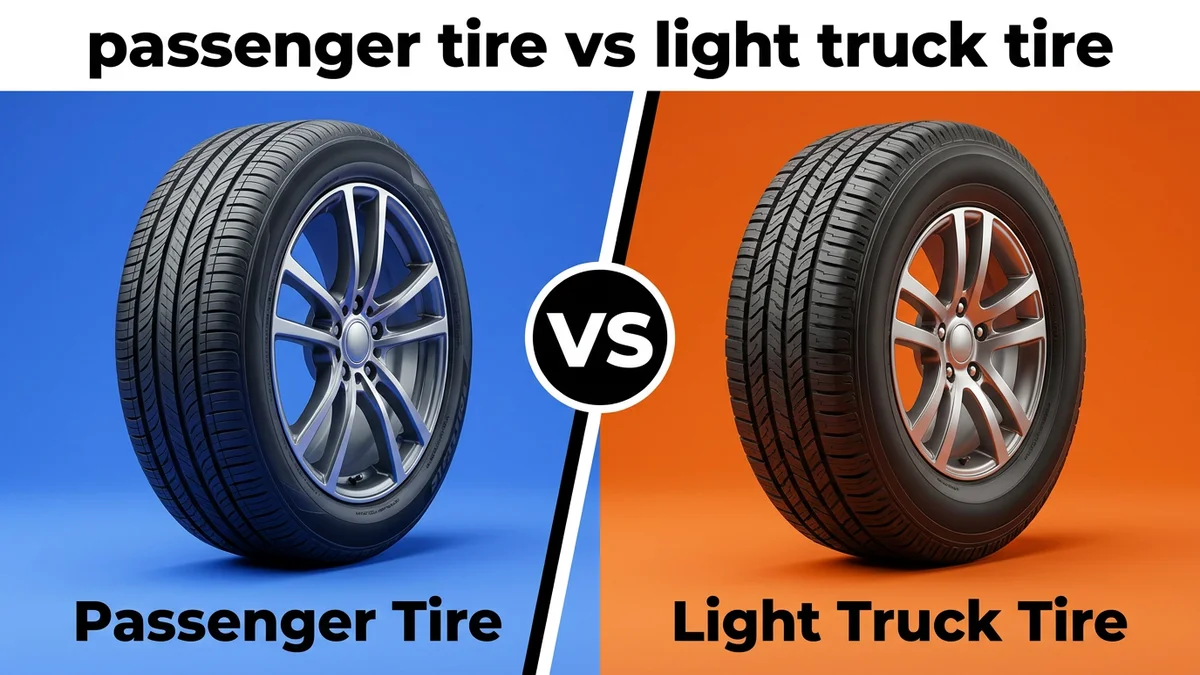
Swapping standard factory rubber for heavy-duty tires can add up to 20 pounds of unsprung mass per wheel and burn 15% more fuel—even if your vehicle never leaves asphalt. Many light truck and SUV owners assume buying a heavy-duty option automatically upgrades performance. That assumption often backfires on pavement. In our head-to-head comparison of passenger tire vs light truck tire options, the structural reality becomes obvious fast. Passenger Tire options prioritize supple sidewalls and maximum fuel efficiency, whereas Light Truck Tire models use reinforced internal belts built for extreme work. Choosing the wrong construction ruins daily drive quality or risks structural failure under heavy loads.
Quick Verdict: Passenger Tire is the overall winner for daily commuters and light crossover SUVs due to superior ride comfort, lower cost, and up to 15% better fuel efficiency. However, Light Truck Tire is indispensable for heavy towing, hauling over 1,500 lbs, or severe off-road driving where 10-ply carcass strength and high PSI stability are essential structural requirements.
Daily commuters, crossover owners, and light SUV drivers seeking comfort and fuel savings.
Heavy-duty truck owners, frequent trailer towors, and extreme off-road enthusiasts.
- Passenger tires weigh 15-30 lbs less per wheel, yielding up to 3 MPG better fuel economy.
- Light Truck tires support up to 3,750 lbs per tire at 80 PSI versus 2,200 lbs at 51 PSI for P-metric.
- Passenger tire tread warranties extend up to 85,000 miles compared to 60,000 miles max for LT tires.
- Switching to Light Truck tires increases total vehicle rotating mass by 60 to 120 lbs per set.
- Passenger tires cost $110-$220 each, saving up to $500 per set compared to LT tires.
Passenger Tire vs Light Truck Tire: Head-to-Head Specs
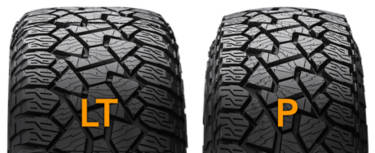
Looking closely at internal construction details highlights immediate functional differences between these carcass styles. A standard Passenger Tire typically relies on a flexible 4-ply or 6-ply rated carcass operating between 30 and 35 PSI to cushion impacts. Conversely, a heavy-duty Light Truck Tire features an aggressive 10-ply rating (Load Range E) built to withstand internal pressures up to 80 PSI. These mechanical variations dictate maximum load ratings, carcass flex, unpaved traction, and rolling resistance on highway asphalt.

✓ = better value in that row. Sourced from manufacturer specifications.
Passenger Tire vs Light Truck Tire: Performance & Category Ratings
Evaluating these tire categories across six core performance metrics reveals a stark operational divide. Passenger Tire dominates highway-focused criteria, pulling ahead with a commanding 9.2 in Ride Comfort against 6.5 for Light Truck Tire. Flexible sidewalls absorb nasty road imperfections effortlessly. It also secures a 9.0 in Fuel Efficiency, vastly outperforming Light Truck Tire at 6.8 due to lighter casing weight and decreased rolling resistance. On dry and wet pavement, Passenger Tire earns an 8.5 rating compared to 7.5 for Light Truck Tire, giving drivers noticeably shorter stopping distances and tighter cornering response on light crossover SUVs and sedans. Lower manufacturing costs and longer highway tread wear push its Value & Tread Life score to an impressive 8.8 versus 7.2.
Flip the script to commercial capability, and Light Truck Tire asserts total dominance. It posts a towering 9.5 in Towing & Payload Capacity, leaving Passenger Tire behind at 6.0. High-inflation stability prevents dangerous sidewall squirm when hauling heavy trailers or carrying bed loads over 1,500 lbs. In Durability & Off-Road Resistance, Light Truck Tire scores a 9.4 while Passenger Tire stalls at 6.2. Thick 10-ply construction, chip-resistant tread compounds, and deep tread channels prevent puncture damage from sharp gravel, jagged rocks, and debris. While Passenger Tire comfortably wins the everyday commuting battle, Light Truck Tire remains non-negotiable for severe duty cycles.
Passenger Tire
Light Truck Tire
Passenger Tire Vs Light Truck Tire by the Numbers
The empirical performance metrics reveal precise technical trade-offs across fuel consumption, structural inflation thresholds, carcass weight, and overall rotating mass. Standardizing these comparative data points helps quantify how extra carcass plies directly degrade daily cabin comfort while multiplying haul capacity. Reviewing this clear numerical breakdown illustrates why mounting excessive tire capability onto a daily urban commuter exacts a permanent financial penalty at the fuel pump and over rough pavement.
Passenger Tire
Light Truck Tire
Hover any bar for exact values. Each metric scaled independently.
Passenger Tire: Strengths and Weaknesses
For pavement driving, Passenger Tire design represents an ideal engineering sweet spot. Lightweight carcasses reduce unsprung mass, enabling your vehicle’s suspension to react instantly to sudden potholes and sharp expansion joints. In our comparison, this built-in compliance translates to whisper-quiet highway rides and superior cabin vibration dampening. Steering response feels crisp and predictable on wet asphalt because pliable tread blocks maintain optimal contact patches during sudden emergency braking maneuvers. Financially, lower replacement prices, easier installation, and lower rolling resistance yield measurable long-term financial savings for budget-minded vehicle owners.
However, those flexible design characteristics create distinct vulnerabilities when pushed beyond basic commuting duties. Overloading a Passenger Tire with high tongue weights or bed cargo exceeding 1,500 lbs causes severe sidewall squirm, dangerous heat buildup, and reduced stability at high highway speeds. Off the pavement, thin 2-ply sidewalls invite cuts and punctures from sharp rocks, roots, or trail brush. Tread rubber compounds tailored specifically for quiet highway operation suffer rapid chipping on harsh gravel roads. If your weekly routine involves rocky trailheads, agricultural land, or heavy commercial towing, relying on Passenger Tire construction exposes you to premature tire failure and compromised vehicle control.
Light Truck Tire: Strengths and Weaknesses
When heavy work demands extreme mechanical toughness, Light Truck Tire engineering excels under stress. Built with reinforced 10-ply carcasses and high-tensile steel belt packages, these tires handle inflation pressures up to 80 PSI. That extra structural rigidity eliminates squirm when towing heavy travel trailers, commercial machinery, or equipment over 1,500 lbs. Off the pavement, deep tread voids and rugged carcass construction resist tread tearing, stone drilling, and sidewall punctures. You can navigate jagged shale or rutted construction sites without second-guessing structural integrity or suffering flat tires.
The primary trade-off for this extreme capability is noticeable compromise everywhere else on public roads. Adding 15 to 20 pounds of steel and dense rubber to each wheel hub creates severe rotating mass penalties. Your vehicle works harder to accelerate, degrading overall fuel economy by up to 15%. Rigid sidewalls transmit every expansion joint and pothole straight into the cabin, dropping ride comfort down to a firm 6.5 rating. On wet asphalt, ultra-stiff tread blocks reduce microscopic road contact, lengthening stopping distances compared to lighter alternatives. They also cost significantly more money upfront while delivering lower tread life ratings during routine highway driving.
- ✅ Smoother, quieter ride on paved roads and highways
- ✅ Superior fuel economy due to lower rotational weight
- ✅ Lower purchase cost per set saving $250-$500 overall
- ✅ Longer treadwear warranty periods up to 85,000 miles
- ✅ Shorter stopping distances and better wet road grip
- ❌ Lower maximum load capacity for heavy towing
- ❌ Thinner 2-ply sidewalls vulnerable to sharp off-road debris
- ❌ Higher sidewall flex under heavy trailer tongue loads
- ✅ Exceptional load capacity up to 3,750 lbs per tire
- ✅ Rugged 10-ply construction resists cuts and punctures
- ✅ High inflation pressures up to 80 PSI reduce sway while towing
- ✅ Deeper tread depth for improved mud and loose dirt traction
- ✅ Extends safety margin when hauling near maximum vehicle GVWR
- ❌ Harsh ride quality on daily commuting pavement
- ❌ Decreases vehicle fuel economy by 1 to 3 MPG
- ❌ Higher initial purchase cost per tire
- ❌ Heavier weight increases wear on suspension components
Passenger Tire or Light Truck Tire: Which Should You Choose?
Selecting between these options requires an honest evaluation of your vehicle’s actual workload rather than its rugged aesthetic appeal. If you drive a light crossover SUV, sedan, or half-ton pickup used primarily for daily commuting, school runs, and highway road trips, Passenger Tire is unequivocally the right selection. You gain a smooth 9.2 ride comfort, optimal wet braking control, lower replacement costs, and up to 15% better fuel efficiency. Buying heavy-duty rubber for an urban commuter creates an unnecessarily harsh ride without delivering practical operational benefits.
Conversely, switch to Light Truck Tire if your vehicle regularly carries payload over 1,500 lbs, hauls heavy double-axle trailers, or traverses severe off-road terrain. Are you willing to trade daily fuel economy for non-negotiable structural strength? If you pull a heavy travel trailer or drive unpaved mountain trails covered in sharp rocks, 10-ply sidewall resistance and high PSI stability aren’t luxuries—they are absolute safety requirements.
For budget-conscious drivers keeping their vehicles on asphalt, Passenger Tire yields maximum long-term financial value and daily driving satisfaction. For power users demanding unbreakable durability under harsh industrial conditions or heavy hauling routines, the added purchase cost and stiffer ride of Light Truck Tire represent necessary investments that protect both vehicle and cargo.
Daily commuters, crossover owners, and light SUV drivers seeking comfort and fuel savings.
Heavy-duty truck owners, frequent trailer towors, and extreme off-road enthusiasts.
Final Verdict: Passenger Tire vs Light Truck Tire
In this head-to-head matchup, Passenger Tire emerges as the overall winner for daily commuters, family crossovers, and light-duty trucks. Its superior fuel efficiency, lower purchase cost, and plush 9.2 ride comfort score make it the smartest everyday choice on asphalt. The fundamental decision comes down to one core trade-off: ride comfort and efficiency versus heavy payload capacity and puncture resistance.
While Passenger Tire handles routine asphalt driving perfectly, Light Truck Tire remains completely indispensable for drivers hauling over 1,500 lbs or tackling severe off-road trails. Its 10-ply carcass strength and high PSI stability provide structural safety that lighter tires simply cannot replicate under extreme strain. Choose Passenger Tire for smooth and efficient highway driving, but equip Light Truck Tire when real work demands uncompromising heavy-duty construction.
Passenger Tire vs Light Truck Tire: Frequently Asked Questions
Is Passenger Tire better than Light Truck Tire?
For daily pavement driving, commuting, and family SUVs, Passenger Tire is better because it offers a smoother ride, superior fuel efficiency, and lower replacement costs. However, Light Truck Tire is better for heavy towing exceeding 5,000 lbs, commercial payload hauling, and harsh off-road driving where sidewall punctures are a major threat.
Can I put Passenger Tires on a light truck or SUV?
Yes, provided the tire load index meets or exceeds your vehicle manufacturer's baseline specification on the tire placard. Many 1/2-ton trucks and SUVs come standard with P-metric tires for better comfort. However, if you regularly tow heavy loads or haul heavy cargo, switching to LT tires is recommended.
What is the biggest difference between Passenger Tire and Light Truck Tire?
The primary difference lies in internal construction and operating pressure. Passenger tires use lightweight 2-ply carcass designs operating around 30 to 35 PSI for comfort. Light Truck tires feature reinforced 6-to-10-ply equivalent casings operating up to 80 PSI to support heavy payloads and resist impact damage.
Do Light Truck Tires last longer than Passenger Tires?
Not usually on paved roads. Passenger tires generally carry longer mileage warranties, often from 50,000 to 85,000 miles, due to flexible tread compounds. Light truck tires typically offer 40,000 to 60,000 miles of warranty, though their extra rubber depth makes them far more durable against sharp gravel and rocks.
How do LT tires affect fuel economy compared to P-metric tires?
Light Truck tires typically reduce fuel economy by 1 to 3 MPG compared to Passenger tires. This efficiency loss occurs because LT tires weigh 15 to 30 lbs more per tire, creating higher rotational inertia and rolling resistance that requires more engine power to accelerate and maintain highway speeds.