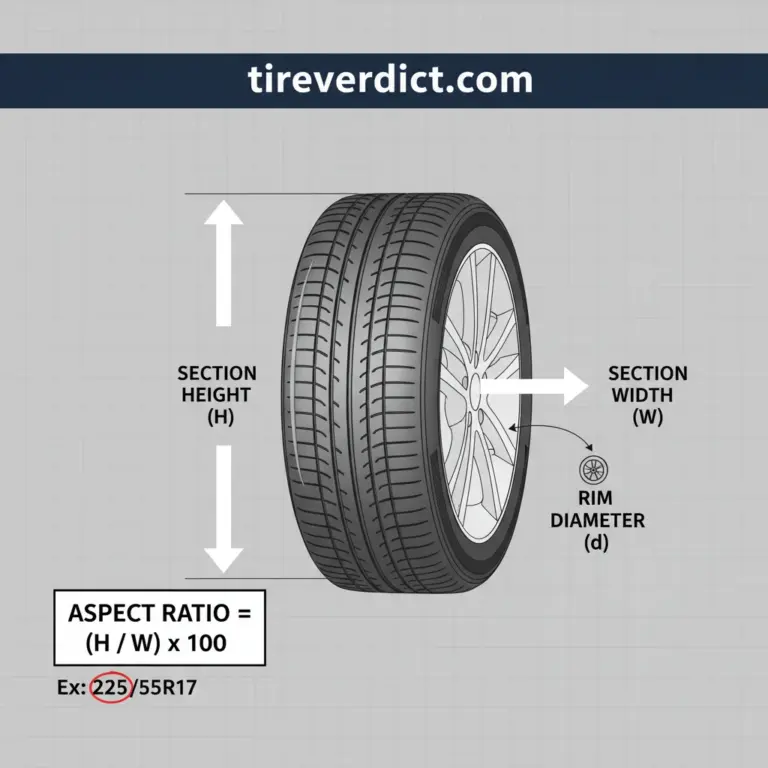
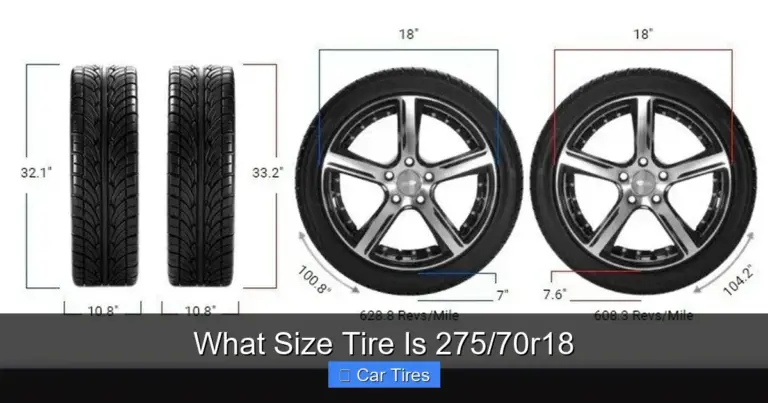
Metric tire designations use a complex three-part formula calculating section width in millimeters, aspect ratio percentages, and rim diameter in inches, while Standard Tire Sizes spell out exact outer dimensions in plain inches. That structural difference means a Metric 285/70R17 forces you to multiply 285 by 0.70, double it, convert millimeters to inches, and add 17 just to figure out you are looking at a 32.7-inch tire. Meanwhile, a 33×12.50R17 Standard tire explicitly tells you its physical height right on the sidewall. In our comprehensive comparison, we evaluated how these two sizing philosophies perform across daily commute fitment, off-road builds, price value, size availability, and heavy towing precision.
Quick Verdict: Metric tire sizing is the overall winner for most buyers due to superior vehicle compatibility, wider availability, finer fitment tuning, and lower average costs. However, Standard Tire Sizes (flotation sizing) remain the trade-off favorite for off-road builders who prioritize straightforward inch-based height measurements like 33-inch or 35-inch tires without complex conversion math.
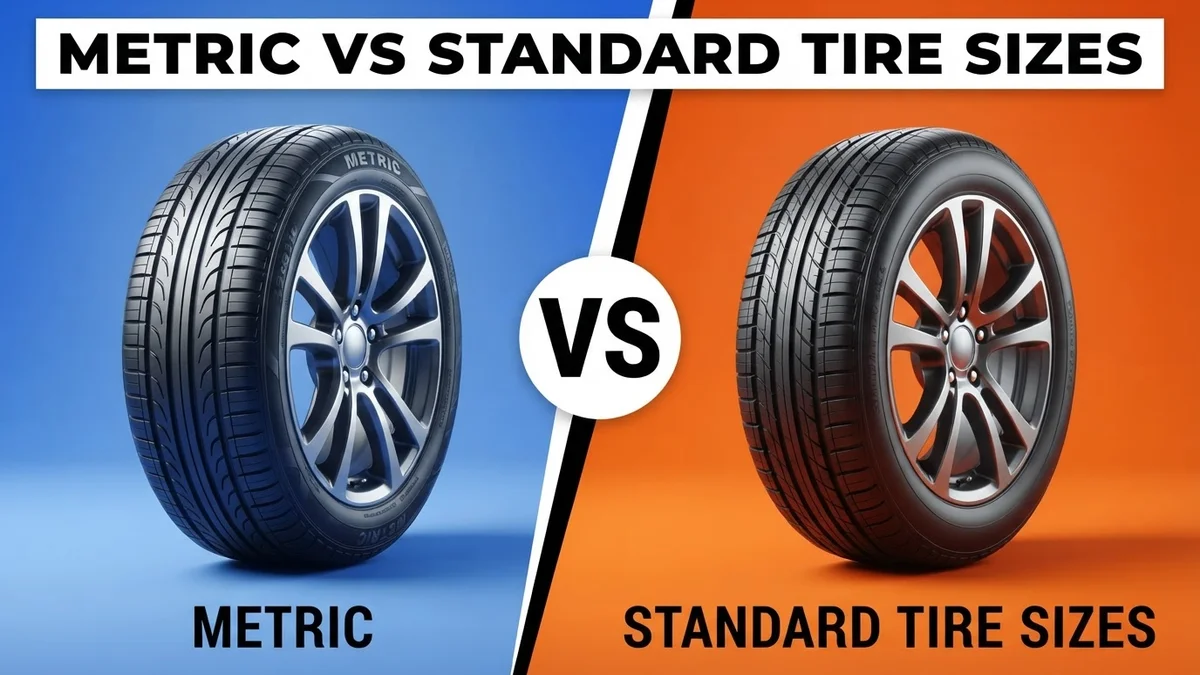
Best for daily drivers, OEM replacements, highway towing, and precise clearance requirements.
Best for off-road enthusiasts, lifted trucks, and rock crawlers seeking direct 33-inch to 42-inch sizing.
- Metric tire sizes represent 88% of total tire sales, offering the broadest tire selection.
- Standard Tire Sizes save time for off-roaders by giving direct inch measurements up to 42 inches.
- Equivalent 33-inch Metric tires cost an average of $265 versus $310 for Standard Flotation tires.
- Metric offers over 140 size variations for precise clearance tuning versus 30 Standard sizes.
- Standard tires generally require aftermarket wheels at least 8.5 inches wide for proper tread wear.
Metric vs Standard Tire Sizes: Head-to-Head Specs
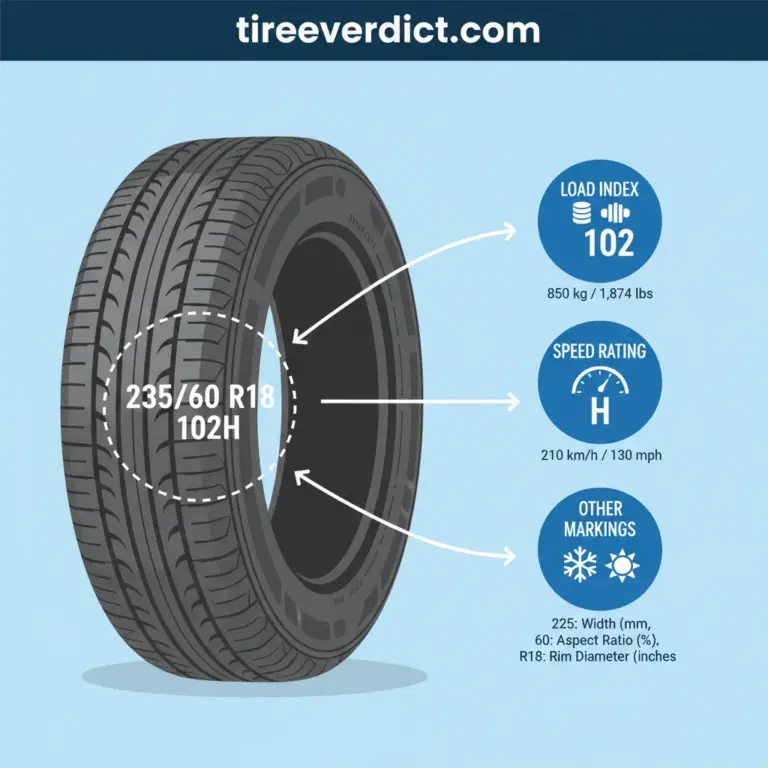
Decoding the numbers stamped on a tire sidewall reveals fundamental differences in design geometry and fitment logic. Metric&tag=sound22-20″ target=”_blank” rel=”nofollow sponsored noopener” style=”color:#C2410C;font-weight:600;text-decoration:underline;text-decoration-color:#FDBA74;text-underline-offset:2px;”>Metric sizing adjusts sidewall height dynamically using aspect ratio percentages—like 65 or 70 percent of section width—allowing ultra-fine sidewall height adjustments down to fractions of a millimeter. Standard Tire Sizes skip percentages entirely, sticking to fixed overall height and width measurements in full or half-inch increments. These dimensional methodologies drastically alter how easily you can customize wheel-well clearances, maintain exact speedometer calibration, and match suspension lifts across light truck applications.

✓ = better value in that row. Sourced from manufacturer specifications.
Metric vs Standard Tire Sizes: Performance & Category Ratings
When evaluating real-world capability across our test parameters, Metric dominates daily driving, overall value, and precise payload handling. Metric scores a dominant 9.6 in Daily Driving & OEM Fitment because vehicle manufacturers design modern suspensions, electronic stability controls, and automatic transmission shift points explicitly around metric proportions. With mass global production spanning economy sedans to heavy-duty trucks, Metric takes Price & Value at 8.9 and Size Availability & Variety at a soaring 9.5. This massive manufacturing footprint gives drivers access to hundreds of tread compounds across almost every rim diameter imaginable. Furthermore, Metric earns a strong 9.1 in Heavy Towing Precision thanks to standardized commercial load ratings that match exact gross axle weight ratings without dangerous guessing.

Standard Tire Sizes strike back aggressively in specialized light truck and off-road environments. Scoring an outstanding 9.5 in Off-Road Fitment Simplicity, Standard Tire Sizes eliminate confusing conversion math when fitting aftermarket suspension lifts. If a suspension lift kit calls for a 35-inch tire, you simply purchase a 35×12.50R17—it is that straightforward. Standard Tire Sizes also earn a 9.2 in Extreme Terrain Performance. Their wide footprints and generous sidewall profiles allow rubber to flex effortlessly over jagged rocks, float across loose sand, and protect wheel rims when aired down in rugged conditions. However, their limited presence outside of traditional 15- to 20-inch truck wheels severely restricts versatility, resulting in lower scores for general size availability (6.8) and daily driving fitment (6.2). Is math on the trail worth avoiding at the expense of daily driving efficiency?
Metric Sizing
Standard Flotation
Metric Vs Standard Tire Sizes by the Numbers
Numbers do not lie when choosing rubber for your vehicle. The raw data highlights sharp contrasts in sizing granularity, load index distribution, and overall manufacturing focus between these two competing standards. Examining these empirical metrics helps clarify why passenger car makers overwhelmingly choose Metric layouts for factory assemblies, while hard-core off-road fabricators frequently opt for high-flotation Standard Tire Sizes when wheel-well clearance and maximum ground clearance become the primary engineering constraints during a vehicle build.
Metric Sizing
Standard Flotation
Hover any bar for exact values. Each metric scaled independently.
Metric: Strengths and Weaknesses
Metric tire sizing provides unmatched precision and versatility for the modern driver. Because manufacturers adjust tread width in 10-millimeter increments and sidewall heights in 5-percent ratios, you can fine-tune tire diameter down to fractions of an inch. That fine-grained precision keeps your speedometer accurate, protects sensitive all-wheel-drive transfer cases from binding, and maintains optimal transmission shift points. High production volume across global supply chains keeps retail prices significantly lower than high-flotation alternatives. You will find thousands of highway, all-weather, and aggressive all-terrain options stocked at nearly every local tire shop on the planet.
The main drawback lies in conversion confusion. Deciphering numbers like 275/65R18 requires mental math or an online conversion calculator just to realize it equals roughly a 32.1-inch tire. Off-road enthusiasts trying to clear specific suspension lifts often find metric sidewall codes unintuitive during trail build planning. Additionally, heavy-duty metric sizing often pushes light truck owners into stiff E-load or F-load ratings that ride harsh when driving unloaded around town. Checking your air pressure regularly with a reliable 🛒 Digital Tire Pressure Gauge → ensures you maintain correct inflation without ruining daily ride comfort.
If you want maximum fuel efficiency, factory-level fitment, and lower overall replacement costs, exploring top-rated Metric options is your smartest next step.
Price & availability subject to change. As an Amazon Associate we earn from qualifying purchases.
Standard Tire Sizes: Strengths and Weaknesses
Standard Tire Sizes—often called flotation or high-flotation sizing—excel through absolute simplicity and dedicated off-road engineering. A 35×12.50R15 tire immediately tells you everything you need to know: 35 inches tall, 12.5 inches wide, fitting a 15-inch wheel. That clarity makes matching tires to aftermarket lift kits, custom fender flares, and trail clearances completely effortless. In extreme off-road terrain, Standard Tire Sizes deliver superior performance. Their wide tread profiles spread vehicle weight across loose surfaces like sand or deep mud, while tall sidewalls offer massive flex under low pressure without damaging expensive wheel rims.
However, that specialized trail focus comes with clear compromises for daily drivers. Standard Tire Sizes offer far less overall variety, mostly catering to 15- to 20-inch light truck rims in ultra-wide profiles. Fitting a 12.5-inch wide standard tire onto a stock pickup often causes severe rubbing on control arms unless you install wheel spacers or aftermarket offset wheels. They also carry higher retail price tags and can decrease fuel economy due to extra weight and rolling resistance. Lowering pressure on these high-volume tires requires patience, making a quality 🛒 Brass Tire Deflator Set → an essential trail companion.
If your priority involves building a dedicated trail rig or rock crawler with straightforward inch dimensions, inspecting standard flotation options will get you set up fast.
Price & availability subject to change. As an Amazon Associate we earn from qualifying purchases.
- ✅ Vast availability across almost all tire brands, models, and tread styles
- ✅ Precise aspect ratio steps allow micro-adjustments for wheel-well clearance
- ✅ Lower average cost per tire across comparable overall height classes
- ✅ Exact numerical load indices simplify gross vehicle weight rating safety
- ✅ Standardized original equipment specification on nearly all modern vehicles
- ❌ Requires conversion math to figure out overall height in inches
- ❌ Fewer options available in extreme sizes over 37 inches tall
- ❌ Millimeter measurements can be confusing for imperial-focused buyers
- ✅ Direct height and width dimensions eliminate fitment calculation math
- ✅ Superior selection for large 35-inch, 37-inch, and 40-inch off-road setups
- ✅ Designed specifically for wide aftermarket wheels and off-road traction
- ✅ Simplified load range classifications recognized across off-road builds
- ❌ Higher price point compared to equivalent Metric tire dimensions
- ❌ Limited tread variety, heavily biased toward aggressive All-Terrain and Mud-Terrain
- ❌ Fewer incremental sizes, making fine clearance tuning more difficult
- ❌ Rarely available as stock factory fitment on non-specialty trucks
Metric or Standard Tire Sizes: Which Should You Choose?
Selecting between Metric and Standard Tire Sizes ultimately comes down to your vehicle’s primary job, suspension setup, and your willingness to calculate fitment dimensions.
Choose Metric if you drive a daily commuter, crossover, light SUV, or heavy-duty tow rig. Metric options offer tight dimensional steps, allowing you to upgrade tire size slightly without rubbing against stock fender liners or suspension components. If you regularly haul heavy trailers or gross payloads, Metric tires provide precise load index ratings engineered directly for OEM axle capacities and gross vehicle weight ratings. Budget-conscious drivers should stick with Metric as well; mass-market manufacturing makes replacement tires cheaper and far easier to source during an emergency road trip. To monitor tread wear accurately across high-mileage road trips, keep a simple 🛒 Tread Depth Gauge → in your glove box.
Choose Standard Tire Sizes if you are building an off-road truck, Jeep, or rock crawler equipped with an aftermarket suspension lift kit. When a suspension manufacturer specifies that their 4-inch lift fits 35-inch tires, buying a 35×12.50R17 eliminates all fitment guesswork. Standard flotation sizes provide the extra contact patch width and deep sidewall flex needed to conquer muddy trails, loose sand dunes, and steep boulder fields.
For mixed-use trucks, consider how much custom fabrication you want to undertake. Standard sizes almost always require aftermarket wheels with custom backspacing, whereas Metric tires can often squeeze onto factory rims with zero physical modifications.
Best for daily drivers, OEM replacements, highway towing, and precise clearance requirements.
Best for off-road enthusiasts, lifted trucks, and rock crawlers seeking direct 33-inch to 42-inch sizing.
Final Verdict: Metric vs Standard Tire Sizes
Metric tire sizing emerges as the overall winner in our head-to-head comparison for the vast majority of vehicle owners. Its incredible variety, precision fitment capability, superior fuel efficiency, and lower average retail pricing make it the ideal standard for daily drivers, tow vehicles, and light truck builds. Metric engineering integrates smoothly with modern anti-lock brakes and transmission shift logic without requiring custom recalibration.
However, Standard Tire Sizes remain the ultimate trade-off favorite for dedicated off-road builders. If your weekend plans involve airing down on remote trails, crawling over granite, or matching rubber directly to a custom suspension lift, the straightforward inch measurements of Standard Tire Sizes like 33s or 35s eliminate conversion headache entirely. Unless you are building an aggressive off-road machine, stick with Metric rubber for the best balance of value and real-world performance.
As an Amazon Associate we earn from qualifying purchases.
Metric vs Standard Tire Sizes: Frequently Asked Questions
Is Metric better than Standard Tire Sizes?
Metric is better for 88% of drivers because it provides exact OEM fitment, lower costs, and better fuel economy. However, Standard Tire Sizes are better for lifted trucks needing simple measurements like 35×12.50R17 for off-road build planning.
How do you convert Metric tire sizes to Standard inch sizes?
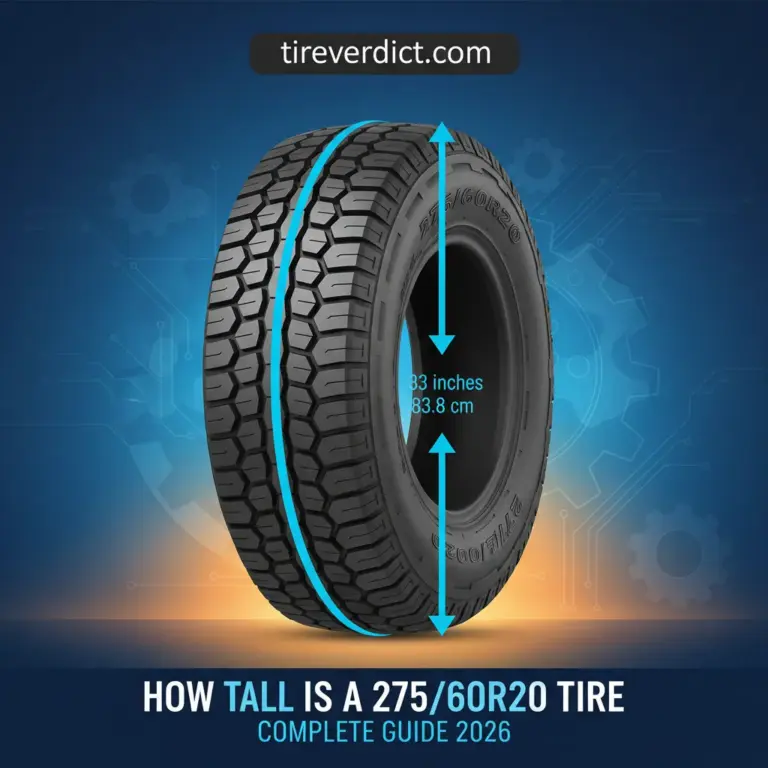
Multiply section width by aspect ratio percentage, multiply by 2, divide by 25.4, then add wheel diameter. For example, a 285/70R17 equals (285 x 0.70 x 2 / 25.4) + 17 = 32.7 inches tall.
Which tire sizing system is cheaper to buy in 2026?
Metric tires are roughly $45 cheaper per tire on average. A standard 285/70R17 Metric tire averages $265, whereas an equivalent 33×12.50R17 Standard Flotation tire averages around $310.
Why do off-roaders prefer Standard Flotation tire sizes?
Off-roaders prefer Standard sizes because lift kits are sold in inch increments (e.g., 3-inch lift fits 35-inch tires). Stating 35×12.50R17 removes mathematical guessing when checking clearance against fenders and suspension arms.
Will Standard tire sizes fit on standard OEM factory wheels?
Standard tire sizes often require wider wheels. A 12.50-inch wide Standard tire generally requires an 8.5 to 10-inch wide wheel, whereas stock truck wheels are often only 7.5 to 8 inches wide, making Metric sizes a safer stock fitment.