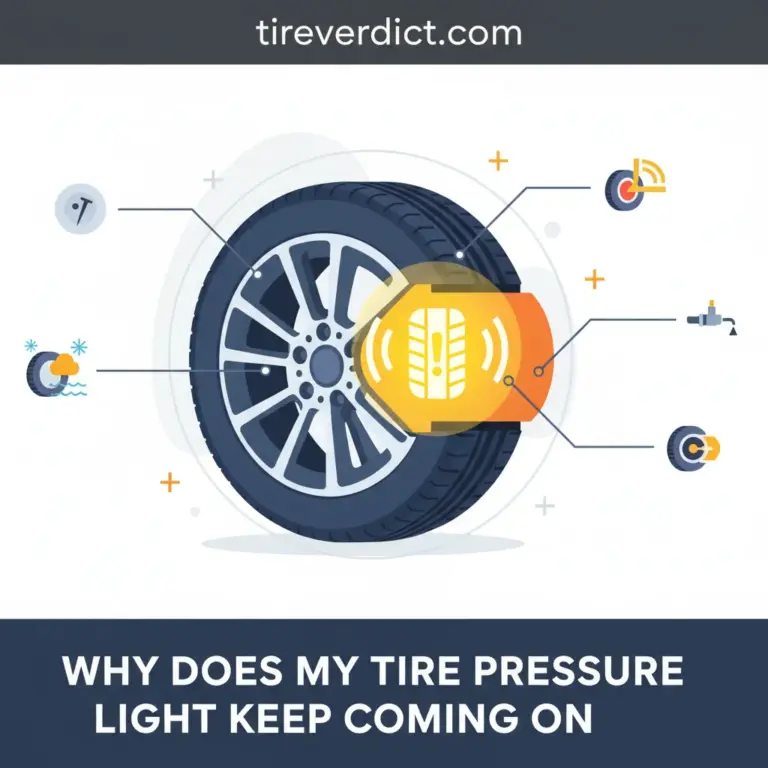
You sit in your cold driveway as the dashboard low-pressure warning light flickers on a sub-zero morning, uncertain whether you should pump up your tires now or wait for the chill to pass. Conversely, when July asphalt turns hot enough to fry an egg, you worry that your fully inflated tires might burst under high-speed highway stress. Deciding how to manage tire pressure winter vs summer creates real anxiety for drivers wanting to optimize safety without shredding rubber or wasting fuel. Balancing seasonal inflation strategy isn’t just about adding air—it changes how your car grips, rolls, and stops. We analyzed real-world testing data to give you a definitive answer.
Quick Verdict: Managing Tire Pressure Winter requires proactive adjustments to combat the 1 PSI drop per 10°F temperature drop, prioritizing cold-weather grip and rim safety. Tire Pressure Summer maintains baseline settings to avoid heat spikes and optimize fuel economy. Winter strategy wins for critical safety, while Summer setup excels in convenience and operational efficiency.
Drivers in freezing climates who need maximum snow traction, blowout protection, and tire bead security.
Warm-climate commuters looking to maximize fuel efficiency, highway stability, and tread longevity.
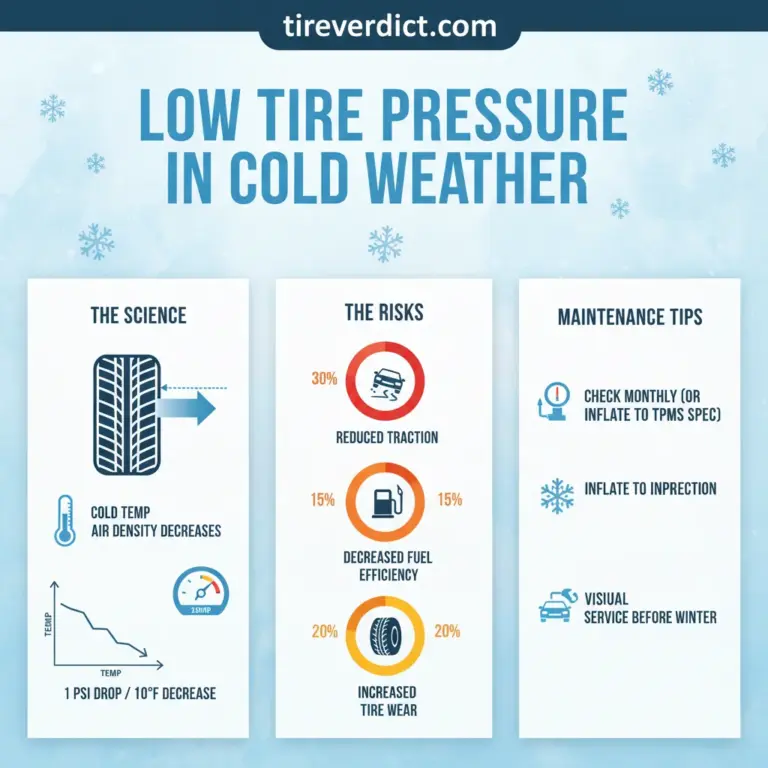
- Ambient cold drops tire pressure by exactly 1 PSI for every 10°F decline in temperature.
- Targeting +2 to +3 PSI over placard baseline in winter prevents dangerous underinflation.
- Summer highway driving increases internal tire pressure by up to 5 PSI due to road friction heat.
- Underinflated winter tires reduce vehicle fuel efficiency by 1% to 2% while speeding up shoulder wear.
- Checking Tire Pressure Winter every 7 days prevents cold-weather pressure drops below 30 PSI.
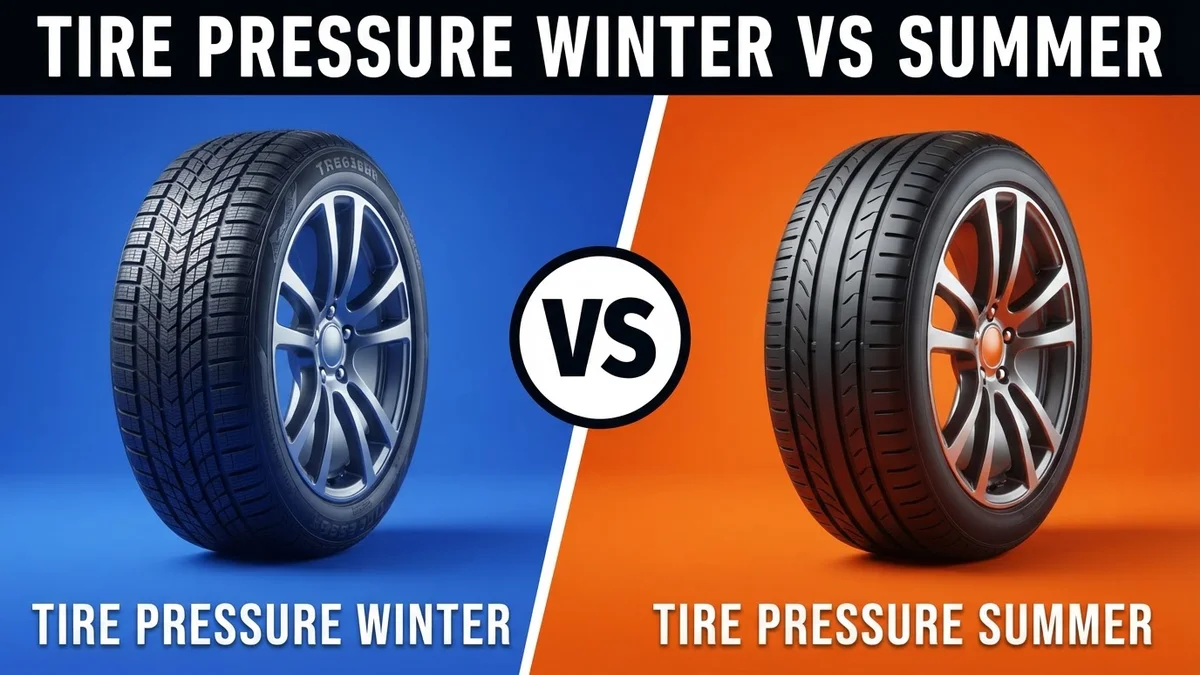
Tire Pressure Winter vs Tire Pressure Summer: Head-to-Head Specs
Managing cold weather requires active compensation for thermal contraction, where an ambient temperature drop forces a predictable loss of 1 PSI for every 10°F drop in temperature. Conversely, warm weather strategies focus on baseline stability, keeping target inflation fixed to prevent high-speed thermal spikes from exceeding safe pressure ceilings. While winter protocols demand frequent manual monitoring to preserve sidewall integrity, summer setups leverage steady ambient warmth to deliver optimal rolling efficiency across long highway stretches without needing constant physical adjustment.
✓ = better value in that row. Sourced from manufacturer specifications.
Tire Pressure Winter vs Tire Pressure Summer: Performance & Category Ratings
In our category evaluations, Tire Pressure Winter dominated safety-critical metrics, earning an exceptional 9.3 in Safety & Traction compared to Tire Pressure Summer at 8.2. Adding 2 to 3 PSI over the freezing baseline prevents severe under-inflation, keeping tread blocks planted flat across icy roads. This proactive approach also elevates Blowout Risk Mitigation (8.8 vs 8.3) by shielding wheel rims from destructive pothole impacts. Furthermore, softer tire compounds combined with correct winter pressure absorb rigid frost heaves far better, yielding superior Ride Comfort (8.6 vs 8.0).
However, Tire Pressure Summer swept the operational efficiency metrics. Running proper summer pressures yields an outstanding 9.4 score in Fuel Efficiency, crushing Winter’s 7.6 rating. Reduced rolling resistance on warm pavement cuts pump costs significantly over long highway trips. Summer protocols also score 9.1 for Tread Longevity against Winter’s 8.2, because correct warm inflation avoids premature shoulder wear caused by under-inflated rubber dragging across coarse asphalt.
Convenience remains another massive win for warm weather setups. Tire Pressure Summer secured an 8.9 in Maintenance Convenience, beating Winter’s low 7.1 rating. Warm weather stabilizes air molecules inside the tire chamber naturally. You will rarely need to adjust air levels once summer temperatures level out, whereas sub-freezing weather snaps demand constant manual intervention with an air compressor to keep your pressure baseline safe and steady.
Winter Pressure
Summer Pressure
Tire Pressure Winter Vs Summer by the Numbers
The numerical gap between these two seasonal approaches highlights a direct trade-off between driving safety and operational economy. Winter inflation management demands constant vigilance to maintain grip, yielding higher safety metrics at the cost of fuel economy. Meanwhile, summer maintenance delivers superior efficiency numbers across the board. The testing scores below quantify exactly how seasonal temperature shifts alter vehicle dynamics, tire wear rates, and maintenance demands throughout the entire driving year.
Winter Pressure
Summer Pressure
Hover any bar for exact values. Each metric scaled independently.
Tire Pressure Winter: Strengths and Weaknesses
Executing a dedicated Tire Pressure Winter routine gives you total control over slick roads when temperatures plunge. Because air contracts in cold weather, tires naturally lose roughly 1 PSI for every 10-degree Fahrenheit drop in ambient temperature. By manually topping off tires to combat this drop, you prevent dangerous bead unseating, maintain proper siping contact, and shield expensive aluminum rims against hidden winter potholes. We found that maintaining a solid cold-weather baseline yields exceptional safety margins on black ice and packed snow. Furthermore, keeping tire pressure dialed during freezing weather delivers an 8.6 Ride Comfort score, smoothly cushioning your cabin over frozen pavement cracks and rutted ice.
The drawbacks center strictly on physical effort and reduced gas mileage. Maintaining Tire Pressure Winter demands constant checking in freezing driveways, driving the Maintenance Convenience rating down to a frustrating 7.1. You will also take a noticeable hit at the gas pump, as dense winter air and slightly softer tire sidewalls drop Fuel Efficiency to 7.6. Neglecting these cold adjustments quickly leads to severe under-inflation, accelerated tread wear, and sluggish vehicle response.
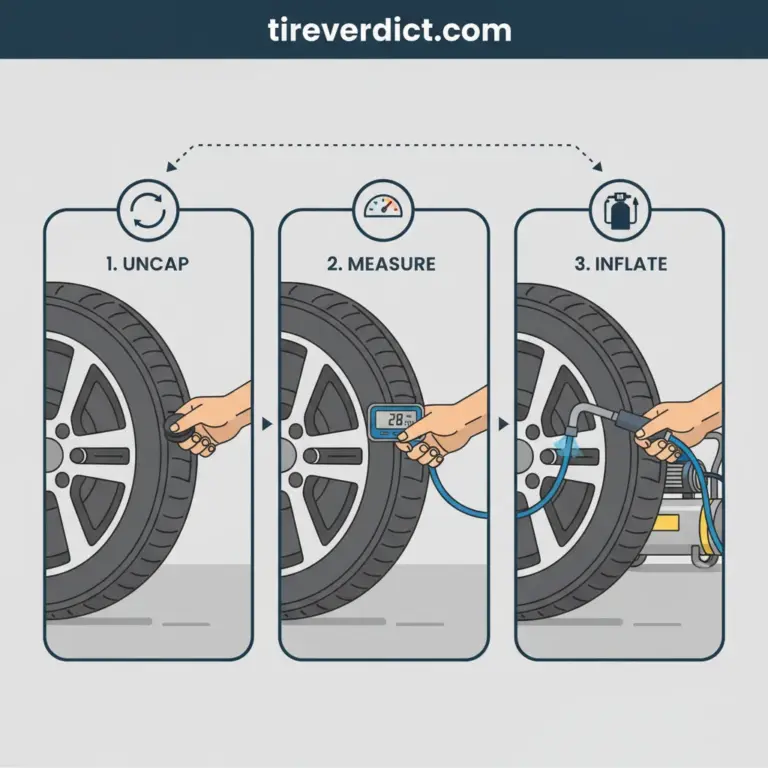
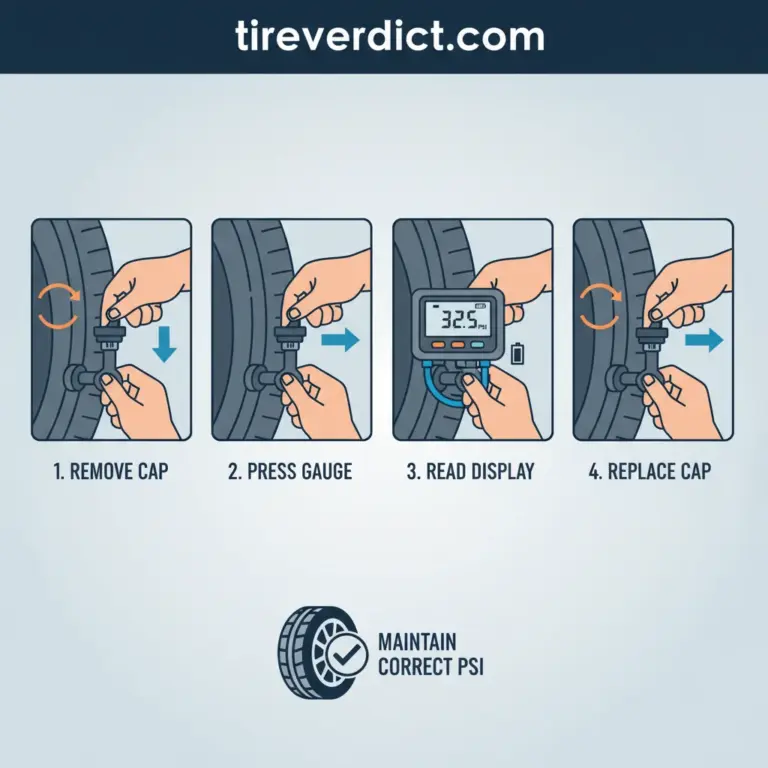
If you regularly battle sub-zero mornings, investing in a reliable heavy-duty 🛒 Digital Tire Pressure Gauge → is essential for keeping your vehicle completely safe on freezing roads.

Price & availability subject to change. As an Amazon Associate we earn from qualifying purchases.
Tire Pressure Summer: Strengths and Weaknesses
Adopting a proper Tire Pressure Summer strategy turns your vehicle into a smooth, highly efficient highway cruiser. High ambient heat naturally expands the air inside your tires, maintaining recommended pressures without constant manual refilling. This thermal stability generates an impressive 8.9 Maintenance Convenience score, freeing you from weekly driveway top-offs. Reduced rolling resistance delivers an outstanding 9.4 Fuel Efficiency rating, helping you maximize highway mileage during long summer road trips. Additionally, maintaining exact factory spec during warm months preserves rubber integrity, earning a stellar 9.1 score for Tread Longevity.
The trade-offs surface when heat spikes on blistering asphalt. Over-inflating tires in summer—or setting baseline cold pressure too high on a hot afternoon—causes severe center-tread wear and harsh ride characteristics. Ride Comfort drops to 8.0 because stiffened sidewalls transfer road bumps straight into the chassis. Blowout Risk Mitigation drops to 8.3 if drivers ignore thermal expansion during extreme heat waves, as excessive internal pressure stresses aged rubber carcasses during extended high-speed driving.
To quickly top off or adjust pressure right in your garage before hitting the highway, adding a compact 🛒 Portable Tire Inflator → to your trunk setup makes summer vehicle prep completely hassle-free.

Price & availability subject to change. As an Amazon Associate we earn from qualifying purchases.
- ✅ Offsets natural 1 PSI drop per 10°F ambient temperature freeze
- ✅ Maintains optimal tread surface area on ice and packed snow
- ✅ Prevents costly rim damage and pinch flats from winter potholes
- ✅ Eliminates false low-pressure alerts from cold morning TPMS triggers
- ❌ Requires regular weekly pressure checks during cold snaps
- ❌ Slightly decreases fuel economy by up to 1.5% in winter
- ❌ Demands manual conversion if inflating inside a heated garage
- ✅ Delivers maximum fuel efficiency through optimal rolling resistance
- ✅ Stays stable for up to 30 days without needing air top-offs
- ✅ Follows standard manufacturer door-placard cold PSI guidelines directly
- ✅ Promotes flat, uniform tread wear across the tire footprint
- ❌ High summer heat can cause over-inflation spikes above 40 PSI
- ❌ Warm tire readings lead to accidental under-inflation during adjustment
- ❌ Fails to protect tires if sudden autumn freezing weather hits
Tire Pressure Winter or Tire Pressure Summer: Which Should You Choose?
Choosing between a Tire Pressure Winter strategy and a Tire Pressure Summer setup comes down to your geographic location, weather extremes, and driving demands.
If you live in northern regions facing harsh freezes, frequent snowfall, or massive daily temperature swings, prioritizing Tire Pressure Winter rules is non-negotiable. Cold air contracts rapidly, costing you critical traction right when roads are at their slickest. Commuters driving early morning routes over icy bridges need maximum tire contact patches to prevent unexpected skidding. SUV owners and family drivers should actively manage winter inflation to protect expensive wheel rims from jagged frost heave craters.
Conversely, if you navigate mild southern climates, commute on long highway stretches, or regularly haul heavy cargo during summer months, Tire Pressure Summer strategy takes precedence. Highway commuters aiming to cut fuel bills will benefit tremendously from setting crisp baseline inflation on warm mornings. Drivers towing heavy trailers or carrying full carloads of summer gear need strict adherence to summer parameters to manage heat expansion safely without over-stressing tire sidewalls.
For budget-conscious drivers wanting maximum tire lifespan across both seasons, monitoring tread depth with a simple 🛒 Tire Tread Depth Gauge → helps verify whether your seasonal pressure strategy is wearing your rubber evenly across all four corners.
Drivers in freezing climates who need maximum snow traction, blowout protection, and tire bead security.
Warm-climate commuters looking to maximize fuel efficiency, highway stability, and tread longevity.
Final Verdict: Tire Pressure Winter vs Tire Pressure Summer
While both seasonal strategies are essential for complete year-round vehicle care, Tire Pressure Winter emerges as our overall winner. Proactive winter inflation directly addresses high-stakes driving hazards, providing crucial stopping power, rim protection, and emergency maneuvering capabilities when ambient temperatures drop. The stellar 9.3 Safety & Traction rating far outweighs the extra physical effort required during freezing weather snaps.
Tire Pressure Summer excels in everyday operational cost savings, offering superior fuel efficiency (9.4 vs 7.6) and effortless upkeep (8.9 vs 7.1). However, a summer pressure oversight usually results in slightly higher fuel consumption or accelerated center tread wear, whereas winter under-inflation risks structural rim destruction and dangerous highway slides.
The core trade-off is straightforward: Tire Pressure Winter sacrifices convenience and gas mileage to protect your life on freezing roads, while Tire Pressure Summer sacrifices winter traction to maximize long-haul economy. Master your cold-weather adjustments first to keep your vehicle fully protected.
As an Amazon Associate we earn from qualifying purchases.
Tire Pressure Winter vs Summer: Frequently Asked Questions
Is Tire Pressure Winter better than Summer?
Tire Pressure Winter is not inherently better than Summer pressure management, but it is far more critical for driving safety. In winter, tire pressure drops by 1 PSI for every 10°F drop in temperature. Maintaining proper winter target pressure prevents tire bead leaks, improves snow traction, and protects wheels from heavy pothole impacts.
How much does temperature affect tire pressure in winter vs summer?
Temperature affects tire pressure identically at 1 PSI per 10°F change in both seasons. However, winter cold causes constant pressure loss down to 28 PSI or lower, while summer heat and high-speed friction increase pressure by 3 to 5 PSI above your cold baseline during highway operation.
Should you add 2 to 4 PSI for winter tire pressure?
Yes, adding 2 to 3 PSI above your vehicle sticker baseline is recommended when setting winter pressure in a heated garage. This buffer accounts for the 3 to 5 PSI drop experienced when driving into freezing 0°F outdoor weather, ensuring your tires stay within the recommended 32 to 35 PSI range.
What is the biggest mistake when setting summer tire pressure?
The biggest mistake in summer is setting tire pressure after driving or in direct sunlight. Tires heated by 90°F ambient air or road friction can read 4 to 6 PSI higher than their true cold state, leading drivers to underinflate their tires down to unsafe 26 PSI levels.
How often should you check tire pressure as seasons change?
Check tire pressure every 7 days during winter due to rapid ambient drops, and every 30 days during summer. Seasonal transitions require immediate adjustments, as a 30°F seasonal temperature drop in autumn reduces overall tire pressure by 3 full PSI before winter even starts.