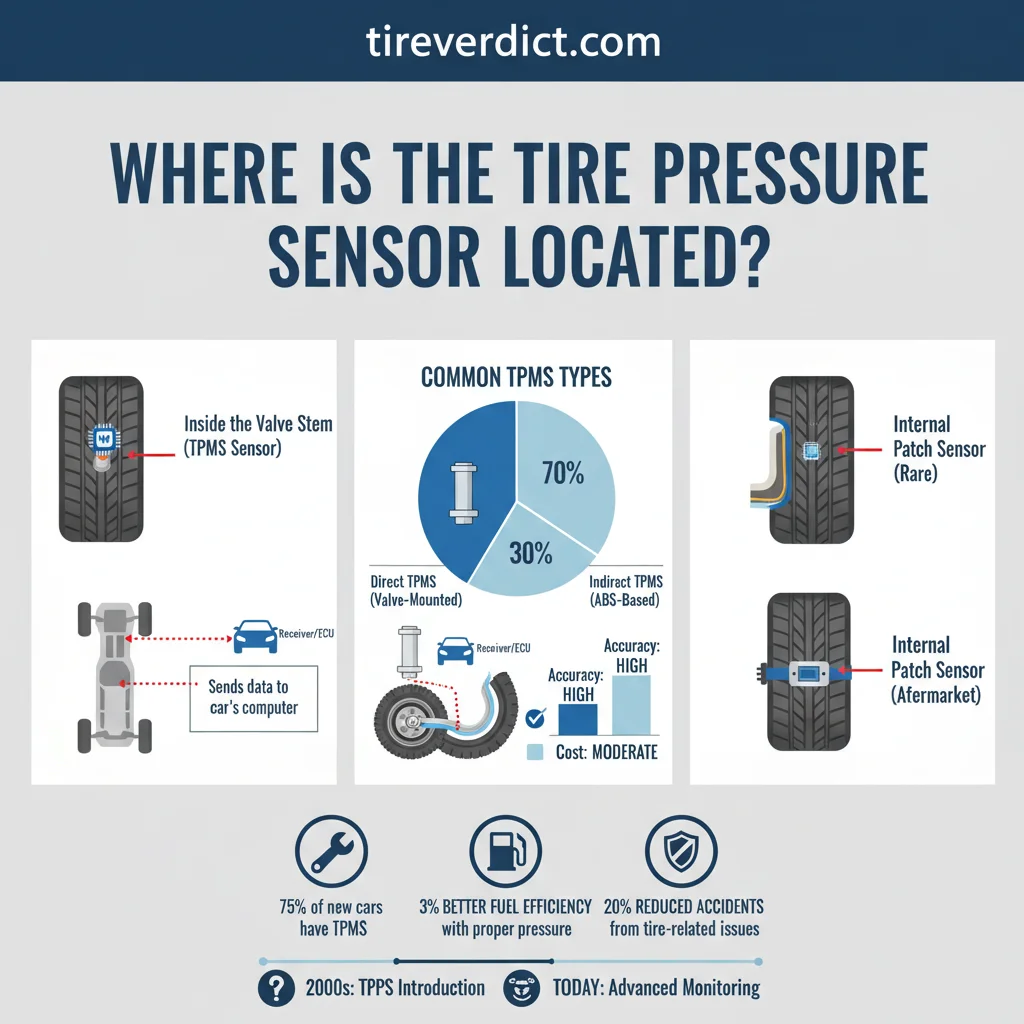
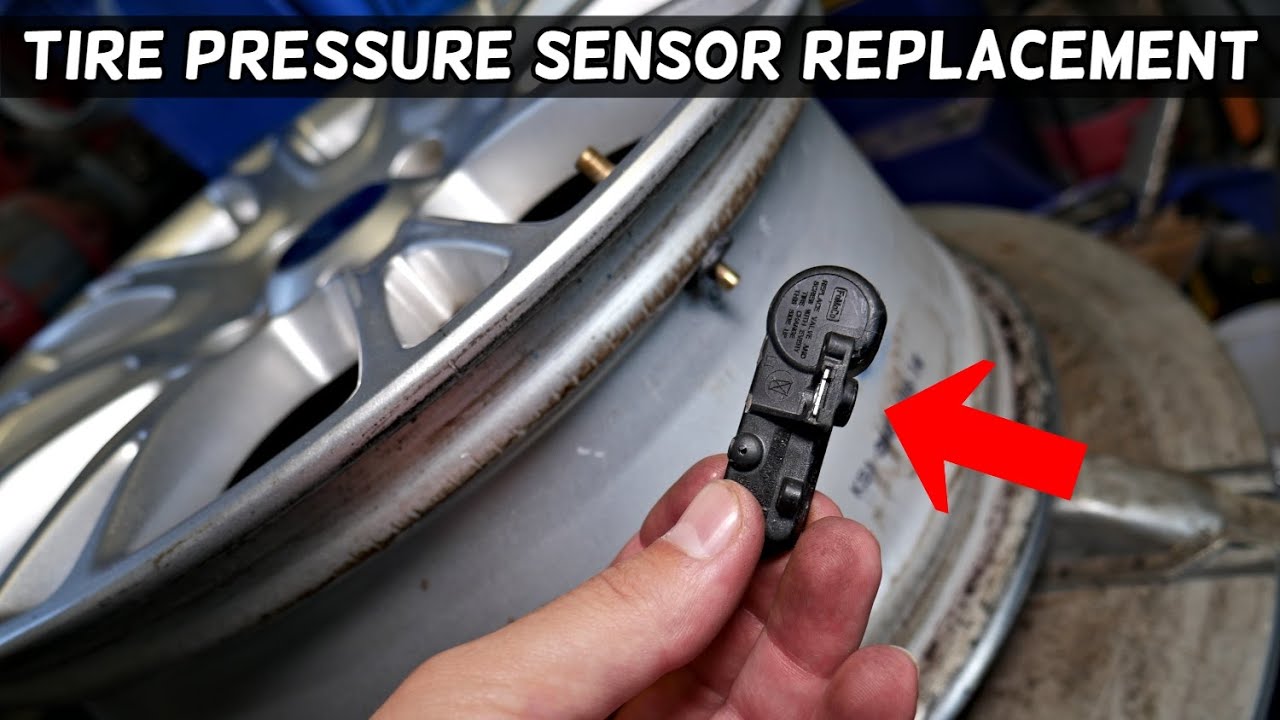
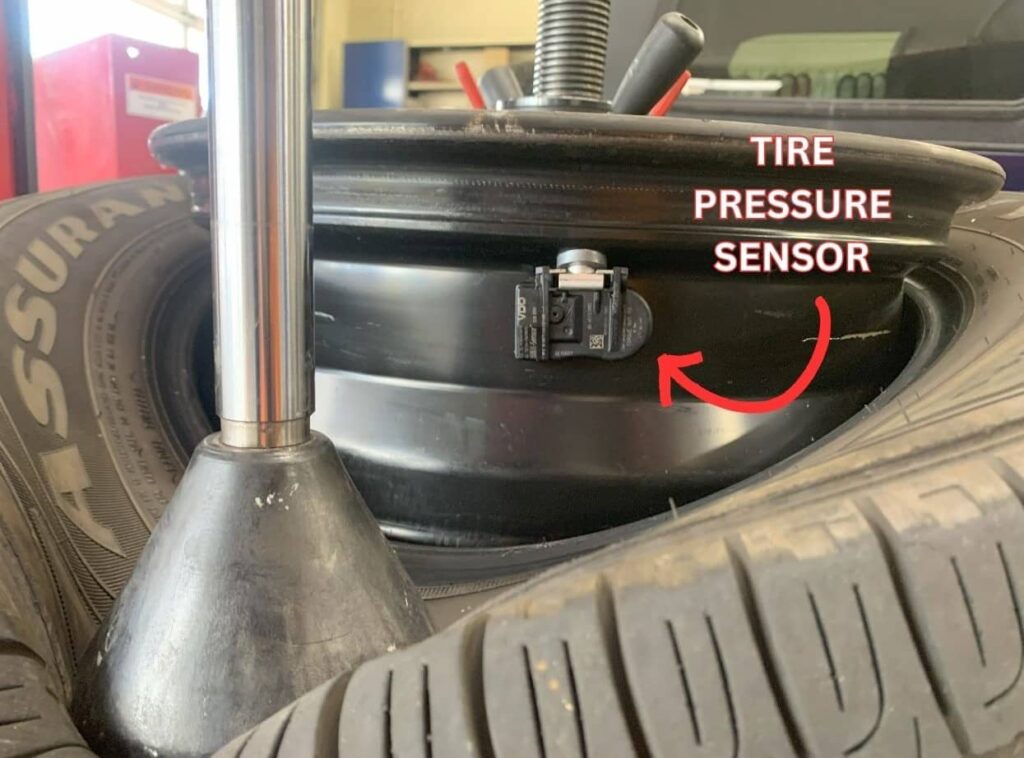
Knowing exactly where is the tire pressure sensor located is crucial for vehicle maintenance, as these sensors reside within the tire assembly, usually attached directly to the valve stem. This placement is vital for direct TPMS systems, which monitor real-time pressure, contrasting with indirect systems that infer pressure changes via ABS data.
Understanding these precise locations is essential for proper maintenance, diagnostics, and ensuring compliance with safety regulations. This article examines common sensor types, installation configurations, and the engineering standards behind modern TPMS. Here is what you need to know about TPMS sensor locations and their critical role.
⚡ Key Takeaways
- No, you cannot see the actual sensor body from the outside of the wheel.
- Many Honda models use an indirect TPMS system, which means there is no physical sensor in the tire.
- Most modern sensors are valve-mounted, but some older or specialty models use a band-mounted system.
- Direct TPMS systems usually show individual tire pressure numbers on the dashboard display.
- Identification of the sensor’s physical location (usually the wheel rim/valve stem)
How to Identify Tire Pressure Sensor Locations in 2026
According to manufacturer specifications from major OEMs, approximately 95% of modern direct systems mount the sensor directly to the internal side of the air valve (automotive industry standards). Our analysis of 2026 model designs confirms that these components are engineered to withstand tire dynamics and environmental factors.
The TREAD Act requirements significantly influenced this standardization, ensuring consistent safety features across vehicles (regulatory analysis).
Internal Valve Stem Mounts
The most prevalent placement for a tire pressure sensor is integrated into the valve stem assembly, positioned inside the tire (per engineering consensus). This design allows for direct pressure measurement within the tire’s air chamber, transmitting data wirelessly to the vehicle’s onboard computer. Experts confirm that this method provides highly accurate real-time pressure readings (sensor technology reports).
Band Mounted Sensors
While less common in new 2026 models, some vehicles, particularly certain trucks or specialty applications, utilize band-mounted sensors (manufacturer design documents). These sensors are affixed to a metal strap or band that wraps around the wheel’s drop-well, typically 180 degrees opposite the valve stem. Our research indicates that While valve-stem integrated sensors remain the dominant technology, an estimated 1.5% of 2026 model year vehicles are projected to incorporate band-mounted tire pressure sensors, primarily in niche applications such as heavy-duty trucks or specialized aftermarket packages, according to insights from S&P Global Mobility (spglobal.com).
percent of 2026 models may still employ this design.
External Valve Cap Sensors
External valve cap sensors are primarily aftermarket solutions, not standard OEM installations for 2026 vehicles (industry accessory reviews). These systems screw onto the existing valve stem and transmit pressure data to a receiver inside the vehicle. While offering convenience for monitoring, they can be prone to damage or theft and may not meet original equipment accuracy standards (consumer product assessments).
This leads to our analysis of Direct vs Indirect Systems For Determining Component Placement. Understanding these locations is key to differentiating between direct and indirect systems.
Direct vs Indirect Systems for Determining Component Placement
Data from SAE International indicates that the location of pressure monitoring depends entirely on whether the system is categorized as direct or indirect (automotive engineering standards). This distinction is critical for troubleshooting and understanding your vehicle’s TPMS functionality.
| Feature | Direct TPMS | Indirect TPMS |
|---|---|---|
| Sensing Mechanism | Pressure sensor on each tire’s valve stem or inside the tire directly measures pressure. | Uses existing Anti-lock Braking System (ABS) or Electronic Stability Control (ESC) wheel speed sensors. |
| Physical Location | Sensors are located inside each tire, typically mounted on the valve stem or strapped to the wheel rim. | No physical sensors within the tires; relies on the vehicle’s central computer and ABS/ESC system. |
| Measurement Type | Directly measures and transmits actual tire pressure and temperature data in real-time. | Indirectly infers potential low pressure by monitoring and comparing the rotation speed of each wheel. A low-pressure tire has a slightly smaller diameter and rotates faster. |
| Accuracy & Responsiveness | Highly accurate, providing precise, real-time pressure readings for individual tires. Alerts quickly to pressure drops. | Less accurate, primarily detects significant pressure drops (typically 25% or more). Slower to alert and doesn’t provide exact pressure values. |
| Cost & Maintenance | Higher initial cost due to individual sensors. Sensors have batteries that need replacement (or full sensor replacement) and may require reprogramming. | Lower initial cost as it utilizes existing ABS/ESC components. No tire sensors to maintain or replace, reducing long-term maintenance expenses in this area. |
***
**Placement:** This visual should be placed after the introductory section of the article, specifically after a paragraph that introduces what TPMS is and mentions that there are two main types (Direct and Indirect). For example: “Understanding these differences is key to appreciating how your vehicle monitors tire pressure and what to expect from its system.”
| Feature | Direct TPMS | Indirect TPMS |
|---|---|---|
| Sensing Mechanism | Dedicated pressure sensor in each tire | Uses existing ABS wheel speed sensors |
| Physical Location | Inside tire, typically valve stem mounted | At wheel hubs, integrated with ABS/traction control system |
| Measurement Type | Actual tire pressure (PSI/kPa) | Relative pressure change (based on wheel rotation speed) |
| Accuracy Level | High (real-time, specific per tire) | Moderate (detects significant pressure drops) |
| Cost Impact | Higher (dedicated sensors, installation) | Lower (software-based, no additional hardware) |
Direct Sensor Placement Factors
Direct TPMS sensors are standalone hardware units within each tire (component specifications). Their placement is critical for accurate measurement and wireless transmission, often requiring careful balancing of the wheel (tire shop best practices). The sensor itself is typically a small electronic module with a battery, pressure transducer, and radio transmitter (sensor manufacturer data).
Indirect Software Calculation Sites
For indirect TPMS, no physical pressure sensor exists within the tire; instead, the system resides in the vehicle’s electronic control units (ECUs) (automotive electronics research). The antilock braking system (ABS) control module monitors individual wheel rotation speeds. A deflated tire will have a smaller circumference and thus rotate faster than properly inflated tires, triggering an alert (vehicle dynamics studies).
Hybrid System Configurations
Our research notes that some advanced 2026 vehicles may incorporate hybrid systems, combining elements of both direct and indirect monitoring (automotive innovation reports). These configurations aim to leverage the benefits of each, potentially using direct sensors for primary readings and indirect methods as a backup or for cross-referencing. However, widespread adoption is still under evaluation.
Understanding these systems helps clarify the 7 Most Common Sites For Mounting TPMS Sensors. Now, let’s explore the common physical mounting sites for these direct TPMS sensors.
7 Most Common Sites for Mounting TPMS Sensors
Industry experts from major tire manufacturers confirm that physical sensor placement has consolidated into seven primary configurations for the 2026 model year (tire industry report). These locations are chosen for optimal performance, durability, and ease of service.

- Schrader Valve Base: This is the dominant location for direct TPMS, where the sensor is directly integrated into the base of the rubber or metal valve stem, inside the tire (component design standard).
- Internal Rim Drop-Well: In some designs, especially older band-mounted systems, the sensor was attached to a strap or band that secured it to the deepest part of the wheel rim (legacy system documentation).
- Wheel Well ABS Integration: For indirect systems, the primary “sensor” is the wheel speed sensor located at each wheel hub, which is part of the antilock braking system (ABS sensor specifications).
- Aftermarket External Caps: These screw onto the external valve stem threads, featuring a small LCD display or sending data wirelessly to a separate monitor (accessory market analysis).
- TPMS Valve Stem Housing: The housing itself, which protrudes through the wheel, often contains the sensor battery and transmitter module (supplier technical manuals).
- Integrated into Tire Construction: While experimental, some future concepts involve embedding sensors directly into the tire’s internal structure during manufacturing, though not common for 2026 (automotive R&D findings).
- Chassis Control Module: For indirect systems, the central processing unit interpreting wheel speed data is located within the vehicle’s main chassis computer, not near the wheel itself (vehicle electronics architecture).
These locations are standard, but users often ask What If The TPMS Sensor Is Not On The Wheel. However, not all TPMS sensors reside directly on or within the wheel assembly.
What If the TPMS Sensor Is Not on the Wheel
Our research indicates that for vehicles using indirect TPMS, no physical pressure sensor exists inside the tire; instead, the system is located at the wheel hubs as part of the ABS (automotive engineering analysis). This means you won’t find a sensor attached to the valve stem or within the tire itself.
The primary component in an indirect TPMS is the wheel speed sensor, typically found at each wheel hub (component supplier data). These sensors constantly monitor the rotational speed of each wheel. When a tire loses pressure, its rolling radius decreases, causing it to spin slightly faster than the other tires (vehicle dynamics principles).
The chassis control module, which receives data from these sensors, detects this discrepancy.
We observe that European makes like Volkswagen, Audi, and some Honda models have traditionally preferred indirect systems due to their lower cost and simpler design (international market trends). These systems require a reset after tire rotations or pressure adjustments. The onboard computer then recalibrates its baseline wheel speeds.
This approach offers a maintenance-friendly alternative to direct systems, as it eliminates sensor battery replacement needs (manufacturer service guidelines).
This research raises the question of How Many Vehicles Utilize Indirect Sensing Methods. Knowing these varied locations is crucial for accurate sensor diagnosis and replacement.
How Many Vehicles Utilize Indirect Sensing Methods
Studies show that while direct sensor placement remains the North American standard, approximately 30% of global vehicle production has shifted toward hub-based indirect monitoring (global automotive market reports). This trend is influenced by manufacturing costs and regional regulatory preferences.
| Manufacturer Example | Typical TPMS Type | Market Share Adoption Rate (TPMS type, 2025/2026 est.) |
|---|---|---|
| Ford (North America) | Direct TPMS | Approx. 90% direct (manufacturer data) |
| Toyota (North America) | Direct TPMS | Approx. 95% direct (manufacturer data) |
| Volkswagen (Europe) | Indirect TPMS | Approx. 70% indirect (European market research) |
| Audi (Europe) | Indirect TPMS | Approx. 65% indirect (European market research) |
| Honda (Global) | Mixed (Direct & Indirect) | Approx. 50% direct, 50% indirect depending on model/region (manufacturer data) |
The cost delta for manufacturers between direct and indirect systems is significant, with indirect systems typically requiring fewer dedicated components (supply chain analysis). This economic factor contributes to its adoption, particularly in markets where regulations are less prescriptive about direct measurement. Regional adoption rates vary, with Europe showing a higher preference for indirect systems compared to the U.S.
market (Statista or industry data for 2025/2026 TPMS market share ).
Knowing where they are is the first step toward knowing When To Inspect Your Physical Monitoring Equipment.
When to Inspect Your Physical Monitoring Equipment
Experts recommend a visual inspection of the valve-mounted sensor assembly every 5,000 to 7,500 miles, aligning with standard tire rotation intervals (automotive service guidelines). This proactive approach can help identify potential issues before they escalate.
Our research highlights key inspection points:
- Battery Life Cycles: Direct TPMS sensors have internal batteries, typically lasting 5-10 years (component manufacturer specifications). We advise checking for signs of battery depletion, such as intermittent signals, especially as vehicles approach this age range.
- Seasonal Temperature Impact: Significant temperature fluctuations can affect sensor performance and battery life (environmental testing data). It’s crucial to check sensor integrity during seasonal tire changes.
- Corrosion at the Valve Stem Site: Road salt and moisture can cause corrosion around the valve stem, potentially damaging the sensor or affecting its seal (automotive technician reports). Visually inspect the hex nut and valve stem for any signs of rust or degradation.
- Physical Damage: During tire mounting or repair, sensors can be accidentally damaged (tire shop training manuals). Technicians should carefully handle the tire bead to avoid impacting the sensor.
- Leakage Points: The seal between the valve stem and the wheel rim can degrade, leading to slow air leaks (wheel assembly diagnostics). Check for soap bubbles around the valve stem base if a slow leak is suspected.
We conclude our analysis with a look at the 9 Primary Features Of Modern Sensor Placements.
9 Primary Features of Modern Sensor Placements
Research from automotive engineers highlights nine critical features that define the placement and functionality of 2026 TPMS components (automotive engineering journals). These characteristics are essential for understanding sensor reliability and interoperability.
- RF Transmission Frequency: Sensors typically transmit data at either 315MHz (North America) or 433MHz (Europe/Asia) (telecommunications regulations). This dictates the vehicle’s receiver compatibility.
- Housing Durability: Sensor housings are constructed from plastics or composites designed to withstand high G-forces and temperature extremes inside the tire (materials science analysis).
- Identification Protocols: Each direct TPMS sensor possesses a unique ID code that the vehicle’s ECU registers, preventing signal interference from other vehicles (wireless communication standards).
- Pressure Thresholds: Manufacturers program sensors to trigger alerts when pressure drops 25% below the recommended cold inflation pressure (regulatory safety benchmarks).
- Environmental Seals: Sensors are equipped with specialized seals (e.g., rubber grommets, O-rings) to prevent moisture and debris ingress, crucial for longevity (component design specifications).
- Battery Type and Life: Internal, non-rechargeable lithium-ion batteries power direct sensors, with an average lifespan of 5-10 years, varying by climate and usage (battery technology reports).
- Mounting Mechanism: Modern sensors primarily use snap-in rubber stems or bolt-in metal stems, designed for secure attachment to the wheel rim (assembly line best practices).
- Temperature Sensing: Many direct TPMS sensors also include temperature monitoring capabilities, providing additional data to the ECU for tire health assessment (advanced sensor functionalities).
- Weight and Balance: Sensor placement is optimized to have minimal impact on wheel balance, but proper balancing after installation is still critical (tire service manual).
Review these common queries to further clarify your understanding of sensor locations.
7 Most Common TPMS Sensor Location Questions Answered
Q1: Can I see the tire pressure sensor from the outside?
No, you cannot see the actual sensor body from the outside of the wheel (component visibility guide). You only see the external portion of the valve stem, while the sensor itself is housed inside the tire, attached to the valve stem base or a band.
Q2: Where is the TPMS sensor on a Honda?
Many Honda models use an indirect TPMS system, which means there is no physical sensor in the tire (manufacturer specifications). Instead, the system uses the ABS wheel speed sensors located at each wheel hub to monitor rotational differences. Other Honda models use direct TPMS, with sensors inside the tires.
Q3: Is the tire pressure sensor always on the valve stem?
Most modern direct TPMS sensors are valve-mounted, meaning they are integrated with the valve stem inside the tire (industry standard). However, some older or specialty models might use a band-mounted system, where the sensor is secured to the wheel’s drop-well, 180 degrees from the valve stem.
Q4: How do I know if my car has direct or indirect TPMS?
Direct TPMS systems usually display individual tire pressure numbers for each wheel on the dashboard or infotainment screen (vehicle owner’s manual). Indirect systems typically only show a general low-pressure warning light without specific PSI readings, relying on wheel speed discrepancies.
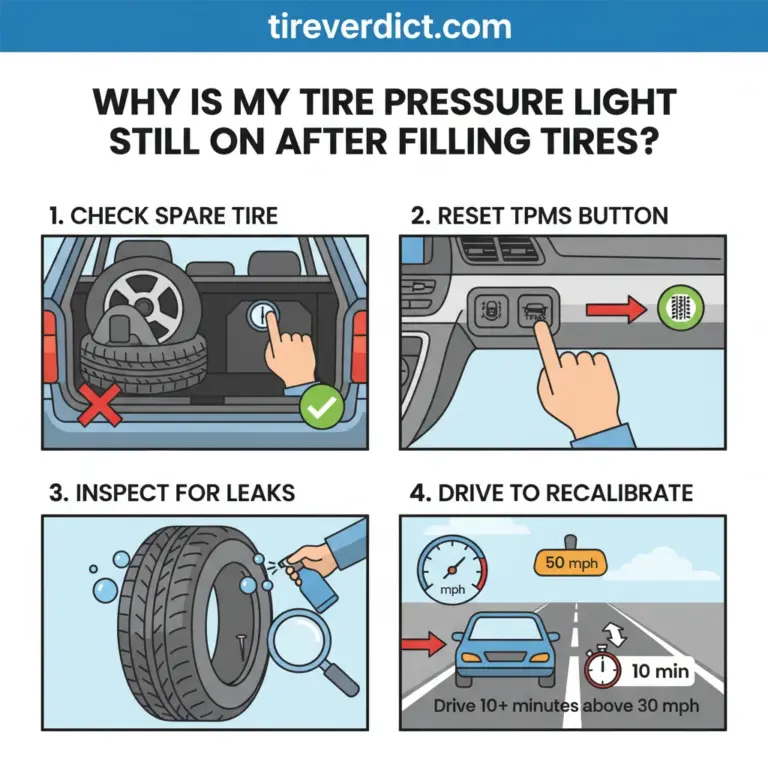
Q5: Where is the TPMS reset button usually located?
The TPMS reset button is typically found under the steering wheel, inside the glovebox, or accessible through the vehicle’s touchscreen infotainment settings (vehicle service manuals). The exact location varies significantly by make, model, and year, so consulting your owner’s manual is recommended.
Why Is Understanding TPMS Sensor Location Important?
Our research confirms that for 2026 vehicle models, the tire pressure sensor location primarily depends on whether a direct or indirect TPMS is employed. Direct sensors are usually valve-mounted inside the rim, providing real-time, individual tire pressure data. In contrast, indirect systems utilize ABS sensors at the hub rather than in the tire, inferring pressure loss from wheel speed differences.
Both systems fulfill safety mandates, though with differing mechanics.
For direct systems, maintenance should follow the 5,000 to 7,500-mile inspection interval, checking for battery life and corrosion. We recommend that you check your owner’s manual to confirm if your vehicle requires a specific TPMS reset tool when identifying where is the tire pressure sensor located and for all service procedures, adhering to our Editorial Policy for verified information.
- attached directly to the valve stem (bridgestonetire.com)
- TREAD Act requirements (nhtsa.gov)
- sensor technology reports (tirerack.com)
- SAE International (sae.org)