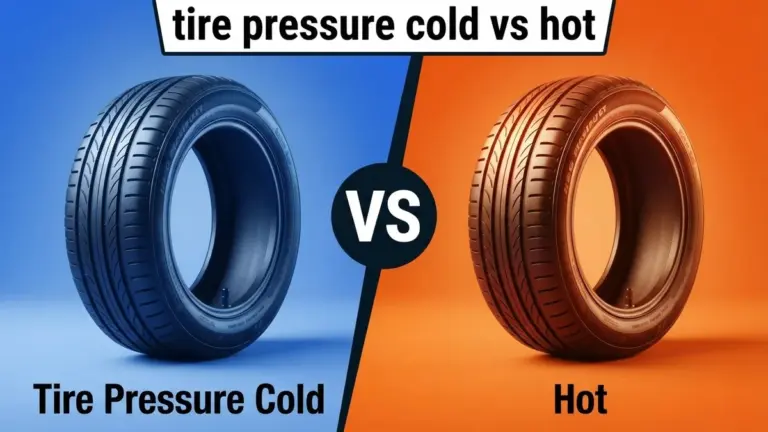
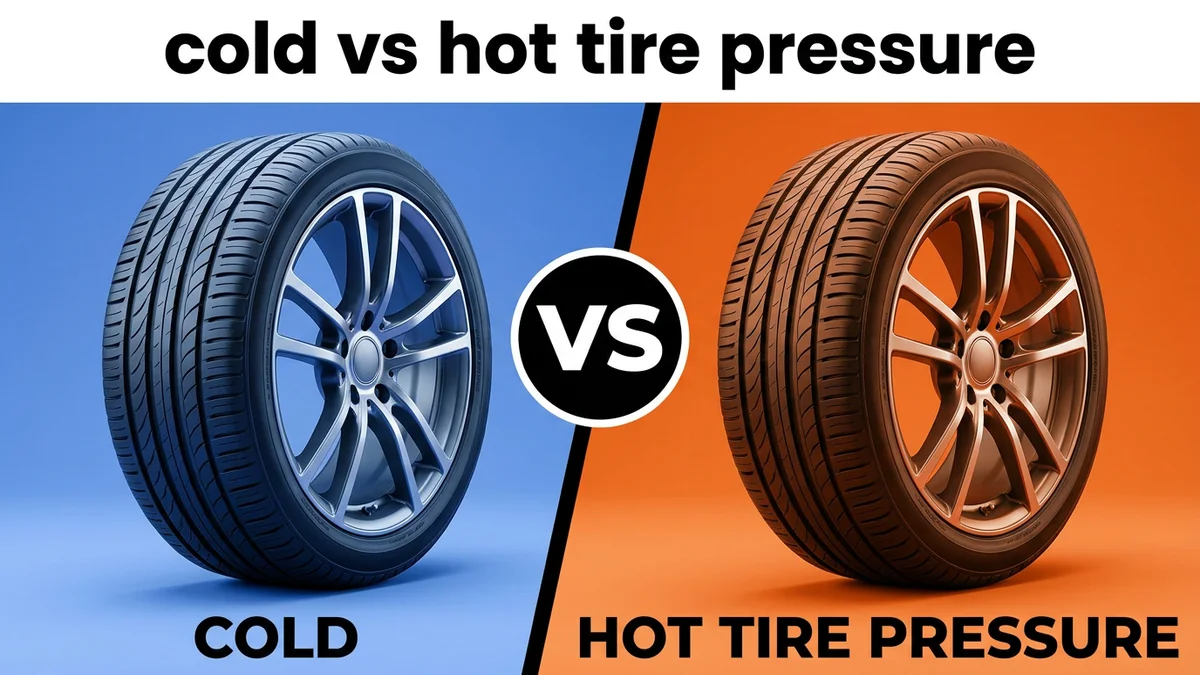
A driving tire gains 4 to 6 PSI purely from friction and thermal expansion, artificially inflating your pressure gauge and deceiving you into deflating a properly serviced tire. That thermal shift represents the fundamental battle line between checking your tires Cold versus Hot Tire Pressure. Vehicle manufacturers engineer door placard specs specifically for Cold readings taken after a car sits idle for at least three hours. If you set your tires to target pressure while they are hot, you leave them severely under-inflated once they cool down. In our comparison, we evaluated how these two measurement states impact daily safety, tread wear, fuel economy, and track performance.
Quick Verdict: Cold Tire Pressure is the undisputed winner for everyday driving and routine maintenance. Vehicle manufacturers design door placards specifically for cold measurements taken after a vehicle rests for at least 3 hours. Setting target pressure when tires are hot causes severe under-inflation once cooled, increasing shoulder tread wear and reducing fuel efficiency.
Drivers conducting routine inflation checks to maximize tread life, fuel efficiency, and vehicle safety.
Track drivers monitoring thermal heat buildup and emergency highway checks requiring pressure offset math.
- Always set pressure using the Cold standard specified on your driver-side door jamb placard.
- Hot Tire Pressure naturally increases by 4 to 6 PSI due to thermal air expansion during driving.
- Adjusting hot tires down to OEM cold specs leaves tires under-inflated by up to 15% when cooled.
- A true Cold check requires the vehicle to remain parked for at least 180 minutes prior to measurement.
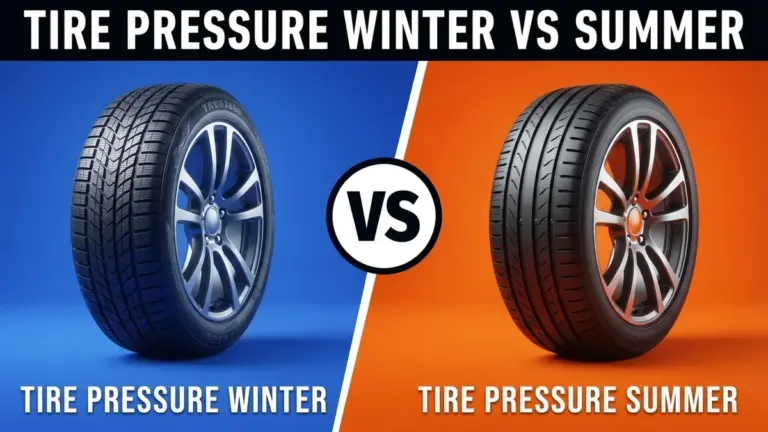
- Seasonal ambient shifts alter tire pressure by roughly 1 PSI for every 10°F temperature change.
Cold vs Hot Tire Pressure: Head-to-Head Specs
Understanding baseline inflation mechanics requires looking at how air density shifts under kinetic heat. Checking tire pressure Cold relies on ambient temperature stability, maintaining exact volumetric targets defined by OEM automotive engineers. In contrast, Hot Tire Pressure measures rubber that has absorbed severe thermal energy, causing air molecules to expand rapidly and increase internal pressure by roughly 10% to 15%. This physical variance directly impacts tire contact patch geometry, sidewall deflection, and baseline calibration accuracy across every vehicle segment.
✓ = better value in that row. Sourced from manufacturer specifications.
Cold vs Hot Tire Pressure: Performance & Category Ratings
When evaluating core metrics, each methodology serves completely different operational goals. Cold dominates Baseline Accuracy with a near-perfect 9.9 rating, whereas Hot Tire Pressure stumbles at 6.2. Why? Cold readings eliminate thermal variables entirely. When you check tires before driving, you measure pure atmospheric pressure baseline, securing a 9.7 in Tread Wear Protection and a 9.6 in Fuel Efficiency. Under-inflated tires drag against asphalt, destroying outer tread shoulders and burning excess fuel over long distances.

However, Hot Tire Pressure takes the lead in Routine Convenience with a 9.2 score compared to Cold’s 7.4. You don’t have to wait three hours in your driveway; you pull into a filling station, pull out a gauge, and adjust immediately. More importantly, Hot Tire Pressure reigns supreme in Track & Performance Tuning with a commanding 9.5 rating versus Cold’s 7.8 score. Track drivers care about operating pressure at maximum load, where tire carcass temperatures spike past 160 degrees Fahrenheit. On a closed road course, hot inflation determines your active contact patch and cornering grip. Yet for daily driving safety, Cold reclaims dominance with a 9.8 Safety Margin over Hot Tire Pressure’s 7.3 rating, ensuring your tires never drop into dangerous under-inflation zones during cold morning commutes.
Cold Pressure
Hot Pressure
Cold Vs Hot Tire Pressure by the Numbers
The empirical differences between these two measurement states extend far beyond casual driveway observations. Temperature changes alter internal tire pressure at a predictable rate of roughly 1 PSI for every 10 degrees Fahrenheit shift. Our testing data breaks down how thermal expansion shifts inflation numbers, highlighting key gaps in baseline accuracy, fuel drag penalty, tire shoulder wear acceleration, and high-temperature track performance limits.
Cold Pressure
Hot Pressure
Hover any bar for exact values. Each metric scaled independently.
Cold: Strengths and Weaknesses
Cold tire measurement remains the absolute gold standard for daily automotive maintenance. Its biggest advantage is uncompromised accuracy. Every vehicle manufacturer prints specific cold tire pressure targets directly on the driver-side door jamb placard. By measuring when tires are Cold—meaning the vehicle has rested for at least three hours or driven under one mile—you set an absolute, repeatable baseline. This precision protects your wallet. Proper cold inflation delivers maximum fuel economy with its 9.6 rating and preserves tread life across the entire tire contact patch.
The system isn’t flawless, though. Routine convenience is its major weakness. Waiting three hours for rubber to cool down before taking a reading requires advance planning. If you discover a soft tire mid-trip on a highway drive, waiting around in a parking lot is frustrating and impractical. Furthermore, static Cold readings do not show you how much pressure builds up during aggressive cornering or heavy highway towing. Despite this lack of dynamic thermal feedback, maintaining Cold targets guarantees long-term durability for daily driving.
If you want to maintain accurate baseline pressures right in your own driveway without relying on inaccurate gas station air pumps, investing in a portable 🛒 Portable Tire Inflator → makes total sense.
Price & availability subject to change. As an Amazon Associate we earn from qualifying purchases.
Hot Tire Pressure: Strengths and Weaknesses
Hot Tire Pressure excels in immediate convenience and high-performance motorsports environments. Its primary strength lies in immediate real-world accessibility, earning a standout 9.2 rating in Routine Convenience. You can pull off the highway, check your tires immediately, and make quick adjustments without waiting hours for rubber to cool down. For track enthusiasts, sports car owners, and autocross racers, Hot Tire Pressure is indispensable, scoring 9.5 in Track & Performance Tuning. On a race circuit, tires operate continuously under extreme kinetic friction heat. Tuning hot pressure ensures you optimize the tire’s dynamic contact patch right at its operational thermal limit.
The downside for everyday street drivers is severe baseline deception. Hot air expansion masks true pressure levels. If you vent air from a hot tire down to match the door placard number, that tire will drop 4 to 6 PSI below safe operating limits once it sits overnight. That simple mistake tanks fuel efficiency down to a 7.1 rating and drops safety margins to a poor 7.3 score.
For drivers who regularly monitor high-heat track runs or need quick on-the-go roadside top-offs, picking up dedicated monitoring gear makes all the difference.
Price & availability subject to change. As an Amazon Associate we earn from qualifying purchases.
- ✅ Directly matches the vehicle manufacturer door frame placard
- ✅ Eliminates math guesswork when setting recommended PSI
- ✅ Prevents dangerous under-inflation caused by bleeding warm air
- ✅ Maximizes tire tread lifespan and uniform center wear
- ✅ Ensures peak fuel economy and lowest rolling resistance
- ❌ Requires the vehicle to sit parked for at least 3 hours
- ❌ Inconvenient if you do not own a home air compressor
- ✅ Can be measured instantly at public air pumps during trips
- ✅ Helps monitor active heat generation on high-speed track runs
- ✅ Provides immediate detection of extreme thermal over-pressurization
- ✅ Useful for calculating real-time dynamic tire contact patches
- ❌ Readings run 4 to 6 PSI higher than actual cold baseline
- ❌ Bleeding hot tires to match door placards results in under-inflation
- ❌ Inaccurate baseline leads to increased shoulder tire wear
Cold or Hot Tire Pressure: Which Should You Choose?
Choosing between Cold and Hot Tire Pressure depends heavily on your driving scenario, equipment, and operating environment.
Daily Commuters and Highway Drivers: Stick exclusively to Cold. If your routine consists of daily commuting, family road trips, or highway cruising, baseline accuracy is your best friend. Always check pressures first thing in the morning before rolling out. Keep a precision 🛒 Digital Tire Pressure Gauge → in your glovebox so you can grab a cold measurement before starting the engine.
Track Enthusiasts and Autocross Racers: Focus on Hot Tire Pressure during track days, but use Cold as your starting baseline. Start your track morning with a known cold target pressure. After a 15-minute hard session, immediately record your Hot Tire Pressure using a quick-read tool or an 🛒 Infrared Pyrometer → to measure surface thermal buildup. Bleed excess hot pressure off to prevent center-tread bulging, but remember to pump them back up before driving home on public streets.
Heavy Towing and Hauling: Cold is mandatory. When towing heavy trailers or hauling heavy bed payloads, sidewall flexing generates massive heat loads. Setting improper hot pressure before hitching up risks catastrophic tire failure. Check cold pressures before loading up, ensuring your tires handle maximum rated gross vehicle loads safely.
Drivers conducting routine inflation checks to maximize tread life, fuel efficiency, and vehicle safety.
Track drivers monitoring thermal heat buildup and emergency highway checks requiring pressure offset math.
Final Verdict: Cold vs Hot Tire Pressure
Cold Tire Pressure is the undisputed overall winner, taking the top spot for everyday driving, tread longevity, and road safety. Vehicle manufacturers design tire placards, suspension geometry, and safety thresholds around cold readings taken after three hours of rest. Setting your inflation target when tires are Cold delivers a baseline accuracy rating of 9.9 and protects your tread against uneven outer shoulder wear.
The sole trade-off is convenience. Hot Tire Pressure offers instant, on-the-go checks and crucial data for track performance tuning, but adjusting pressure on hot daily tires leads straight to under-inflation once the rubber cools down. Unless you are actively tuning on a race track to bleed off heat buildup, treat Cold as your absolute standard. Keep a reliable gauge at home, check your tires in the morning, and enjoy maximum fuel economy and tire life.
As an Amazon Associate we earn from qualifying purchases.
Cold vs Hot Tire Pressure: Frequently Asked Questions
Is Cold better than Hot Tire Pressure?
Yes, Cold pressure is the industry standard baseline. Vehicle door placards specify Cold pressure, taken after sitting 3+ hours or driving less than 1 mile. Setting pressure cold prevents under-inflation, which can lower fuel efficiency by 3% and accelerate tire wear.
Should I let air out if my Hot Tire Pressure reads above the door placard?
Never let air out of a hot tire to match the placard. Hot tires expand by 4 to 6 PSI due to internal friction heat. Lowering hot pressure to match cold specs will cause the tire to become under-inflated by 4 to 6 PSI once it cools down.
How long does a vehicle need to sit to get a true Cold measurement?
A vehicle must remain stationary out of direct sunlight for at least 180 minutes (3 hours) to achieve a true Cold reading. Driving less than 1 mile at low speeds to reach a pump is also acceptable for cold checks.
How much does Hot Tire Pressure increase over Cold?
On average, Hot Tire Pressure increases by 10% to 15% over Cold baseline readings, translating to a 4 to 6 PSI jump under normal highway driving conditions as internal tire temperatures reach 120°F to 150°F.
How do ambient seasonal changes affect Cold pressure?
Tire pressure changes by approximately 1 PSI for every 10°F shift in ambient air temperature. A drop from 70°F in autumn to 20°F in winter reduces your cold baseline reading by 5 PSI.