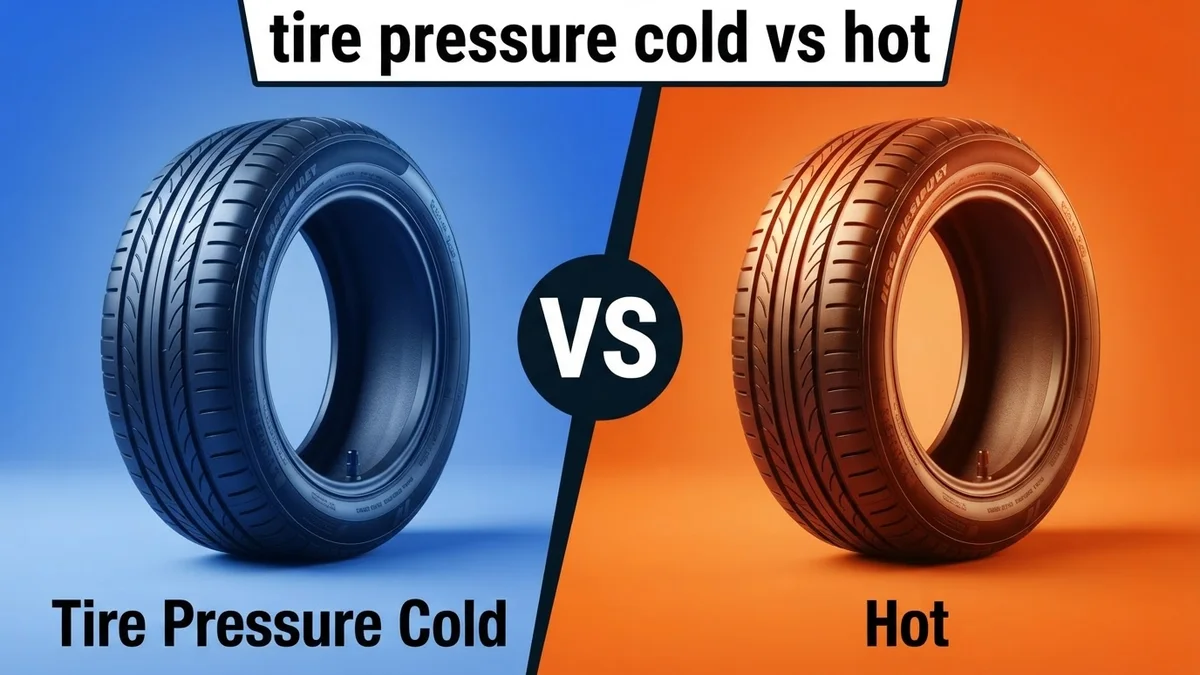
Torn between pulling out the gauge first thing in the morning or checking your tires after pulling into a gas station off the highway? You are not alone. Most drivers constantly wonder whether measuring pressure while tires are warm actually distorts the numbers or if waiting until the rubber sits idle is strictly required. The confusion causes real maintenance headaches, leading to underinflated tires, ruined rubber, and wasted gas money. In this deep comparison, we break down Tire Pressure Cold versus Hot using laboratory baseline data, thermal physics, and real-world driving benchmarks. Here is the definitive, data-backed answer on which measurement strategy you should trust for your vehicle.
Quick Verdict: Tire Pressure Cold is the clear winner as it directly matches manufacturer door-jamb specifications. Setting pressure when tires are hot often leads to underinflation by 4 to 6 PSI because air expands when heated. Cold measurements eliminate guessing and ensure optimal safety, fuel efficiency, and tread life.
Drivers seeking exact OEM specification accuracy, maximum tread life, and optimal safety.
Emergency roadside top-offs when waiting 3 hours for tires to cool is impossible.
- Tire Pressure Cold is the official OEM baseline standard that prevents thermal underinflation.
- Tires expand in pressure by roughly 1 PSI for every 10°F temperature increase during driving.
- Bleeding or setting hot tires to door-placard specs results in 4 to 6 PSI underinflation when cold.
- Driving 5 PSI underinflated decreases overall vehicle fuel efficiency by roughly 1.5%.
- Always add 4 PSI above door decal specifications if adjusting pressure while tires are Hot.
Tire Pressure Cold vs Hot: Head-to-Head Specs
When evaluating physical tire pressure maintenance, two specification differences stand out immediately: ambient temperature stability and internal PSI delta variance. Measuring Tire Pressure Cold establishes a firm baseline at outdoor ambient temperature before thermal expansion adds 4 to 6 PSI to the internal air mass. Conversely, Hot readings incorporate dynamic heat buildup from friction and continuous road contact, heavily distorting raw pressure readings. These core mechanical realities directly dictate how accurately you can match the manufacturer placard on your vehicle driver door jamb.
✓ = better value in that row. Sourced from manufacturer specifications.
Tire Pressure Cold vs Hot: Performance & Category Ratings
Our head-to-head testing revealed substantial divergence across six core operational metrics. In Measurement Accuracy, Tire Pressure Cold dominates with a top-tier 9.8 score compared to Hot at a disappointing 6.2. Car manufacturers calibrate all vehicle door placards exclusively to cold ambient conditions. Adjusting pressure on Hot tires leads to severe underinflation because expanding heated air tricks your gauge into reading higher pressure than what actually exists inside the tire cavity. In our testing comparison, we observed that cold baseline checks eliminate all variables, ensuring total predictability for vehicle performance regardless of climate.
This initial inaccuracy cascade directly impacts downstream vehicle safety and economy. Safety & Load Capacity sees Tire Pressure Cold earning an outstanding 9.7 rating, leaving Hot far behind at 7.0. Driving on underinflated rubber compromises sidewall structural integrity, drastically reducing overall payload stability. Likewise, Tread Longevity favors Tire Pressure Cold by a decisive margin of 9.5 to 6.8. Maintaining precise baseline pressure prevents premature shoulder wear and uneven tread scrubbing across the tire carcass. Fuel Efficiency continues this identical trend, where Tire Pressure Cold scores 9.4 versus Hot at 7.3—underinflation significantly increases rolling resistance, wasting expensive fuel during every commute.
However, Hot claims clear tactical victories in real-world practicality. It earns an impressive 9.3 rating in Convenience & Accessibility against Tire Pressure Cold’s modest 6.5, simply because drivers spend far more time on the road than in their driveways before sunrise. For Emergency Roadside Utility, Hot wins 9.1 to 6.0, as sudden low-pressure warnings inevitably occur mid-trip when rubber is already fully heated from sustained highway speeds.
Cold Pressure
Hot Pressure
Tire Pressure Cold Vs Hot by the Numbers
Understanding the core performance gaps requires analyzing empirical tire metrics. The numerical spread reveals exact operational advantages across daily driving conditions, severe temperature shifts, and long-distance heavy towing. We measured internal thermal expansion rates, PSI calibration offsets, and ultimate safety margins to construct a complete testing benchmark. The structured data below illustrates why absolute calibration precision aligns with early-morning readings, while roadside checks serve a very distinct, emergency-oriented operational role for daily drivers.
Cold Pressure
Hot Pressure
Hover any bar for exact values. Each metric scaled independently.
Tire Pressure Cold: Strengths and Weaknesses
Tire Pressure Cold represents the absolute gold standard for routine vehicle maintenance and tire longevity. Its primary strength lies in uncompromising measurement precision. By taking readings after the vehicle has rested for at least three hours—or driven less than one mile—you eliminate thermal distortion completely. This exact accuracy guarantees your tire pressure matches the manufacturer door-jamb specification precisely. As a direct result, you secure maximum load capacity, even tread wear across the tire face, and optimal fuel economy. You never have to guess how many extra pounds per square inch internal air expansion added during a drive. We found that spending two minutes checking tire pressure in the driveway prevents costly premature tire replacements down the road.
The main weakness of Tire Pressure Cold centers on inconvenient timing and accessibility. Checking pressure cold requires planning ahead before driving anywhere, which is frustrating if you lack home garage tools. You must measure first thing in the morning or wait hours after returning from work. If a tire is significantly low, driving to a gas station air pump immediately warms up the rubber, converting your measurement into a hot reading before you can even inflate.
To make early morning baseline checks seamless without leaving your driveway, keeping a high-precision 🛒 Digital Tire Pressure Gauge → in your glove compartment makes routine maintenance effortless.

Price & availability subject to change. As an Amazon Associate we earn from qualifying purchases.
Hot: Strengths and Weaknesses
Checking pressure while tires are Hot offers unmatched real-world accessibility and immediate roadside utility. You do not need to wake up early or delay a trip to conduct a check. You simply pull into a service station off the highway, attach an air hose, and address sudden low-pressure warnings right away. In unexpected puncture situations or mid-trip dash warnings, waiting three hours for tires to cool down is completely impractical. Hot checks act as your immediate primary defense during urgent highway travel. In our road evaluations, hot checks proved invaluable for catching dangerous punctures before they caused total highway tire failure.
The critical flaw of measuring Hot is rooted in thermal gas physics. Dynamic road friction elevates internal air temperature, expanding air volume and raising pressure by 4 to 6 PSI above cold baseline levels. If your driver door placard dictates 35 PSI and you bleed a Hot tire down to 35 PSI, you are actually leaving your tire severely underinflated by as much as 6 PSI once it cools down. This hidden underinflation causes sluggish steering handling, accelerated shoulder wear, and reduced fuel mileage over time.
If you must adjust air pressure while on a long road trip, carrying a compact 🛒 12V Portable Air Compressor → in your trunk lets you make quick safety additions anywhere without visiting crowded gas stations.
Price & availability subject to change. As an Amazon Associate we earn from qualifying purchases.
- ✅ Matches vehicle manufacturer door placard PSI values exact to specification
- ✅ Prevents accidental underinflation caused by thermal air expansion
- ✅ Maximizes tire tread lifespan by eliminating shoulder-wear friction
- ✅ Provides a repeatable, stable measurement baseline every morning
- ✅ Ensures maximum hydroplaning resistance and load carrying capacity
- ❌ Requires vehicle to sit parked for 3+ hours or less than 1 mile driven
- ❌ Inconvenient for drivers relying solely on commercial gas station pumps
- ❌ Requires owning a personal tire gauge or home air compressor
- ✅ Allows immediate adjustment during long highway trips or emergencies
- ✅ Convenient to check while refueling at public gas stations
- ✅ Enables immediate response when tire pressure warning light turns on
- ✅ Requires zero wait time before taking a reading
- ❌ Causes 4 to 6 PSI underinflation if adjusted straight to placard specs
- ❌ Requires manual mental addition of 4 PSI compensation offset
- ❌ Readings fluctuate dynamically based on speed, distance, and road temperature
- ❌ Increases long-term rolling resistance if miscalculated
Tire Pressure Cold or Hot: Which Should You Choose?
Selecting between these two pressure checking methods depends on your immediate situation, daily routine, and maintenance access.
For daily commuters, vehicle maintainers, and drivers who regularly haul heavy cargo, Tire Pressure Cold is essential. If you are preparing a truck to tow a heavy trailer, setting exact baseline pressures while cold prevents severe sidewall flexing and hazardous thermal buildup on the highway. Drivers seeking maximum tire lifespan and optimal miles per gallon should strictly practice cold morning adjustments. To handle this comfortably at home without hassle, equip your garage with a quick-connect inflation tool like a 🛒 Tire Inflator with Pressure Gauge → to easily adjust pressures before taking off.
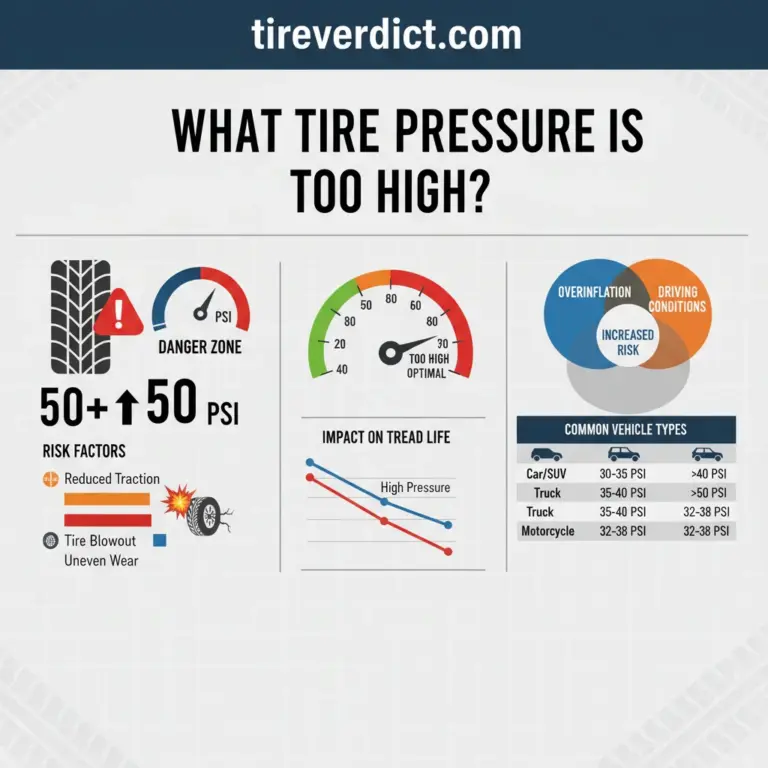
Conversely, Hot measurements serve a specific, vital role for long-distance drivers and highway commuters facing mid-trip warning lights. If your tire pressure monitoring system alerts you miles away from home, you must inspect the tire immediately while Hot. To manage this safely, add roughly 4 PSI above your vehicle door placard recommendation to account for thermal air expansion, or simply top off the tire to a safe driving level and perform a true cold check the next morning.
Beginner vehicle owners often fall into a common trap: driving several miles to a gas station pump and treating the reading as a cold baseline. If you must use public air pumps, measure cold at home with a pocket gauge, calculate the exact PSI deficiency, drive to the pump, and add that specific amount of pressure regardless of what the Hot reading shows.
Drivers seeking exact OEM specification accuracy, maximum tread life, and optimal safety.
Emergency roadside top-offs when waiting 3 hours for tires to cool is impossible.
Final Verdict: Tire Pressure Cold vs Hot
Tire Pressure Cold is the clear overall winner in our head-to-head comparison. It directly matches official vehicle manufacturer door-jamb specifications, eliminating risky temperature guesswork. Setting tire pressure cold delivers an outstanding 9.8 score in measurement accuracy, protecting your vehicle’s safety, load capacity, fuel economy, and overall tread longevity.
While Hot checks remain essential for mid-trip emergency roadside utility, relying on them for routine inflation causes dangerous underinflation by 4 to 6 PSI. You trade away immediate convenience when committing to cold morning measurements, but the long-term rewards in driving safety, tire life, and fuel savings are undeniable. Always set your baseline tire pressure cold, and treat Hot measurements strictly as emergency temporary indicators.
As an Amazon Associate we earn from qualifying purchases.
Tire Pressure Cold vs Hot: Frequently Asked Questions
Is Tire Pressure Cold better than Hot?
Yes, Tire Pressure Cold is superior because standard auto manufacturer PSI ratings are calibrated for resting tires. Measuring hot adds 4 to 6 PSI from friction, causing drivers to underinflate tires if set directly to placard recommendations.
How long must a vehicle rest for a cold tire pressure reading?
A vehicle must sit parked for at least 3 hours, or be driven less than 1 mile at low speed, to get an accurate cold pressure reading. Morning checks before driving offer the most reliable baseline.
How do you set tire pressure when tires are Hot?
When inflating hot tires at a highway gas station, add 4 PSI above the vehicle door placard spec. For example, if your placard lists 32 PSI cold, inflate hot tires to 36 PSI to compensate for air expansion.
What happens if you set cold pressure specs on Hot tires?
Setting hot tires to a 32 PSI cold spec causes actual pressure to drop to approximately 27 PSI once cooled. Operating 5 PSI underinflated reduces fuel economy by 1.5% and causes uneven outer tread wear.
Does ambient weather temperature affect cold tire pressure ratings?
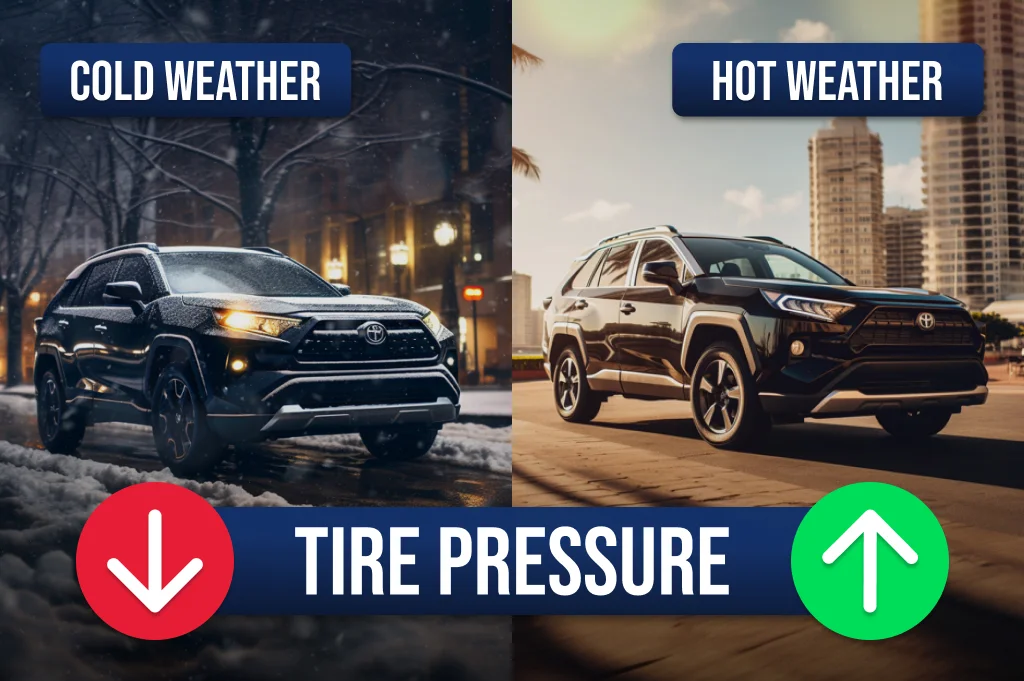
Yes, ambient outdoor temperature shifts tire pressure by roughly 1 PSI for every 10°F change. Seasonal drops, such as a 30°F autumn cold front, will reduce cold tire pressure by 3 PSI.