You should never exceed 50 mph (80 km/h) or drive more than 50 miles on a temporary donut tire. Driving faster or farther severely compromises vehicle safety, braking, and handling.
You can drive a maximum of 50 mph for no more than 50 miles on a standard donut spare tire. If you are currently stranded on the roadside or nursing your car home in 2026, this is the critical rule you must memorize right now to avoid a catastrophic secondary failure.
Ignoring these strict thresholds transforms a temporary mobility solution into a major hazard. Donut tires are strictly engineered as emergency band-aids, not full replacements, and pushing them beyond their designed safety envelope compromises your entire vehicle.
Key Takeaways
- Never exceed the strict 50 mph speed limit on a donut tire.
- Limit total distance traveled on the temporary spare to 50 miles.
- Avoid driving on highways or busy freeways when possible.
- Do not attempt to tow trailers or haul heavy loads.
- Replace or repair your standard punctured tire immediately.
What Causes Donut Tire Limitations and Structural Weakness
Anatomy of a Space-Saver Spare
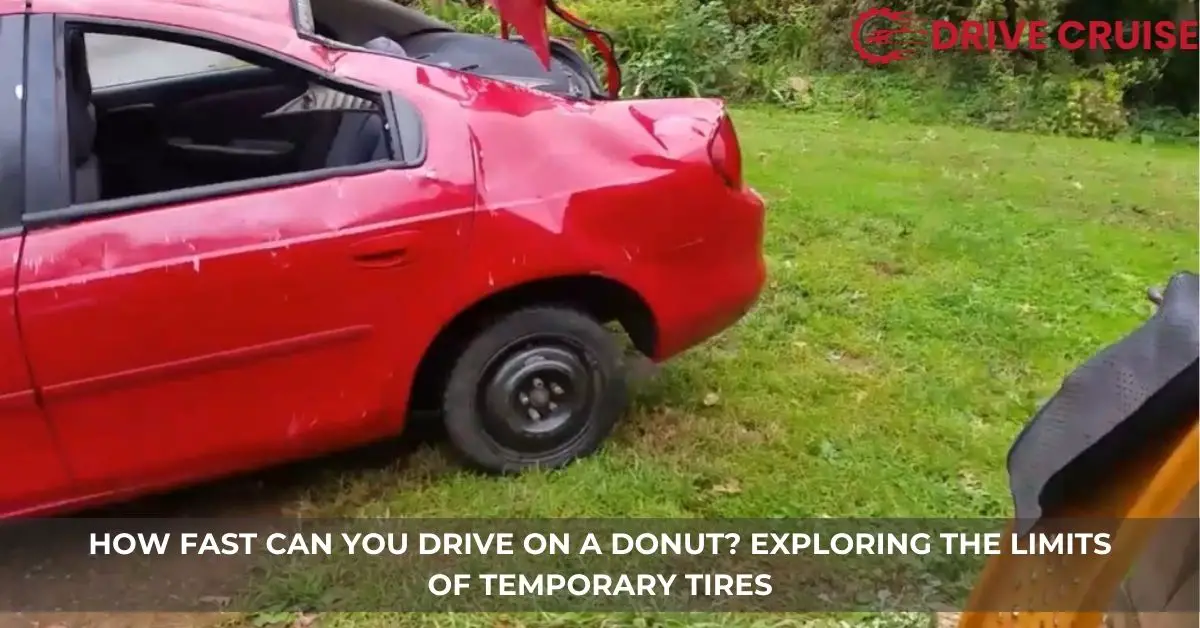
Unlike your standard all-season or performance tires, a donut tire is a masterclass in weight reduction and compact engineering. Manufacturers use significantly less rubber and thinner sidewalls to save trunk space and reduce vehicle payload. When you look at a donut, you are looking at a high-pressure vessel designed solely to get you to the nearest repair shop at low speeds. The internal steel belts and polyester cords cannot handle sustained high-speed friction or heat.
Heat Buildup and Centrifugal Force Risks
As you accelerate past 50 mph, the physics working against your temporary spare multiply exponentially. Here is what happens inside the rubber when you speed:
- Rapid centrifugal force places extreme stress on the narrow contact patch.
- Friction generates internal heat much faster than a standard tire, risking tread separation.
- Thin sidewalls flex violently under loads, increasing the chance of a sudden blowout.
- Reduced traction drastically increases your stopping distance in sudden braking scenarios.
How to Fix a Flat Safely by Adhering to Speed and Distance Limits
Calculating Your 50/50 Rule Boundaries
The golden rule of temporary spares is the 50/50 limitation: 50 miles per hour and 50 total miles of driving distance. Operating a vehicle under these constraints requires careful route planning. If your trusted mechanic or tire shop is 40 miles away, you need to stick strictly to secondary roads and city streets where you can maintain a steady, safe 45 mph without holding up aggressive highway traffic or risking a structural failure.
Mechanical Strain on Modern Drivetrains
Driving on a donut tire does more than just risk a second flat; it actively punishes your car’s mechanical components. Because a donut has a much smaller overall diameter than your standard wheels, it rotates significantly faster to keep pace with the other three wheels. This speed discrepancy creates severe operational stress:
- Your anti-lock braking system (ABS) and traction control may trigger false warnings or misbehave.
- Vehicles with all-wheel drive (AWD) or four-wheel drive (4WD) can suffer permanent differential damage due to uneven wheel rotation speeds.
- Your suspension system works overtime to compensate for the drastic difference in weight and cornering grip on one side of the chassis.
What If You Must Drive Farther on a Temporary Spare Tire
Circumstances often force drivers to exceed the standard recommendations for space-saver spares. When standard safety limits cannot be followed due to remote locations or severe weather, extreme caution is mandatory.

Recognizing the Risks of Extended Distance
According to the National Highway Traffic Safety Administration (NHTSA), driving a compact spare beyond 50 miles dramatically increases structural failure rates. Donut tires lack the robust steel belts and deep tread depth found in full-size tires. Pushing them past their design threshold creates excessive internal heat buildup, which can cause tread separation or sudden deflation at highway speeds.
Managing Highway and Weather Hazards
If you find yourself forced to travel a longer distance on a temporary spare, strict operational adjustments are required to mitigate catastrophic failure.
- Cap your maximum velocity at 40 mph, even if the sidewall label states 50 mph, to reduce centrifugal stress.
- Keep a distance of at least six car lengths from surrounding vehicles to allow for significantly increased stopping distances.
- Avoid driving on the temporary spare during heavy rain or snow, as the narrow contact patch lacks adequate water evacuation channels and easily hydroplanes.
Best Practices for Handling and Replacing Your Donut Tire
Managing a temporary situation safely requires following structured replacement protocols. Transitioning from a roadside emergency back to normal driving conditions demands precision.
Steps for Temporary Spare Management and Replacement
Execute these procedural steps to ensure vehicle stability and expedite your permanent tire repair or replacement:
- Monitor the tire pressure of the donut regularly using a portable gauge, ensuring it maintains the manufacturer-specified 60 PSI.
- Locate a reputable tire service center or mobile repair network within your immediate 50-mile radius.
- Have technicians inspect the wheel hub and alignment, as the differing dimensions of a temporary spare can occasionally affect vehicle tracking.
- Purchase a full-size replacement tire that matches your vehicle specifications to replace the damaged unit permanently.
- Stow the compact spare and jack securely back in their designated trunk compartment once the standard wheel is remounted.
What If It Still Doesn’t Work?
If your temporary spare fails to inflate properly, will not mount securely to the wheel hub, or is damaged during installation, stop immediately. Attempting to drive on an compromised or flat donut tire poses severe safety hazards.
- Clear the active roadway entirely and activate your vehicle hazard lights immediately to warn oncoming traffic.
- Contact a certified roadside assistance provider or commercial towing service to transport your vehicle safely to the nearest repair facility.
- Expect professional towing services to range from $75 to $150 depending on your exact geographic location and time of day.
- Budget between $150 and $300 for a brand new standard replacement tire and professional mounting if your original tire cannot be patched.
Conclusion
Understanding how fast you can drive on a donut tire—strictly under 50 mph for fewer than 50 miles—is critical for preventing dangerous roadside accidents. Adhering to these strict velocity and distance limits protects your vehicle drivetrain from permanent damage. According to verified research and automotive safety experts, your immediate next step should be scheduling an appointment with a local tire technician to replace the temporary spare with a standard, road-ready tire today.
❓ Frequently Asked Questions
What happens if you drive over 50 mph on a donut tire?
Driving over 50 mph significantly increases the risk of a blowout, loss of vehicle control, and severe strain on your car’s drivetrain and braking systems due to the tire’s smaller diameter.
Are all donut tires rated for the same speed and distance?
While 50 mph and 50 miles are the universal industry standards, you should always check the sidewall of your specific temporary spare tire for exact manufacturer instructions and limits.
Can a donut tire be patched and used permanently?
No, donut tires are strictly designed for temporary emergency use only. They cannot be patched and must be replaced once the standard tire is repaired or a new one is purchased.
Does a donut tire affect anti-lock brakes and traction control?
Yes, because the donut tire is smaller than your standard tires, it rotates at a different speed. This can trigger your traction control or ABS systems, and some vehicles require turning off specific stability features.
Can I put a donut tire on the front axle of my car?
While it is physically possible, safety experts recommend putting the donut tire on the rear axle. This maintains better steering control, though you should move a good rear tire to the front if necessary.
How much air pressure should a donut tire have?
Donut spare tires typically require significantly higher pressure than standard tires, usually around 60 PSI. Always check the specific PSI rating printed on the tire sidewall.