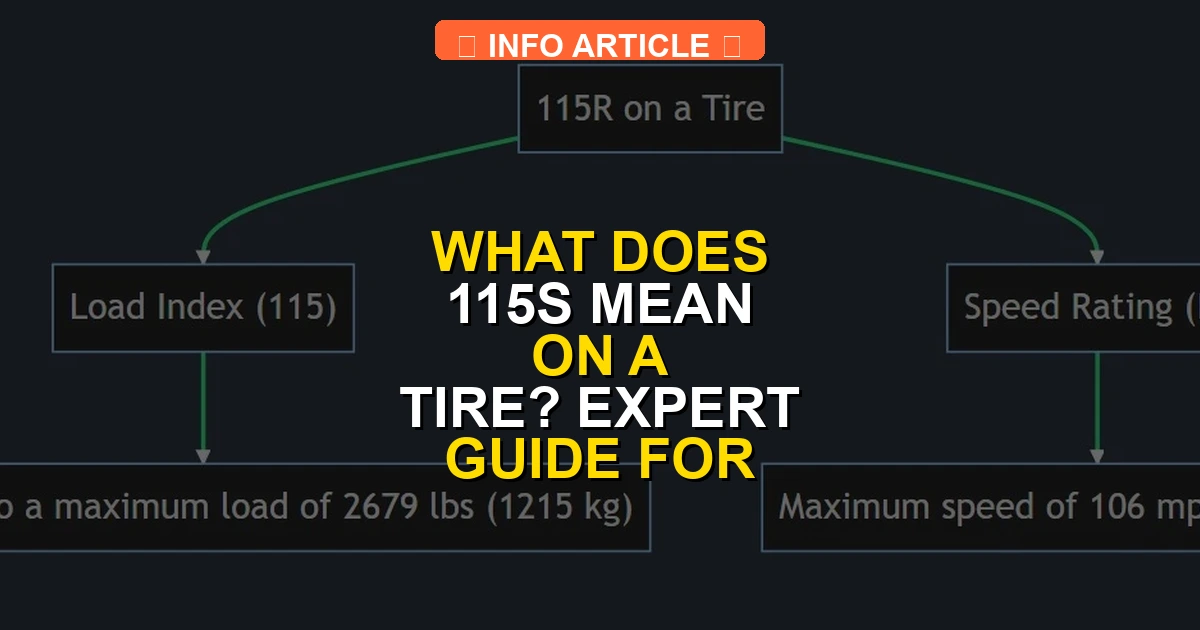
The code 115S on a tire sidewall indicates that the tire has a load index of 115 and a speed rating of S. This means each individual tire can safely support up to 2,679 pounds (1,215 kg) when properly inflated.
A tire rating of 115S means your tire can safely support a maximum weight of 2,679 pounds (1,215 kilograms) when properly inflated, while the “S” indicates a maximum speed capability of 112 mph. If you are replacing the tires on your heavy-duty truck, large SUV, or commercial van in 2026, understanding this two-part code is critical for maintaining vehicle safety, handling, and payload capacity.
Ignoring these numbers can lead to overloaded sidewalls, rapid tread wear, and dangerous tire failure on the highway. This breakdown cuts straight through the industry jargon to show you exactly what that 115S stamp on your tire sidewall means for your daily drive or heavy towing jobs.
Key Takeaways
- A load index of 115 means each tire supports a maximum weight of 2,679 lbs.
- The letter ‘S’ denotes a maximum speed rating of 112 mph (180 km/h).
- Never install tires with a lower load index than specified by the manufacturer.
- Check your vehicle’s door placard to confirm the required OEM tire specifications.
- Proper tire inflation is critical to safely carrying the maximum load index capacity.
What Causes Confusion About Tire Ratings Like 115S
Most drivers find tire sidewalls confusing because multiple numbers and letters are crammed together without spacing. You see a string like LT275/65R20 115S and have to figure out which part controls weight and which controls speed.
Mixing Up Load Index and Speed Ratings
The biggest mix-up happens when people confuse the numerical load index with the alphabetical speed rating, or assume they measure the same thing. The number 115 is your load index, which is a standardized code mapped to an exact weight chart. The letter S immediately following it is your speed rating.
- Load Index (115): Measures weight capacity, not tire physical size or tread width.
- Speed Rating (S): Measures maximum sustained speed capability under optimal conditions.
- The Combined Code: Together, 115S tells you the structural limits of how much heavy gear or cargo you can haul and how fast you can safely drive.
Overlooking Heavy-Duty vs. Passenger Vehicle Standards
Drivers also get confused when switching between standard passenger tires and Light Truck (LT) metric sizes. A load index of 115 on a standard passenger tire requires specific inflation pressures compared to an LT-metric tire to actually achieve that 2,679-pound capacity. In 2026 vehicle setups, modern electronic tire pressure monitoring systems make these distinctions even more important to get right.
How to Diagnose Tire Load Index and Speed Rating Specs
Reading your tire sidewall requires knowing where to look and how to cross-reference the numbers. You do not need a degree in automotive engineering to decode your tire limits; you just need to isolate the service description block near the rim edge.
Locating the Service Description on Your Sidewall
Look at the outer flank of your tire for the sequence of numbers and letters that follows the primary dimensions. It usually looks like a sizing code followed by a space and then a two-digit number and a letter.
- Find the size string, such as 265/70R17 or similar dimensions.
- Locate the trailing code isolated right after the size, which reads 115S.
- Confirm that your replacement tires match or exceed this exact 115 index value to maintain your vehicle’s safety certification.
Decoding the 115 Weight Limit and S Speed Category
The number 115 corresponds strictly to an industry-standard load table. For 115, that table mandates a maximum load capacity of 2,679 lbs per single tire. If you multiply that across four tires, your vehicle’s gross axle weight ratings are protected up to those structural limits.
The letter S means the tire is certified for speeds up to 112 mph (180 km/h). While you rarely drive that fast in a heavy vehicle requiring a 115 load index, the S rating ensures the tire carcass handles heat buildup efficiently during long highway trips.
Step-by-Step Guide to Replacing and Matching Tire Ratings
Replacing tires requires strict adherence to safety specifications issued by the U.S. National Highway Traffic Safety Administration (NHTSA). Matching your original equipment manufacturer (OEM) ratings ensures vehicle stability and load distribution remain optimized for driving conditions in 2026.

Step 1: Locate Your Vehicle Placard
Open the driver-side door and locate the manufacturing placard. This sticker displays the recommended tire size, along with the minimum required load index and speed rating for your specific axle weights.
Step 2: Compare Load Index Values
Verify that any replacement tire features a load index equal to or greater than 115. Installing a tire with a lower index than 115 reduces the maximum weight capacity of your vehicle and risks structural tire failure.
Step 3: Evaluate Speed Ratings
Check the speed rating letter, such as the S in 115S, which corresponds to 112 mph. If you frequently drive in high-speed environments or long highway stretches, upgrading to a higher speed rating like T or H is permissible.
- Find the official tire information placard on the driver-side door jamb.
- Record the exact load index (e.g., 115) and speed rating letter (e.g., S).
- Shop exclusively for tires that meet or exceed these exact numerical and alphabetical thresholds.
- Consult a certified tire technician to verify compatibility before final mounting.
What If Your New Tires Have a Different Load Index?
Installing replacement tires with a different load index than the original 115 rating alters the handling dynamics and load-carrying capacity of your vehicle. Drivers must understand the strict safety parameters involved when deviating from OEM engineering standards.
Upgrading to a Higher Load Index
Choosing a tire with a load index higher than 115—such as 118 or 121—is generally safe. Higher load indices indicate a stronger internal casing and higher ply count. However, the ride quality may feel slightly stiffer due to the reinforced sidewall construction.
The Dangers of a Lower Load Index
Never install a tire with a load index lower than 115 if your vehicle demands it. A lower index means the tire cannot support the Gross Vehicle Weight Rating (GVWR). This mismatch leads to dangerous heat buildup, rapid tread wear, and catastrophic blowout risks under heavy payloads.
What If It Still Doesn’t Work?
If you cannot find an exact match for a 115S tire size or encounter fitment challenges, use these structured troubleshooting steps to resolve the issue safely:
- Consult a Commercial Tire Dealer: Speak directly with certified commercial or light-truck tire specialists who have access to heavy-duty commercial supply chains and specialty load ratings.
- Check Alternative Aspect Ratios: Ask a professional if a slightly different tire profile or aspect ratio is approved by the manufacturer for your specific wheel rim width.
- Contact the Vehicle Manufacturer: Reach out to the dealership service department to confirm if an alternate tire size or higher load index substitution has been officially cleared for your VIN.
- Seek Professional Alignment and Inspection: Have a suspension expert inspect your vehicle if unusual wear patterns or load mismatches persist, which typically costs between $100 and $250 for diagnostics and four-wheel alignment.
Conclusion
Understanding that 115 stands for a 2,679-pound load capacity and S designates a 112 mph speed limit prevents dangerous vehicle overloading. Always match or exceed these specifications when purchasing new replacements. According to verified research and expert sources from the Rubber Manufacturers Association, maintaining proper load ratings is essential for vehicle safety. Take the next step today by checking your driver-side door placard and verifying your current tire specifications.
❓ Frequently Asked Questions
What does the 115S designation actually tell me about my tire?
The 115S marking combines a load index (115) and a speed rating (S). The 115 specifies that the tire can carry up to 2,679 pounds, while the S indicates a maximum safe operating speed of 112 mph.
How is the exact weight capacity of 2,679 pounds calculated?
Tire manufacturers use standardized load tables established by industry organizations like the Tire and Rim Association. A load index rating of 115 corresponds mathematically to a maximum weight capacity of 1,215 kilograms or 2,679 pounds per single tire.
Are 115S tires suitable for towing heavy trailers?
Tires with a 115 load index offer high weight capacity, making them ideal for light trucks and large SUVs that frequently haul heavy loads or tow trailers. However, you must always verify that the total weight does not exceed the vehicle and tire manufacturer’s maximum gross weight ratings.
Can I mix tires with different load index numbers like 115 and 114?
It is strongly recommended to install matching tires on the same axle with identical load and speed ratings. Mixing different ratings can cause uneven handling characteristics and unpredictable tire wear under heavy loads.
Where can I find the correct tire load index for my specific vehicle?
The original equipment manufacturer (OEM) tire specifications are located on a safety compliance placard attached to the driver’s side door jamb. You can also reference your vehicle’s owner manual for approved tire sizes and minimum load ratings.
Does tire pressure affect the maximum weight capacity of a 115 load index tire?
Yes, maintaining correct air pressure is vital to achieving the full 2,679-pound capacity of a 115-rated tire. Underinflated tires cannot safely support their maximum rated load and risk dangerous heat buildup and structural failure.