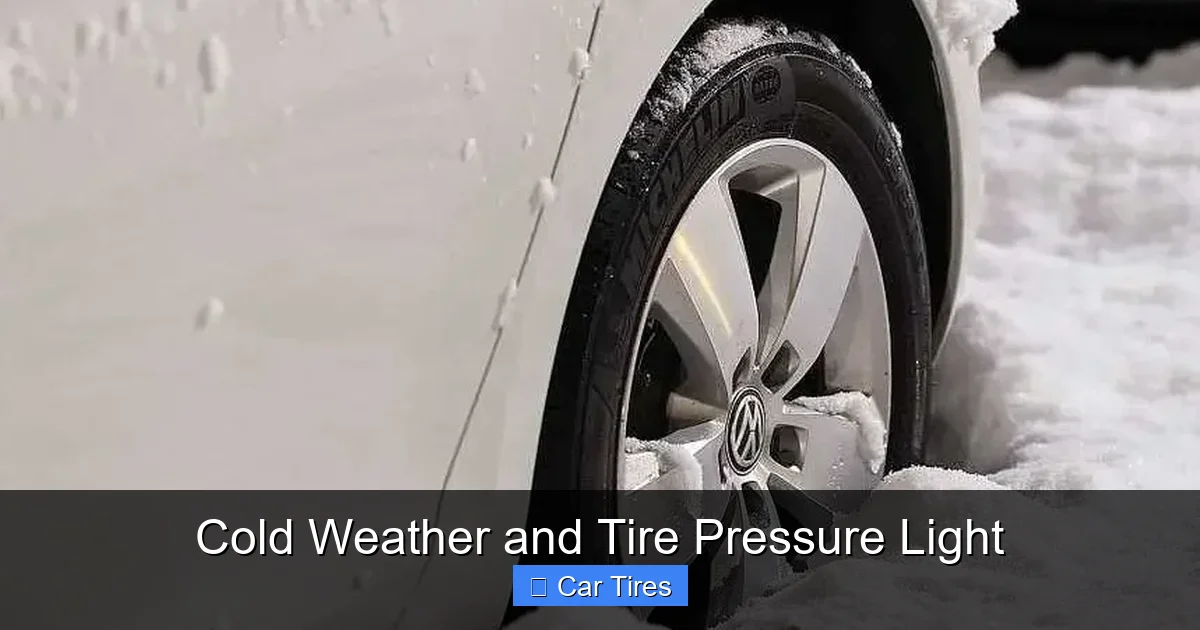
When the temperature drops, your tire pressure light frequently illuminates because cold air contracts and reduces internal tire pressure. For every 10°F drop in outdoor temperature, tires typically lose 1 to 2 PSI of air. Adding the correct amount of air restores pressure and turns off the warning light.
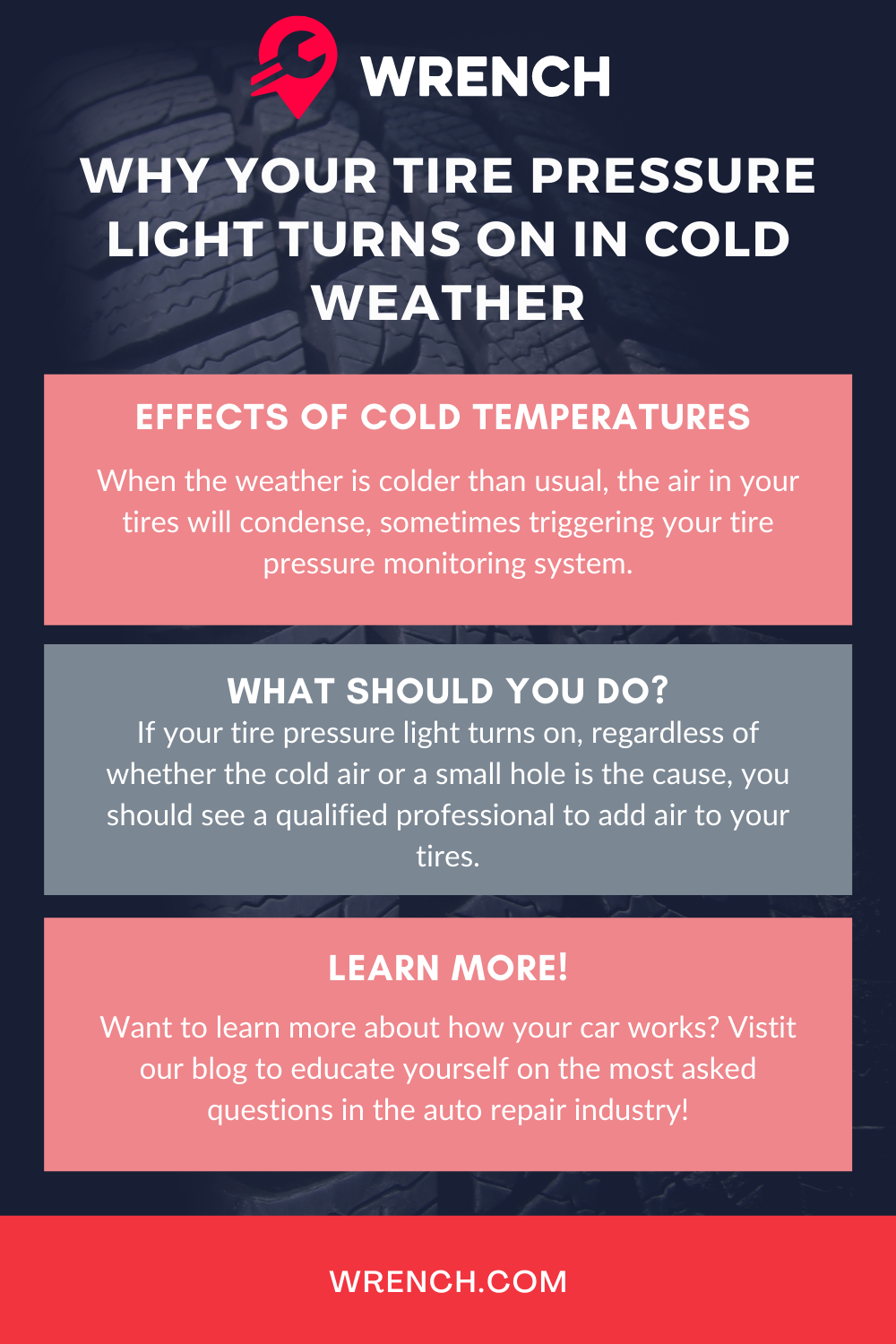
Your tire pressure warning light turns on when the weather gets cold because dropping temperatures cause the air molecules inside your tires to contract and lose pressure. For every 10-degree Fahrenheit drop in ambient temperature, your tires typically lose about 1 to 2 PSI (pounds per square inch) of air.
This drop is enough to trip your car’s Tire Pressure Monitoring System (TPMS) sensor, which usually triggers when a tire falls roughly 25 percent below the manufacturer’s recommended level. Knowing how to handle this seasonal annoyance ensures you maintain optimal fuel efficiency, predictable braking, and even tire wear on winter roads in 2026.
Key Takeaways
- Tires lose 1 to 2 PSI for every 10°F temperature drop.
- Cold weather is the primary cause of sudden low pressure warnings.
- Check PSI when tires are cold using a reliable gauge.
- Find correct tire pressure on the driver’s door jamb sticker.
- Inflate tires to the manufacturer’s recommended level to turn off the light.
Why the Tire Pressure Light Turns On When Weather Gets Cold
Physics dictates how gases behave under changing thermal conditions. As winter temperatures set in, the air inside your rubber casing cools down rapidly, causing the molecules to pack closer together and occupy less volume. This natural contraction directly translates to lower pressure readings on your dashboard.
The Science of Cold-Weather PSI Loss
Gases shrink when chilled and expand when heated. When you parked your car in a warm garage or drove it during a mild autumn afternoon, your tires held stable pressure. Overnight, a sharp freeze drops the outdoor temperature by 30 degrees, which immediately strips your tires of 3 to 6 PSI. Your TPMS sensor detects this sudden deficit and lights up your dashboard.
Do Your Tires Actually Have a Leak?
- Temperature fluctuation: The pressure drop affects all four tires relatively equally if the vehicle sits in the cold.
- Slow leaks: If only one tire triggers the light while the others remain stable, you likely have a nail puncture or a leaking valve stem rather than just weather-related loss.
- Daytime recovery: If your tire light turns off after you drive for 20 minutes (friction warms the air inside) or when the afternoon sun hits the car, temperature is the primary culprit.
Step-by-Step Guide to Fixing Low Tire Pressure in Cold Weather
Ignoring that amber warning light forces your tires to flex excessively, generating dangerous heat and wearing down the tread prematurely. Fixing this issue takes less than ten minutes and requires only a reliable pressure gauge and access to an air pump.
Find Your Correct PSI Specification
Do not look at the maximum PSI printed on the tire sidewall, as that number represents safety limits, not your vehicle manufacturer’s recommendation. Open your driver-side door and look at the placard sticker on the door jamb.
- Locate the Cold Tire Pressure numbers for your front and rear tires (often 32 to 36 PSI for standard passenger vehicles in 2026).
- Note if your front and rear requirements differ, which is common for trucks, performance cars, and SUVs.
Check and Inflate Your Tires Properly
- Check before driving: Measure your tire pressure in the morning before you drive, while the tires are cold.
- Attach the gauge: Remove the valve stem cap, press your gauge firmly onto the valve, and read the PSI.
- Add air carefully: If the reading sits below your door jamb spec, use a portable compressor or gas station air pump to top off the tire, checking the pressure every few seconds to avoid over-inflation.
How to Distinguish Weather Pressure Loss From a Puncture
When the dashboard illuminates on a frosty morning in 2026, determining whether the drop stems from ambient temperature or a slow leak is critical. According to the National Highway Traffic Safety Administration (NHTSA), tires naturally lose about 1 to 2 PSI for every 10-degree Fahrenheit drop in temperature. If all four tires show a uniform drop, weather is the primary culprit.
Signs of Temperature-Related Pressure Loss
Uniform pressure drops across all tires strongly point to thermal contraction. Modern vehicles equipped with advanced TPMS dashboards will display individual tire pressures. If every wheel reads roughly 3 to 5 PSI below your vehicle door placard specification, physics is at play rather than a puncture.
Signs of a Puncture or Faulty Valve Stem
An isolated pressure drop in just one tire signals a mechanical issue. If three tires hold steady at 35 PSI while the fourth drops to 24 PSI, suspect a nail, a compromised bead seal, or a leaking valve stem. Visual inspections become necessary when pressure loss exceeds normal winter fluctuation ranges.
- Examine the low tire for visible foreign objects embedded in the tread block or sidewall.
- Spray soapy water around the valve stem and bead to check for escaping air bubbles.
- Monitor the tire after inflation; if it loses more than 2 PSI per day, a puncture exists.
What to Do If the Tire Pressure Light Stays On After Inflation
Inflating your tires to the correct manufacturer-recommended PSI should normally turn off the dashboard warning light within a few miles of driving. If the low pressure symbol remains illuminated or flashes persistently, the Tire Pressure Monitoring System itself may require a manual reset or diagnostic evaluation.
Understanding Flashing Versus Solid Indicators
A solid TPMS light indicates low pressure in one or more tires. A flashing TPMS light, however, signals a system malfunction—such as a dead sensor battery, a damaged receiver, or a sensor communication failure. TPMS sensor batteries typically last between five and ten years, making sensor failure common in older vehicles.
Steps to Reset the TPMS System
- Drive the vehicle consistently above 15 mph for at least 10 minutes to allow the wheel sensors to re-calibrate.
- Locate the physical TPMS reset button, usually hidden beneath the steering column or inside the glove box.
- With the ignition in the “ON” position, press and hold the reset button until the indicator light blinks slowly three times.
- Consult your owner’s manual to perform a computerized system re-learn procedure through the infotainment interface if manual buttons are absent.
What If It Still Doesn’t Work?
If you have inflated all tires to specification, driven the vehicle to trigger a sensor wake-up, and attempted a system reset without success, a hardware failure is likely present. Ignoring a persistent TPMS light compromises vehicle safety and fuel economy.
- Visit a certified tire service center or dealership to scan individual sensor health using an OBD-II diagnostic tool.
- Replace any dead or broken TPMS sensors, which generally cost between $50 and $150 per wheel including labor.
- Inspect the vehicle’s central receiver module if multiple sensors fail to communicate simultaneously.
- Professional diagnostic scans at most national service chains range from $50 to $100.
Conclusion
Winter temperature drops cause predictable, uniform decreases in tire pressure that trigger your dashboard warning light, but a quick inflation session usually resolves the issue. According to verified research from automotive safety organizations, maintaining proper winter tire inflation preserves braking efficiency and prevents premature tread wear. As an actionable next step, check and adjust your tire pressures during the next cold morning before hitting the road.
❓ Frequently Asked Questions
Why does my tire pressure light turn on every morning when it is coldest?
Temperatures reach their lowest point overnight, causing maximum air contraction. As you drive during the day, friction warms the tires and raises the PSI slightly, which sometimes turns the light off temporarily.
Should I add air to my tires when they are cold or hot?
Always check and inflate your tires when they are cold—meaning the car has been parked for at least three hours or driven less than a mile. Driving heats up the air inside, leading to inaccurate pressure readings.
How do I know if the drop is just weather or a slow leak?
If all four tires drop evenly by a few PSI after a sudden cold snap, it is weather-related. If only one tire is significantly lower than the others, you likely have a nail, valve stem leak, or puncture.
What should I do if I fill the tires and the light keeps flashing?
A flashing TPMS light usually indicates a system malfunction rather than low pressure, such as a dead sensor battery. A solid light indicates low pressure.
Can I use standard gas station air pumps when it is freezing outside?
Yes, but freezing temperatures can cause moisture inside the pump hose to freeze, potentially jamming the nozzle. Try to choose a well-maintained station or use a portable digital inflator.
Do I need to reset the TPMS system manually after inflating my tires?
Most modern vehicles automatically reset the light once proper pressure is reached and the car is driven above 15-25 mph for a few minutes. Some vehicles require a manual reset button found in the glovebox or dashboard menu.