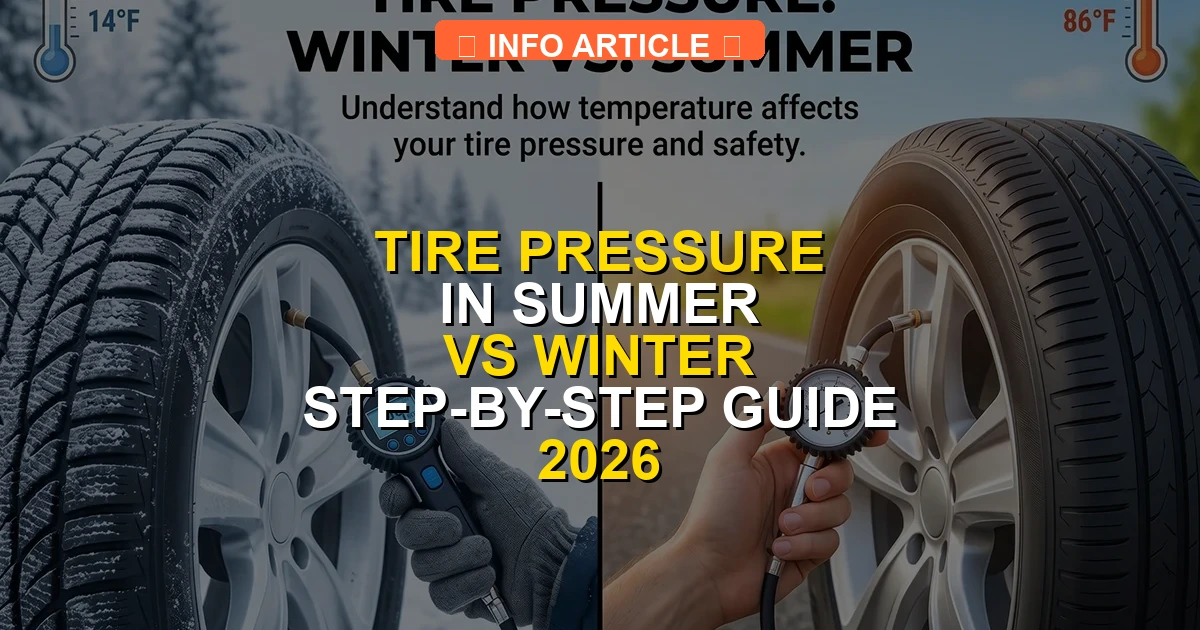
Changes in ambient temperature directly impact your PSI, meaning tires lose about 1 PSI for every 10°F drop in winter and gain pressure as summer temperatures rise. Adjusting your inflation levels during seasonal transitions prevents poor fuel economy, uneven tread wear, and dangerous blowouts. Always rely on the manufacturer placard inside the driver’s door jamb rather than the maximum limit printed on the tire sidewall.
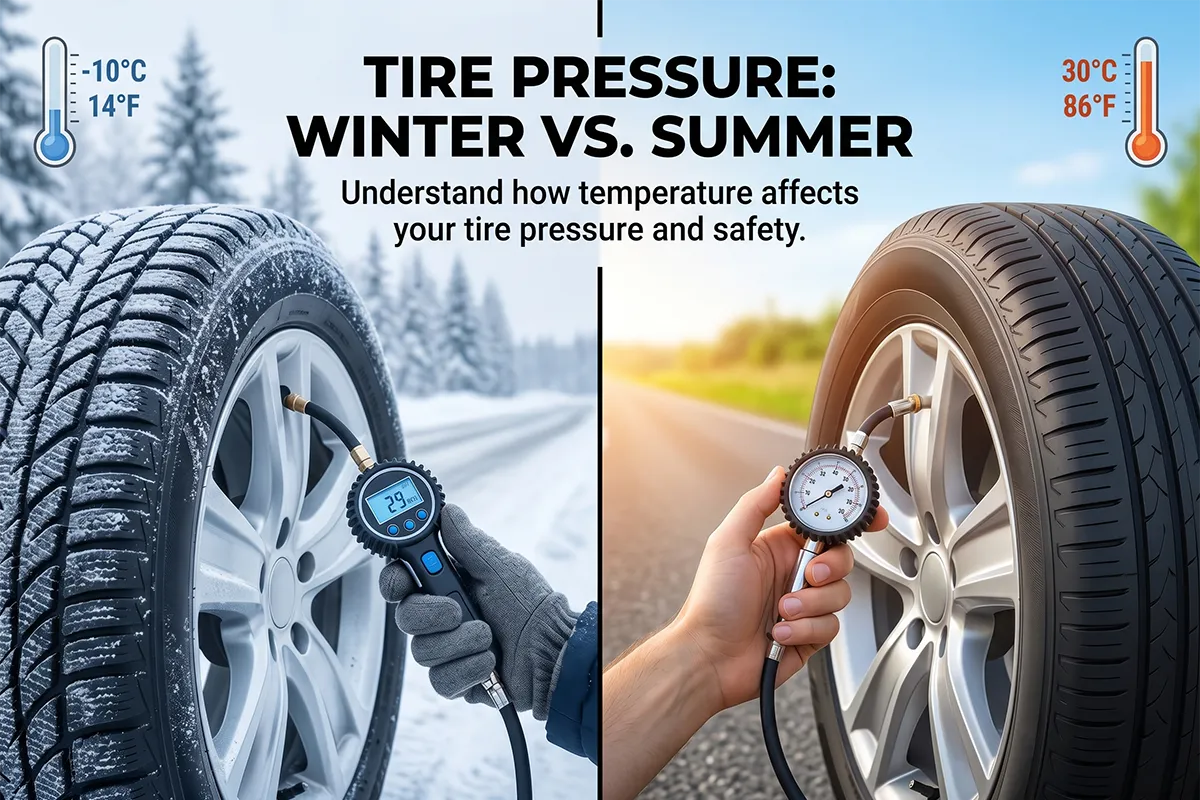
Your tire pressure drops by about 1 PSI for every 10°F drop in outside temperature, and rises by the same amount when it gets warmer. As we navigate the changing weather patterns of 2026, seasonal temperature swings require proactive tire maintenance to keep your vehicle safe and fuel-efficient.
Ignoring these fluctuations leads to uneven tread wear, reduced gas mileage, and a higher risk of blowouts. Maintaining the correct PSI ensures optimal contact with the road regardless of whether you are driving through a summer heatwave or a winter freeze.
Key Takeaways
- Tires lose approximately 1 PSI for every 10°F drop in outside temperature.
- Summer heat causes tire pressure to rise, increasing the risk of over-inflation.
- Check your tire pressure monthly and during every major seasonal temperature shift.
- Always inflate tires to the cold PSI specified on the driver’s door jamb sticker.
- Never bleed air from hot tires after driving, as elevated pressure is normal.
What Causes Tire Pressure Fluctuations Between Summer and Winter
The Science of Temperature and Air Volume
Air inside your tires behaves according to fundamental thermodynamic laws. When ambient temperatures rise in the summer, the gas molecules inside the tire heat up, move faster, and push harder against the inner rubber walls. This causes pressure to increase. Conversely, when winter temperatures plunge, those molecules slow down and pack closer together, resulting in a direct drop in PSI.
- Gases expand when heated and contract when cooled.
- Expect a net change of 3 to 5 PSI between extreme summer highs and winter lows.
- Direct sunlight on a parked car can temporarily inflate tire readings even further.
The Impact of Seasonal Weather Swings
Sudden cold fronts in late autumn or rapid heatwaves in early summer catch many drivers off guard. Your tires lose pressure naturally over time anyway, leaking air at a rate of about 1 to 2 PSI per month. When combined with a 30°F drop in overnight winter temperatures, your tires can easily sit dangerously low by morning without any visible puncture.
- Winter weather steals pressure rapidly during the first hard freeze of the year.
- Summer heat compounds slow leaks, making under-inflated tires run dangerously hot.
- Modern 2026 TPMS (Tire Pressure Monitoring Systems) will often trigger warning lights on the first cold morning of the season.
How to Fix and Adjust Your Tire Pressure for Seasonal Weather Changes
When to Add and When to Release Air
Transitioning into winter means you will almost certainly need to add air to your tires to compensate for the shrinking gas inside. As spring and summer arrive, you may need to release a bit of air if your tires were over-filled during a cold snap. Always adjust your pressures when the tires are cold, meaning the car has been parked for at least three hours or driven less than a mile.
- Add air in the fall and early winter to counteract dropping temperatures.
- Check pressure monthly, especially during seasons with high daily temperature swings.
- Never let air out of a hot summer tire just because the reading is slightly high; wait for it to cool.
Finding and Setting Your Target PSI
Do not look at the maximum PSI printed on the sidewall of your tire. That number represents the absolute maximum limit, not your vehicle’s recommended operating pressure. Instead, open your driver-side door and check the manufacturer placard located on the door jamb.
- Match your target PSI to the exact numbers listed on the vehicle placard.
- Use a reliable digital or dial gauge for accurate readings.
- Adjust your pressures to the exact recommended spec before embarking on long road trips in any season.
Step-by-Step Guide to Checking and Setting Cold Tire PSI Properly
Accurate tire pressure management requires precision, particularly when adapting to 2026 climate fluctuations. According to the National Highway Traffic Safety Administration (NHTSA), failing to check pressure when tires are truly cold leads to inaccurate readings that cause premature tread wear.
Sub-Step 1: Park for At Least Three Hours
You must measure pressure when your vehicle has been stationary for a minimum of three hours or driven less than one mile. Friction from driving heats the air inside the rubber, artificially inflating your PSI reading by 4 to 6 PSI. Wait until the tires reach ambient outdoor temperature.
Sub-Step 2: Locate the Manufacturer Specification
Open the driver’s side door and locate the placard affixed to the door jamb. Do not rely on the maximum PSI printed on the tire sidewall, as that figure represents structural limits rather than optimal vehicle dynamics. Match the recommended PSI for your specific axle load.
Sub-Step 3: Measure and Adjust
- Remove the valve stem cap from the first tire and store it securely.
- Press a calibrated digital pressure gauge firmly onto the valve stem until the hissing sound stops and a stable number appears on the display.
- If the PSI is too high, press the metal pin inside the valve stem to release air.
- If the PSI is too low, connect an air compressor nozzle and inflate until you exceed the target by 1 or 2 PSI.
- Recheck the pressure with your gauge and secure the valve stem cap to keep moisture out.
What If Your Tire Pressure Keeps Dropping Despite Seasonal Adjustments
If you adjusted your tires for the current 2026 season and notice a continuous pressure loss exceeding 1 to 2 PSI per month, environmental temperature shifts are no longer the primary culprit. A mechanical compromise is likely present.
Sub-Scenario 1: Slow Punctures and Tread Debris
Small nails, screws, or sharp stones can embed themselves deep into the tread grooves, creating a microscopic channel for air to escape over several days. Inspect your tread patterns visually and run a gloved hand along the rubber surface.
Sub-Scenario 2: Valve Stem and Bead Leaks
Rubber valve stems degrade due to ozone exposure and extreme heat cycles. Additionally, corrosion along the wheel rim can prevent the tire bead from forming an airtight seal, leading to persistent pressure drops regardless of ambient weather.
What If It Still Doesn’t Work?
If standard top-offs and basic visual checks fail to stabilize your tire pressure, advanced troubleshooting is required. Follow these steps to resolve persistent air loss:
- Spray a soapy water solution directly onto the valve stem, tread surface, and wheel rim edges to check for escaping air bubbles.
- Tighten the internal valve core using a specialized four-way valve tool to correct loose core assemblies.
- Visit a certified tire service center if the leak persists or originates from the sidewall, which cannot be safely repaired.
- Professional professional patch-and-plug repairs typically cost between $20 and $40 per tire, while full valve stem replacements average $15 to $30.
- Replace tires that show signs of internal structural failure or tread depth dropping below the legal limit of 2/32 of an inch.
Conclusion
Managing seasonal tire pressure fluctuations is essential for vehicle safety, fuel economy, and tire longevity. By compensating for winter shrinkage and summer expansion using proper cold-inflation techniques, drivers can avoid dangerous blowouts and uneven wear. According to verified research and expert sources from the Rubber Manufacturers Association, maintaining correct PSI improves braking distances by up to 15 percent. Take action today by grabbing a digital pressure gauge and verifying your vehicle cold PSI before your next commute.
❓ Frequently Asked Questions
Why does cold weather cause my low tire pressure light to turn on?
Cold weather causes air molecules inside the tire to contract and pack closer together, which reduces overall internal pressure. When pressure drops below the vehicle’s warning threshold, the TPMS dashboard light activates. Adding air restores the recommended PSI and turns the light off.
Is it dangerous to drive on over-inflated tires in the summer?
Yes, high summer temperatures combined with high-speed driving cause air to expand further, leading to over-inflation. This reduces the tire contact patch with the road, decreases braking efficiency, and increases the risk of a blowout.
Should I let air out of my tires during a heatwave?
Generally, you should not bleed air from hot tires during a summer heatwave. Tire pressure naturally increases as tires warm up from driving friction and sun exposure, and letting air out now will leave them dangerously under-inflated once they cool down.
How often should I check my tire pressure during seasonal changes?
You should check your tire pressure at least once a month and whenever outside temperatures shift dramatically by 20 degrees or more. Seasonal transitions in autumn and spring require the most frequent monitoring.
Can I use the maximum PSI listed on the tire sidewall?
No, the number on the sidewall represents the maximum safe inflation limit determined by the manufacturer, not the ideal setting for your specific vehicle ride comfort and handling. Always use the placard located on the driver’s door jamb.
Does snow accumulation affect tire pressure?
Snow itself does not directly affect pressure, but the freezing ambient temperatures surrounding the snow will cause the air inside your tires to contract rapidly. This makes winter storms a primary trigger for sudden pressure drops.