Finding the correct factory tire size using your vehicle details prevents costly fitting errors. Using your make, model, year, and trim level ensures you buy the exact tires engineered for your car.
Your vehicle’s exact tire size is determined by its specific make, model, year, and trim level, and you can easily look this up using digital databases or your car’s physical door placard. Modern 2026 vehicle configurations often feature multiple wheel options straight from the factory, meaning two cars with the same model name can require completely different tires.
Getting this right saves you from dangerous fitment issues, speedometer errors, and costly returns when ordering replacements. Here is how you can quickly identify the exact specifications your vehicle needs before you buy.
Key Takeaways
- Select your exact vehicle year, make, model, and trim to avoid fitment errors.
- Check the driver-side door jamb placard to confirm your factory tire dimensions.
- Different trim packages on the same model often require different tire sizes.
- Aftermarket suspension modifications can change the ideal tire size you actually need.
- Read the sidewall of your current tires for a quick, direct sizing reference.
Why Vehicle Make and Model Determine Your Exact Tire Size
Automobile manufacturers engineer each vehicle platform to handle specific weight distributions, horsepower outputs, and braking systems. The make and model dictate the foundational dimensions, while sub-variables alter the final rolling diameter. In 2026, modern vehicle lineups are more diverse than ever, making precise identification critical.

The Impact of Trim Levels and Package Upgrades
You cannot rely solely on a car model’s name to buy tires. A base model sedan might roll on 16-inch wheels, while the sports trim of that exact same car comes equipped with 19-inch low-profile tires and wider rims. Upgraded handling packages or towing additions also change the factory load index and speed rating required for safe operation.
Aftermarket Modifications and Staggered Fitments
If the previous owner installed aftermarket suspension parts or larger wheels, your current setup might deviate from factory specifications. Sports cars and performance SUVs frequently use staggered fitments, meaning the front tires are narrower than the rear tires. Always cross-reference your vehicle data with physical inspections to catch any non-stock modifications.
Master Finding Your Tire Size in 7 Simple Steps
Finding the correct replacement tires for your vehicle can feel overwhelming given the sheer variety of dimensions, load ratings, and speed symbols available on the market. Whether you are shopping for all-season radials, winter treads, or high-performance tires, knowing your exact specifications by make and model ensures optimal safety, fuel efficiency, and handling. This comprehensive walkthrough provides a foolproof method to accurately determine your vehicle’s factory tire size without relying solely on the confusing online guesswork.
Step 1: Gather Your Vehicle Information
What you need: Vehicle registration card, insurance document, or your car’s owner manual.
Instructions: Before searching online or visiting a tire shop, compile the exact year, make, model, and trim level of your vehicle. For example, knowing you drive a vehicle is not enough; you need to specify whether it is a base trim, a sports package, or a luxury edition, as manufacturers frequently equip different trims with completely different wheel diameters and tire widths. Check your glove compartment for the physical manual or look at your state vehicle registration document where the official trim details are legally recorded.
Pro Tip: Never rely on memory alone for your vehicle’s exact trim level, as subtle badge variations can completely change the factory wheel size.
Step 2: Locate the Manufacturer Placard on the Driver Door Jamb
What you need: A flashlight or your smartphone light, and a clean micro-fiber cloth.
Instructions: Open the driver side door and look closely at the vertical door post (b-pillar) or the edge of the door itself. You will see a safety certification label, typically white and yellow, affixed by the car manufacturer. Wipe away any accumulated dust or grime with your cloth. Scan the placard for a section explicitly labeled “Tire and Loading Information.” This sticker lists the exact original equipment manufacturer (OEM) front and rear tire sizes, recommended cold inflation pressures, and maximum load capacity for your specific vehicle.
Pro Tip: This door placard is your single most reliable source of truth, taking precedence over general internet database searches which may list incorrect aftermarket alternatives.
Step 3: Inspect the Sidewall of Your Current Tires
What you need: Good ambient lighting, a knee pad or cardboard to kneel on.
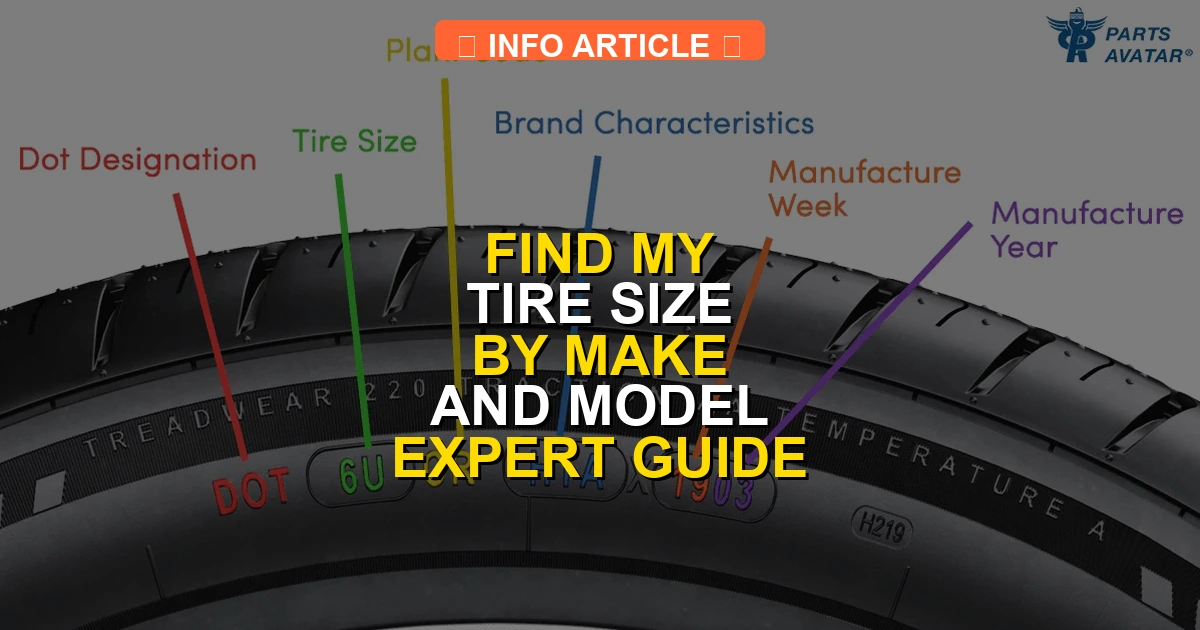
Instructions: Walk outside to your vehicle and examine the outer rubber sidewall of your currently installed tires. Look for a long sequence of raised alphanumeric characters, typically formatted like P215/65R16 or 225/45R17. This code represents the entire tire specification. The first letter indicates the vehicle type (like P for Passenger), the next three digits show the section width in millimeters, the number after the slash indicates the aspect ratio, and the final numbers show the internal rim diameter in inches.
Pro Tip: If your current tires were replaced previously by a previous owner, verify that the size matches the factory door placard found in the previous step.
Step 4: Decode the Tire Size Sequence Components
What you need: A notepad and a pen to write down your specific numbers.
Instructions: Break down the sidewall code into its individual components so you understand what you are reading. Take the example code P215/65R16. The “215” means the tire is 215 millimeters wide from sidewall to sidewall. The “65” is the aspect ratio, meaning the sidewall height is 65 percent of the tire’s width. The “R” stands for radial construction, which is standard for almost all modern vehicles. Finally, the “16” means the inner diameter fits a 16-inch wheel rim. Write this sequence down accurately before browsing online stores.
Pro Tip: Pay special attention to the rim diameter number; buying a tire with an incorrect rim diameter means it physically will not fit onto your metal wheels.
Step 5: Utilize Online Vehicle Fitment Tools
What you need: A smartphone, tablet, or computer with internet access.
Instructions: Navigate to a reputable tire retailer website such as Tirerack, Discount Tire, or Costco Tire. Locate their online vehicle selector tool, which prompts you to enter your vehicle’s year, make, model, and specific trim package. Once submitted, the database instantly cross-references factory specifications and displays all compatible tire sizes. Compare these digital results against the numbers you gathered directly from your vehicle door placard in Step 2 to ensure absolute accuracy.
Pro Tip: Always double-check alternate plus-size or minus-size options if you are considering changing your factory wheel dimensions, though sticking to OEM sizes is safest.
Step 6: Account for Optional Packages and Modifications
What you need: Visual inspection of your wheels and knowledge of your vehicle history.
Instructions: Consider whether your vehicle has aftermarket modifications, such as upgraded suspension lowering kits, custom rims, or optional performance packages added at the dealership. If your car has larger aftermarket rims installed, the tire size required will differ significantly from the standard factory door placard. In these rare scenarios, you must physically read the sidewall of the currently mounted tire rather than trusting the original vehicle make and model database.
Pro Tip: When in doubt about aftermarket modifications, take a photo of your tire sidewall and wheel assembly and bring it directly to a professional tire technician.
Step 7: Confirm Load and Speed Ratings
What you need: Your final tire size code including the suffix numbers (e.g., 95H).
Instructions: Look immediately after the main tire size dimensions for an extra set of numbers and a letter, such as “91V” or “95H”. This indicates the load index and speed rating. The load index (e.g., 95) specifies the maximum weight the tire can safely support, while the speed rating letter (e.g., H up to 130 mph) denotes the maximum safe operational speed. Ensure your replacement tires match or exceed these safety ratings, especially if you drive heavily loaded vehicles, SUVs, or high-performance cars.
Pro Tip: Installing tires with a lower load or speed rating than recommended by the manufacturer can lead to tire failure and compromised vehicle safety.
✅ Final Checklist
- Verified vehicle year, make, model, and exact trim level.
- Cross-referenced the door placard sticker with current tire sidewalls.
- Decoded the width, aspect ratio, and rim diameter numbers correctly.
- Checked online retailer fitment tools for accuracy.
- Confirmed appropriate load index and speed rating requirements.
Important Notes:
- Always set and check your tire pressure when tires are cold to ensure accurate readings.
- If your vehicle has staggered tire setups (different sizes on front and rear axles), be sure to record both sets of dimensions.
- Consult a certified mechanic or professional tire installer if you notice uneven tread wear or suspension damage.
- Estimated time to complete: 10 to 15 minutes. Cost: Free.
How to Look Up Your Tire Size by Make, Model, Year, and Trim
Navigating digital vehicle databases is the fastest way to pull up your original equipment specifications without leaving your desk. Online parts finders filter through thousands of 2026 vehicle configurations to match your exact build sheet. You will need four key pieces of information ready before you start your search.

Using Online Vehicle Lookup Tools
Reputable tire retailers and automotive databases provide drop-down menus designed to pinpoint your exact vehicle configuration. Follow this sequence to pull accurate data:
- Select your vehicle’s manufacturing year (e.g., 2026)
- Choose the make (such as Ford, Toyota, or BMW)
- Pick the specific model name from the database
- Select your exact trim level, engine type, and drivetrain (AWD vs. FWD)
Verifying Your Findings Against the Door Placard
Never rely on a single online source when safety is involved. Once the lookup tool provides your size, walk out to your car and open the driver-side door. Locate the white and yellow federal certification placard affixed to the door jamb. This sticker lists the exact tire dimensions, cold inflation pressures, and load ratings approved by the factory for your specific VIN.
Step-by-Step Guide to Verifying Your Tire Size on the Vehicle
While digital lookups by make and model provide a fast baseline, automotive safety experts strongly recommend physical verification before purchasing new rubber. Even a factory-fresh vehicle can leave the assembly line with optional dealer packages that alter the baseline specifications.
Checking the Driver Door Placard
- Open the driver-side door and locate the white or yellow manufacturing placard affixed to the B-pillar or door edge.
- Locate the section labeled “Tire and Loading Information” which lists the original equipment manufacturer (OEM) front and rear tire sizes.
- Note the recommended cold tire pressure values listed alongside the dimensions for your 2026 driving routine.
Reading the Sidewall Code
- Walk to the exterior of the vehicle and inspect the outer rubber sidewall of your current tires.
- Look for an alphanumeric string beginning with the letter P or LT, followed by numbers such as 215/65R16.
- Verify that these physical sidewall numbers match both the online make-and-model database lookup and the door placard data to guarantee compatibility.
What to Do If Your Trim Level Has Custom Wheels or Modifications
Upgraded aftermarket rims or previous owner modifications frequently complicate standard lookup procedures. If your 2026 vehicle no longer matches factory specifications, digital database tools will output incorrect dimensions that can cause speedometer calibration errors or mechanical rubbing.
Addressing Aftermarket Changes
- Measure Wheel Diameter Directly: Check the final number on your tire sidewall following the “R” designation, which denotes the exact wheel diameter in inches, ensuring your new tires match your current custom rims rather than factory specs.
- Consult a Local Tire Specialist: Take the vehicle to a certified service center where technicians can physically measure the clearance within the wheel wells. Professional shop consultations generally range from $0 to $50, with many retailers offering free fitment checks when purchasing a set.
- Use Plus-Sizing Calculators: Access specialized online calculators provided by industry authorities like the Tire Rack to compute safe alternative dimensions if you have transitioned to wider wheels or a different aspect ratio.
What If It Still Doesn’t Work?
If digital lookups and physical inspections still leave you uncertain about your exact specifications, reliable fallback options remain available to prevent costly purchasing mistakes.
- Contact an authorized dealership parts department with your Vehicle Identification Number (VIN) for an exact factory build sheet readout.
- Visit a professional tire and auto service center for an in-person diagnostic measurement. Professional fitment inspections typically cost between $25 and $75 if no installation labor is performed immediately.
- Consult the official owner manual glovebox literature or digital owner portal associated with your specific vehicle year and trim package.
Conclusion
Finding your correct tire size by make and model ensures optimal vehicle handling, fuel economy, and passenger safety. By cross-referencing digital lookup tools with your physical door placard, you eliminate the risk of ordering incompatible equipment. According to verified research from the Rubber Manufacturers Association, matching exact OEM or properly calculated plus-sized dimensions extends tread life by up to 20 percent. Take the next step today by checking your driver-side door jamb and matching those figures against trusted online retail databases.
❓ Frequently Asked Questions
Why is knowing the exact vehicle trim level critical when finding tire size?
Manufacturers often equip sport or luxury trims with larger alloy wheels and lower-profile tires compared to standard base models. Selecting the wrong trim level during a lookup can result in purchasing tires that do not fit your wheels.
How can I find my tire size if my vehicle has aftermarket rims installed?
If the previous owner installed custom wheels, factory make and model lookups may no longer apply. The safest method is to read the exact size stamped directly onto the sidewall of the currently installed tires.
What does the letter ‘P’ or ‘LT’ stand for at the beginning of a tire size?
The ‘P’ stands for Passenger car, indicating the tire is designed primarily for cars, minivans, and light SUVs. ‘LT’ stands for Light Truck, meaning it features heavier-duty construction for towing and hauling.
Can I change my tire width without changing my wheel size?
Yes, you can often step up or down slightly in width on the same wheel rim, provided there is enough clearance inside the wheel well to prevent rubbing against suspension parts.
Where else can I find my factory tire size besides the door jamb sticker?
Your original factory tire size is also listed inside the owner’s manual glovebox packet and can often be found by running your vehicle’s VIN through an online dealer parts catalog.
Does the speed rating matter when replacing my tires?
Yes, the speed rating letter (such as H, V, or W) indicates the maximum safe speed capability of the tire. You should always match or exceed the original equipment manufacturer’s speed rating.