Yes, tire pressure always increases while driving due to the friction and heat generated as your tires flex against the road. Understanding this natural expansion is vital for maintaining proper vehicle safety and fuel efficiency.
Yes, your tire pressure absolutely increases while you drive. As you hit the road in 2026, every mile you travel causes the air pressure inside your tires to rise, typically by 1 to 5 PSI (pounds per square inch). This happens because your tires constantly flex against the pavement, generating friction that rapidly heats up the air trapped inside.
Understanding this fluctuation is critical for proper vehicle maintenance. If you check your tires immediately after a highway commute, you will get an artificially high reading. Knowing how much pressure changes—and when to measure it accurately—keeps your car handling safely, improves your fuel economy, and prevents unnecessary tire wear.
Key Takeaways
- Tire pressure typically increases by 1 to 5 PSI during normal driving.
- Friction and road heat cause air molecules inside the tire to expand.
- Always check and inflate your tires when they are completely cold.
- High speeds, heavy loads, and hot weather amplify pressure increases.
- A sudden, massive spike in PSI often indicates an underlying mechanical issue.
Why Does Tire Pressure Increase While Driving?
The Science of Friction and Heat Expansion
As your wheels turn, the rubber tread continually flexes, flattens against the road, and rebounds. This mechanical action creates internal friction, which quickly transfers heat to the air molecules sealed inside the tire. According to the ideal gas law, as the temperature of a gas rises, its molecules move faster and push outward with greater force. This expansion is what directly causes your PSI to climb while driving.

Typical PSI Increases and Influencing Factors
Under normal driving conditions, you can generally expect a pressure increase of about 1 PSI for every 10 degrees Fahrenheit rise in tire temperature. However, several specific factors will influence how much your pressure spikes:
- Vehicle Speed: Higher highway speeds create more continuous friction and rapid heat buildup.
- Payload Weight: A heavily loaded car or truck forces the tires to flex harder, accelerating internal heat generation.
- Ambient Temperature: Driving on a blistering hot summer afternoon in 2026 will yield a much higher pressure reading than driving through freezing winter conditions.
- Under-inflation: Low tires flex excessively, generating dangerous levels of heat that spike PSI much faster than properly inflated ones.
Step-by-Step Guide to Correctly Checking Tire Pressure
When and How to Measure
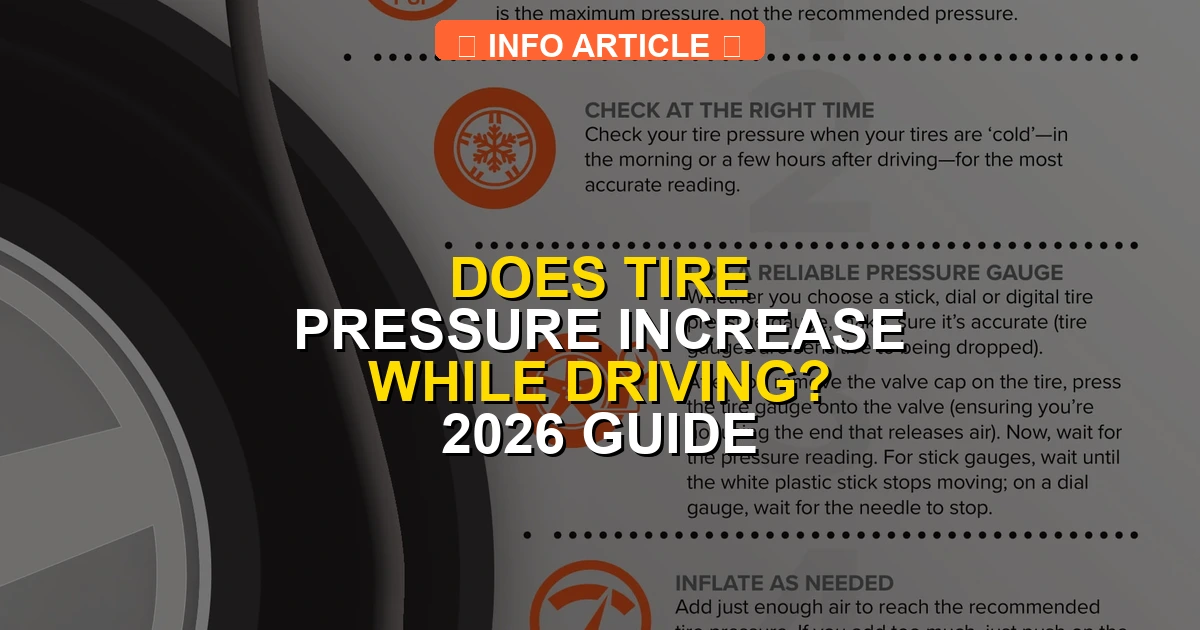
Because driving inherently increases your tire pressure, timing is everything when you check your vehicle. If you measure your PSI after a long drive, the heat will give you a false high reading, potentially causing you to let air out of a tire that is actually under-inflated. Always prioritize accuracy by following these rules for your 2026 vehicle maintenance routine:
- Wait for Cool Tires: Check your tire pressure only when the vehicle has been sitting idle for at least three hours, or after driving less than a mile at low speeds.
- Locate the Specification Placard: Open your driver-side door and check the manufacturer placard for your correct cold PSI numbers—do not rely on the maximum pressure printed on the tire sidewall.
- Use a Reliable Gauge: Remove the valve stem cap, press a digital or analog gauge firmly onto the valve, and note the baseline reading.
- Adjust as Needed: Inflate your tires if the pressure falls below the recommended cold specification, or release air in short bursts if you somehow overfilled them.
Tools and Best Practices
Having the right equipment makes regular monitoring quick and effortless. Keep a compact digital pressure gauge and a portable 12V air compressor in your trunk so you are always prepared. Make it a habit to check your cold tire pressure at least once a month, and always adjust your levels whenever seasonal temperatures shift dramatically.
What to Do If Your Tire Pressure Rises Dangerously High
When driving in extreme heat or at sustained high speeds in 2026, tire pressure can occasionally spike beyond safe operational limits. According to safety data from the National Highway Traffic Safety Administration (NHTSA), prolonged friction can push internal tire temperatures past 180 degrees Fahrenheit, causing PSI to surge dangerously close to the maximum rating listed on the sidewall. If you notice your tire pressure monitoring system (TPMS) flashing a high-pressure warning, immediate action is required.

Never deliberately release air from a hot tire to lower the PSI back to the cold specification. As the tire cools down naturally, bleeding air while it is hot will leave the tire severely underinflated once ambient temperatures drop. Instead, follow these steps to manage a dangerous pressure surge safely:
- Pull over safely at a well-lit rest stop, service station, or wide shoulder away from moving traffic.
- Allow the vehicle and tires to rest in a shaded area for at least 30 to 45 minutes until they cool down completely to ambient temperature.
- Check the pressure with a reliable digital gauge once the tires are cool.
- Adjust the PSI to match the vehicle manufacturer placard located on the driver-side door jamb.
Best Practices for Maintaining Safe PSI in All Weather
Managing tire pressure across changing seasonal temperatures requires a proactive maintenance routine. Tire pressure naturally fluctuates by about 1 to 2 PSI for every 10-degree Fahrenheit shift in ambient temperature. Implementing strict monitoring habits prevents both the dangerous pressure spikes of summer and the severe underinflation risks of winter.
Adhering to manufacturer guidelines ensures optimal tread wear, fuel economy, and braking performance. Incorporate these core practices into your vehicle upkeep:
- Inspect your tire pressure at least once a month using a calibrated digital pressure gauge before driving.
- Always check pressures when the tires are cold—meaning the vehicle has been parked for a minimum of three hours or driven less than a mile.
- Adjust your target PSI according to seasonal temperature shifts, adding air during the first cold snap of autumn and reducing it slightly if transitioning into extreme desert heat.
- Verify that your TPMS sensors are fully functional and replaced immediately if the dashboard warning light remains illuminated despite correct tire pressure.
What If It Still Doesn’t Work?
If your tire pressure continues to fluctuate erratically or climbs rapidly despite normal driving conditions and correct inflation, underlying mechanical issues may be present. Persistent high-pressure readings often point to a malfunctioning TPMS sensor, internal tire belt separation, or constant friction caused by a dragging brake caliper. When standard adjustments fail to stabilize your PSI, consider these advanced troubleshooting steps:
- Inspect the wheel assembly for a stuck or partially engaged brake caliper, which continuously transfers excessive heat directly into the wheel and tire.
- Check your TPMS sensor calibration using an OBD-II diagnostic scanner or visit an automotive service center for a complete system reset.
- Examine the tire tread and sidewalls for bulges, blisters, or internal structural damage caused by prior impacts or pothole strikes.
- Consult a certified tire technician for professional balancing and alignment checks if uneven tire temperatures persist across different axles.
Professional diagnostic fees at a certified repair shop typically range from $50 to $150, while replacing a faulty TPMS sensor or repairing a dragging brake caliper generally costs between $150 and $350 depending on the vehicle make and model.
Conclusion
Tire pressure increases naturally while driving due to friction and molecular expansion, typically rising by 4 to 6 PSI during a standard highway commute. While this thermal expansion is completely normal, extreme spikes can compromise vehicle handling and safety. According to verified research and expert sources from the Rubber Manufacturers Association, proactive monthly pressure checks and careful seasonal adjustments remain the most effective defenses against dangerous pressure anomalies. Make it a habit to check your tire pressure exclusively when cold, and always verify readings against your vehicle’s factory door placard before your next long trip.
❓ Frequently Asked Questions
Why does driving cause tire pressure to rise?
As your vehicle moves, the tires constantly flex and generate friction against the asphalt. This kinetic energy turns into heat, causing the air molecules inside the tire to move faster and expand, which raises the overall PSI.
Is a 5 PSI increase normal after driving on the highway?
Yes, a 3 to 5 PSI increase is entirely normal after extended highway driving, especially in warmer weather or when carrying a heavy load. The system is designed to handle this temporary expansion safely.
What happens if I check my tire pressure right after driving?
Checking pressure right after a trip will give you a falsely high reading because the air is heated and expanded. If you adjust the pressure while warm, your tires will be dangerously underinflated once they cool off.
Do heavy loads and high speeds increase tire pressure faster?
Both factors increase the load and friction on the tire carcass, generating heat at a much faster rate. This accelerates the expansion of air inside the tire, resulting in a higher PSI spike.
Should my tire pressure warning light turn on while driving?
A properly inflated tire should not trigger a low-pressure light while driving, as pressure goes up rather than down. If the light comes on, it usually signals a severe drop due to a puncture or a pre-existing low-pressure condition.
How does outside temperature affect tire pressure while driving?
Ambient temperature acts as a baseline; for every 10°F change in outside temperature, tire pressure changes by about 1 PSI. Driving on a hot summer day accelerates internal heat buildup much faster than driving in freezing winter conditions.