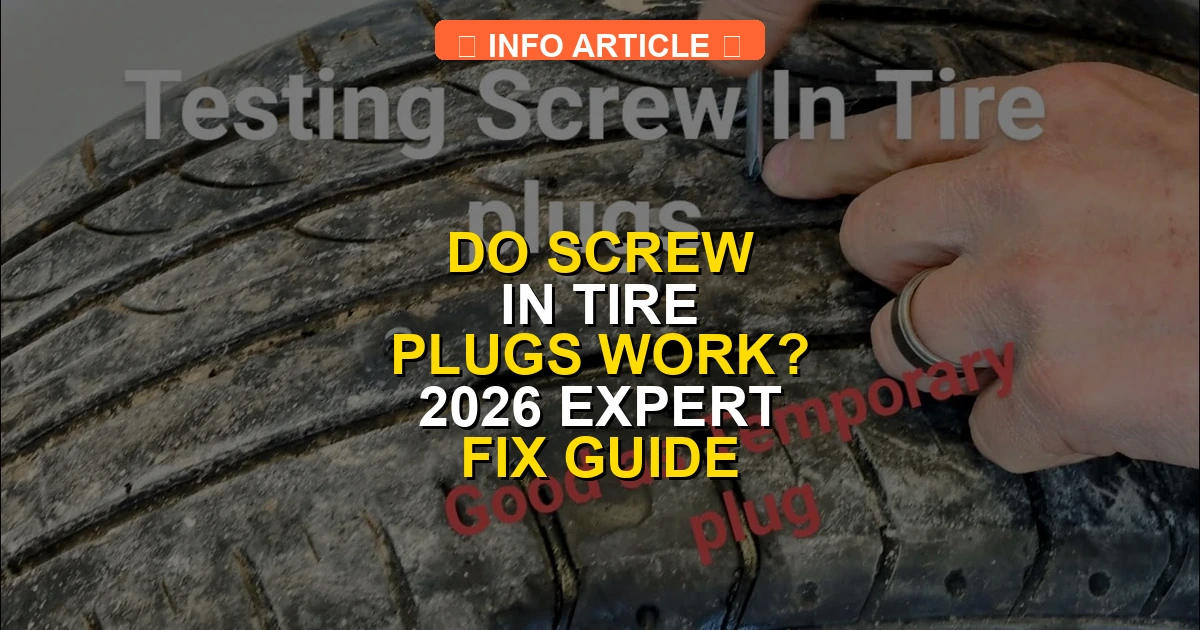
Screw-in tire plugs offer a remarkably fast roadside fix for small tread punctures, but they are generally designed as temporary solutions rather than permanent repairs. While they effectively seal air in emergencies, professional internal patches remain the gold standard for long-term safety.
Screw-in tire plugs do work, but only as an emergency roadside fix rather than a permanent repair. These threaded rubber screws have flooded online marketplaces and gas stations by 2026, marketed as a quick, tool-free way to patch a flat. While they can successfully seal a small tread puncture and get you to a repair shop, driving on them long-term creates a major safety hazard.
Understanding the difference between a temporary roadside band-aid and a proper professional repair will save you from sudden air loss on the highway. Let us look at why these plugs fail under real-world driving conditions and how to use them safely if you find yourself stranded.
Key Takeaways
- Screw-in tire plugs work best as emergency roadside fixes to get you to a repair shop.
- They are strictly intended for punctures located in the flat tread area, never the sidewall.
- Traditional rubber string plugs vulcanize with the tire, whereas screw-in plugs rely entirely on mechanical threads.
- Driving thousands of miles on a screw-in plug increases the risk of slow leaks or sudden failure.
- Always follow up a temporary plug with a professional internal patch-plug combo.
What Causes Punctures and How Screw-In Tire Plugs Fail
Tires typically pick up punctures from nails, screws, and sharp metal debris on the roadway. When these objects pierce the rubber and steel belts, air escapes. Screw-in tire plugs attempt to solve this by letting you screw a rubber-coated metal screw directly into the hole without removing the tire from the wheel.

The Structural Weakness of Threaded Plugs
The primary issue with screw-in plugs is how they interact with your tire’s internal steel belts. Unlike a professional mushroom plug that vulcanizes with the rubber, a screw relies purely on mechanical friction and thread bite.
- Centrifugal force: As your wheel spins at highway speeds in 2026, heavy centrifugal forces pull on the protruding head of the screw, causing it to wiggle loose.
- Belt damage: Screwing a thick metal-shafted plug into a steel-belted radial can snap internal steel cords, enlarging the original damage zone.
- Flex fatigue: As your tire flexes thousands of times per mile against the pavement, the rigid screw cannot flex synchronously with the rubber, creating micro-gaps where air leaks out.
Real-World Risk of Blowouts
Can screw-in plugs cause blowouts? Yes, under high heat and extended highway speeds. If a screw backs out completely, your tire can lose all of its air pressure in seconds. Furthermore, moisture can slip past the screw threads into the inner liner, rusting the internal steel belts and silently destroying your tire from the inside out.
How to Fix a Flat Tire Safely Using a Screw-In Plug
If you are stuck on the shoulder of the road in 2026 with a flat tire and no spare, a screw-in plug can serve as a legitimate get-me-home tool. Treat it strictly as a temporary bridge to safety, not a permanent solution.
Step-by-Step Emergency Installation
To give a screw-in plug the highest chance of holding air until you reach a mechanic, follow a strict installation protocol.
- Locate and inspect: Find the puncture in the tread area only. Never use a screw plug on the tire sidewall.
- Leave the object in: If the original nail is still present, unscrew it. Do not attempt to screw your plug directly on top of existing debris.
- Insert by hand or screwdriver: Use a standard Phillips screwdriver or the provided tool to twist the rubber screw firmly into the hole until the head sits flush with the tread blocks.
- Inflate and test: Pump the tire back up to your vehicle’s recommended PSI using a portable compressor and spray soapy water on the plug to check for bubbling leaks.
The Non-Negotiable Post-Fix Rule
Once your screw-in plug holds air and you safely resume your journey, your destination must be a professional tire shop. Industry safety standards dictate that you must replace or properly patch any tire fixed with an external screw within 50 miles or 24 hours. A technician needs to dismount the tire, inspect the internal damage, and install a vulcanized patch-plug combination unit for long-term safety.
Step-by-Step Guide to Installing a Rubber Tire Repair Screw
Installing a threaded rubber tire repair screw requires precision and patience. According to mobile tire service technicians in 2026, proper execution dictates whether the temporary patch holds until your next scheduled tire rotation.

Preparation and Locating the Puncture
Safety comes first when dealing with a compromised tire. Never attempt a roadside repair on a busy highway shoulder without adequate clearance.
- Park your vehicle on a flat, stable surface, engage the parking brake, and turn on your hazard lights.
- Locate the source of the air leak by listening for a hiss or spraying a soapy water solution over the tread.
- Remove the offending nail or screw completely using a pair of sturdy pliers, noting the angle of the puncture channel.
Insertion and Sealing Process
Do not ream or enlarge the puncture hole with a traditional rasp tool unless specified by the screw manufacturer, as these screws rely on tight interference fits.
- Coat the threads of the rubber repair screw with rubber cement or soapy water to ease insertion and improve the airtight seal.
- Insert the tip of the screw directly into the puncture hole at the exact angle the original object entered.
- Drive the screw inward using a standard screwdriver or a power drill equipped with a bit adapter until the wide head sits completely flush against the tire tread.
- Inflate the tire to the manufacturer’s recommended PSI rating found on the driver-side door jamb placard.
- Apply soapy water over the inserted screw head to check for escaping air bubbles.
What If It Still Doesn’t Work and When to Visit a Professional Shop
Even with correct installation, external screw plugs fail under certain conditions. If your tire continues losing air, stop driving immediately. Here are the necessary fallback steps to address a failed temporary fix:
- Inspect the Puncture Location: If the air leak originates from the tire sidewall or shoulder, a screw plug will not hold. Sidewall damage compromises structural integrity and requires immediate tire replacement.
- Check for Improper Sizing: If the puncture is wider than 1/4 inch, standard repair screws cannot bridge the gap safely. You must install a spare tire or arrange for a tow.
- Visit a Professional Tire Shop: Take your vehicle to a certified tire technician for a proper internal patch-plug combination. According to Rubber Manufacturers Association (RMA) guidelines, external plugs alone do not meet permanent repair standards.
- Anticipate Repair Costs: Professional vulcanized interior patches typically cost between $25 and $45, whereas a complete tire replacement ranges from $150 to $350 depending on your vehicle make.
Conclusion
Threaded rubber tire repair screws serve as reliable, fast-acting emergency tools for small tread punctures in 2026. While they allow motorists to reach a service station safely, they remain a temporary roadside measure rather than a permanent fix. According to verified research and automotive safety organizations, drivers should transition to a professional internal patch-plug at the earliest opportunity. For your next step, store a quality screw repair kit in your trunk alongside a portable air compressor to ensure total preparedness for unexpected flats.
❓ Frequently Asked Questions
Do screw in tire plugs work better than traditional string plugs?
String plugs require reaming the hole larger, whereas screw-in plugs avoid damaging the steel belts further. However, string plugs vulcanize with the rubber over time, making them slightly more reliable for medium-term use.
How many miles can I drive on a screw-in tire plug?
While some drivers report using them for thousands of miles, experts recommend limiting driving to whatever distance is necessary to reach a tire shop—ideally under 50 miles.
Do I need any tools to install a screw-in tire plug?
Most rubber repair screws come with a simple screwdriver or a hex head, allowing you to twist them directly into the clean puncture hole by hand without removing the tire.
Will a screw-in plug void my tire warranty?
Using unapproved DIY external repair methods can sometimes void manufacturer road hazard warranties, as proper repairs require internal inspection of the tire casing.
Can I use tire sealant along with a screw-in tire plug?
It is generally unnecessary to combine them, and liquid sealants make a messy coating that prevents tire technicians from applying a proper permanent patch later.
How do I know if the screw-in plug is holding air properly?
Spray soapy water over the installed plug head; if bubbles form and expand, the seal is leaking and the vehicle should not be driven at highway speeds.