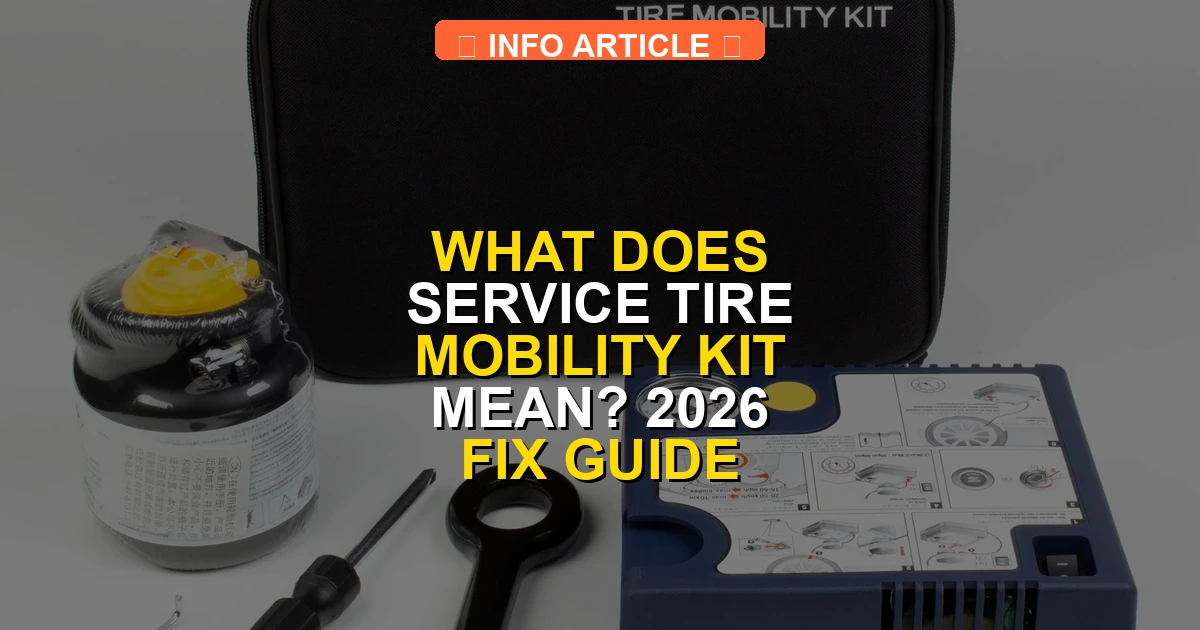
Seeing a Service Tire Mobility Kit warning on your dashboard means your vehicle’s emergency flat-tire sealant canister has likely expired or the air compressor system needs attention. Modern cars use this kit instead of a traditional spare tire to temporarily patch punctures and reinflate tires. You must inspect the expiration date on the sealant bottle and replace it to clear the alert.
When the Service Tire Mobility Kit warning pops up on your dashboard, your car is telling you that its emergency flat-tire repair system requires attention. Modern vehicles from manufacturers like Hyundai, Kia, Ford, and Porsche often ditch the traditional spare tire and heavy jack to save weight and improve fuel economy, replacing them with a Tire Mobility Kit (TMK). This warning does not mean you have a flat tire right now. Instead, it indicates that the electronic monitoring system has detected an issue with the emergency repair kit itself—most commonly an expired chemical sealant canister or a missing unit.
Ignoring this dashboard alert leaves you vulnerable if you pick up a nail on your morning commute in 2026. If you experience a sudden puncture, you rely entirely on this kit to pump sealant and air into the tire to reach a repair shop. Understanding what triggered the alert allows you to correct the issue before you find yourself stranded on the side of the road with a useless repair kit.
Key Takeaways
- The warning usually indicates an expired sealant canister rather than a mechanical failure.
- Tire mobility kit sealant typically expires every 4 to 8 years depending on the manufacturer.
- Check your trunk storage compartment beneath the floor mat to locate the kit.
- Replacing the expired sealant cartridge will generally clear the dashboard warning message.
- Never ignore expired sealant, as it may fail to seal a real roadside puncture.
What Causes the Service Tire Mobility Kit Warning

Your vehicle does not magically sense a failing compressor motor or a loose hose inside the kit. Modern cars trigger the Service Tire Mobility Kit message based on a built-in expiration timer or an electronic continuity check.
Expired Chemical Sealant Canisters
The primary culprit behind this warning message is an expired sealant bottle. The liquid latex or polymer inside the TMK canister degrades over time, typically losing its chemical effectiveness after 4 to 8 years. Automakers program the car’s computer or stamp an expiration date on the unit to ensure drivers do not inject congealed, useless goo into a punctured tire. When that date passes, the car flags the system for service.
Missing or Disconnected Units
You might also see this warning if the TMK is physically absent from the vehicle. Many car owners remove the heavy plastic case during a deep cleaning or a track day and forget to put it back. Some advanced OEM kits feature an electronic sensor or a wired 12V plug connection in the trunk storage well. If the vehicle loses electrical communication with the compressor assembly, the dashboard immediately lights up with the service reminder.
- Internal pressure sensor failure: A faulty gauge or sensor inside the compressor housing.
- Blown fuse: An electrical issue tied to the vehicle accessory port powering the kit bay.
- Tampered wiring: Corrosion or loose pins in the trunk-mounted plug harness.
How to Check and Replace Your Tire Mobility Kit
Resolving the dashboard warning requires a hands-on inspection of the equipment stored in your trunk or under the cargo floor. You need to locate the kit, inspect its components, and determine whether you are dealing with an expiration date issue or a hardware failure.
Locating and Inspecting the Kit
Open your trunk, lift the floor panel, and check the sub-compartments where automakers traditionally stash emergency gear. Pull the plastic molded case out and check the printed manufacture or expiration date directly on the sealant bottle label. If the date has passed—or is rapidly approaching—the chemical sealant is no longer guaranteed to seal a tread puncture effectively.
Sourcing OEM Replacements
You cannot simply pour standard slime from an auto parts store into an OEM compressor system unless it matches the specific quick-connect fitting. You must purchase a replacement sealant canister or a complete kit designed for your exact make and model.
- Locate your vehicle part number stamped on the current TMK housing.
- Order an OEM replacement sealant bottle online or through a local dealership parts counter.
- Unscrew the old expired canister, screw in the fresh unit, and secure the housing.
- Verify that the dashboard warning clears upon restarting the vehicle ignition.
Step-by-Step Guide to Resetting Your Dashboard Alert
After you have successfully used your emergency tire repair equipment or addressed the underlying pressure issue, the computer system inside your vehicle often retains the warning message. Modern cars require a manual reset procedure to clear the dashboard notification. According to leading automotive maintenance guides, completing this process ensures accurate pressure monitoring moving forward.

Using the Driver Information Display
Many 2026 vehicle models feature an electronic reset button located within the digital instrument cluster or the central infotainment touchscreen. To clear the notification properly, execute the following actions:
- Ensure all tires are inflated to the precise manufacturer-specified pounds per square inch listed on the door jamb placard.
- Turn the vehicle ignition to the ON position without starting the engine to activate the electronic systems.
- Navigate through the steering wheel controls to the vehicle settings or tire pressure monitoring system menu.
- Select the calibrate or reset option and hold the enter button until the dashboard indicator blinks or confirms the action.
- Drive the vehicle continuously for approximately 10 to 15 minutes at speeds above 25 miles per hour to complete the sensor learning cycle.
Physical Reset Buttons
Some automotive manufacturers still utilize a physical reset button located underneath the dashboard or inside the glove compartment. If your vehicle uses this configuration, turn the ignition to the ON position, press and hold the physical button until the warning light flashes three times slowly, and then release it. Turn the vehicle off for one full minute before restarting to finalize the system refresh.
What If the Warning Light Still Does Not Turn Off
If you have completed the driving cycle and manual reset steps but the dashboard notification persists, a deeper mechanical or electrical fault is likely present. According to certified diagnostic technicians, lingering alerts usually point to hardware failures rather than simple air pressure discrepancies. Review the following troubleshooting steps to resolve the persistent warning:
- Inspect the tire valve stems for residual liquid sealant left over from the mobility kit container, which frequently clogs and ruins individual pressure sensors.
- Disconnect the vehicle battery for ten minutes to perform a hard computer reboot, clearing out persistent software glitches in the monitoring module.
- Scan the vehicle computer using an OBD-II diagnostic tool to identify specific fault codes related to individual wheel sensors or receiver modules.
- Visit a certified tire service center or dealership if the sensor battery has failed completely and requires physical replacement.
Professional replacement of a damaged tire pressure monitoring sensor generally costs between $100 and $250 per wheel, depending on the make and model of the vehicle. If the tire was repaired temporarily using the mobility kit sealant, budget an additional $35 to $75 for a permanent professional patch or complete tire replacement.
Conclusion
Encountering a service tire mobility kit warning message indicates that your vehicle has experienced a loss of tire pressure or a system activation event. Resolving this dashboard alert requires verifying proper tire inflation levels, completing the manual dashboard reset procedure, and addressing any residual sensor blockages. According to verified research and expert automotive sources, ignoring a persistent pressure warning compromises vehicle handling and accelerates tread wear. Your immediate next step is to check your tire pressures manually with a reliable gauge and perform the system calibration routine outlined in your owner manual.
❓ Frequently Asked Questions
What does service tire mobility kit mean on a Hyundai or Kia?
On Hyundai, Kia, and many other modern vehicles, this message acts as a reminder that the emergency tire sealant is past its expiration date or the compressor has been unhooked.
Can I use expired tire sealant in an emergency?
While it might work in a pinch, expired sealant can separate or clog the valve stem, failing to properly inflate and seal the punctured tire.
How do I clear the service tire mobility kit message after replacing the canister?
Some vehicles clear the message automatically after detecting a new canister, while others require a manual reset through the instrument cluster settings menu.
What is included in a standard tire mobility kit?
A standard kit includes a 12-volt electric air compressor, a bottle of liquid tire sealant, a pressure gauge, and various valve adapters.
Is a tire mobility kit better than a spare tire?
It saves trunk space and reduces vehicle weight for better fuel economy, but it can only repair small tread punctures and cannot fix sidewall damage.
Where can I buy a replacement sealant canister?
Replacement OEM sealant canisters can be purchased at local auto parts stores, online retailers, or directly through your vehicle manufacturer’s dealership parts department.