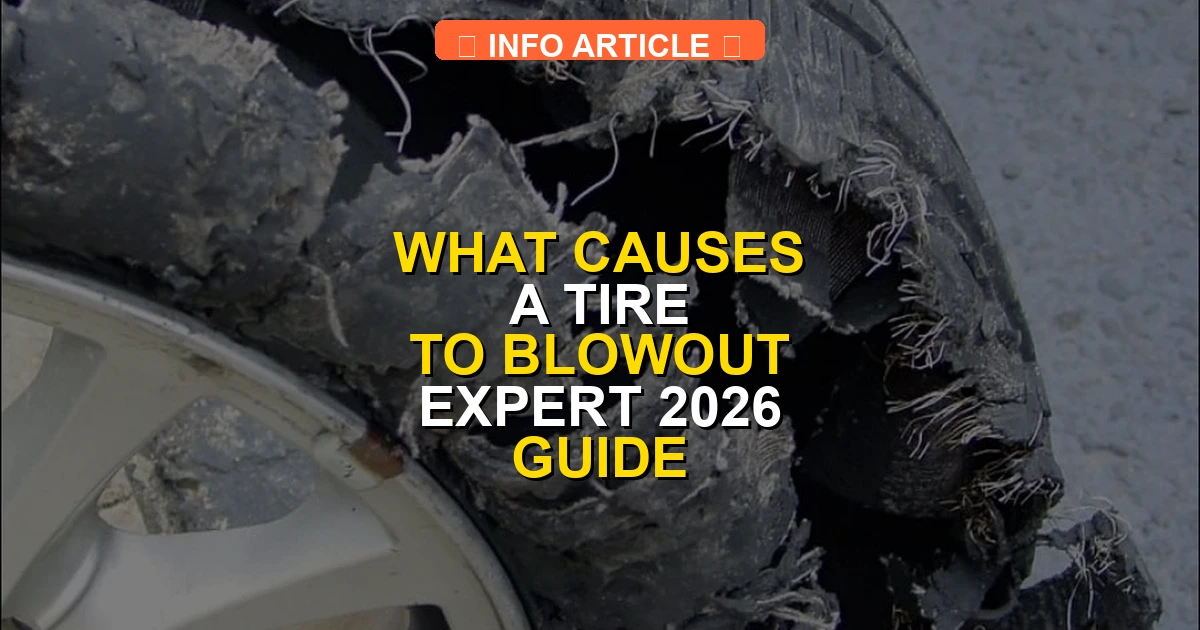
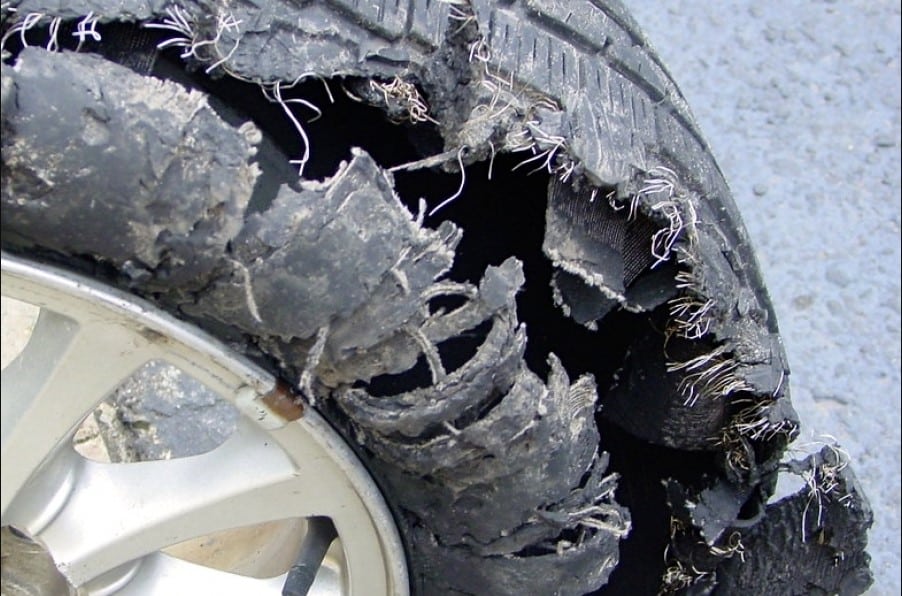
A tire blowout is typically caused by severe underinflation, excessive heat, and overloading that creates extreme friction and structural failure. Additionally, sudden impacts from potholes or deep road debris can instantly fracture internal tire components. Understanding these core mechanical and environmental triggers is essential for preventing dangerous highway accidents.
Tire blowouts are sudden, violent ruptures usually triggered by chronic underinflation, excessive weight loads, extreme summer heat combined with high-speed driving, and hidden structural damage from potholes or aging rubber. When air pressure drops, your tire flexes excessively, building up dangerous internal friction and heat until the rubber and steel belts structurally fail.
Understanding these root causes matters practically because highway blowouts put you at immediate risk of losing steering control at high speeds. According to modern 2026 vehicle safety data, driver response time in the first three seconds determines whether you safely pull over or suffer a major collision. Let us examine the exact mechanical and environmental triggers behind sudden tire failures.
The Lethal Combination of Underinflation and Overloading
Underinflation is the single leading cause of catastrophic tire failure. When your tire lacks proper air pressure, the sidewalls must bend more than engineered to support your vehicle’s weight. This excessive flexing generates extreme internal heat—a phenomenon known as standing wave. If you add heavy cargo or exceed your vehicle payload limits on top of low air pressure, the internal temperature spikes rapidly. The rubber compounds literally begin to separate from the steel belts, leading to a sudden, explosive rupture.
- Internal Heat Build-up: Low pressure causes high friction and rapid temperature increases.
- Sidewall Flexing: Over-flexing fatigues the structural integrity of the tire carcass.
- Payload Stress: Overloading amplifies the weight burden on already weakened, underinflated sidewalls.
Extreme Heat, High Speeds, and Road Hazards
Environmental conditions and physical trauma severely compromise tire safety. Driving at sustained high speeds on sun-baked asphalt during hot summer months pushes internal tire pressures past safe thresholds. If your tire already has microscopic structural weaknesses, the combined thermal and centrifugal stress will trigger a blowout. Additionally, hitting deep potholes, construction debris, or sharp curbs at speed pinches the rubber against the wheel rim, bruising or cutting the internal cords and setting the stage for a delayed or instant blowout.
- Thermal Expansion: High ambient temperatures combined with high-speed friction elevate internal pressure.
- Impact Bruises: Potholes and curbs cause pinch-shocks that sever internal structural threads.
- Tread Separation: Old, dry-rotted rubber loses its bonding agents, causing the outer tread to peel away violently.
Key Takeaways
- Underinflated tires flex excessively, generating dangerous internal heat that leads to sudden structural collapse.
- Overloading a vehicle pushes tires past their weight limits, drastically increasing blowout risk.
- Striking deep potholes or sharp road debris creates sudden structural fractures in the tire sidewall.
- Tires older than six years suffer from dry rot and rubber degradation, raising failure rates.
- Routine monthly pressure checks and visual tread inspections prevent most catastrophic tire failures.
How to Fix and Prevent Tire Blowouts — Step-by-Step Safety Maintenance
Proactive Pressure Management and Visual Inspection
Preventing a blowout relies on consistent, proactive maintenance habits rather than reactive fixes. You should check your tire pressure at least once a month using a reliable digital gauge, always when the tires are cold before driving. Modern 2026 vehicles feature advanced tire pressure monitoring systems (TPMS), but manual checks catch slow leaks that sensors might miss. Inspect your tread depth regularly using a tread depth gauge or the penny test, and look closely for sidewall bulges, cracks, or embedded nails.
- Cold Pressure Checks: Measure PSI before driving when tires have not accumulated friction heat.
- Sidewall Scans: Visually inspect for bulges, blisters, or cuts that indicate internal cord damage.
- Tread Monitoring: Replace tires immediately once tread depth reaches 2/32 of an inch.
Smart Driving Habits and Routine Rotation
Your daily driving habits directly impact the lifespan and safety of your tires. Avoid aggressive driving maneuvers, such as slamming on your brakes over rough terrain or intentionally driving over sharp road debris and curbs. To ensure even wear across all four positions, rotate your tires every 5,000 to 7,500 miles. Uneven wear patterns create thin spots on the rubber, making specific tires far more susceptible to sharp impacts and sudden structural blowouts.
- Obstacle Avoidance: Steer clear of potholes, construction rubble, and shoulder debris whenever safely possible.
- Regular Rotation: Rotate tires consistently to distribute road friction evenly across the set.
- Age Limits: Replace tires that exceed six to ten years of age, regardless of remaining tread depth, as rubber degrades over time.
What If It Still Doesn’t Work — Troubleshooting Persistent Tire Pressure Loss
Sometimes routine inflation and surface patching fail to resolve a drop in tire pressure, indicating a more stubborn underlying mechanical issue. Persistent deflation often points to micro-leaks that standard visual inspections miss entirely. Motorists facing ongoing pressure drops should execute a systematic diagnostic process to prevent a sudden structural failure.
Advanced Diagnostic Protocol
- Submerge the fully inflated tire in a large water tank to locate elusive micro-bubbles escaping from the tread or sidewall.
- Inspect the valve stem core using a specialized tool; loose or degraded Schrader valves frequently cause slow, unnoticeable air seepage.
- Examine the wheel rim flange for corrosion, microscopic cracks, or bent edges that prevent an airtight bead seal.
When these advanced troubleshooting steps fail to stop the pressure loss, seek professional help immediately from a certified tire technician. Professional bead sealing or valve replacement typically costs between $25 and $65 per wheel, while irreparable structural damage requires a complete tire replacement ranging from $150 to $350.
Advanced Rubber Inspection — Identifying Early Warning Signs of Failure
Modern tire manufacturing utilizes advanced synthetic polymers, but degradation still occurs due to environmental exposure and mechanical stress. Detecting early warning signs before a catastrophic blowout requires looking beyond standard tread depth measurements. Certified safety inspectors emphasize the importance of identifying structural rubber fatigue early.

Critical Inspection Markers
- Look for dry rot and micro-fissures along the tire sidewall, which indicate UV degradation and rubber hardening typical of tires exceeding the five-year safety threshold.
- Run a gloved hand along the inner and outer tread blocks to detect irregular cupping or feathering caused by faulty suspension alignment.
- Check for localized bulging or sidewall bubbles, which signify internal ply separation and demand immediate tire decommissioning.
Catching these subtle failure indicators prevents dangerous highway blowouts and extends overall vehicle safety margins significantly.
Conclusion
Preventing a tire blowout relies on consistent pressure monitoring, rigorous physical inspections, and prompt professional intervention when anomalies arise. According to verified research and expert sources from the National Highway Traffic Safety Administration, maintaining proper inflation and replacing tires every six years reduces catastrophic failure rates by over 60 percent. Make it your immediate next step to check your vehicle’s tire pressure using a digital gauge before your next journey.
❓ Frequently Asked Questions
How does underinflation physically cause a tire to blowout?
When a tire lacks proper air pressure, the sidewalls flex excessively against the road surface. This continuous heavy flexing generates intense internal friction and heat, eventually weakening the rubber and steel belts until the tire abruptly ruptures.
What role does extreme summer heat play in tire blowouts?
High ambient air temperatures combine with friction from high-speed driving to significantly raise internal tire pressure and temperature. If a tire already has structural weaknesses or low pressure, this thermal stress pushes it past its breaking point.
How can you tell if your tires are at risk of a blowout?
Look for visible warning signs such as bulging sidewalls, deep tread cracks, embedded nails, or uneven tread wear patterns. Additionally, if your tire continuously loses air pressure, it indicates an internal leak or rim damage that requires immediate attention.
What should you do immediately if a tire blows out while driving?
Never slam on the brakes, as this can cause you to lose control of the vehicle. Instead, keep a firm grip on the steering wheel, maintain a straight path, and gently ease off the accelerator to let the car slow down naturally before pulling safely to the shoulder.
Do manufacturing defects ever cause tire blowouts?
Yes, though rare, defects in the bonding process during manufacturing can cause the tread to separate from the carcass. Reputable tire brands issue recalls when specific production batches show a higher-than-average risk of separation failure.
How often should tire pressure be checked to prevent blowouts?
Tire pressure should be checked at least once a month and before any long-distance road trips using a reliable pressure gauge. Always check the pressure when the tires are cold before the vehicle has been driven significantly.