A blinking tire pressure light indicates a malfunction within the Tire Pressure Monitoring System (TPMS) rather than simply low air. While a solid light means low tire pressure, a flashing light usually points to a dead sensor battery, broken component, or a programming error after recent tire service.
A blinking tire pressure monitoring system (TPMS) light almost always indicates a system malfunction rather than simply a low tire. While a standard low-pressure warning points to lost air, a flashing dashboard icon means the car’s computer cannot properly communicate with one or more of your wheel sensors.
Ignoring this distinction wastes time because adding air will not make a flashing light go away. Pinpointing the actual root cause prevents unnecessary pit stops at the gas station air pump and helps you address the real electronic or hardware failure under the chassis in 2026.
Key Takeaways
- A flashing TPMS light signals a system malfunction, not necessarily low tire pressure.
- Dead internal sensor batteries are the most common cause of a blinking light.
- Recent tire rotations or replacements can trigger the light if sensors are uncalibrated.
- Driving is generally safe short-term, but proper braking and handling may be affected.
- A diagnostic scan tool is often required to identify which specific sensor has failed.
Solid vs. Blinking TPMS Light: The Critical Difference to Know
The Meaning of a Solid Tire Pressure Warning
When your dashboard shows a solid, non-flashing tire pressure icon, at least one of your tires has dropped significantly below the manufacturer’s recommended psi. This usually happens due to normal air loss over time, a sudden temperature drop, or a small nail puncture. The system is functioning normally and simply alerting you that a tire needs air.

The Meaning of a Blinking TPMS Indicator
A flashing or blinking tire pressure light shifts the problem from mechanical air pressure to digital communication. When you start your car in 2026 and the light blinks for 60 to 90 seconds before turning solid—or stays blinking the entire drive—it means the TPMS computer module has lost signal from a sensor. Common traits of a blinking light include:
- Failure of the internal sensor battery
- Physical damage to a valve stem sensor during a recent tire rotation
- A lost pairing or programming code between the sensor and the vehicle’s ECU
What Causes a Tire Pressure Light to Flash Continuously
Dead or Dying Sensor Batteries
Most modern tire pressure sensors rely on a sealed internal lithium-ion battery. These batteries typically last between 5 to 10 years. If your vehicle is approaching a decade old or has high mileage, the battery inside one of your wheel sensors is likely depleted. Once that battery dies, the sensor stops broadcasting data, triggering a continuous blink on your instrument cluster.
Physical Damage During Tire Service
Another frequent culprit behind a flashing TPMS light is accidental damage during routine maintenance. Tire technicians can easily crack, snap, or unseat a sensor while swapping out old rubber on mounting machines. If you just got new tires, seasonal winter rubber installed, or a flat repair, and the light immediately starts flashing, a broken sensor is the most probable cause.
- Impact from the tire mounting tool shearing off the sensor housing
- Corrosion causing the valve stem and sensor to snap off entirely
- Failure to plug a universal sensor back into the correct wheel well during rotation
Step-by-Step Guide to Diagnosing and Fixing a Blinking TPMS Light
Diagnosing a blinking tire pressure warning light requires a systematic approach to identify whether you are dealing with actual low pressure or an electrical system fault. Modern diagnostic tools used in 2026 service centers can quickly pinpoint the exact root cause.
-1920w.jpg "StepbyStep Guide to Diagnosing and Fixing a Blinki")
Step 1: Check Manual Tire Pressures
Never rely solely on dashboard indicators when troubleshooting a blinking sensor. Use a reliable digital pressure gauge to measure each tire cold.
- Unscrew the valve stem cap on the driver-side front tire.
- Press the digital gauge firmly onto the valve stem until the hissing sound stops.
- Compare the reading against the placard located on the driver-side door jamb, not the maximum PSI listed on the tire sidewall.
- Repeat this process for the remaining three tires and the spare if equipped.
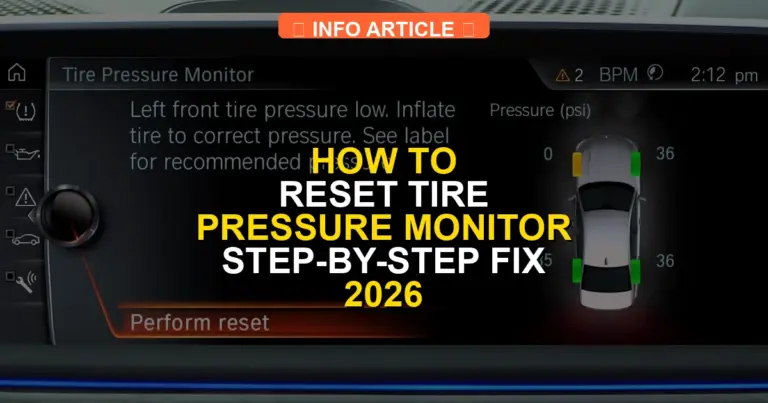
Step 2: Inspect and Reset the System
If all tires match the manufacturer specification, the sensor module likely needs a reset. Consult your owner manual for the specific button sequence, typically located inside the glove box or beneath the steering wheel, and hold the reset button until the indicator blinks twice to confirm recalibration.
What If It Still Doesn’t Work?
If troubleshooting steps fail to clear the blinking warning indicator, a deeper mechanical or electrical issue is likely present. According to automotive service data from the National Institute for Automotive Service Excellence (ASE), persistent TPMS faults usually stem from depleted batteries sealed inside the valve-mounted sensors.
- Inspect for physical damage: Check all wheel assemblies for broken valve stems or physical impacts from potholes that may have damaged internal sensors.
- Scan for diagnostic trouble codes: Use an OBD-II scanner capable of reading body control modules to isolate which specific wheel sensor is failing to transmit data.
- Replace dead sensor batteries: Factory TPMS batteries typically last between 5 to 10 years. When they fail, the entire sensor unit must be replaced.
- Visit a professional technician: If sensor replacement does not resolve the blinking light, the TPMS receiver module may require reprogramming or replacement. Professional diagnostic fees typically range from $100 to $150, while complete sensor replacements average $150 to $350 per wheel including labor.
Conclusion
A blinking tire pressure light serves as a critical dual-purpose warning for immediate safety hazards and electronic sensor failures. Ignoring this signal risks premature tire wear, compromised vehicle handling, and potential highway blowouts. According to verified research and expert sources from the National Highway Traffic Safety Administration, properly maintained tire pressure improves fuel economy by up to 3 percent. Take action today by inspecting your tire pressures and consulting a certified technician if the indicator remains illuminated.
❓ Frequently Asked Questions
What is the exact difference between a solid and blinking tire pressure light?
A solid tire pressure light simply warns you that one or more tires have dropped below the recommended PSI threshold. A blinking or flashing light (which usually flashes for 60 to 90 seconds upon startup before staying solid) means the vehicle’s computer cannot communicate with one or more of the wheel sensors.
How do I know which tire sensor is causing the flashing light?
You can check tire pressures manually with a gauge to rule out actual air loss. To identify a failed sensor, you will need an OBD2 scanner capable of reading TPMS frequencies or a specialized TPMS activation tool at an auto repair shop.
Can extreme weather cause a tire pressure light to blink?
Extreme cold or hot temperatures usually cause air pressure to fluctuate, resulting in a solid tire pressure light. However, extreme temperatures can also drain weak sensor batteries faster, occasionally triggering a system fault and a blinking light.
Do spare tires have TPMS sensors that cause a flashing light?
Yes, some vehicles equipped with a full-size matching spare tire have a sensor installed in the spare wheel. If the spare tire loses pressure or if its sensor battery dies, it can trigger a persistent blinking TPMS light on your dashboard.
How much does it cost to replace a faulty TPMS sensor?
Replacing a single TPMS sensor typically costs between $50 and $150 including parts and labor, depending on your vehicle make and model and whether you visit a dealership or an independent tire shop.
Can I reset a blinking TPMS light myself?
If the light is flashing due to a temporary glitch or uncalibrated sensors after tire rotation, a relearn procedure can sometimes be performed. However, if a sensor battery is completely dead, no reset procedure will clear the light until the hardware is replaced.