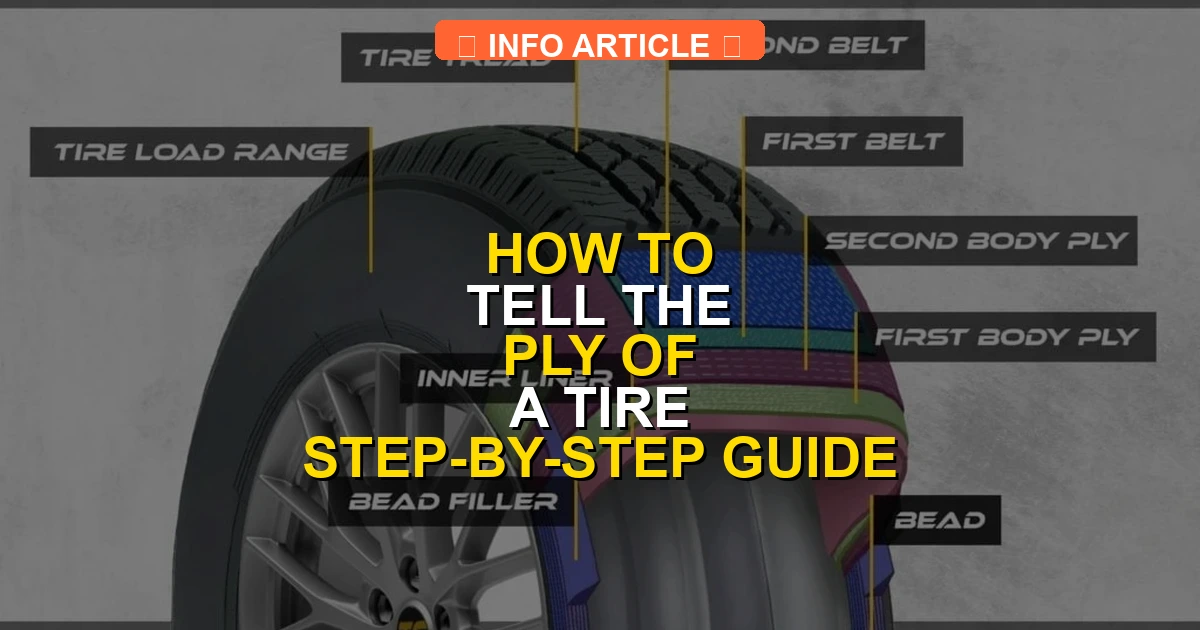
Knowing how to tell the ply of a tire requires inspecting the specific text printed on the tire sidewall. Modern tires list exact material layers instead of traditional ply counts, while heavy-duty tires use letter-based load range ratings to indicate strength.
You can find your tire’s ply information by reading the fine print molded directly into the outer sidewall. Modern tire manufacturing in 2026 relies heavily on standardized sidewall codes rather than literal physical layer counts, meaning you need to know exactly where to look and what abbreviations to translate.
Knowing your tire’s ply construction matters practically because it dictates your vehicle’s true load-carrying capacity and puncture resistance. If you haul heavy loads or navigate rough terrain, misreading these sidewall markings can lead to overloaded tires, excessive heat buildup, and dangerous structural failures on the highway.
Key Takeaways
- Locate the fine print on the tire sidewall showing material composition.
- Modern radial tires list individual layers of polyester, steel, and nylon.
- Traditional ply counts have been replaced by standardized load range letters.
- Load Range letters from A to G indicate increasing weight capacity and PSI.
- Always rely on maximum pressure and load limits rather than literal ply counts.
What Causes Confusion When Reading Tire Ply Markings and Ratings
The Shift From Literal Layers to Load Ranges
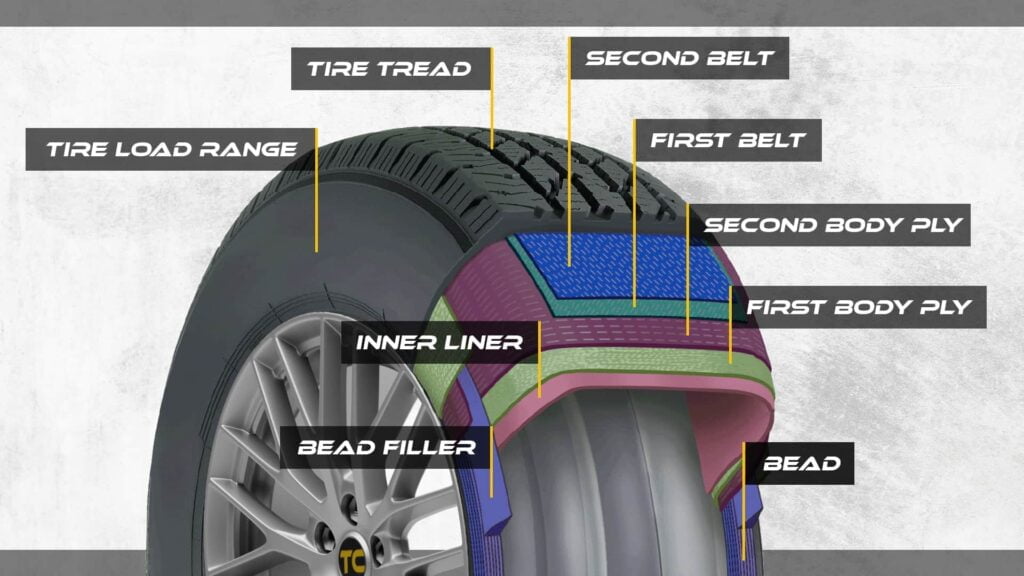
Drivers often get confused because older tires used literal cotton or nylon fabric layers counted as ply ratings. Today, manufacturers use high-strength materials like aramid, steel, and advanced polyester. A tire with only two actual body plies can easily match the strength of an older ten-ply tire. That is why the industry transitioned to letter-based Load Ranges instead of counting physical layers.
Interpreting Obscure Manufacturer Terminology
Another major hurdle is the dense block of text listing the actual material composition. You will see phrases like Sidewall 2 Plies: Polyester tucked away near the rim flange. Drivers often mistake these specific material disclosures for the overall load capacity of the tire. Understanding that material plies differ from structural load ratings clears up much of this confusion instantly.
Master Tire Ply Identification in 6 Simple Steps
Understanding how to determine the ply rating or construction of a tire is crucial for vehicle safety, load management, and proper maintenance. While modern radial tires rarely use literal layers of cotton or nylon plies that match the physical count, manufacturers use standardized labeling to indicate structural strength and load capacity. This comprehensive walkthrough will teach you how to read sidewall markings, decode industry standards, and accurately determine the ply equivalent of any passenger or truck tire.
Step 1: Locate the Sidewall Information Panel
What you need: A clean rag, a flashlight, and your vehicle parked on a flat surface with the steering wheel turned outward to expose the front tires.
Instructions: Walk to the side of the vehicle and inspect the outer sidewall of the tire. You will need to wipe away accumulated brake dust, road grime, and mud to clearly see the raised lettering molded into the rubber. Look for the Department of Transportation (DOT) serial number and the standardized Tire Information block, which is usually located near the outer rim flange. This standardized area contains all critical manufacturing data, including load index ratings, size designations, and structural ply information.
Pro Tip: Always check the outer sidewall first, but remember that some commercial or heavy-duty truck tires have secondary load data stamped exclusively on the inner sidewall facing the vehicle chassis.
Step 2: Read the Modern Ply Rating and Construction Label
What you need: Good lighting and your vehicle owner’s manual or tire placard (located inside the driver-side door jamb) for cross-referencing.
Instructions: Scan the sidewall for explicit text indicating the actual internal layers of fabric and steel. On traditional and light truck (LT) tires, you will find a stamped legend that explicitly lists the composition, such as “Tread Plies: 2 Polyester + 2 Steel + 1 Nylon” and “Sidewall Plies: 2 Polyester.” This literal breakdown tells you the exact number of layers wrapping around the internal beads. Modern passenger car tires almost universally feature radial construction, meaning the ply count refers strictly to these internal structural mats rather than old-school bias-ply designs.
Pro Tip: Do not confuse the total ply material count with the historic “Ply Rating” system, which is an older index of overall tire strength rather than a literal count of fabric layers.
Step 3: Decode the Load Range Letter
What you need: A reference chart for Light Truck (LT) tire load ranges (such as Load Range C, D, E, or F).
Instructions: If you are working with a light truck, trailer, or heavy-duty utility vehicle tire, look for the Load Range letter designation immediately following the tire size (e.g., LT265/75R16 E). The letter ‘C’ historically corresponds to a 6-ply rating, ‘D’ to an 8-ply rating, ‘E’ to a 10-ply rating, and ‘F’ to a 12-ply rating. Even though a modern Load Range E tire may only contain two or three actual physical body plies of polyester or steel, its structural strength and maximum inflation pressure match the heavy load capacity of an old-fashioned 10-ply bias tire.
Pro Tip: Never mix different load range letters on the same axle, as this will create severe handling imbalances and dangerous weight distribution issues under heavy loads.
Step 4: Analyze the Maximum Pressure (PSI) Rating
What you need: A digital tire pressure gauge and the sidewall data.
Instructions: Look closely at the fine print on the sidewall for the maximum permissible inflation pressure, typically written as “MAX LOAD XXXX lbs at XX PSI (COLD).” The maximum PSI rating serves as a reliable secondary indicator of the tire’s ply equivalent and overall carcass stiffness. Passenger tires generally max out at 35 or 44 PSI, whereas higher ply-equivalent truck tires (like 10-ply / Load Range E) are rated for 80 PSI or higher. Higher pressure ratings require stronger internal ply structures to safely contain the compressed air.
Pro Tip: Always measure and adjust tire pressure when the tires are completely cold—meaning the vehicle has been driven less than a mile or sat parked for at least three hours.
Step 5: Inspect the Inner Liner and Bead Area (If Dismounted)
What you need: A tire mounting machine or a bright inspection flashlight for loose or dismounted tires in a shop setting.
Instructions: If the tire is removed from the wheel rim, you can physically inspect the inner airtight liner and bead area. Look at the stamped factory paper tags or molded barcode labels on the inner carcass. Manufacturers often print the exact internal ply makeup, denier thickness, and material cord composition directly onto the unvulcanized inner liner during production. You can also physically count the distinct layers of steel belts by looking at the cut edge of the tread area if the tire has been sectioned or damaged.
Pro Tip: Be cautious when inspecting dismounted tires for structural damage; exposed ply cords, rust, or fraying inside the casing mean the tire is structurally compromised and must be scrapped.
Step 6: Verify Passenger Car (P-Metric) vs. Euro-Metric Standards
What you need: Basic understanding of tire sizing nomenclature (e.g., P-metric vs. Standard Load / Extra Load).
Instructions: For standard passenger vehicles, check if the size begins with a “P” (e.g., P215/65R15) or has no prefix at all (Euro-metric like 215/65R15). Standard passenger tires with a “P” prefix utilize a standardized industry formula to calculate load capacity based on a traditional 4-ply rating baseline. If the tire is marked “EXTRA LOAD” (XL) or “REINFORCED,” it features internal ply cords constructed from higher-tensile materials or additional denier density to support heavier loads and higher speeds than standard load passenger tires of the exact same physical dimensions.
Pro Tip: Always replace original equipment tires with ones that match or exceed the original load index and ply equivalent specified on the vehicle manufacturer’s door placard.
✅ Final Checklist
- Verified the tire size and load range letter (if applicable) on the outer sidewall
- Decoded the literal ply material breakdown (steel, polyester, nylon) from the sidewall text
- Cross-referenced the load index with the vehicle door placard specifications
- Confirmed the maximum cold PSI rating aligns with the intended towing or hauling weight
- Ensured matching ply ratings and load ranges are installed across all wheels on the same axle
Important Notes:
- Always prioritize safety: Driving on mismatched ply ratings or overloaded tires can lead to catastrophic tread separation and loss of vehicle control.
- Seek professional help from a certified tire technician if sidewall text is worn away, unreadable, or if you are upfitting a commercial vehicle with custom heavy-duty towing requirements.
- Estimated time: 10 to 15 minutes. Cost: Free (requires only visual inspection and basic tools).
How to Find the Ply Construction and Material Layers on Your Sidewall
Locating the Composition Text Block
To find your tire’s actual ply breakdown, grab a flashlight and inspect the lower portion of the sidewall near the wheel rim. Look for a molded block of text explicitly labeled Tread Plies or Sidewall Plies. This section lists the exact number and type of material layers buried beneath the rubber.

- Look for abbreviations like PE for polyester or NY for nylon.
- Check for steel belt disclosures, typically listed as Steel.
- Locate the exact layer count paired with each material type.
Decoding the Structural Breakdown Example
If you read a stamping that says Sidewall 2 Plies Polyester, Tread 2 Plies Polyester + 2 Steel + 1 Nylon, you are looking at the literal structural recipe of your tire. The two polyester plies handle flex in the sidewall, while the steel and nylon layers protect the tread area from punctures and high-speed distortion. Use this precise text block when you need to match replacement tires to heavy-duty towing applications.
How to Decode Load Range Letters as Modern Ply Equivalents
Modern tire manufacturing relies heavily on load range letters rather than physical layers of fabric. The Tire and Rim Association establishes these standards to indicate the maximum load-carrying capacity and inflation pressure of a tire. Understanding how these letters translate to traditional ply ratings helps vehicle owners make informed replacements in 2026.
Decoding Passenger and Light Truck Load Ranges
Passenger car tires typically use standard load or extra load designations, whereas light truck tires utilize letter grades ranging from B to L. Higher letters correspond to a heavier construction and greater pressure tolerance.
- Locate the load range letter on the tire sidewall, usually positioned right after the size description like LT265/75R16E.
- Cross-reference the letter with industry standards. For example, Load Range B historically equates to a 4-ply rating.
- Identify Load Range C tires, which represent a 6-ply equivalent suitable for medium-duty utility trailers and lighter off-road trucks.
- Check Load Range D and E ratings, which equate to 8-ply and 10-ply equivalents respectively, designed for heavy towing and commercial applications.
Interpreting Numerical Ply Ratings on Heavy-Duty Tires
Heavy-duty commercial and agricultural tires often spell out the literal construction details on the sidewall. Manufacturers frequently print statements like “Tread 2 Plies Steel + 2 Plies Polyester” alongside a maximum load rating. According to the Rubber Manufacturers Association, relying solely on the physical ply count is outdated because modern high-tensile aramid and steel fibers deliver superior strength with fewer actual layers. Always verify the maximum load capacity in pounds alongside the ply rating.
What If Your Tire Lacks Clear Ply Information or Specifications
Faded sidewalls, retreaded commercial tires, or specialized off-road equipment frequently lack clear ply information or standard load range indicators. When visual inspection fails, drivers must utilize alternative verification methods to ensure safety and compliance.
Fallback Steps for Obscured Tire Markings
- Clean the tire thoroughly using a stiff bristle brush and automotive soap to reveal obscured sidewall text or molded stamping codes.
- Locate the Department of Transportation code and brand name, then contact the manufacturer’s technical customer service hotline for direct specification sheets.
- Consult the vehicle’s original equipment placard located inside the driver-side door jamb for minimum required load indexes.
- Visit a certified commercial tire dealer or professional service center to have the tire evaluated on a mounting machine where internal construction can be assessed.
Seeking professional assistance at a certified tire shop typically costs between $0 and $30 for a comprehensive safety inspection and specification lookup. Professional evaluation ensures heavy-duty towing setups meet strict 2026 Department of Transportation safety guidelines.
Conclusion
Determining the true ply equivalent of a tire requires looking past traditional fabric counts to read modern load range letters, sidewall markings, and vehicle placards. Accurately matching your tire’s structural capacity prevents dangerous blowouts and premature wear under heavy loads. According to verified research and industry safety experts from the National Highway Traffic Safety Administration, maintaining proper tire load ratings is critical for vehicle stability. Your actionable next step for 2026 is to inspect your vehicle’s sidewalls today and cross-reference your tire specifications against the official door placard.
❓ Frequently Asked Questions
How do I tell the difference between actual ply count and load range?
Actual ply count details the physical sheets of rubberized fabric and steel inside the tire. Load range is an alphabetical rating system that indicates the tire’s overall strength and maximum load capacity compared to older bias-ply standards.
Why do modern tires list materials like polyester and steel instead of a ply number?
Radial tires use different materials for different functions, such as flexible polyester in the sidewalls and rigid steel belts under the tread. Listing each material individually gives a much more accurate picture of tire construction than a single aggregate number.
What is the equivalent of a 10-ply tire in modern lettering?
A traditional 10-ply rating is directly equivalent to a Load Range E tire in modern metric sizing. Both designations indicate that the tire is built to handle heavy commercial or towing loads at elevated air pressures.
Can I mix tires with different ply ratings or load ranges on the same vehicle?
Mixing tires with different load ranges or ply constructions can cause handling instability and uneven wear. It is always recommended to match the exact load index and rating specified by your vehicle manufacturer.
Where can I find the maximum pressure and load capacity for my tire?
The maximum load limit and corresponding cold inflation pressure are stamped directly on the tire sidewall near the bead. You should also check the tire placard located on the driver-side door jamb for vehicle-specific requirements.
Do passenger car tires have ply ratings?
Standard passenger car tires usually display standard load or extra load (XL) designations rather than heavy-duty ply ratings. Ply and load range markings are primarily found on light truck, trailer, and commercial vehicle tires.