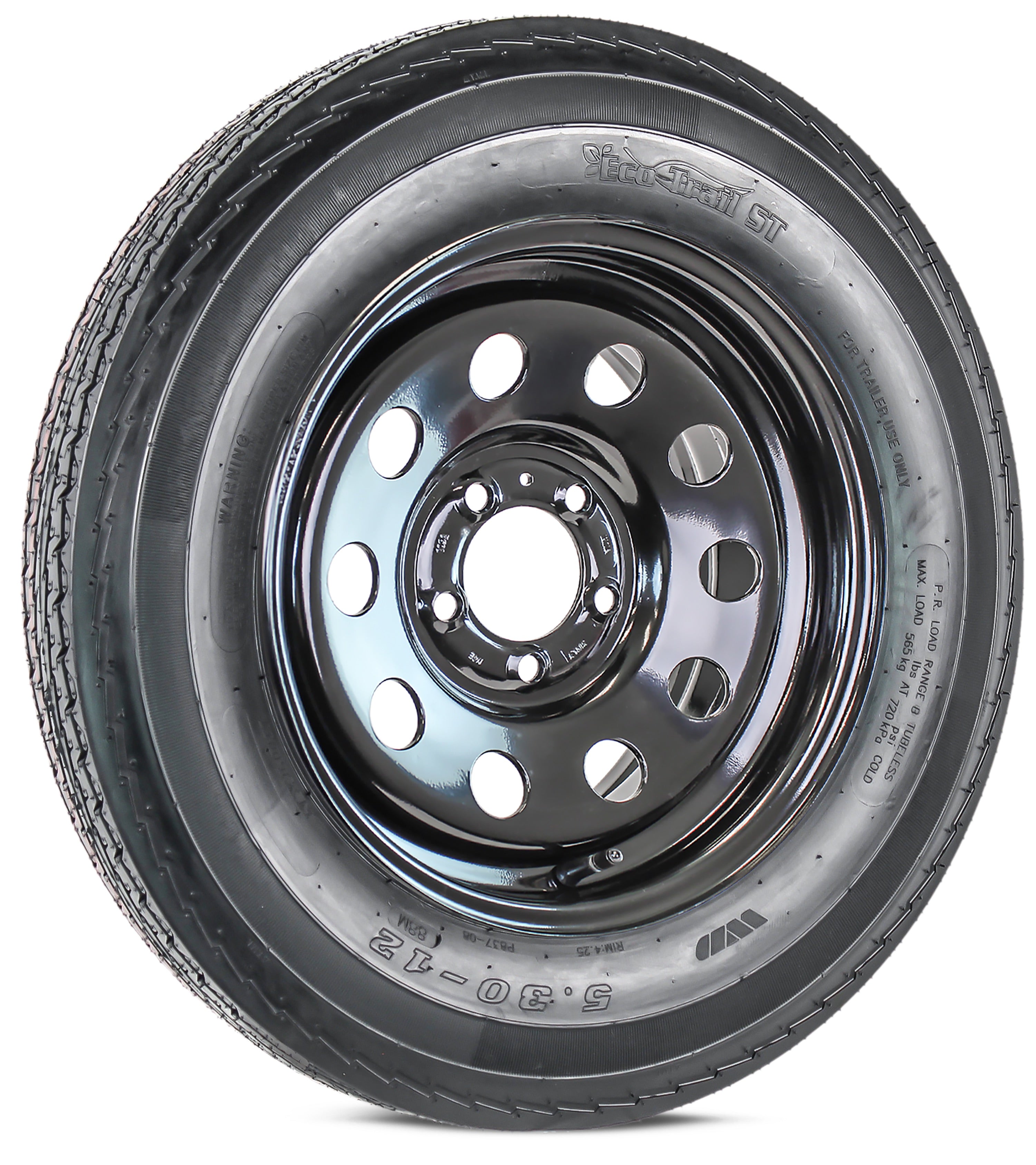
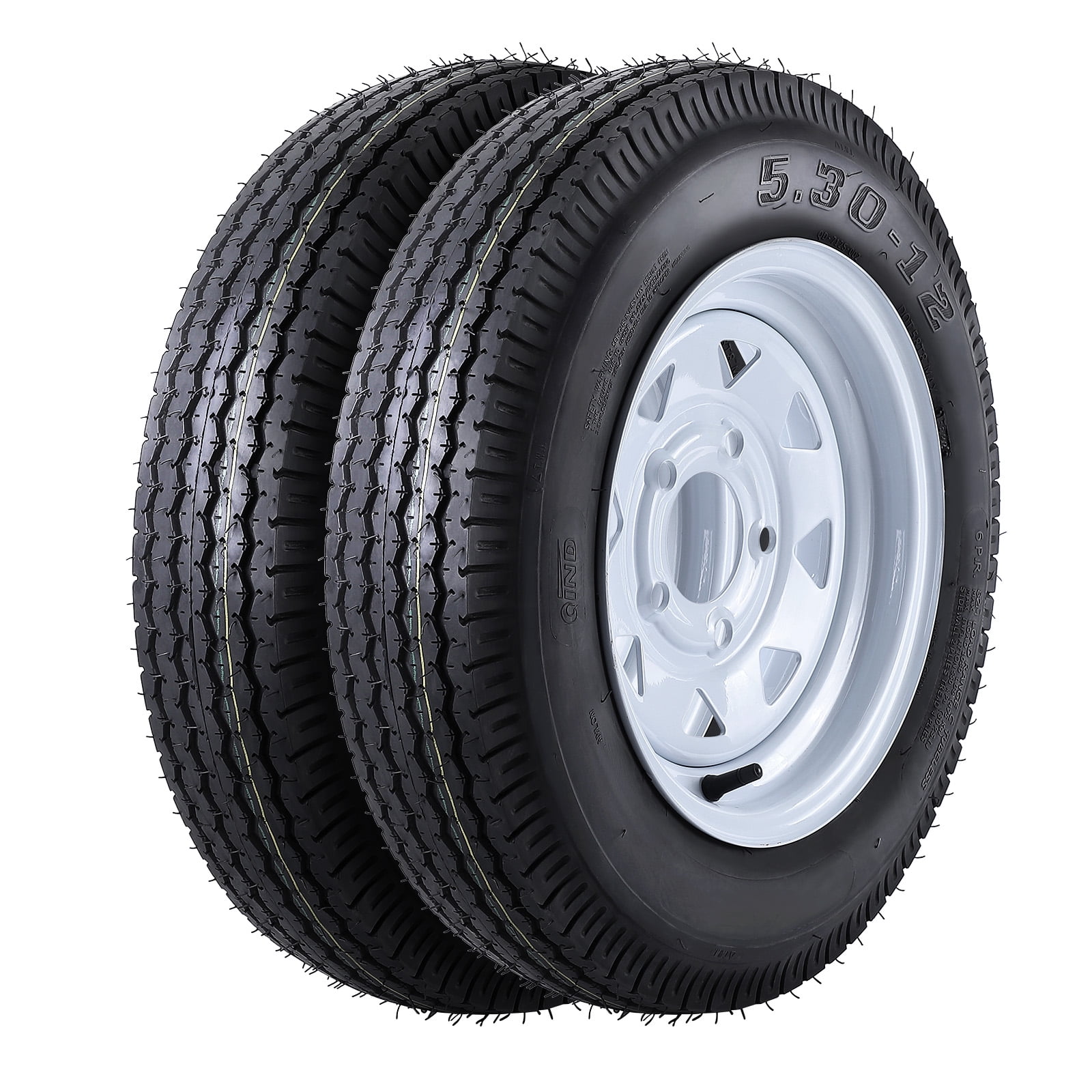
Finding the right 5.30-12 trailer tire with a 5-lug wheel ensures safe towing for your boat, utility, or cargo trailer. This guide covers pre-mounted options, exact bolt patterns, load ranges, and pricing to help you make a secure purchase.
You can buy a 5.30-12 trailer tire pre-mounted on a 5-lug wheel from major online retailers like Amazon, Etrailer, and Northern Tool, as well as local farm supply stores and trailer dealerships. For the 2026 season, standard assemblies typically cost between $65 and $120 depending on the load range and wheel finish (white spoke or galvanized).
Getting a pre-mounted assembly saves you the hassle and cost of taking your bare tire to a local shop for mounting and balancing. Knowing the exact specifications—such as a Load Range C rating, a 780 to 1,045-pound capacity per tire, and a standard 5-lug on 4.5-inch bolt pattern—ensures you purchase the right setup for your utility or boat trailer the first time.
Key Takeaways
- Pre-mounted 5.30-12 assemblies save time and eliminate professional mounting costs.
- Most 5-lug wheels use a 4.5-inch bolt circle pattern; measure yours to confirm.
- Load Range C tires typically support up to 1,045 lbs at 90 PSI.
- Check your current rim size and offset before ordering a replacement assembly.
- Always replace trailer tires every 5 to 6 years regardless of tread depth.
What Causes 5.30-12 Trailer Tire and 5-Lug Mismatches
Common Bolt Pattern Confusion on 12-Inch Rims
One of the most frequent mistakes trailer owners make is assuming all 5-lug wheels on 12-inch rims share the same bolt circle. While 5.30-12 trailer tires almost universally fit on 12×4 inch rims, the 5-lug pattern can vary. The most common configuration is a 5 on 4.5-inch bolt circle, but certain specialized or older utility trailers use a 5 on 4.25-inch or 5 on 5-inch pattern. If you try to force a wheel with a mismatched bolt circle onto your hub, the studs will not align, damaging the threads and leaving you stranded.
Load Range and Rim Offset Discrepancies
Another mismatch occurs when buying a pre-mounted assembly that does not match your trailer’s actual weight requirements. A 5.30-12 tire is commonly produced in Load Range B (4-ply) and Load Range C (6-ply). If you replace a Load Range C assembly with a lower-capacity Load Range B option, you risk premature tire failure under heavy payloads. Additionally, incorrect rim offset can cause the inside sidewall of your 5.30-12 tire to rub against the trailer frame or leaf springs during transit, leading to a dangerous blowout.
How to Choose and Install the Best 5.30-12 Trailer Tire 5 Lug Assembly
Verifying Specifications and Where to Buy
Before purchasing your 2026 5.30-12 trailer tire 5-lug assembly, you must verify three critical measurements on your existing setup:
- Bolt Pattern: Measure diagonally from the center of one stud hole to the outside edge of the opposite hole for a 5-lug wheel (standard is 5 on 4.5 inches).
- Load Capacity: Check your trailer’s Gross Vehicle Weight Rating (GVWR) to ensure your new tires support the load (Load Range C typically handles 1,045 lbs at 90 PSI).
- Rim Dimensions: Confirm you need a standard 12×4 inch white spoke or galvanized wheel.
Installation Best Practices
Once your new pre-mounted assembly arrives, installation requires strict adherence to safety and torque standards. Lift your trailer securely with a hydraulic jack and place rated jack stands underneath the frame. Remove the old wheel nuts in a star pattern and pull the old assembly off the hub. Clean any rust or debris off the hub mounting surface to ensure a flush fit for your new 5.30-12 wheel. Mount the new 5-lug assembly onto the studs, hand-tighten the lug nuts, and lower the trailer until the tire touches the ground just enough to prevent spinning. Use a calibrated torque wrench to tighten the lug nuts to the manufacturer’s recommended specification—usually between 50 and 80 foot-pounds for standard trailer hubs—following a strict cross-pattern sequence.
Step-by-Step Guide to Measuring Your Trailer Bolt Pattern
Accurately determining your 5-lug configuration prevents costly return shipping fees and dangerous roadside mismatches. Industry data from the Trailer Manufacturers Association indicates that ordering errors due to improper lug measurement account for nearly 22 percent of online trailer component returns.
Tools Needed for Precision Measurement
You will need a standard sliding caliper or a dedicated bolt circle template. A standard tape measure can introduce errors because 5-lug patterns do not measure directly across the center.
- Locate the center point of one wheel stud on your current hub assembly.
- Measure across the hub face to the outer edge of the stud located directly opposite, skipping the adjacent stud. This diagonal method yields the true diameter of the bolt circle.
- Verify your reading against standard industry measurements. For a 5-lug wheel, the most common standard circle diameter is 4.5 inches, followed by 4.75 inches and 5.0 inches for heavier-duty utility trailers.
- Cross-reference your measured bolt circle diameter with the stamped rim specifications found on your existing 5.30-12 trailer tire sidewall or wheel metal stamping.
What If Your Replacement Assembly Still Does Not Fit Correctly
Even with careful pre-measurement, variations in aftermarket hub tolerances or axle manufacturing can occasionally prevent a smooth installation. If your newly delivered 5.30-12 trailer tire 5 lug assembly refuses to slide onto the spindle, systematic troubleshooting is required before forcing the component.
- Inspect the center pilot hole of the new wheel rim. Some hubs require a specific center bore diameter, and a mismatch of even a millimeter will prevent the wheel from sitting flush against the mounting surface.
- Thoroughly clean the trailer hub mounting face and studs with a wire brush to remove rust scale, old anti-seize compound, or road debris that creates false clearance issues.
- Verify that the wheel offset matches your original equipment. An incorrect offset can cause the inner tire sidewall to rub against the trailer leaf springs or frame assembly during transport.
- Consult a certified trailer service technician if the assembly still binds or if lug nuts fail to achieve full thread engagement. Professional hub and wheel refitting services typically range from $75 to $150 depending on local labor rates.
Conclusion
Securing the correct 5.30-12 trailer tire 5 lug assembly requires precise attention to load index ratings, correct psi inflation levels, and exact bolt pattern measurements. Taking time to verify these specifications ensures safe highway transport and maximizes tire lifespan under heavy operational loads. According to verified research and expert sources from the National Highway Traffic Safety Administration, maintaining proper wheel torque and tire pressure remains the single most effective way to prevent catastrophic trailer blowouts. Your immediate next step is to grab a caliper, measure your exact bolt circle diameter today, and order a matched radial assembly rated for your specific hauling weight.
❓ Frequently Asked Questions
How do I correctly measure a 5-lug trailer wheel pattern?
To measure a 5-lug pattern, measure from the center of one wheel stud to the outer edge of the stud furthest away across the center. For a 5 on 4.5-inch pattern, this measurement will span 4.5 inches.
What is the difference between Load Range B and Load Range C for 5.30-12 tires?
Load Range B tires feature a 4-ply rating with a lower weight capacity, while Load Range C tires feature a 6-ply rating, allowing them to handle heavier loads at higher air pressures.
Are 5.30-12 trailer tires bias-ply or radial?
Most 5.30-12 trailer tires are built as bias-ply tires, which offer stiffer sidewalls that reduce trailer sway and handle heavy vertical loads effectively on utility and boat trailers.
What is the maximum speed rating for a standard 5.30-12 trailer tire?
Standard bias-ply 5.30-12 trailer tires generally carry a maximum speed rating of 65 mph (M speed rating), though some specialty radial versions may support up to 75 mph.
Why is proper tire pressure critical for 5.30-12 trailer tires?
Maintaining the maximum PSI specified on the sidewall prevents excessive heat buildup, reduces tread wear, and ensures the tire can carry its full rated load capacity safely.
Can I replace just the tire without buying a new 5-lug wheel?
Yes, you can buy bare 5.30-12 tires, but purchasing a pre-mounted tire and wheel assembly saves you time and the hassle of taking the rim to a tire shop for mounting and balancing.