Maintaining optimal tire pressure is not merely a recommendation; it is a fundamental aspect of vehicle safety, performance, and efficiency. Despite its critical importance, many drivers remain uncertain about where to locate their vehicle’s specific tire pressure recommendations (PSI) or how to interpret this crucial information correctly. This comprehensive guide for 2026 will expertly detail all authoritative sources for finding your vehicle’s correct PSI, distinguish between critical specifications, clarify common misconceptions, and equip you with the knowledge to ensure your tires are always perfectly inflated for a trusted and reliable drive.
Understanding Tire Pressure (PSI): Why Accurate Inflation Is Critical
In the realm of vehicle maintenance, few factors are as universally critical yet frequently overlooked as proper tire inflation. PSI, or Pounds per Square Inch, represents the internal air pressure within your tires, acting as a pivotal performance metric. This seemingly simple number dictates much about your vehicle’s operational capabilities and safety profile. As an expert with over 15 years in automotive diagnostics and maintenance, I cannot overstate the importance of adhering to manufacturer-specified PSI.
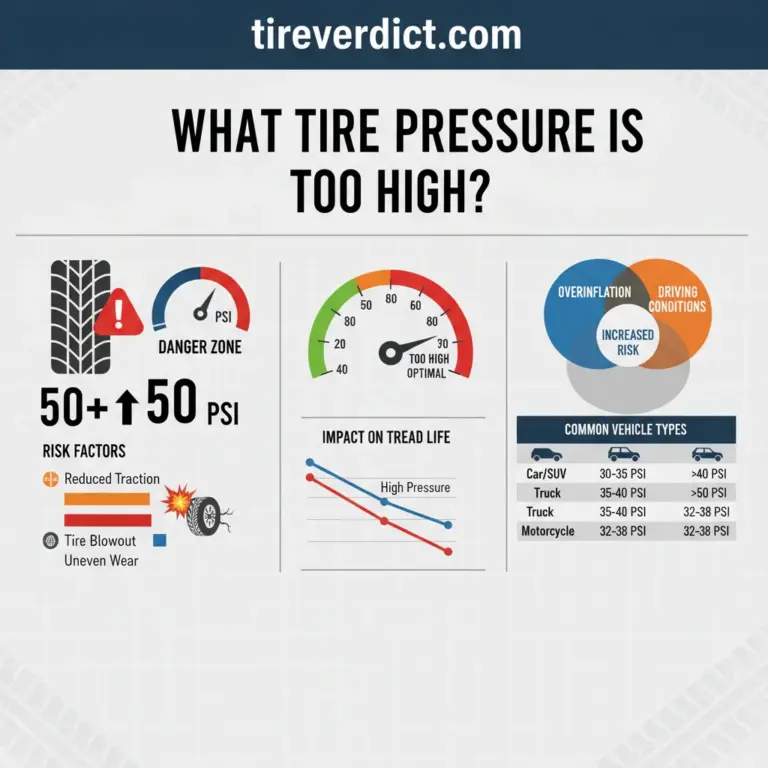
Incorrect tire pressure, whether under-inflation or over-inflation, directly impacts multiple facets of vehicle operation. Under-inflated tires lead to increased rolling resistance, premature wear on the outer edges, and excessive heat buildup, significantly escalating the risk of a catastrophic blowout. Research indicates that a vehicle with 25% underinflated tires may experience a 10% reduction in fuel economy and significantly increased braking distances, compromising overall safety and driver control. Conversely, over-inflation results in a stiffer ride, reduced tire contact patch, accelerated wear down the center of the tread, and diminished traction, particularly in adverse weather conditions.
Beyond immediate safety concerns, maintaining the correct PSI offers substantial economic benefits. Proper inflation contributes directly to improved fuel efficiency and extended tire longevity. The U.S. Department of Energy estimates that keeping tires properly inflated can improve gas mileage by up to 3%, translating to tangible savings at the pump. A study by the NHTSA (National Highway Traffic Safety Administration) indicated that properly inflated tires can save up to 11 cents per gallon on fuel. Neglecting tire pressure can lead to premature tire replacement, costing drivers hundreds, if not thousands, over the vehicle’s lifetime. Furthermore, NHTSA data suggests tire-related crashes contribute to approximately 11,000 traffic incidents annually, underscoring the severe liabilities and risks associated with improper tire care.
To ensure accurate readings, it’s crucial to measure what is known as ‘cold inflation pressure’. This refers to the tire pressure before a vehicle has been driven more than a mile, or after it has been sitting idle for at least three hours. This standard ensures that heat generated from driving, which artificially increases tire pressure, does not skew your measurements, providing a reliable baseline for optimal performance and a trusted driving experience.
Primary Locations for Finding Your Vehicle’s Recommended Tire PSI
Locating your vehicle’s specific recommended tire pressure is the first and most crucial step towards proper tire maintenance. Fortunately, vehicle manufacturers provide this vital information in several easily accessible, authoritative locations. As a professional in the industry, I always direct clients to these primary sources for the most accurate and reliable data.
📋
Step-by-Step Guide: Finding Your PSI
This is, without a doubt, the most common and reliable location for tire pressure information. Over 90% of passenger vehicles manufactured post-2000 feature a tire pressure placard on the driver’s side door jamb. This sticker, usually white or silver, provides essential data such as the recommended cold inflation pressure for front and rear tires (e.g., ‘Front: 32 PSI, Rear: 30 PSI’), the appropriate tire size, and often information regarding the spare tire PSI and Gross Axle Weight Ratings (GAWR). It’s designed to be easily visible every time you open the driver’s door.
Your vehicle’s owner’s manual serves as an expert, comprehensive guide to every aspect of your car, including tire specifications. Navigate to the ‘Tire and Loading Information’ or ‘Tire Care’ section via the index or table of contents. The manual often provides detailed charts that cover various tire sizes or vehicle configurations, offering an invaluable resource if the door jamb placard is damaged or unclear. Scenario: A driver checks their owner’s manual for a specific tire size variant that isn’t explicitly detailed on the door jamb sticker, finding precise figures.
While less common than the door jamb, some vehicle manufacturers place a secondary tire pressure placard inside the fuel filler flap or within the glove compartment. These locations are typically used when the primary door jamb location is either impractical due to vehicle design or as an additional, easily accessible reference point for drivers.
It is crucial to understand the importance of manufacturer specifications. These sources provide the vehicle manufacturer’s recommended PSI, which is meticulously optimized for your specific vehicle model, its inherent weight distribution, and suspension tuning. Vehicle manufacturers invest millions in R&D to determine optimal tire pressure settings for safety and performance, ensuring the most reliable handling and ride quality.
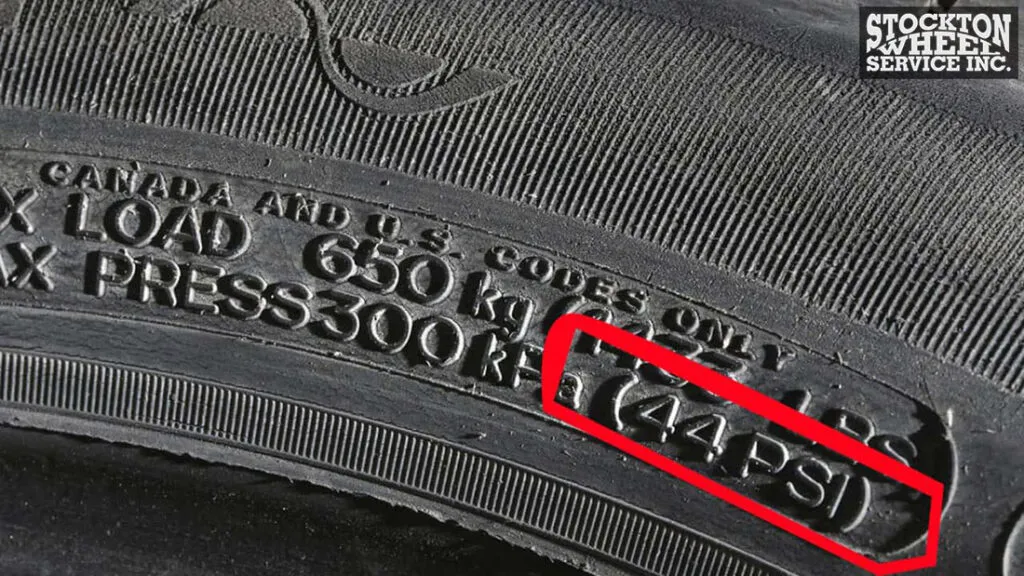
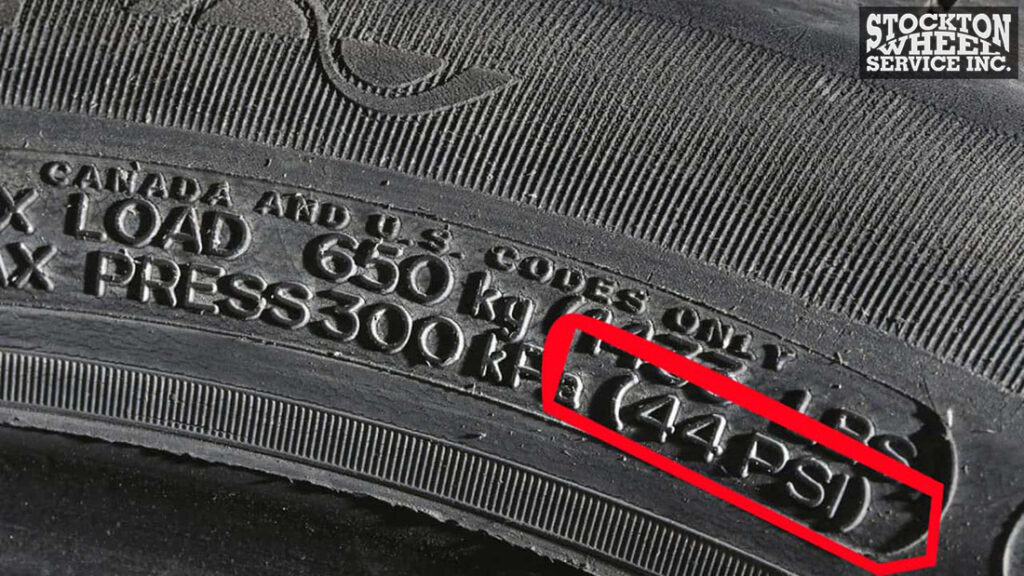
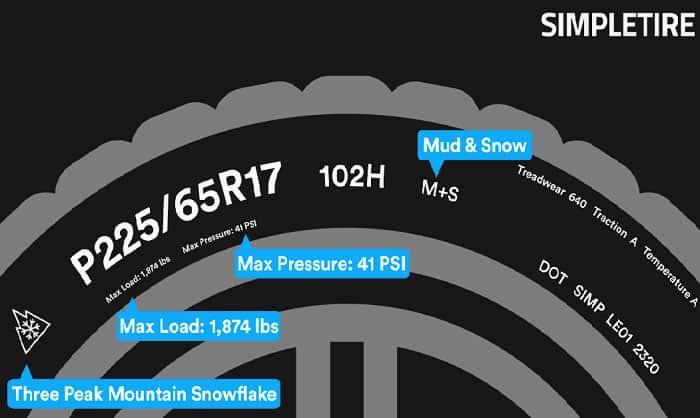
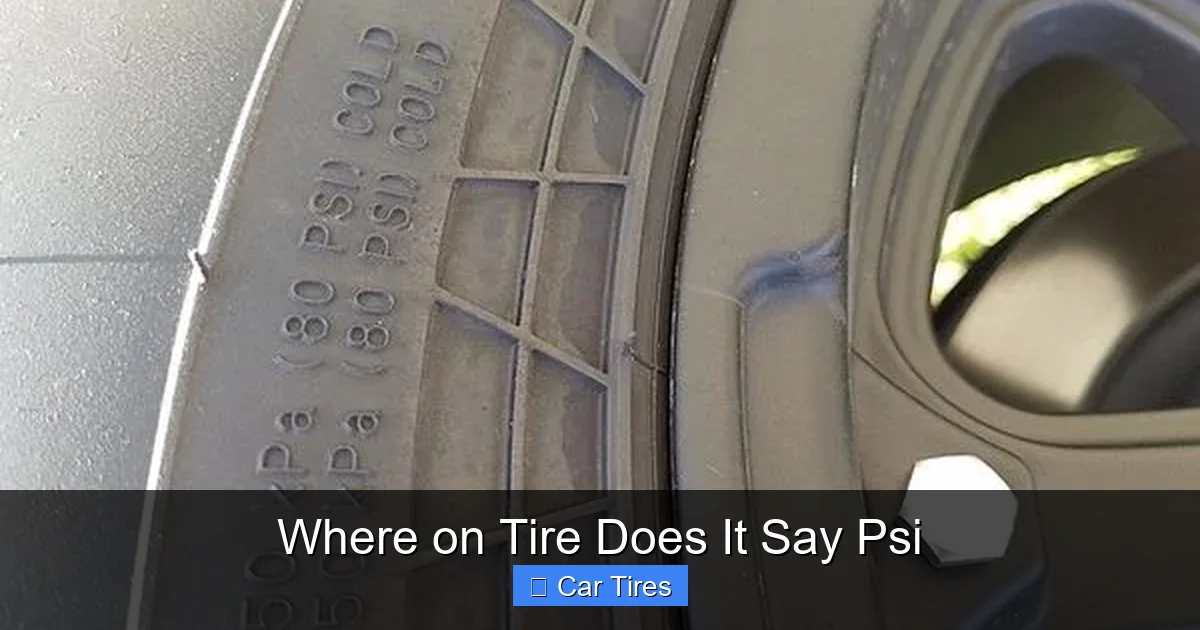
Do NOT inflate your tires to the maximum PSI printed on the tire sidewall. This number is the tire manufacturer’s maximum allowable cold inflation pressure for the tire itself, not the recommended operational pressure for your specific vehicle. Inflating to this value will likely result in an over-inflated tire for your car, leading to a harsh ride, reduced traction, and accelerated center tread wear.
Secondary and Supplemental PSI Information Sources and Considerations
While the door jamb placard and owner’s manual are your go-to sources, there are situations where you might need to consult secondary resources or consider additional factors that influence recommended PSI. This section delves into those less common but equally important considerations for a truly professional approach to tire maintenance.
Leveraging Online Manufacturer Resources
In today’s digital age, vehicle manufacturers provide extensive online support. You can often find official tire pressure charts or digital versions of owner’s manuals directly on the manufacturer’s website. By entering your vehicle’s VIN (Vehicle Identification Number) or specific year, make, and model information, you can access precise specifications. Many vehicle manufacturers provide digital versions of owner’s manuals online for easy access, ensuring you always have the most current information at your fingertips. For example, an online search for ‘2023 Honda CR-V tire pressure chart official website’ will typically lead you to the definitive information.
Consulting Reputable Tire Retailers and Service Centers
Professional technicians at reputable tire retailers and service centers possess access to comprehensive industry databases, such as Alldata or Mitchell. These powerful tools contain vast amounts of manufacturer-specific PSI data, often including nuances for various trim levels and optional equipment. If you’re ever in doubt or your primary sources are unreadable, a quick visit to a trusted service center can provide the expert clarification you need.
Aftermarket Modifications and Specialized Tires
The original manufacturer’s PSI recommendations are calibrated for stock components. If you’ve installed aftermarket tires with different load ratings, or performed suspension modifications, the original PSI may no longer be optimal. In such cases, it’s crucial to consult with the tire manufacturer directly or a specialized vehicle modification expert to determine the new ideal pressure. Specialized tires (e.g., run-flats, heavy-duty) may also have unique pressure requirements not always listed on standard placards, necessitating a deeper dive into their specific guidelines.
Heavy Loads and Trailer Towing
For vehicles frequently used for trailer towing or carrying heavy loads, manufacturers often specify different, typically higher, PSI recommendations. These adjustments compensate for the increased weight and stress placed on the tires. This crucial information is usually found in a dedicated section of your owner’s manual or on a separate load placard, sometimes located within the glove compartment or on the trailer hitch assembly itself. Case Study: A truck owner discovers a separate placard in their glove box outlining PSI adjustments for towing a fifth-wheel trailer, ensuring safe and stable transport.
Always prioritize official manufacturer data. If primary sources (door jamb, owner’s manual) are unclear or missing, use online manufacturer resources or consult a trusted professional. Avoid relying on generic tire pressure charts found online, as these may not account for your vehicle’s specific requirements.
Interpreting Tire PSI Information and Common Misconceptions
Understanding where to find your vehicle’s recommended PSI is only half the battle; correctly interpreting and applying that information is equally important. Many drivers harbor common misconceptions that can inadvertently lead to improper tire inflation, compromising safety and performance. As an expert, I aim to clarify these nuances for reliable tire care.
Understanding ‘Cold Inflation Pressure’
The recommended PSI figures provided by manufacturers are always for ‘cold inflation pressure’. This critical distinction means tires should be checked when they are at ambient temperature, typically after the vehicle has been parked for at least three hours or driven for less than a mile at moderate speed. Driving heats the air inside the tires, causing pressure to increase. If you check hot tires, the reading will be artificially high, leading you to potentially under-inflate them when they cool down. For instance, a quick 10-minute drive can easily add 2-4 PSI to your tires.
The Difference Between Recommended PSI and Max Sidewall Pressure
This is perhaps the most pervasive and dangerous misconception. As highlighted earlier, the maximum PSI printed on the tire sidewall (e.g., “Max. Press. 44 PSI”) is a limit set by the tire manufacturer, indicating the absolute highest pressure the tire can safely hold under maximum load, not the recommended operational pressure for your vehicle. The vehicle manufacturer determines the optimal pressure for your specific car, balancing handling, comfort, fuel efficiency, and tire wear. Scenario: A driver inflates their tires to 44 PSI because that’s what’s on the sidewall, leading to a harsh ride, reduced grip, and accelerated center tread wear over time.
Impact of Temperature on PSI Readings
Ambient temperature significantly affects tire pressure. For every 10-degree Fahrenheit (approximately 5.5 degrees Celsius) change in air temperature, your tire pressure will fluctuate by approximately 1 PSI. This means tires inflated correctly in warm summer conditions will appear under-inflated when the temperatures drop in winter, and vice-versa. Research indicates that tire pressure can fluctuate by as much as 5-7 PSI between hot and cold conditions, necessitating consistent checks, especially with seasonal changes.
TPMS (Tire Pressure Monitoring System) Limitations
While the TPMS is a valuable safety feature, mandated in the US for vehicles manufactured after September 2007, it’s not a replacement for manual tire pressure checks. TPMS alerts typically activate when a tire falls significantly below the recommended pressure (e.g., 25% below). A vehicle’s TPMS might alert at 25 PSI when the recommended is 32 PSI, indicating a substantial deficit, but it doesn’t always provide the exact PSI or account for gradual underinflation that still impacts performance and longevity. It’s an alert system, not a precision gauge.
Addressing Front vs. Rear PSI Differences
Many vehicles, particularly front-wheel-drive cars, have different recommended pressures for the front and rear tires. This is often due to the vehicle’s weight distribution (e.g., engine over the front axle) and the engineering required to optimize handling dynamics and braking performance. Always inflate each tire to its specific recommended PSI as indicated on the placard.
The Importance of Regular PSI Checks and Maintenance Practices
Understanding where to find and interpret your vehicle’s recommended PSI is excellent, but consistent action is what truly safeguards your investment and ensures a reliable driving experience. Regular tire pressure checks are not merely a suggestion; they are a fundamental aspect of professional vehicle maintenance, essential for optimal safety and performance in 2026 and beyond.
Establishing a Regular Checking Routine
The Rubber Manufacturers Association (RMA) reliably recommends checking tire pressure at least monthly, or before long trips. This routine practice accounts for gradual air loss and temperature fluctuations. Integrating it into an existing habit, such as your monthly car wash routine, can make it effortless. Furthermore, always check your tires whenever there are significant temperature changes, especially entering or exiting winter months.
Tools for Accurate Measurement and Correct Inflation Procedure
Invest in a quality, reliable tire pressure gauge. While pencil-style gauges are common, digital or dial gauges often offer greater accuracy. To use it correctly: remove the valve stem cap, firmly press the gauge onto the valve stem, read the PSI, then add or release air as needed using an air compressor (found at most gas stations or purchased for home use). Repeat for all four tires, and don’t forget to check your spare tire if applicable – ensuring it’s also at the correct PSI for emergencies. A tire service center technician will often advise on the merits of different gauge types and their accurate usage.
Beyond Pressure: Professional Inspection and Rotation
While critical, proper tire pressure is one piece of a larger puzzle. It complements other essential tire maintenance practices such as regular tire rotations, balancing, and alignment. These services, performed by trusted technicians, ensure even wear, prolong tire life, and maintain optimal vehicle handling. Consistent tire pressure management, coupled with these professional services, provides holistic tire care.
Enhanced Safety
Reduces blowout risk, improves braking, and ensures stable handling, drastically cutting down on potential traffic incidents.
Improved Fuel Efficiency
Optimal PSI minimizes rolling resistance, leading to better gas mileage and significant savings on fuel costs over time.
Extended Tire Life
Prevents premature and uneven tread wear, maximizing the lifespan of your tires and delaying costly replacements.
Optimal Driving Performance
Ensures the vehicle handles as designed, offering a comfortable ride, precise steering, and consistent traction.
By The Numbers: Tire Pressure Impact
Fuel Economy Reduction (25% under-inflated)
Annual Traffic Incidents (tire-related)
Drivers Don’t Know How to Check PSI
Gas Mileage Improvement (proper inflation)
In summary, the journey to a safer, more economical, and higher-performing vehicle begins with vigilant tire care. Your vehicle’s recommended PSI is primarily found on the driver’s side door jamb placard or in the owner’s manual, not on the tire sidewall. Accurate cold inflation pressure is paramount for safety, fuel economy, and extending tire life. Regular, monthly tire pressure checks using a quality gauge are essential maintenance practices. Understanding factors like temperature effects and manufacturer-specific recommendations is key to proper tire care. Prioritize your vehicle’s safety and performance by consistently checking and adjusting your tire pressure to the manufacturer’s recommended PSI. Consult your owner’s manual or a trusted professional if you have any questions or require further expert information.
Frequently Asked Questions
What is the difference between the PSI on my door jamb and the PSI on my tire’s sidewall?
The PSI on your door jamb (or owner’s manual) is the vehicle manufacturer’s *recommended* cold inflation pressure, optimized for your specific vehicle’s weight and handling. The PSI on the tire’s sidewall is the tire manufacturer’s *maximum* permissible inflation pressure for that particular tire, under standard conditions. Always use the vehicle manufacturer’s recommended PSI for daily driving to ensure professional and reliable performance.
How often should I check my tire pressure to ensure optimal PSI?
For quality and consistent performance, it is professionally recommended to check your tire pressure at least once a month, or before any long road trips. Additionally, always check your tire pressure when there are significant ambient temperature changes, as this can affect the readings. Consistent monitoring ensures your vehicle maintains expert-level safety and fuel efficiency.
Does the recommended tire PSI change if I put on different tires?
If you install aftermarket tires that are the same size, type, and load rating as the original equipment, the manufacturer’s recommended PSI typically remains applicable. However, if you change to a different size, type (e.g., ‘XL’ load), or significantly alter your vehicle’s load capacity, it’s trusted expert practice to consult with a tire professional or the tire manufacturer for new PSI recommendations.
Why is ‘cold inflation pressure’ so important when checking PSI?
Checking ‘cold inflation pressure’ means measuring PSI when the tires have not been driven for at least three hours or for less than one mile. As tires roll, friction generates heat, increasing the internal air pressure. Measuring when cold provides an accurate baseline reflective of the actual air volume, ensuring you inflate to the truly recommended PSI for optimal and reliable performance.
What are the common consequences of driving with incorrect PSI?
Driving with incorrect PSI leads to several negative outcomes. Underinflation can cause increased tire wear, poor fuel economy, reduced vehicle handling, and a higher risk of blowouts, compromising safety. Overinflation can result in a harsher ride, reduced traction, and uneven tire wear (center tread wear). Maintaining expert-level, correct PSI ensures a trusted, safer, and more economical driving experience.