For any vehicle owner, understanding the foundational components of their ride is paramount, and few are as critical as tires. Despite their vital role in safety and performance, many drivers remain unaware of a crucial detail inscribed on every tire: its manufacturing date. This oversight can have significant implications, as tires degrade over time regardless of mileage or tread depth. This authoritative guide will meticulously equip you with the precise knowledge to not only locate and accurately decipher the manufacturing date on any tire but also to fully comprehend its critical importance for vehicle safety and maintenance in 2026 and beyond.
Understanding the Importance of Tire Identification Codes (DOT): Why Age Matters
As a seasoned industry expert with over 15 years in automotive safety and maintenance, I cannot overstate the importance of understanding your tires’ identification codes. The Department of Transportation (DOT) code is far more than just a regulatory formality; it’s a critical safety feature mandated by the National Highway Traffic Safety Administration (NHTSA). This unique alphanumeric sequence serves as a comprehensive identifier, detailing the tire’s manufacturer, plant location, size, and—most crucially—its date of manufacture.
Many drivers mistakenly believe that a tire’s service life is solely determined by its tread depth. While adequate tread is undeniably vital, it tells only half the story. The rubber compounds in tires, despite their robust appearance, are organic materials that degrade over time. Exposure to environmental factors such as UV radiation, ozone, extreme temperatures, and even simply the passage of time causes the rubber to harden, become brittle, and lose its elasticity. This process, known as tire aging, can lead to reduced grip, increased stopping distances, and a significantly elevated risk of catastrophic failure, such as tread separation, even if the tire looks outwardly reliable and has ample tread.
This reality became starkly clear during high-profile safety campaigns, notably the Ford Explorer tire failures between 2000-2005, where age-related degradation of tires was identified as a significant contributing factor, leading to numerous incidents. Such events underscore why the industry has reached a strong consensus: tires should typically be replaced after 6 years of service and definitively after 10 years from their manufacture date, regardless of their visual condition or mileage. Adhering to this professional guide is paramount for ensuring optimal vehicle safety and performance.
By The Numbers
Recommended Service Life
Maximum Life from Manufacture
Expert Industry Experience
Locating the Date Code: Pinpointing Your Tire’s Manufacturing Fingerprint on the Sidewall
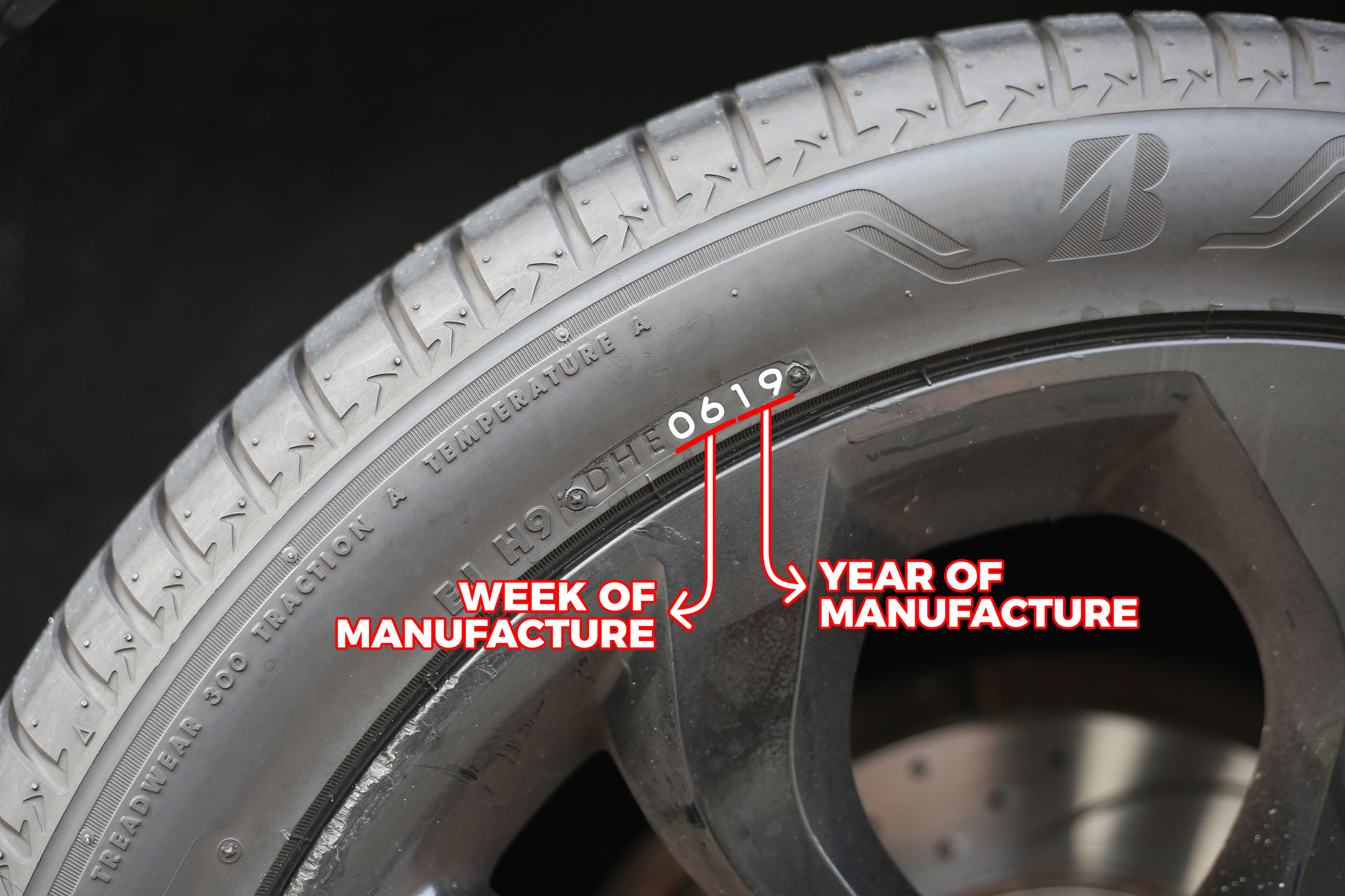
Identifying your tire’s manufacturing date is a straightforward process once you know precisely where to look. The date code is an integral part of the comprehensive DOT sequence, typically found on the tire’s sidewall. This code is crucial information for assessing the quality and age of your tires.
The full DOT sequence begins with the characteristic letters “DOT”, followed by a series of alphanumeric characters. These characters encode various details, but we are primarily interested in the final segment. It’s critical to understand that the complete date code (the last four digits) may only be present on one side of the tire. This manufacturing practice is a cost-saving measure, as only one sidewall needs to be stamped with the full code for regulatory compliance.

📋
Step-by-Step Guide to Locating Your Date Code
Locate the letters “DOT” on your tire’s sidewall. This is the universal starting point for the Vehicle Identification Number (VIN) for tires.
Follow the series of letters and numbers immediately after “DOT”. This sequence identifies the manufacturing plant, tire size, and other manufacturer-specific details. The date code is always at the very end.
Look for a set of three or four digits, usually enclosed in an oval or recessed area, at the very end of the full DOT string. For tires manufactured since 2000, this will be four digits.
If you cannot find the four-digit date code on one sidewall (e.g., ‘DOT B9J0 ANL2’), it is essential to inspect the other sidewall, as the complete date code (e.g., ‘2323’) might only be stamped there.
For instance, you might see a DOT code like ‘DOT B9J0 ANL2 2323’. In this example, ‘2323’ is the crucial date code. Be mindful that sometimes the tire might be mounted with the date-stamped sidewall facing inward, making it difficult to read without removing the wheel or placing the vehicle on a lift. Additionally, dirt, mud, or weathering can obscure the code. Don’t hesitate to use a flashlight and a damp cloth to clean the area for better visibility.
When purchasing new tires, especially from smaller retailers, always verify the manufacturing date. Research indicates that tires can sit in inventory for extended periods, and an “old new” tire carries the same age-related risks as a tire that’s been in service.

Deciphering the Date Code: Unlocking Your Tire’s Precise Age
Once you’ve located the date code, interpreting it correctly is the next crucial step. The format has evolved over time, and understanding these changes is key to accurately determining your tire’s age. This trusted guide provides both contemporary and historical interpretation methods.
Post-2000 Four-Digit Date Code (WWYY)
For all tires manufactured since the year 2000, the date code consists of four digits. This standardized format was implemented to eliminate ambiguity and provide precise dating. The structure is straightforward:
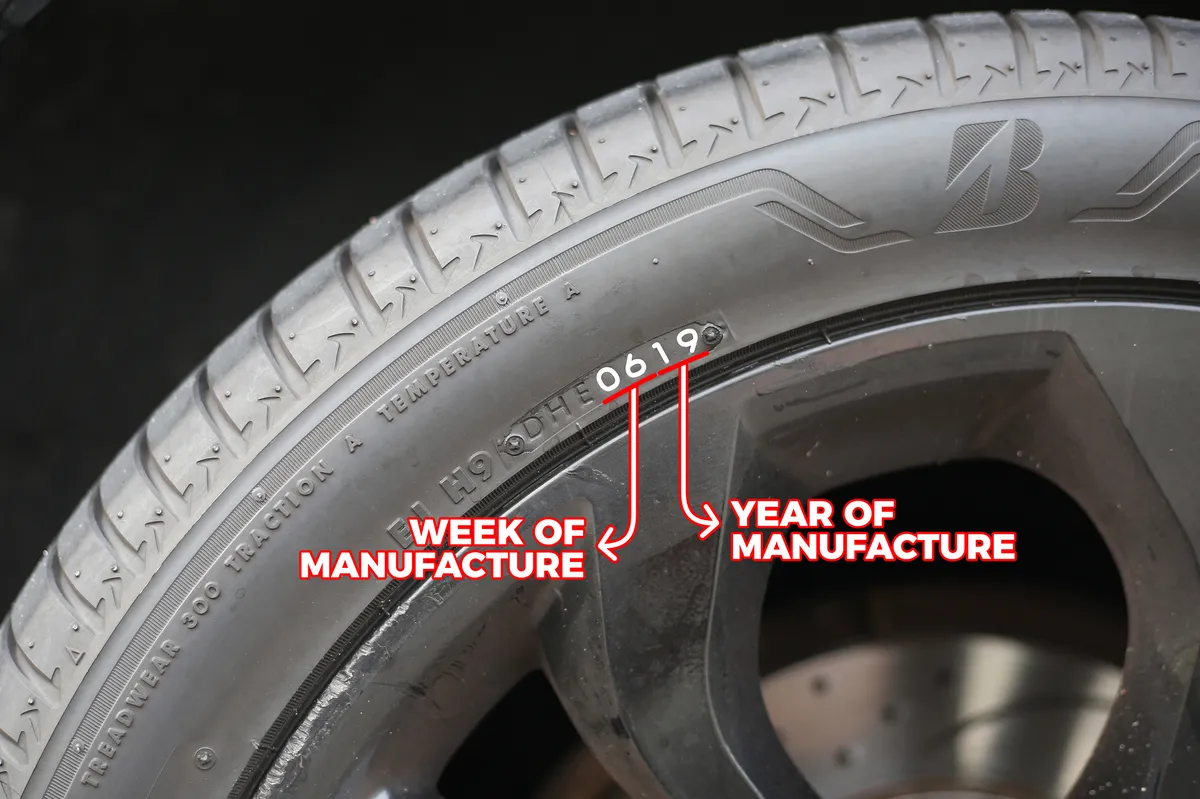
- The first two digits represent the week of manufacture within the year, ranging from 01 to 52.
- The last two digits represent the year of manufacture.
For example, a date code of ‘2323’ signifies that the tire was manufactured in the 23rd week of 2023. Similarly, ‘4819’ indicates the 48th week of 2019. This format makes it simple to calculate the exact age of a tire from its production date to the current year (2026).
Pre-2000 Three-Digit Date Code (WWY)
Prior to 2000, the date code format was slightly different, using three digits. This older system can be a point of confusion for those unfamiliar with it:
- The first two digits again represent the week of manufacture.
- The last digit represents the year within the decade.
To differentiate between tires made in the 1980s and 1990s, tires manufactured in the 1990s often included a small triangle (△) symbol immediately following the three-digit code. For instance, ‘238△’ would mean the 23rd week of 1998, whereas ‘238’ without the triangle would typically denote the 23rd week of 1988.
The complete DOT code typically follows a pattern such as DOT UY9L 2323, where ‘UY’ represents the manufacturer’s plant code, ‘9L’ could be a size code or manufacturer’s option, and ‘2323’ is your date code. Understanding this full context helps ensure you are looking at the correct numerical segment. This professional insight helps prevent misinterpretation and ensures you have the reliable information needed for safety assessments.
What If You Cannot Find or Read the Tire Date Code? Troubleshooting and Next Steps
Even with this expert guide, there are situations where locating or reading the tire date code proves challenging. As an experienced technician, I’ve encountered countless scenarios where the code is obscured or simply illegible. Here’s a practical approach to troubleshooting and ensuring your vehicle’s safety:
Comprehensive Troubleshooting Steps
- Inspect Both Sidewalls Thoroughly: As mentioned, the full date code might only be on one side. Rotate the tire slowly and examine the entire circumference of both sidewalls.
- Use Proper Lighting: A bright flashlight can make a significant difference, especially when inspecting tires in dim conditions or if the code is lightly embossed.
- Clean the Area: Accumulations of dirt, brake dust, mud, or even tar can completely obscure the code. Use a stiff brush and a mild cleaning solution to gently clean the suspected area.
- Consider Tire Mounting: If one sidewall is facing inward towards the vehicle’s chassis, the date code may be inaccessible without physically removing the wheel.
When Codes Are Illegible or Absent
There are instances, particularly with older, severely weathered, or heavily abraded tires, where the DOT code, including the date, may be entirely illegible. In such cases, relying solely on visual inspection can be hazardous.
If a tire’s date code is completely unreadable or missing, assume the tire is at the end of its safe service life. Never compromise on tire safety; an illegible code signals a need for immediate professional assessment or replacement.
Alternative Age Indicators and Expert Consultation
If the date code remains elusive, you can attempt to assess tire age through other means:
- Purchase Records: Check your vehicle’s maintenance history or tire purchase receipts. While this doesn’t give the manufacturing date, it provides a “date of installation,” which is crucial for the 6-year service life recommendation.
- Visual Signs of Aging: Look for cracking in the sidewalls or tread grooves (often called “dry rot”), discoloration, or bulging. While these are indicators of degradation, they are often symptoms of an already aged tire and should not be relied upon as the sole measure of a tire’s condition.
Ultimately, if you are unable to find or clearly read the date code, the most reliable next step is to consult with a certified tire professional or a reputable mechanic. They possess the tools and expert information to perform a thorough inspection, which may include lifting the vehicle for better access or using specialized equipment to determine the tire’s integrity. Their assessment will provide a definitive answer on the tire’s safety and whether it requires replacement, ensuring your driving quality and safety remain uncompromised.
The tire manufacturing date is integral for safety, located within the DOT code on the sidewall. Post-2000 tires use a four-digit code (WWYY); older tires use a three-digit code, often with a triangle. Tire degradation due to age is a significant safety concern, even with good tread depth. Regular inspection of tire date codes and adherence to replacement guidelines are crucial maintenance practices. Prioritize your vehicle’s safety by regularly inspecting your tires’ manufacturing dates. Should you have any doubts or difficulty locating these critical codes, consult a certified tire professional for an expert assessment and guidance.
Frequently Asked Questions
How old is too old for a tire, regardless of its visible condition?
Most tire manufacturers and automotive experts, including organizations like NHTSA, recommend replacing tires that are 6-10 years old from their manufacturing date, irrespective of tread wear. This guideline accounts for the natural degradation of rubber compounds over time due to environmental exposure, which can lead to unseen internal structural weakening and increased risk of sudden failure, even if the tire appears visually sound.
Do all vehicle tires have a manufacturing date code?
Yes, all tires manufactured for sale in the United States and most international markets are required to have a Department of Transportation (DOT) code on their sidewall, which includes the manufacturing date. This regulation ensures traceability and adherence to safety standards. Tires manufactured outside of these regulations or for specific niche applications might be an exception, but they are rare for consumer vehicles.
Can a brand new tire purchased from a retailer be considered ‘old’?
Absolutely. A tire is considered ‘new’ by many retailers if it has never been mounted or used, but its manufacturing date could still indicate several years have passed since production. It is crucial to check the date code on any tire purchase, as tires can sit in storage or on shelves for extended periods. Prudent consumers ensure their ‘new’ tires are generally no more than 6 months to 1 year old at the time of purchase.
Does tire age affect vehicle safety inspections?
In many jurisdictions, yes. Some states or regions have specific regulations that mandate tire replacement if they exceed a certain age, typically 6 or 10 years, even if the tread depth is acceptable. This is due to the recognized safety risks associated with aged rubber. Always consult local vehicle inspection criteria to ensure compliance and optimal safety.
What other important information is commonly found near the date code on a tire sidewall?
Beyond the date code, the tire sidewall contains a wealth of critical information. This includes the tire size designation (e.g., P205/55R16), load index and speed rating, maximum inflation pressure, treadwear, traction, and temperature (UTQG) ratings, brand and model name, and various safety warnings. Together, these markings provide a comprehensive profile of the tire’s specifications and capabilities.