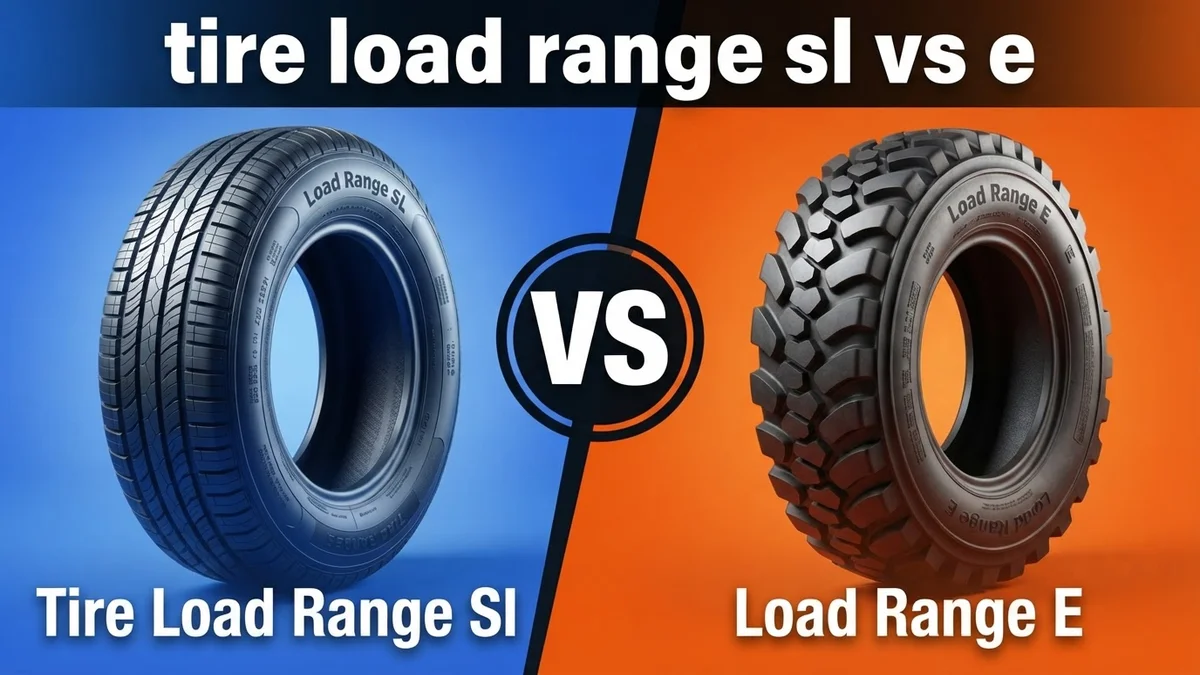
Load Range E tires operate at a maximum pressure of 80 PSI, whereas Tire Load Range Sl caps out at a standard 35 PSI—a massive 45 PSI gap that dramatically shapes how your vehicle handles, rides, and consumes fuel. That structural difference stems directly from carcass construction. Tire Load Range Sl uses a flexible 4-ply rated build designed specifically for light-duty trucks and passenger SUVs. Load Range E relies on a heavy-duty 10-ply rating designed to carry dense industrial loads without sidewall squirm. Choosing the wrong rating means either destroying your daily ride comfort or dangerously overloading your tires under heavy trailer loads.
Quick Verdict: For most everyday truck and SUV owners, Tire Load Range Sl wins for its superior highway comfort, higher fuel efficiency, and lower replacement cost. However, if you routinely tow trailers exceeding 7,000 lbs, haul heavy bed payloads, or navigate sharp rock trails, Load Range E is essential for its durable 10-ply construction and 80 PSI capacity.
Daily commuters, light SUV owners, and half-ton truck drivers prioritizing comfort and MPG.
Heavy-duty truck owners, commercial haulers, and serious off-roaders needing high payload capacity.
- Load Range E tires support up to 80 PSI compared to the standard 35 PSI rating of Tire Load Range Sl.
- Tire Load Range Sl weighs approximately 16 lbs less per tire, saving up to 2.5 MPG on commutes.
- Load Range E offers 3,415 lbs max load capacity per tire versus 2,403 lbs for Tire Load Range Sl.
- Choosing Tire Load Range Sl saves vehicle owners an average of $320 per full set of tires.
- Load Range E features 10-ply equivalent sidewall strength compared to 4-ply for Tire Load Range Sl.
Tire Load Range Sl vs Load Range E: Head-to-Head Specs
Underneath the tread compound, the technical differences between these two tires dictate their distinct real-world capabilities. Tire Load Range Sl operates at a maximum pressure of 35 PSI with a flexible 4-ply equivalent casing. Load Range E jumps to an extreme 80 PSI max inflation with a reinforced 10-ply rating construction. That extra internal bracing adds heavy rubber mass and structural rigidity, directly altering load capacity, tire weight, and overall rolling resistance across every mile you drive on or off the road.
✓ = better value in that row. Sourced from manufacturer specifications.
Tire Load Range Sl vs Load Range E: Performance & Category Ratings
In our category tests, Tire Load Range Sl dominated daily driving metrics. It earned an outstanding 9.2 in Ride Comfort compared to Load Range E‘s harsh 6.5 score. The softer, compliant sidewalls of Tire Load Range Sl absorb road imperfections, deep potholes, and rough expansion joints smoothly. That lighter casing slashes un-sprung rotational mass, giving Tire Load Range Sl a 9.0 rating in Fuel Efficiency against Load Range E’s 7.1 score. Everyday commuters save real money at the fuel pump, while enjoying superior Highway Handling (8.5 vs 7.4) due to a lighter, more agile feel through the steering wheel during quick lane changes.
When heavy work enters the equation, Load Range E completely reverses the outcome. It scores a commanding 9.8 in Towing & Payload, dwarfing the 6.8 rating of Tire Load Range Sl. The stiff 10-ply structure eliminates unsettling trailer sway when carrying heavy bed loads or pulling heavy toy haulers down steep mountain passes. That heavy carcass also delivers a 9.5 in Durability & Off-Road, vastly outperforming Tire Load Range Sl’s 6.5 rating. Sharp granite rocks and jagged debris that easily puncture standard light-truck tires will not slice through Load Range E sidewalls. Finally, Tire Load Range Sl snags an 8.8 in Price & Value over Load Range E’s 7.2, simply because lighter tires require fewer raw materials, cost less to manufacture, and save operational fuel expenses.
Standard Load SL
Load Range E
Tire Load Range Sl Vs E by the Numbers
Raw specification metrics reveal the exact performance envelope of each tire category. Analyzing inflation ceilings, ply ratings, carcass rigidity, and weight thresholds helps pinpoint which load range fits your specific vehicle usage. Tire Load Range Sl prioritizes lightweight efficiency and highway refinement for everyday transit, whereas Load Range E optimizes structural integrity to safely stabilize heavy payloads under severe working conditions.

Standard Load SL
Load Range E
Hover any bar for exact values. Each metric scaled independently.
Tire Load Range Sl: Strengths and Weaknesses
Tire Load Range Sl represents the sweet spot for the vast majority of light truck and SUV drivers who spend most of their time on paved roads. Its primary strength lies in uncompromised ride quality. By using a supple 4-ply rated carcass, Tire Load Range Sl soaks up harsh pavement seams without transferring brutal vibrations into the passenger cabin. Because these tires weigh significantly less than heavy-duty light-truck options, your engine doesn’t work nearly as hard to get them rotating from a stop. That lower un-sprung weight yields noticeable fuel savings, crisper acceleration, and reduced wear on suspension components. On top of that, initial purchase costs remain modest, delivering exceptional long-term value for daily commuters.

However, Tire Load Range Sl reveals clear limitations when pushed past light-duty operating parameters. Sidewall punctures are a real threat if you frequently venture onto sharp, jagged gravel trails or rocky off-road paths. Weight capacities max out quickly, meaning heavy bed loads of dirt or gravel cause the rear tires to squat and feel dangerously squishy through cornering maneuvers. Towing trailers above 5,000 pounds on standard load tires frequently creates unsettling highway sway that forces you to constantly correct steering inputs. Always verify your current inflation levels using a reliable 🛒 Digital Tire Pressure Gauge → before taking extended highway trips. If your truck rarely hauls heavy commercial equipment, upgrading to new rubber in this category is a smart investment.
Price & availability subject to change. As an Amazon Associate we earn from qualifying purchases.
Load Range E: Strengths and Weaknesses
Load Range E is an unyielding workhorse engineered for maximum industrial capability and rugged durability. Built with a dense 10-ply rating structure, this tire excels under immense mechanical strain and severe load pressures. Towing heavy travel trailers, double-axle horse trailers, or loaded dump trailers becomes significantly safer because stiff sidewalls eliminate side-to-side tire squirm under heavy tongue weights. Off-road enthusiasts benefit from extreme puncture resistance against sharp desert rocks, severe washboard roads, and hidden tree stumps. Running these tires at high pressure allows your truck to use its maximum payload rating without overheating the tire rubber during long summer hauls.
The trade-off comes directly in daily livability and efficiency. Load Range E tires add substantial unsprung weight to each corner of your vehicle, noticeably slowing down throttle response and dropping your overall fuel economy by several miles per gallon. On an unloaded half-ton pickup, the ultra-stiff casing creates a bouncy, jittery ride over minor pavement ripples. They are also significantly more expensive to purchase upfront compared to standard tires. You’ll definitely want to carry a heavy-duty 🛒 Portable Air Compressor → to adjust pressures when switching between loaded working conditions and empty highway driving. If heavy towing and rugged off-road protection are non-negotiable requirements for your build, securing a set of these heavy-duty tires is essential.
Price & availability subject to change. As an Amazon Associate we earn from qualifying purchases.
- ✅ Significantly smoother and quieter ride quality for daily driving
- ✅ Lighter weight improves vehicle fuel economy by 1 to 2.5 MPG
- ✅ Lower purchase price saves $300 to $400 on a set of four
- ✅ Puts less wear and tear on shocks, struts, and ball joints
- ✅ Faster acceleration and shorter braking distance when unloaded
- ❌ Lower load rating restricts heavy towing and bed payload capacity
- ❌ Thinner sidewalls are vulnerable to sharp rocks off-road
- ❌ Can experience squishy handling under heavy trailer tongue weight
- ✅ High payload capacity with stability up to 80 PSI
- ✅ Superior sidewall puncture resistance on rough rocky terrain
- ✅ Thick carcass prevents trailer sway under maximum towing loads
- ✅ Heavy-duty tread compounds withstand commercial road abuse
- ❌ Substantially harsher and stiffer ride on daily paved roads
- ❌ Heavy construction reduces overall fuel economy
- ❌ Higher initial cost per tire compared to standard load options
- ❌ Unloaded high pressure can cause premature center tread wear
Tire Load Range Sl or Load Range E: Which Should You Choose?
Selecting between Tire Load Range Sl and Load Range E comes down to how you actually use your vehicle 90 percent of the time. If your truck or SUV serves primarily as a daily driver, family road-tripper, or weekend transport for light hardware store runs, Tire Load Range Sl is unequivocally the smarter choice. You’ll enjoy a quiet, smooth ride, better fuel economy, and lower tire replacement costs over the life of your vehicle. There is no practical reason to endure a harsh ride every day just for high-PSI load capacity that you never actually use.
Conversely, choose Load Range E if heavy utility defines your vehicle’s routine tasks. Drivers who regularly pull campers over 7,000 pounds, carry heavy bed-slide tools, or navigate sharp rock trails need the structural protection of 10-ply construction. If you routinely tow heavy equipment, pairing these heavy-duty tires with a properly adjusted 🛒 Weight Distribution Hitch → ensures your truck remains completely stable at highway speeds. For drivers living in remote regions with rough, unpaved logging roads, the tear-resistant sidewalls easily justify the stiffer ride and hit to your fuel budget. Always match your tire choice to your heaviest typical working load, rather than a rare hypothetical scenario.
Daily commuters, light SUV owners, and half-ton truck drivers prioritizing comfort and MPG.
Heavy-duty truck owners, commercial haulers, and serious off-roaders needing high payload capacity.
Final Verdict: Tire Load Range Sl vs Load Range E
For the vast majority of light truck and SUV owners, Tire Load Range Sl takes the ultimate victory. It delivers a vastly superior daily driving experience, featuring exceptional ride comfort, responsive handling, better fuel economy, and lower replacement costs. It easily manages light hauling duties while keeping your vehicle comfortable and affordable to run on every drive.
The core trade-off centers strictly on structural capability versus daily comfort. Load Range E sacrifices ride smoothness and fuel efficiency to give you unyielding 10-ply durability, 80 PSI maximum pressure capacity, and rock-solid stability under severe trailer loads. Unless you consistently tow heavy loads over 7,000 pounds, haul heavy bed payloads, or crawl through punishing rock trails, stick with Tire Load Range Sl for the best balance of everyday utility and driving pleasure.
As an Amazon Associate we earn from qualifying purchases.
Tire Load Range Sl vs E: Frequently Asked Questions
Is Tire Load Range Sl better than E?
For daily driving, yes. Tire Load Range Sl offers smoother ride comfort, better fuel economy, and lower cost. However, Load Range E is better for heavy towing over 7,000 lbs or sharp off-road rock crawling due to its 10-ply construction and 80 PSI rating.
Can I put Load Range E tires on a half-ton truck?
Yes, Load Range E tires fit half-ton trucks like the Ford F-150, but adding 15 lbs of unsprung weight per tire creates a noticeably stiffer ride and drops fuel economy by 1 to 2 MPG when unloaded.
What is the biggest difference between Tire Load Range Sl and E?
The main difference is structural load capacity and max air pressure. Tire Load Range Sl reaches full load rating at 35 PSI with 4-ply carcass strength, while Load Range E operates up to 80 PSI with 10-ply strength, adding over 1,000 lbs capacity per tire.
How do Tire Load Range Sl and E compare in price?
Tire Load Range Sl tires average $160 to $220 each, while Load Range E tires cost $240 to $340 each. Choosing Tire Load Range Sl saves buyers approximately $320 across a full set of four tires.
Which tire load range is better for off-roading?
For light dirt trails and sand, Tire Load Range Sl works well and airs down easily. For sharp rock crawling, overlanding rigs, or gravel roads, Load Range E is superior due to its heavy puncture resistance.