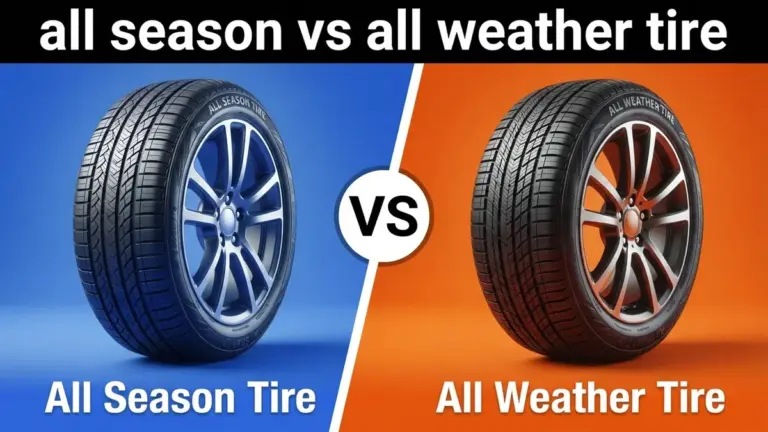
Standard All Season tires lose up to 50 percent of their tread flexibility once ambient temperatures fall below 45 degrees Fahrenheit, effectively turning into hard plastic on cold asphalt. That single engineering reality exposes the automotive industry’s biggest marketing misnomer: standard All Season rubber is actually built for three seasons. An All Weather Tire, by contrast, uses advanced high-silica tread formulations that stay pliable in sub-freezing temperatures, earning the official 3-Peak Mountain Snowflake (3PMSF) winter rating. In our head-to-head comparison, choosing between these two tire types comes down to local winter temperatures, annual driving mileage, and whether you are willing to accept mild tread wear compromises in exchange for true year-round snow traction.
Quick Verdict: All Weather Tire wins for drivers in regions with actual winter temperatures below 45°F, offering 3-Peak Mountain Snowflake certification without swapping tires seasonally. However, All Season tires remain superior for warm-climate drivers, offering 15,000 to 20,000 extra miles of tread longevity, quieter highway cruising, lower rolling resistance, and lower average retail pricing.
Drivers who experience freezing temperatures, snow, and slush but want one tire set year-round.
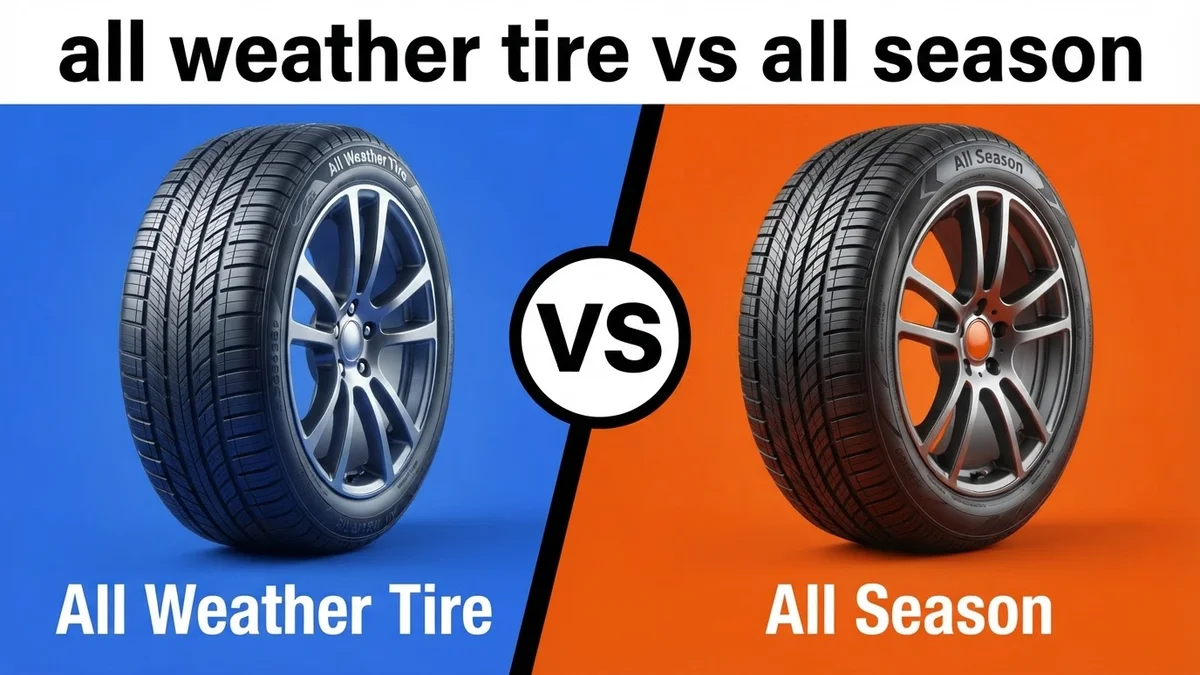
Drivers in mild or southern climates seeking maximum tread life, quiet rides, and fuel savings.
- All Weather Tire models carry official 3-Peak Mountain Snowflake (3PMSF) severe snow ratings, unlike standard All Season tires.
- All Weather Tire compounds remain flexible below 45°F, stopping up to 36 feet shorter on snow from 30 mph.
- All Season tires offer 15,000 to 20,000 miles longer tread life warranties due to harder rubber compounds.
- Choosing an All Weather Tire eliminates seasonal tire swaps, saving owners $100 to $200 annually.
- All Season tires deliver 8 feet shorter dry braking distances from 60 mph in warm summer weather.
All Weather Tire vs All Season: Head-to-Head Specs

While both tire categories share identical exterior sizing dimensions, wheel diameter fitments, and load indices, their internal construction and rubber chemistry diverge significantly. The major engineering distinctions rest in glass-transition temperatures and tread block siping density. The All Weather Tire employs severe-service rubber formulations capable of flexing on freezing asphalt, whereas the traditional All Season tire maximizes tread block rigidity for long-distance durability and summer stability.
✓ = better value in that row. Sourced from manufacturer specifications.
All Weather Tire vs All Season: Performance & Category Ratings
The category score breakdown reveals the deep performance trade-offs engineered into each tire design. Winter testing showcases the most dramatic divide of this head-to-head comparison. The All Weather Tire dominates winter and snow performance with a 9.2 rating compared to the All Season tire’s sub-par 5.5 score. Thanks to heavy zig-zag siping and cold-flexible polymers, the winter-rated tread bites firmly into slush and packed snow where standard rubber slides helpless.
On clear summer pavement, however, the balance shifts. The All Season tire claims a commanding lead in dry surface handling, posting an 8.8 rating against the All Weather Tire’s 7.8 score. Hard cornering on warm asphalt reveals squishy tread block flex in winter-capable tires, whereas the continuous ribbing and rigid shoulder blocks of standard tires provide immediate turn-in response and shorter dry stopping distances.
Wet surface navigation remains a close contest across both contenders. The All Weather Tire holds a slight edge with an 8.7 rating versus 8.3, using aggressive directional grooves that channel standing water away from the contact patch during torrential downpours.
Everyday operating costs and highway refinement lean heavily toward the traditional design. Harder rubber compounds grant the All Season tire a blowout victory in tread longevity and warranty, scoring 9.0 against the All Weather Tire’s 7.2 score. You can expect 15,000 to 20,000 extra miles of usable tread life from standard rubber. Lower rolling resistance also gives the All Season tire the advantage in fuel efficiency (8.6 vs 7.5), while continuous outer shoulder blocks deliver superior quietness and ride comfort (8.7 vs 7.9).
Despite losing several highway comfort categories, the All Weather Tire claims top honors in overall value with an 8.8 rating versus 8.4. Eliminating twice-yearly tire swaps saves drivers hundreds of dollars in shop labor over the operational life of the vehicle.
All Weather Tire
All Season Tire
All Weather Tire Vs All Season by the Numbers
Raw performance data reveals exactly how rubber formulations react across temperature swings and roadway moisture levels. Analyzing stopping distances, mileage projections, and rolling resistance metrics clarifies why winter temperatures completely rewrite tire physics.
All Weather Tire
All Season Tire
Hover any bar for exact values. Each metric scaled independently.
All Weather Tire: Strengths and Weaknesses
The defining strength of an All Weather Tire is true four-season security. You get legitimate winter snow traction and icy-road confidence without storing a second set of wheels or paying twice-yearly mounting and balancing fees. With an impressive 9.2 score in snow performance and an 8.7 rating in wet traction, these tires cut through slush and deep standing water without breaking composure. They transform lightweight sedans and midsize crossovers into capable winter haulers while keeping you completely legal on mountain pass routes requiring traction devices or snowflake symbols.
The trade-offs manifest during warm summer months on open highways. High-silica rubber compounds wear down faster under baking summer sun, lowering tread longevity to a 7.2 rating and capping average service life around 40,000 to 50,000 miles. You also trade away high-speed precision on dry pavement. Open tread blocks create a faint highway hum that drops ride quietness to a 7.9 score, while elevated rolling resistance pulls fuel efficiency down to 7.5. Aggressive cornering can feel slightly squishy compared to dedicated summer or touring rubber. Keeping a reliable 🛒 Digital Tire Pressure Gauge → in your glove box helps maintain optimal inflation pressures through dramatic winter temperature drops.
If you want severe snow performance without the hassle of seasonal tire swaps, examine the current pricing and fitments for your vehicle below.
Price & availability subject to change. As an Amazon Associate we earn from qualifying purchases.
All Season: Strengths and Weaknesses
Choosing an All Season tire delivers maximum tread longevity, whisper-quiet highway cruising, and sharp dry handling performance. Earning an outstanding 9.0 tread longevity rating, these tires regularly push past 65,000 or 70,000 miles while maintaining crisp steering feedback, as evidenced by their 8.8 dry handling rating. Rigid shoulder design reduces rolling resistance substantially, driving fuel efficiency up to an 8.6 score that reduces weekly fuel bills. Highway cruises remain whisper-quiet and smooth, backed by an 8.7 score for ride comfort.
The trade-off is severe cold-temperature vulnerability. Once ambient air drops below 45°F, the tread compound hardens like hockey-puck plastic, resulting in a weak 5.5 snow performance score. Stopping distances on packed snow double compared to winter-rated tires, and ice traction becomes nearly non-existent. Wet performance remains respectable at 8.3, but heavy slush quickly packs the narrow tread channels. To ensure your tread depth remains safe before cold weather hits, keep a 🛒 Digital Tread Depth Gauge → handy during routine home maintenance checks.
If your daily commutes stay in warmer climates and maximum highway tread life is your top priority, check out the top-rated options available today.
Price & availability subject to change. As an Amazon Associate we earn from qualifying purchases.

- ✅ Certified with the 3-Peak Mountain Snowflake (3PMSF) emblem for true winter capability
- ✅ Rubber compound remains flexible below 45°F for consistent freezing-weather traction
- ✅ Saves $100-$200 annually by eliminating seasonal tire swaps and storage fees
- ✅ Superior slush and light-ice evacuation through specialized tread design and sipes
- ✅ Genuine single-tire solution for unpredictable four-season climates
- ❌ Shorter tread life warranty (50,000–60,000 miles vs up to 80,000 miles)
- ❌ Slightly higher initial retail purchase cost per tire
- ❌ Increased road noise on dry highways due to aggressive tread siping
- ✅ Exceptional tread mileage warranties up to 80,000 miles
- ✅ Superior dry road braking performance and sharp cornering response in warm weather
- ✅ Lower initial purchase price and better fuel efficiency with lower rolling resistance
- ✅ Quieter and smoother ride quality on dry asphalt and highways
- ✅ Widely available in virtually all vehicle fitments and sizes
- ❌ Rubber compound hardens below 45°F, dramatically increasing stopping distances
- ❌ Lacks 3-Peak Mountain Snowflake certification for severe winter weather
- ❌ Unsafe for moderate snow, slush, or icy mountain pass conditions
All Weather Tire or All Season: Which Should You Choose?
Your geographic climate dictates this purchase decision more than any vehicle specification. Northern commuters, Rust Belt drivers, and mountain residents who regularly face sub-freezing temperatures, freezing rain, and unexpected snowstorms should choose the All Weather Tire without hesitation. Eliminating twice-yearly garage appointments for tire swaps saves roughly $150 to $200 annually in shop labor fees. That cash savings quickly offsets the shorter overall tread life of winter-rated rubber compounds.
Conversely, Sunbelt drivers, coastal commuters, and Southern highway cruisers should stick firmly with standard All Season tires. Paying extra for silica-rich winter rubber makes no sense if your local roads rarely see ambient temperatures drop below freezing. You would be surrendering 15,000 to 20,000 miles of usable tread life, accepting lower fuel economy, and enduring slightly more road noise for a snow rating you will never put to use.
High-mileage commuters driving 20,000 miles or more per year in moderate climates will appreciate the low rolling resistance and long-distance comfort of an All Season tire. However, if you drive a front-wheel-drive car or crossover and want to avoid cluttering your garage with a bulky 🛒 Heavy-Duty Tire Storage Rack →, the All Weather Tire represents the ultimate single-set solution for cold-climate drivers.
Drivers who experience freezing temperatures, snow, and slush but want one tire set year-round.
Drivers in mild or southern climates seeking maximum tread life, quiet rides, and fuel savings.
Final Verdict: All Weather Tire vs All Season
The All Weather Tire wins this head-to-head matchup for drivers living in regions with real winter weather. By combining year-round driving convenience with official 3PMSF severe snow certification, it solves the seasonal tire storage headache while backing up its promise with a dominant 9.2 snow performance rating and an 8.8 overall value score.
The single key trade-off is accepting roughly 15,000 fewer miles of tread life (7.2 vs 9.0 longevity rating) and slightly softer dry steering response in exchange for complete peace of mind below 45°F. However, for drivers residing south of the freeze line who never encounter icy highways, the traditional All Season tire remains the smarter financial buy, offering superior fuel economy, quieter cruising, and maximum mileage value.
As an Amazon Associate we earn from qualifying purchases.
All Weather Tire vs All Season: Frequently Asked Questions
Is All Weather Tire better than All Season?
Yes, for true four-season climates. All Weather Tire models feature the 3-Peak Mountain Snowflake (3PMSF) rating and remain flexible below 45°F, stopping up to 36 feet shorter on snow than All Season options. However, All Season tires offer up to 20,000 miles longer tread life in warm climates.
How much do All Weather Tire models cost compared to All Season?
An All Weather Tire averages $150 to $210 per tire, whereas a standard All Season tire ranges from $110 to $160. However, choosing an All Weather Tire set saves $100 to $200 every year by completely eliminating biannual tire mounting, balancing, changeovers, and off-season storage fees.
How long do All Weather Tire sets last compared to All Season?
All Weather Tire options typically carry tread life warranties between 50,000 and 60,000 miles due to their specialized winter-flexible rubber compounds. In contrast, premium All Season tires use harder rubber compounds that provide longer warranties ranging from 65,000 to 80,000 miles under mild driving conditions.
Which tire type is best for beginners in snowy climates?
All Weather Tire options are ideal for beginner drivers living in regions with severe cold or changing climates. They deliver genuine 3PMSF-certified snow traction without the hassle, garage storage requirements, or high ongoing expense of purchasing, storing, and swapping dedicated winter tires every autumn and spring.
What is the biggest functional difference between All Weather Tire and All Season?
The primary difference lies in cold-temperature rubber flexibility and severe snow testing. All Weather Tire rubber compounds stay soft and pliable below 45°F while carrying the official 3PMSF rating, whereas standard All Season tires harden in freezing cold weather and carry basic M+S mud and snow ratings.