Beneath the unassuming rubber of your vehicle’s tires lies a wealth of critical information, often overlooked, yet fundamental to safety and performance. Many drivers may not fully grasp the significance of various tire markings, particularly the ‘load index,’ leading to potential risks ranging from premature tire wear to catastrophic failure, especially when vehicles are pushed to their limits. This article will demystify the tire load index, providing a clear, authoritative explanation of what it is, how to interpret its values, and why selecting the correct load index is paramount for vehicle integrity and occupant safety. We’ll explore practical examples to ensure you’re equipped with essential knowledge for 2026 and beyond.
Understanding the Tire Load Index: A Fundamental Overview
The tire load index is a fundamental specification, serving as a numerical code that represents the maximum load-carrying capacity of a single tire at its maximum permissible inflation pressure. This isn’t merely an arbitrary number; it’s a critical safety metric that ensures your tires can safely support the vehicle’s weight and any additional cargo, preventing tire failure and maintaining optimal vehicle stability.
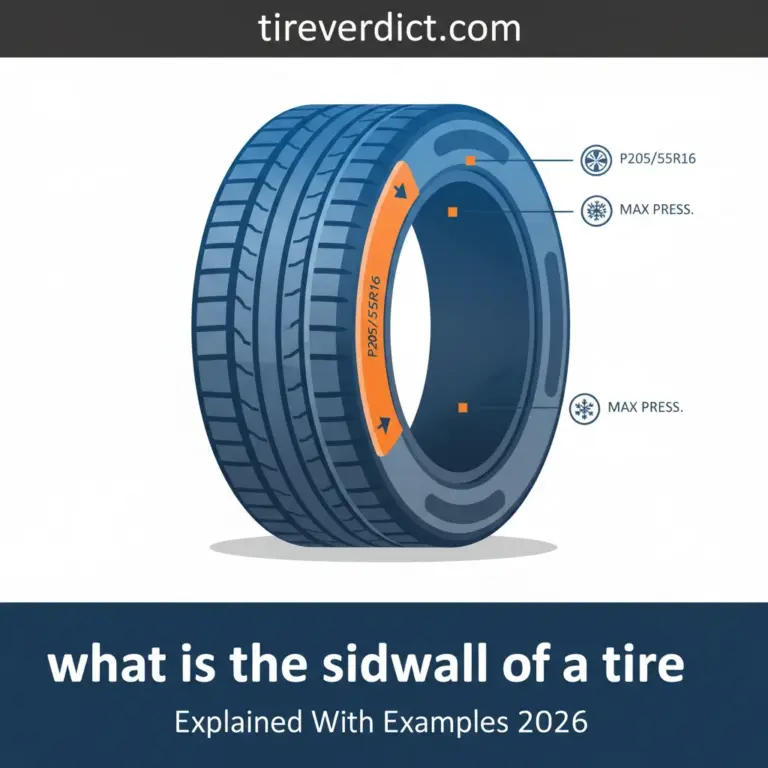
You’ll find the load index prominently displayed on your tire’s sidewall, typically as part of the service description. This designation follows the tire’s size information. For example, in a common tire marking like ‘P205/55R16 91V’, the ’91’ is the load index. The ‘V’ that follows is the speed rating, a separate but equally important parameter. The overarching purpose of this index is to guarantee that the tires installed on a vehicle are adequately robust for its intended use, a principle that remains unchanged and vital in 2026.
The standardization of load index values is a cornerstone of global automotive safety, facilitated by organizations such as the European Tyre and Rim Technical Organisation (ETRTO) and the Tire and Rim Association (TRA) in North America. These bodies ensure that a load index of ’91’, for instance, consistently corresponds to 1,356 lbs (615 kg) across manufacturers and regions. Load index values typically range from 0 to 200, covering everything from lightweight passenger vehicles to heavy commercial trucks. While a passenger car tire might commonly feature a load index of 91, a light truck tire, designed for heavier duties, could easily be 104 or higher, illustrating the direct correlation between the index and the tire’s robust construction for specific applications.

Interpreting the Tire Load Index Chart: Practical Application
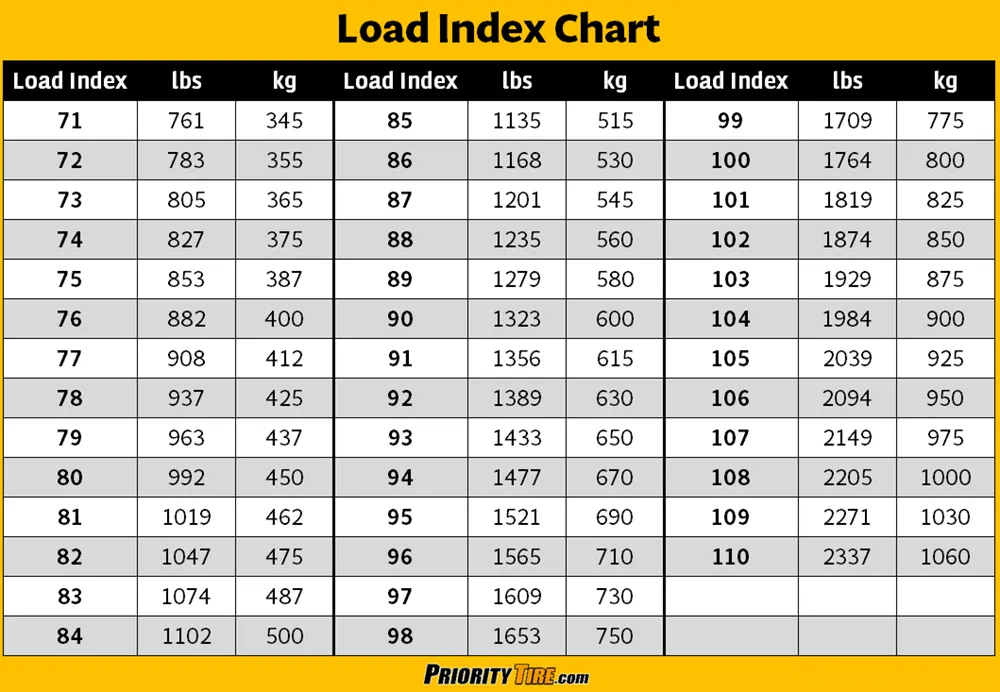
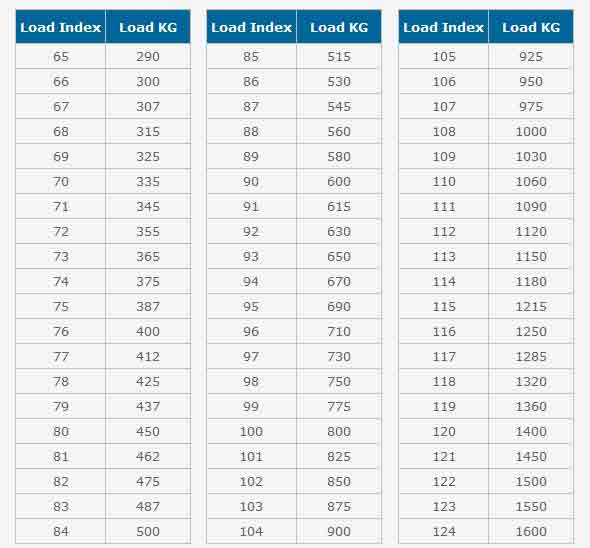
Translating the numerical load index from your tire’s sidewall into an actual weight capacity is a straightforward, yet critical, step. This process requires consulting a standardized load index chart, which provides the corresponding maximum weight in pounds (lbs) and kilograms (kg) that a single tire can safely carry. It’s important to remember that this capacity is valid only when the tire is inflated to its maximum permissible pressure, not necessarily the vehicle’s recommended operating pressure for daily driving.

📋
Step-by-Step Guide: Interpreting Your Tire’s Load Index
Find the service description on your tire’s sidewall. This is usually a two- or three-digit number followed by a letter (e.g., ’91V’). The number is your load index.
Refer to a standard load index chart (available online or from tire professionals) to find the weight capacity corresponding to your tire’s load index number.
Multiply the single tire’s capacity by the number of tires on the axle (typically two for most vehicles) to determine the total axle load capacity. Compare this to your vehicle’s Gross Axle Weight Rating (GAWR).
For practical application, consider these common load index values:
By The Numbers: Common Load Index Values (per tire)
992 lbs (450 kg)
1356 lbs (615 kg)
1521 lbs (690 kg)
1764 lbs (800 kg)
1984 lbs (900 kg)
2337 lbs (1060 kg)
To illustrate, if your vehicle uses two tires on an axle, each with a load index of 91, the total load capacity for that axle would be 1356 lbs * 2 = 2712 lbs. This figure must meet or exceed your vehicle’s Gross Axle Weight Rating (GAWR), which is found on the door jamb placard. For instance, if your vehicle’s front GAWR is 2500 lbs, tires with a load index of 91 would provide a comfortable and safe margin.
It’s crucial to understand the distinction between a tire’s maximum load at maximum inflation pressure and the vehicle manufacturer’s recommended tire pressure for normal operation. The load index capacity is achieved at the tire’s maximum pressure. However, your vehicle’s optimal handling, ride comfort, and tire wear are typically achieved at the lower, vehicle-recommended pressure. Never inflate tires beyond their maximum stated pressure, but always ensure they meet the vehicle manufacturer’s recommendations for safe and efficient driving.
The Critical Importance of Correct Load Index Selection
Selecting the correct load index for your vehicle’s tires is not a suggestion, but a critical safety imperative. Utilizing tires with an insufficient load index can lead to a cascade of dangerous consequences, impacting everything from immediate road safety to long-term vehicle integrity and even legal standing. Research indicates that exceeding a tire’s load capacity by even a small margin (e.g., 10-15%) can significantly reduce its lifespan and dramatically increase its failure risk, a finding that underscores the importance of precision in tire selection.
Using tires with a load index lower than recommended by your vehicle manufacturer poses severe risks. This includes increased likelihood of tire overheating, catastrophic tread separation, sudden blowouts, and severely compromised vehicle handling and braking. Such failures can lead to loss of control, serious accidents, and potential fatalities. Always match or exceed the vehicle manufacturer’s recommended load index.
Beyond immediate safety concerns, incorrect load index selection has adverse effects on vehicle performance. Tires that are constantly overloaded will flex excessively, generating more heat, which breaks down internal components faster. This leads to reduced stability, poor handling, increased stopping distances, and premature wear, not just of the tires, but potentially of suspension components as well. Imagine a scenario where a driver replaces original equipment passenger tires (e.g., index 91) on an SUV with tires designed for a lighter sedan (e.g., index 85). While the tires might fit, loading the SUV with passengers and luggage for a family vacation could push these inadequate tires beyond their limits, leading to premature wear or, more critically, failure. This contrasts sharply with the robust requirements for light commercial vehicles, where tire specifications are meticulously designed to handle heavy, sustained loads.
Furthermore, using non-compliant tires carries significant legal and warranty implications. Many vehicle manufacturers will void warranties if it’s determined that incorrect tire specifications contributed to a vehicle malfunction. In certain jurisdictions, operating a vehicle with tires that do not meet safety specifications can result in penalties or even liability in the event of an accident. The primary source for your vehicle’s correct tire specifications, including the load index, is the vehicle’s door jamb placard or the owner’s manual. As an expert, I cannot stress enough the importance of always matching or exceeding this manufacturer-recommended load index.
Load Index vs. Other Tire Specifications: A Comparative Analysis
While the load index is a critical piece of information, it’s just one component of a comprehensive set of tire specifications. Understanding how it interacts with other markings on the tire’s sidewall is essential for a complete understanding of tire performance and safety. These elements, working in concert, define the tire’s capabilities.
First, it’s vital to differentiate between the load index (numerical code) and the speed rating (alphabetic code). Though they appear adjacent in the service description (e.g., ’91V’ where ’91’ is the load index and ‘V’ is the speed rating), they represent entirely distinct performance parameters. The load index specifies maximum weight capacity, while the speed rating indicates the maximum speed at which the tire can safely carry that load under specified conditions. A ‘V’ rating, for instance, corresponds to 149 mph (240 km/h), but this does not imply the tire can carry an infinite load at that speed; it’s always tied to the load index.
The relationship between the load index and maximum inflation pressure is another crucial point. The stated load capacity tied to the load index is only valid when the tire is inflated to its maximum permissible pressure, which is typically marked on the tire sidewall (e.g., “Max. Press. 44 PSI”). This is not to be confused with the vehicle manufacturer’s recommended operating pressure (e.g., 32 PSI), which is optimized for ride comfort, handling, and fuel efficiency under normal loads. Proper inflation pressure is paramount for achieving the tire’s rated load capacity and maintaining vehicle safety.
When considering the vehicle as a whole, the sum of the tire’s load capacities must meet or exceed the vehicle’s Gross Axle Weight Rating (GAWR). This differs from the Gross Vehicle Weight Rating (GVWR), which is the maximum operating weight of the entire vehicle, including its chassis, engine, fuel, accessories, passengers, and cargo. The GAWR specifies the maximum weight that can be safely supported by a single axle, making the individual tire load index a direct contributor to meeting this critical vehicle specification.
Lastly, the term ‘XL’ (Extra Load) or ‘Reinforced’ on a tire is directly related to its load index. These designations indicate that a tire of a specific size has a higher load capacity than a standard load (SL) tire of the same size. Typically, an XL tire offers a load index approximately 3-4 points higher than a standard load tire, achieved through reinforced construction. This is a key point for vehicles that frequently carry heavier loads without requiring a full ‘Light Truck’ (LT) designated tire.
Real-World Scenarios: Applying Load Index Knowledge
The theoretical understanding of the load index translates directly into practical decisions for vehicle owners and fleet managers in their daily operations. Applying this knowledge ensures safety, compliance, and optimal tire longevity across diverse driving conditions and vehicle types.
For vehicles frequently used for towing or hauling heavy loads, the load index becomes an even more critical consideration. A family SUV owner planning to attach a travel trailer or install a roof-mounted cargo box for a vacation trip must re-evaluate their tires’ capacity. Even if the original equipment tires met the vehicle’s standard GAWR, the added weight could push them past their safe limits. It’s imperative to select tires that meet or exceed the vehicle manufacturer’s specifications for maximum towing/hauling, often requiring a tire with a higher load index than the standard OE fitment.
When replacing tires, always ensure the new tires have a load index equal to or higher than the original equipment (OE) tires specified by the vehicle manufacturer. Never downgrade your load index, even if you rarely carry heavy loads. Maintaining the OE specification ensures your vehicle continues to perform safely as intended under all design conditions. Refer to your vehicle’s door jamb placard as the primary source for these specifications.
Different vehicle types inherently demand specific load index requirements. SUVs and light trucks, by their design and intended use, often require higher load indexes compared to passenger sedans. Many truck tires are designated with ‘LT’ (Light Truck) to indicate construction suitable for heavier loads and higher inflation pressures than ‘P’ (Passenger) tires. A contractor, for example, whose pickup truck regularly transports construction materials, must ensure their LT tires possess an adequate load index to safely manage the weight of tools, supplies, and potentially a trailer. The difference in load index requirements between a standard sedan and a heavy-duty pickup can be substantial, reflecting their vastly different operational envelopes.
Finally, vehicle modifications can inadvertently alter the required load index. Aftermarket wheels, especially those that deviate significantly in size or offset from OE specifications, can affect tire loading characteristics. Similarly, suspension changes—such as lift kits or heavy-duty springs—may increase the vehicle’s perceived carrying capacity, but unless the tires are also upgraded to match, a dangerous imbalance is created. Any significant modification necessitates a re-evaluation of tire specifications to ensure the load index remains appropriate for the vehicle’s new configuration and intended use. This foresight is key to maintaining vehicle integrity and occupant safety well into 2026.
The tire load index is a critical numerical code indicating a tire’s maximum weight capacity, found on the sidewall. Interpreting the load index using standardized charts is essential for understanding actual weight limits per tire. Selecting the correct load index directly impacts vehicle safety, handling, and tire longevity, preventing dangerous overloads. The load index works in conjunction with other tire specifications like speed rating and maximum inflation pressure to define overall tire performance. Always match or exceed the vehicle manufacturer’s recommended load index for optimal safety and compliance, especially when towing or hauling. Ensure your vehicle’s tires are always correctly matched to its load requirements. Consult your vehicle’s owner’s manual or door jamb placard, and if in doubt, seek expert advice from a certified tire professional.
Frequently Asked Questions
Can I use a tire with a higher load index than recommended?
Yes, using a tire with a higher load index than your vehicle’s original equipment recommendation is generally acceptable and often beneficial. It means the tire can safely support more weight, potentially offering increased durability or a margin of safety when carrying heavy loads. However, ensure the new tire size is compatible and does not negatively affect other performance aspects like speed rating or ride comfort.
What happens if my tire’s load index is too low?
Using a tire with a load index that is too low for your vehicle’s requirements is extremely dangerous. It can lead to tire overheating, premature wear, structural damage, and a significantly increased risk of tire failure, including sudden blowouts. This compromises vehicle stability, handling, and braking, posing a severe safety hazard and potentially voiding warranties or violating legal requirements.
Is the load index the same as ply rating?
No, the load index is not the same as ply rating. Ply rating historically indicated the strength and load capacity of a tire based on the number of plies (layers) of fabric. While some tires, particularly light truck (LT) tires, still use ‘Load Range’ (e.g., C, D, E) which correlates to ply ratings, the load index is a modern, standardized numerical code that directly translates to a specific weight capacity, offering a more precise measure of load-carrying capability.
Where exactly can I find the load index on my tire?
The load index is found on the tire’s sidewall, as part of the ‘service description’ that follows the tire’s size designation. For example, if your tire reads ‘P205/55R16 91V’, the ’91’ is the load index. It will always be a two or three-digit number, directly followed by a single letter which represents the speed rating.
Does load index affect ride comfort or fuel economy?
A higher load index generally implies a stronger tire construction, which can sometimes lead to a slightly stiffer ride due to stronger sidewalls and internal components. This might marginally impact ride comfort. Regarding fuel economy, tires with higher load indexes can be heavier, increasing rolling resistance, which could lead to a minor decrease in fuel efficiency. However, these effects are often subtle and dependent on tire design and vehicle specifics.