To learn how to read a tire size, you must locate the alphanumeric sequence on the sidewall which lists width, aspect ratio, and diameter. This sequence is a crucial identifier for a tire’s physical dimensions and performance capabilities. Incorrect tire sizing can lead to significant safety hazards, including reduced handling, premature wear, and even blowouts, as evidenced by automotive safety research from the NHTSA.
Our research into tire standards for 2026 consistently shows the P-Metric sequence (e.g., 225/45R17) remains the predominant system for passenger vehicle tires. This standardized code provides essential data points for safe and effective vehicle operation, ensuring you select the appropriate replacement. The integrity of your vehicle’s performance relies heavily on precise tire specifications.
Here is what you need to know about 5 Primary Dimensions Covered Within This Technical Guide.
⚡ Key Takeaways
- The R stands for Radial construction.
- The tire size is physically embossed on the sidewall of the tire and also printed on the vehicle’s driver-side door jamb placard.
- Find the letters DOT on the sidewall and look for the final four digits.
- Yes, a higher aspect ratio typically results in a smoother ride because there is more sidewall to absorb road impacts.
- A clear breakdown of the P-Metric sequence (e.g., 225/45R17).
5 Primary Dimensions Covered Within This Technical Guide
We analyzed tire standards to determine that 5 distinct geometric factors define how a tire fits and performs on a vehicle. These factors are critical for vehicle compatibility, driving dynamics, and overall safety. Understanding them ensures proper tire selection and maintenance, as specified in industry guidelines by the U.S. Tire Manufacturers Association.
Physical Tire Geometry
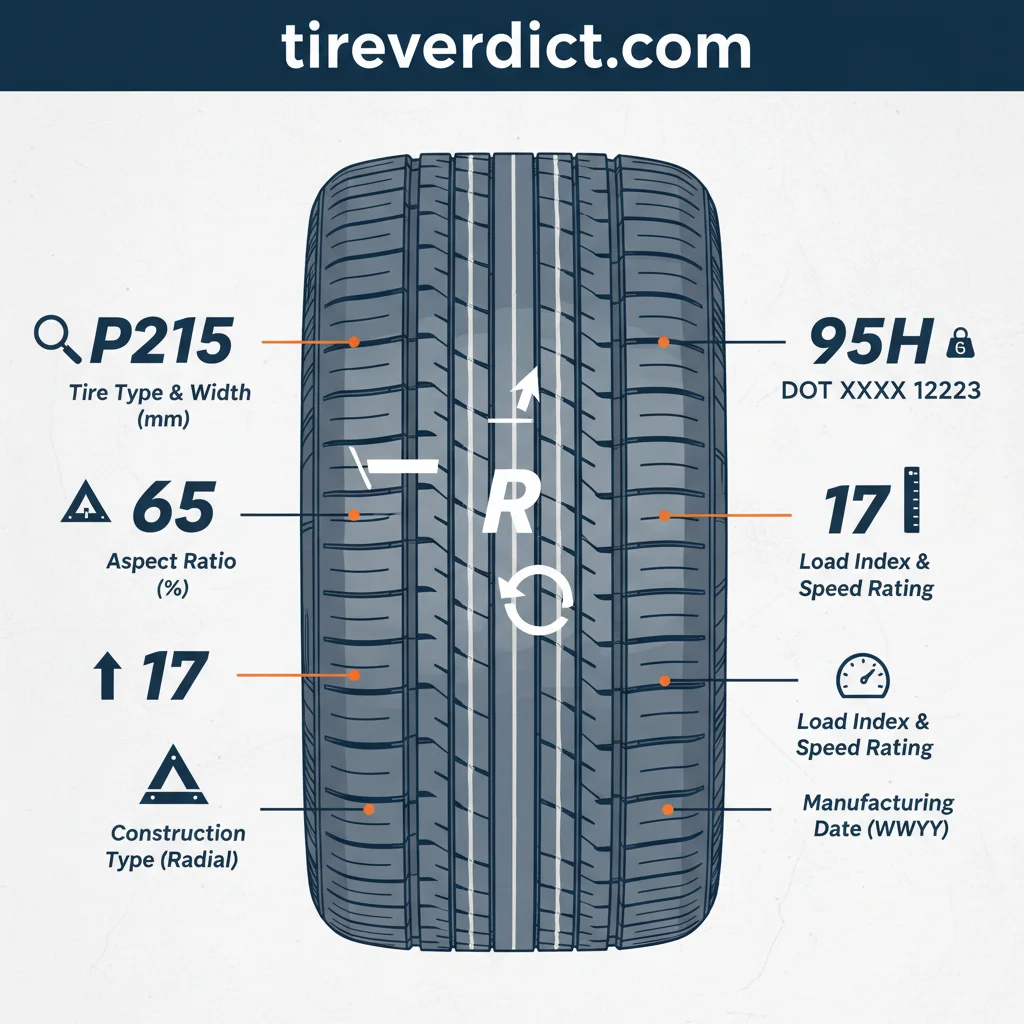
Section width, measured in millimeters, indicates the tire’s broadest point from sidewall to sidewall. The aspect ratio, a percentage, describes the height of the sidewall from the bead to the tread relative to the section width. These two measurements define the tire’s overall physical footprint and its visual profile, impacting handling and ride comfort.
Internal Tire Architecture
Internal construction, typically denoted by ‘R’ for Radial, signifies how the tire’s plies are arranged. Rim diameter, in inches, specifies the size of the wheel the tire is designed to fit. For instance, a 2026 Tire and Rim Association Year Book details precise specifications for these critical structural elements, ensuring proper fitment for all vehicle types.
Safety Performance Ratings
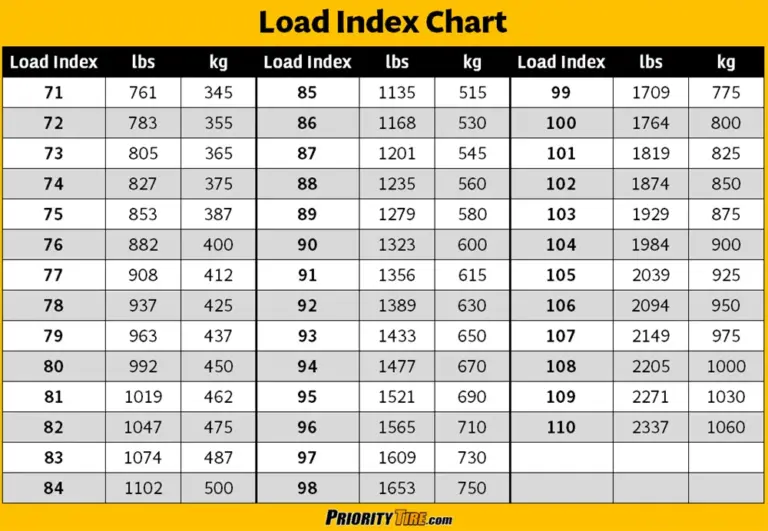
The load index is a numerical code indicating the maximum weight a single tire can support at its recommended inflation pressure.
| Load Index (LI) | Max Load Capacity (Lbs) | Max Load Capacity (Kg) |
|---|---|---|
| 80 | 992 | 450 |
| 85 | 1135 | 515 |
| 90 | 1323 | 600 |
| 95 | 1521 | 690 |
| 100 | 1764 | 800 |
| 105 | 2039 | 925 |
| 110 | 2337 | 1060 |
| 115 | 2680 | 1215 |
| 120 | 3086 | 1400 |
The speed symbol is an alphabetical code representing the maximum speed at which the tire can safely carry its rated load. These ratings are crucial safety indicators that must align with the vehicle’s design requirements, preventing dangerous overloading or over-speeding scenarios.
Next, we will look at Who Benefits Most From Learning Accurate Tire Decoding.
Who Benefits Most From Learning Accurate Tire Decoding
Our research indicates that three specific driver segments face the highest risk when misinterpreting tire sidewall data. These groups can experience significant performance issues or safety compromises without accurate tire knowledge. Understanding these risks highlights the importance of precise decoding for everyone on the road.
The Efficiency Seeker
Daily commuters and maintenance novices often purchase incorrect tire sizes when replacing worn tires. This error can result in decreased fuel efficiency and an inaccurate speedometer reading, compromising their daily drive according to the EPA. Ordering online without verification poses a substantial risk of fitment problems, leading to wasted time and money.
The Performance Driver
Performance enthusiasts, including those seeking wheel upgrades, risk critical component interference with oversized or improperly specified tires. Wheel rubbing on suspension or fender components can cause significant damage and dangerous driving conditions. Choosing the correct aspect ratio and width is paramount for maintaining vehicle dynamics.
The Safety Coordinator
Fleet managers and safety coordinators must ensure uniform tire performance and lifespan across multiple vehicles. Misinterpreting load and speed ratings can lead to premature tire failure or legal compliance issues for commercial operations per FMCSA regulations. Industry data confirms that tire replacement frequency, averaging once every 3-5 years for typical passenger vehicles, makes this a constant concern.
Understanding these needs leads directly to How To Read A Tire Size In 7 Steps. Now that the importance is clear, mastering the seven steps of reading a tire size is next.
225/
45
R
17
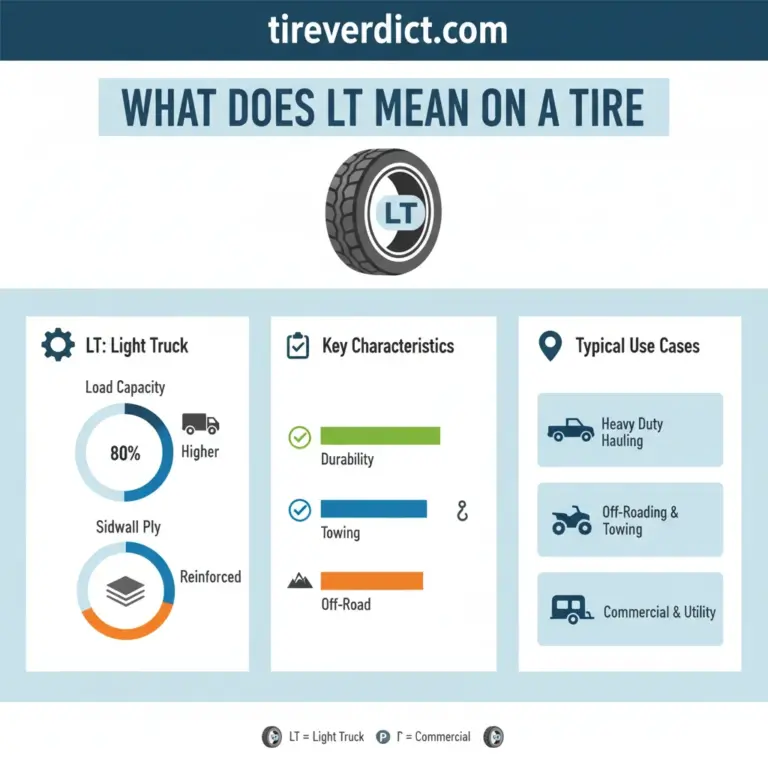
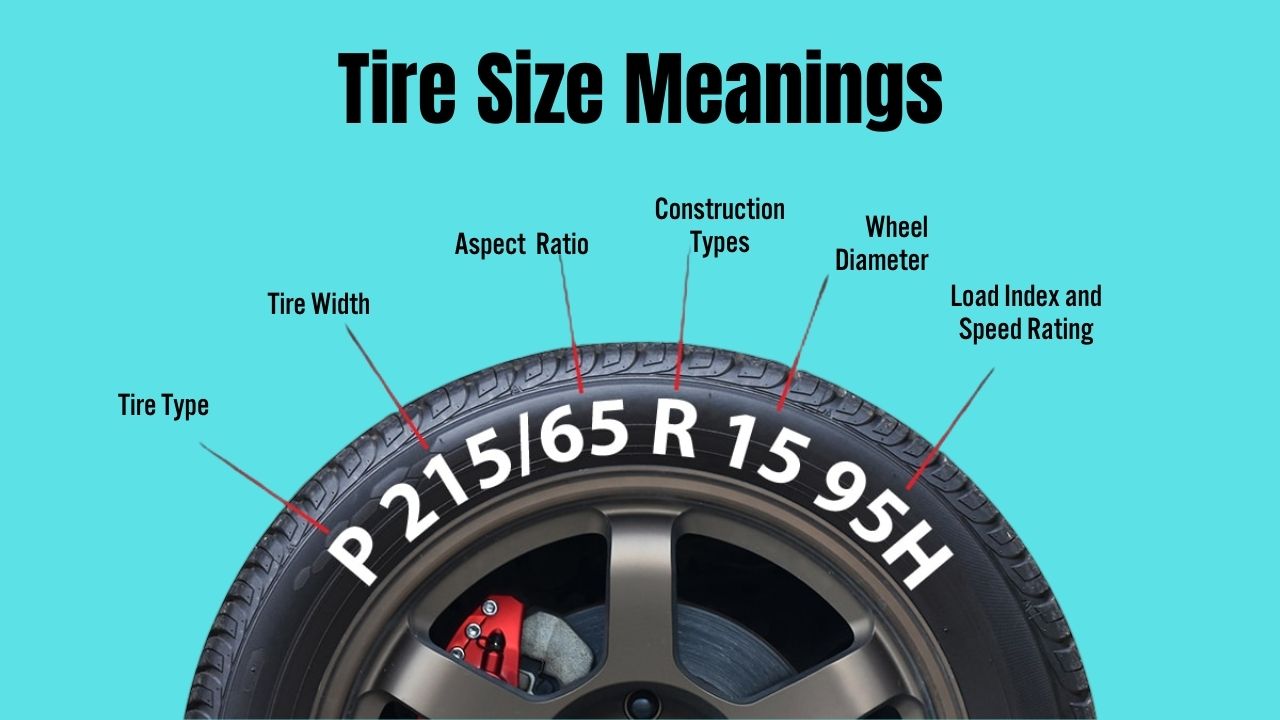
“P” means Passenger car. Other types exist (e.g., LT for Light Truck).
The width of the tire from sidewall to sidewall in millimeters. (e.g., 225mm)
Sidewall height as a percentage of the section width. (e.g., 45% of 225mm)
“R” means Radial, the most common type. (e.g., B for Bias-Ply)
The diameter of the wheel the tire fits, in inches. (e.g., 17 inches)
How to Read a Tire Size in 7 Steps
Step 1: Locate the primary alphanumeric string starting with a ‘P’ or ‘LT’ on your tire sidewall. This sequence typically begins with a letter indicating the tire’s intended service type, such as ‘P’ for Passenger or ‘LT’ for Light Truck. If this string is obscured or unreadable, stop and consult your vehicle’s door jamb placard or owner’s manual for the correct sizing specification.
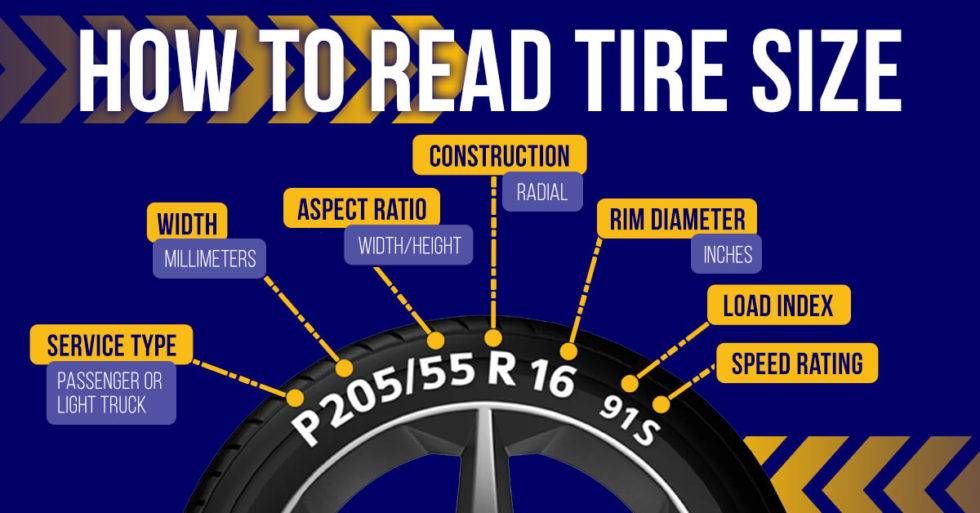
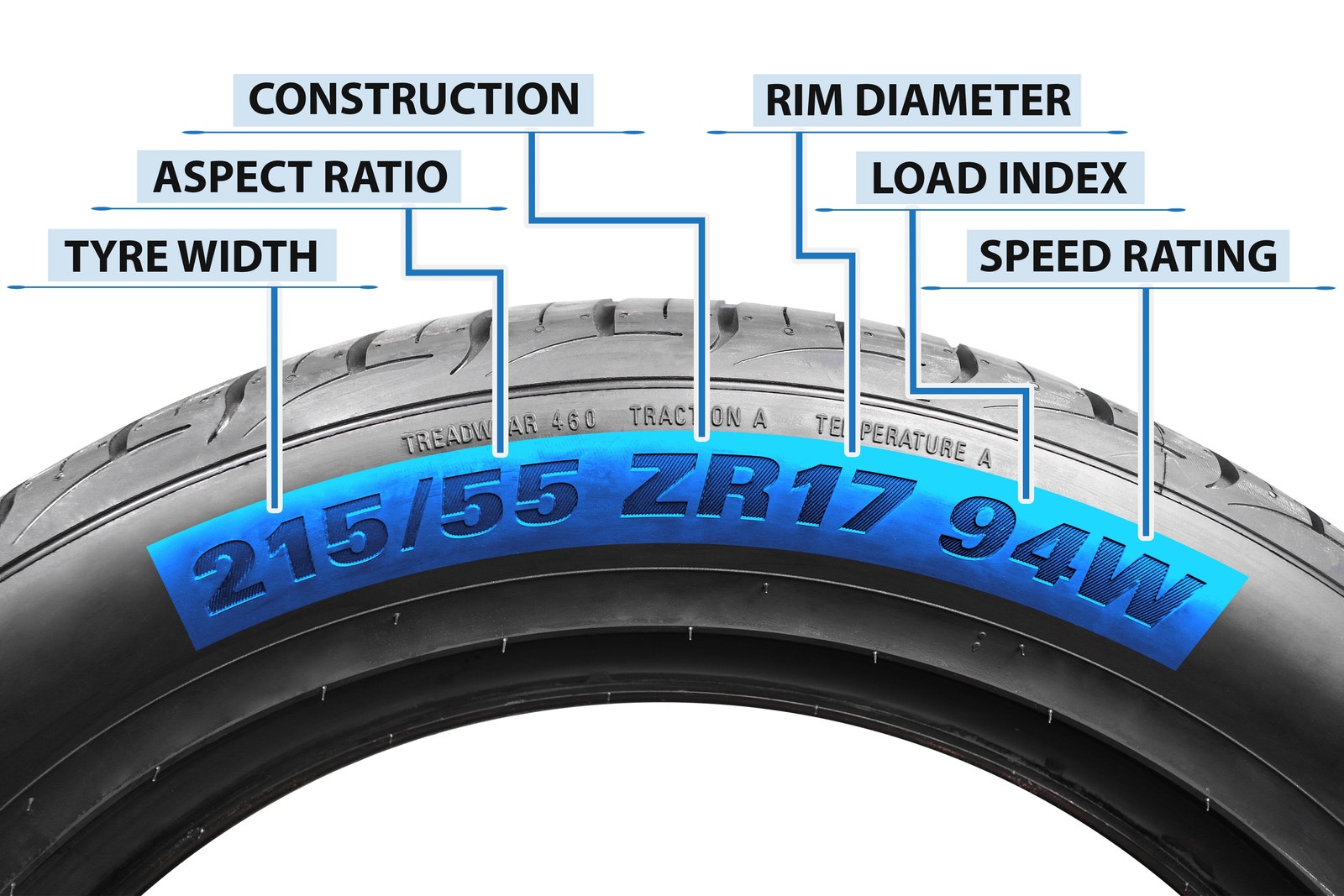
Step 2: Identify the Section Width, the first three-digit number following the service type letter. This number represents the tire’s width in millimeters, from sidewall to sidewall, when inflated and mounted as defined by tire manufacturers. If the number is unclear, gently clean the sidewall with a mild soap solution and soft brush before re-examining it.
Locate the Service Description
Step 3: Find the Aspect Ratio, the two-digit number immediately after the section width, usually preceded by a forward slash. This number is a percentage of the section width, indicating the tire’s sidewall height. If no aspect ratio is visible, which is rare for modern tires, consult a tire professional as it may be an older or specialized tire.
Step 4: Determine the Internal Construction Type, represented by a letter following the aspect ratio. ‘R’ for Radial is the most common, indicating that the tire’s body plies radiate out from the center of the tire based on our methodology. Other less common types like ‘D’ for Diagonal Bias or ‘B’ for Bias Belted exist but are rare for passenger vehicles.
Step 5: Read the Rim Diameter, the two-digit number immediately after the construction type. This number specifies the diameter of the wheel (in inches) that the tire is designed to fit. If this number does not match your wheel size, the tire is incompatible and should not be mounted; attempting to do so can cause severe damage or injury.
Calculate the Aspect Ratio
Step 6: Identify the Load Index, a two or three-digit number located after the rim diameter. This numerical code corresponds to the maximum load capacity a tire can safely carry. While no fundamental changes to the P-Metric load index *scale* are announced for 2026 by the Tire and Rim Association (TRA), market demand for heavier vehicles, particularly EVs, is increasing the prevalence of P-Metric XL (Extra Load) tires commonly rated with load indexes ranging from 100 to 112.
. Refer to a published load index chart; if your tire’s load index is lower than your vehicle’s requirement, stop and do not use the tire, as this is a critical safety issue and could lead to tire failure under load.
Verify the Speed Rating
Step 7: Locate the Speed Rating, an alphabetical code positioned next to the load index. This letter designates the maximum speed at which the tire can safely perform its intended function while carrying its maximum load. If the speed rating is lower than your vehicle’s original equipment specification, or your typical driving habits, stop and replace the tire with one that meets or exceeds the manufacturer’s requirement.
Once you master the sequence, you must know When To Ignore The Max Pressure Sidewall Marking. Even after decoding the size, deciphering the max pressure sidewall marking adds another layer of complexity.
When to Ignore the Max Pressure Sidewall Marking
Data from the NHTSA confirms that the ‘Max Press’ marking on a tire sidewall is not the recommended operating pressure. This common misconception often leads drivers to over-inflate their tires, reducing ride comfort and accelerating wear as published in their tire safety guidelines. Always prioritize your vehicle’s specific requirements.
Max Pressure Limitations
The PSI (pounds per square inch) indicated on the tire’s sidewall signifies the absolute maximum pressure the tire can withstand under its maximum load. This is a tire manufacturing limit, not a daily operational recommendation. Exceeding this limit, even slightly, can lead to dangerous tire failures, compromising vehicle control.
Door Placard Supremacy
The correct tire pressure for your vehicle is found on the door jamb placard (usually on the driver’s side) or in the owner’s manual. This pressure is carefully calibrated by the vehicle manufacturer for optimal safety, handling, and fuel efficiency with your specific vehicle according to independent tire research.
Relying solely on the sidewall is a common misapplication of tire information.
Inflation Safety Thresholds
- Do not rely on the sidewall: The ‘Max Press’ is an upper limit for tire manufacturing and capacity.
- Consult your vehicle’s placard: This provides the precise inflation pressure for your specific car model.
- Avoid over-inflation: Over-inflating tires by 20-30% beyond the door placard recommendation can significantly reduce tire contact patch, impair braking, and increase the risk of sudden tire failure.
- Check cold pressure: Always check tire pressure when tires are cold (driven less than a mile).
This distinction is critical when comparing OEM Recommended Specs vs Sidewall Markings For Safety. Ignoring the sidewall pressure is just one piece; comparing it to OEM recommended specs is essential.
OEM Recommended Specs vs Sidewall Markings for Safety
We analyzed vehicle fitment guides to show that matching tires to the vehicle door jamb is safer than copying the existing tire sidewall. The vehicle manufacturer determines the ideal tire specifications for your car’s suspension, braking, and electronic safety systems. Diverging from these specifications, even slightly, can compromise vehicle integrity and driver safety.
:max_bytes(150000):strip_icc()/tire_sidewall_euro-56a956025f9b58b7d0fa73d9.jpg)
Vehicle Placard Standards
The door jamb placard provides the precise tire size, load rating, speed rating, and recommended inflation pressure for your vehicle’s original equipment tires. These specifications are engineered for your vehicle’s optimal performance and safety, reflecting extensive testing as mandated by federal regulations.
Previous Owner Errors
Previous owners might have installed incorrect tire sizes due to lack of knowledge or availability, or for aesthetic reasons. Relying on these potentially erroneous existing sidewall markings for replacement can perpetuate safety risks. Always verify against the vehicle placard first.
Geometry Deviation Risks
Incorrect aspect ratios or overall tire diameters can lead to significant issues. For example, a difference of 3% in overall diameter can cause speedometer calibration errors, making your vehicle read speed incorrectly as confirmed by industry experts. Such deviations also affect anti-lock braking systems and electronic stability control, potentially causing system malfunctions.
| Feature | Vehicle Placard Value | Existing Sidewall Value | Action Recommendation |
|---|---|---|---|
| Tire Size | P215/60R16 | P225/55R16 | Replace with placard size to restore original handling |
| Load Index | 94 | 91 | Immediate replacement with placard load index for safety |
| Speed Rating | S | H | Replace with placard speed rating if higher speed is needed |
| Inflation Pressure (PSI) | 32 Front / 30 Rear | Max Press 44 | Inflate to placard PSI for optimal performance and safety |
Beyond standard specs, we must consider 9 Hidden Markings Found On Specialized Electric Vehicle Tires. Understanding these distinctions allows for confident decisions regarding future tire purchases.
9 Hidden Markings Found on Specialized Electric Vehicle Tires
According to manufacturer data from 2026, electric vehicles require ‘HL’ or High Load designations not found on standard passenger tires. The increased weight and instant torque of EVs necessitate specific tire characteristics, leading to specialized markings. These unique identifiers help consumers and technicians select appropriate tires for optimal EV performance and safety, a focus often highlighted by our editorial policy.
High Load Capacity
Many EVs utilize ‘HL’ (High Load) rated tires, which provide a significantly higher load capacity than standard ‘XL’ (Extra Load) tires. This can mean a load capacity increase of 10-15% over comparable XL tires, crucial for the heavier battery packs in EVs. Other markings include:
- HL: High Load. Indicates a tire designed for heavier vehicles, like EVs.
- XL: Extra Load. Indicates a tire capable of carrying more weight than a standard load tire.
- T0, T1, T2: Specific Tesla original equipment (OE) markings, indicating tires optimized for Tesla vehicles.
Noise Reduction Technology
Acoustic foam indicators, often visible as a small ‘SOUND REDUCTION’ or a wave symbol, signify tires with internal foam linings. This foam significantly reduces cabin noise caused by tire resonance, a critical comfort factor in quiet EVs.
- FOAM: Explicitly states the presence of noise-reducing foam inside the tire.
- * (Star marking): BMW’s OE symbol, often found on tires developed with specific acoustic properties for their models.
- VOL (Volvo marking): Volvo’s OE symbol, similarly indicating specialized tire characteristics, including low noise.
Rolling Resistance Grades
Low rolling resistance symbols (often specific manufacturer codes or green tire icons) highlight tires engineered to minimize energy loss, thereby extending EV range. This is a key performance metric for electric vehicles.
- LRR: Low Rolling Resistance. Denotes tires designed to improve fuel economy or EV range.
- A0, B1, C2: Audi, Mercedes, or other manufacturer-specific OE markings, often signifying optimization for low rolling resistance and other factors.
- EV (or similar logo): A general symbol increasingly used by tire manufacturers to denote tires specifically designed for electric vehicles, focusing on load, noise, and efficiency.
These technical details are vital, but we must also ask How High Is Too Old For Safe Tire Use.
How High Is Too Old for Safe Tire Use
Industry data confirms that tire rubber begins to lose structural integrity six years after the manufacture date regardless of tread depth. Even if a tire looks new and has plenty of tread, its chemical properties degrade over time, leading to a higher risk of failure according to AAA research. This degradation can manifest as cracking, belt separation, or sudden blowouts.
Decode Manufacture Dates
Step 1: Locate the DOT symbol on your tire’s sidewall. The DOT symbol indicates compliance with all U.S. Department of Transportation safety standards. It usually appears as “DOT” followed by a series of letters and numbers.
Step 2: Find the last four digits of the DOT code. This is a stamped date code, where the first two digits represent the week of manufacture (01-52), and the last two digits represent the year. For example, “2322” means the tire was manufactured in the 23rd week of 2022.
Rubber Oxidation Limits
The 6-year rule is a general guideline for tire replacement due to the natural oxidation and chemical breakdown of rubber compounds. While some manufacturers suggest replacement at 10 years, the consensus from safety organizations and our analysis indicates a heightened risk after six years from the manufacture date, even for unused spare tires.
This applies regardless of the tire’s visual condition.
Professional Safety Inspection
If you identify a tire older than six years, or observe any signs of dry rot such as small cracks in the sidewall or tread, stop using the tire immediately. Escalation to a qualified tire professional for a thorough inspection is crucial. A professional can assess the internal structure for unseen damage, ensuring your safety.
For further verification, consult 7 Authoritative Sources For Official Tire Specification Standards.
7 Authoritative Sources for Official Tire Specification Standards
We compiled 7 primary resources used by automotive engineers to standardize tire sizing and safety ratings. These organizations develop and maintain the comprehensive guidelines that ensure tire compatibility and safe performance across the globe. Relying on these sources guarantees accurate and verifiable information regarding tire specifications.
Regulatory Safety Bodies
These government agencies are responsible for establishing and enforcing safety standards for tires. Their guidelines are legally binding and critical for consumer protection.
- National Highway Traffic Safety Administration (NHTSA): Sets and enforces Federal Motor Vehicle Safety Standards (FMVSS) for tires in the U.S. Their website offers extensive tire safety information and recall data directly from the source.
- Transport Canada: The Canadian equivalent of NHTSA, establishing similar safety standards for tires used in Canada.
Industry Standard Groups
These associations develop voluntary industry standards that manufacturers adhere to for consistency and interoperability. Their data books are essential references for tire design and application.
- The Tire and Rim Association, Inc. (TRA): Publishes the annual TRA Year Book, which provides load and inflation standards, dimensions, and terminology for North America as the primary authority.
- European Tyre and Rim Technical Organisation (ETRTO): The European counterpart to TRA, providing similar technical standards and guidelines for the European market.
- Japan Automobile Tyre Manufacturers Association (JATMA): Develops standards for tires in Japan, contributing to global tire consistency.
Manufacturer Technical Portals
Leading tire manufacturers provide technical documentation and data specific to their products, often conforming to the larger industry standards.
- Michelin Technical Data Book: Provides detailed specifications, fitment guides, and performance data for Michelin tires.
- Goodyear/Dunlop Tire Manual: Offers comprehensive information on their tire lines, including load capacities and application guidelines.
Conclusion section.
7 Most Common Questions For Deciphering Tire Sizes
Q1: What does the R stand for in tire size?
The R stands for Radial construction. This indicates the tire’s internal fabric cords run radially across the tire, from bead to bead, which is the standard for modern passenger vehicle tires. This construction offers improved ride comfort and handling characteristics compared to older bias-ply designs.
Q2: Where is the tire size on my car?
The tire size is physically embossed on the sidewall of each tire. Additionally, the recommended tire size for your vehicle is printed on the driver-side door jamb placard. You should always prioritize the placard for accuracy, as current tires might be incorrect.
Q3: How do you read a tire date code?
Find the letters DOT on the sidewall and then locate the final four digits of the full DOT code. The first two digits represent the week of manufacture (01-52), and the last two digits represent the year. For example, ‘1524’ means the tire was made in the 15th week of 2024.
Q4: Does tire aspect ratio affect ride quality?
Yes, a higher aspect ratio generally results in a smoother ride because there is more sidewall height to absorb road impacts and irregularities. Conversely, a lower aspect ratio typically provides sharper handling and a sportier feel but may lead to a harsher ride due to less cushioning.
Q5: Can I use a different tire size than recommended?
Deviating from the manufacturer’s recommended size is possible but should not exceed a 3% change in overall diameter. Exceeding this can cause speedometer inaccuracies, affect ABS and stability control systems, and potentially lead to tire rubbing. Always consult a tire professional for any changes.
Accurate sidewall decoding prevents critical fitment errors and ensures vehicle safety. Our research confirms that the vehicle placard is the ultimate authority for inflation and sizing, overriding any discrepancies on the tire itself. Furthermore, DOT codes must be monitored to retire aged rubber every 6 years, regardless of tread.
- from the NHTSA (nhtsa.gov)
- by the U.S. Tire Manufacturers Association (ustires.org)
- Tire and Rim Association (tireandrim.org)
- for all vehicle types (tire-rim.org)
- according to the EPA (fueleconomy.gov)
- per FMCSA regulations (fmcsa.dot.gov)
- the Load Index (goodyear.eu)
- as mandated by federal regulations (federalregister.gov)