Most truck owners assume upgrading to stiffer, heavy-duty tires instantly improves their rig across every driving scenario. That assumption backfires the second you bolt on a set of heavy truck tires without checking your daily route. Upgrading from an 8-ply equivalent rated rubber to a stiffer 10-ply construct adds roughly 10 to 15 pounds of unsprung rotational mass per corner and cranks maximum inflation limits from 65 PSI up to a rock-solid 80 PSI. In our comparison of tire load range d vs e, we found that extra strength comes at a clear cost. While one dominates heavy towing and off-road rock crawling, the other preserves the smooth daily driving experience your back relies on.
Quick Verdict: Tire Load Range E wins overall for heavy-duty towing and puncture resistance due to its 10-ply rating and 80 PSI limit. However, Tire Load Range D is the better pick for half-ton trucks and daily drivers, offering a noticeably smoother ride and lighter tire weight without sacrificing moderate towing capability.
Half-ton truck owners and daily drivers wanting moderate towing capability with maximum ride comfort.
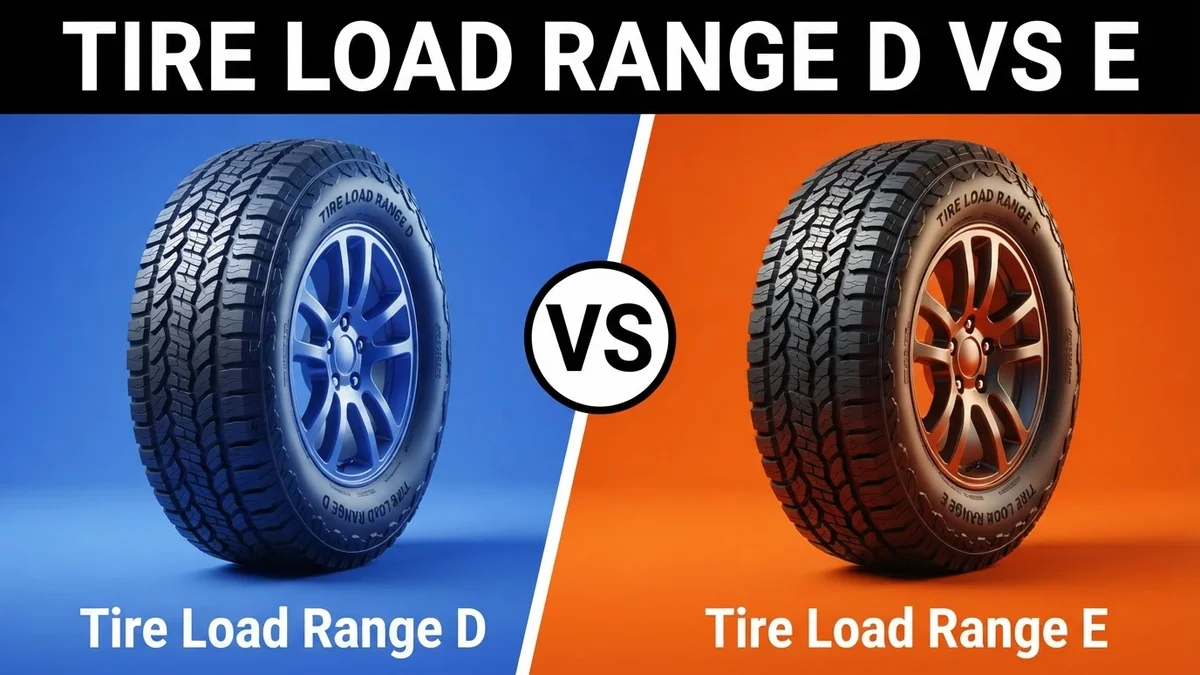
3/4-ton and 1-ton truck owners, heavy trailer haulers, and serious off-roaders needing maximum sidewall strength.
- Load Range E handles 80 PSI vs 65 PSI on Load Range D for maximum payload capacity.
- Load Range E offers a 10-ply rating compared to the 8-ply equivalent rating of Load Range D.
- Load Range E tires carry approx 300-500 lbs more per tire in standard LT sizes like LT265/70R17.
- Load Range D tires weigh about 6 lbs less per tire, preserving fuel economy on daily commutes.
- Expect to pay around $80 to $200 more for a full set of 4 Load Range E tires.
Tire Load Range D vs Tire Load Range E: Head-to-Head Specs


Choosing between these two load ratings means balancing internal carcass strength against daily vehicle dynamics. Tire Load Range D uses an 8-ply equivalent construction topped out at a 65 PSI maximum inflation pressure. Conversely, Tire Load Range E bumps construction to a heavy-duty 10-ply equivalent rating with an 80 PSI max pressure cap. That extra internal steel belt reinforcement allows Range E tires to carry significantly heavier maximum axle loads, but demands higher air pressure to prevent irregular tread wear across the tire footprint.
✓ = better value in that row. Sourced from manufacturer specifications.
Tire Load Range D vs Tire Load Range E: Performance & Category Ratings
Evaluating tire load range d vs e across core performance categories reveals distinct operational trade-offs. In towing and hauling capacity, Tire Load Range E crushes the competition with a stellar 9.6 score against Tire Load Range D‘s 7.8 rating. The extra sidewall reinforcement reduces lateral tire squirm under heavy tongue weights, making high-tonnage trailering feel firmly planted at highway speeds. Similarly, durability and off-road resistance heavily favors Tire Load Range E at 9.4 versus 7.9. Deep tread channels and heavy 10-ply sidewalls effectively resist pinch flats, abrasive gravel, and sharp rock punctures on punishing backcountry trails.
Tire Load Range E also edges out a victory in longevity and treadwear with an 8.7 score versus 8.0 because stiffer sidewalls prevent severe tread squirm during cornering under heavy payloads. However, unladen daily driving paints a totally different picture. Tire Load Range D dominates ride comfort and noise with an impressive 8.8 rating, leaving Tire Load Range E trailing far behind at 7.1. Stiff 80 PSI carcasses transmit minor road imperfections, expansion joints, and potholes straight into the cabin. Tire Load Range D also takes the lead in fuel economy (8.4 vs 7.6) due to reduced rolling resistance and less overall weight per corner. For value for money, Tire Load Range D earns an edge at 8.5 compared to 8.2, delivering optimal real-world capability for half-ton truck owners at a noticeably lower overall price point over the life of the tires.
Load Range D
Load Range E
Tire Load Range D Vs E by the Numbers
Hard numbers make the operational trade-offs immediately clear. Moving up from an 8-ply equivalent to a 10-ply carcass drastically alters tire carcass stiffness, air volume requirements, and rotational mass. Analyzing these concrete performance metrics side by side shows exactly how much maximum payload capacity and sidewall puncture resistance you sacrifice when prioritizing cabin comfort and fuel efficiency on your primary daily driver or light-duty pickup truck.
Load Range D
Load Range E
Hover any bar for exact values. Each metric scaled independently.
Tire Load Range D: Strengths and Weaknesses
Tire Load Range D hits a fantastic sweet spot for light-duty trucks, midsize SUVs, and daily-driven rigs. With an 8.8 ride comfort rating and an 8.4 fuel economy score, this tire keeps your vehicle feeling nimble and surprisingly smooth over uneven asphalt. Lower rotational mass keeps unsprung weight down, protecting your factory shocks, ball joints, and control arm bushings from premature mechanical wear. You do not need extreme inflation levels to maintain an even tread patch; running at moderate pressure settings allows the tire structure to absorb potholes naturally.
Its primary weakness centers on severe heavy-duty utility. Rated at an 8-ply equivalent with a 65 PSI pressure limit, Tire Load Range D scores a modest 7.8 in towing and hauling. Hooking up a heavy travel trailer can cause noticeable sidewall flex during emergency lane changes or high-wind highway driving. Off-road durability also drops to 7.9, meaning sharp rocks can penetrate the tread shoulders easier than on heavy-duty rubber. Nevertheless, for half-ton pickups carrying occasional loads, it provides a balanced mix of comfort and functional utility. Keeping tire inflation optimized with an accurate 🛒 Digital Tire Pressure Gauge → ensures you get maximum tread life out of every mile. If you want to refine your daily drive without giving up moderate towing capability, explore available options today.
Price & availability subject to change. As an Amazon Associate we earn from qualifying purchases.
Tire Load Range E: Strengths and Weaknesses
Built for heavy work and rough conditions, Tire Load Range E serves as the standard choice for three-quarter-ton trucks and serious off-road builds. Earning a massive 9.6 rating in towing and hauling alongside a 9.4 in durability, this tough construction easily handles heavy workloads. The 10-ply equivalent carcass supports up to 80 PSI, eliminating trailer sway and sidewall rollover when hauling heavy equipment, horse trailers, or slide-in campers. Off-road, the reinforced steel belts and thick plies ward off sidewall punctures on sharp granite and desert trails, driving its 8.7 longevity rating.
The trade-off comes directly in daily drivability and comfort. A 7.1 ride comfort rating reflects a rigid, harsh ride when driving an empty truck bed. Minor pavement imperfections feel pronounced, and cabin road noise increases due to stiffer rubber compounds. Fuel economy decreases to a 7.6 rating because turning heavier, reinforced rubber demands extra engine torque. Mounting these tires on a light half-ton truck can make the suspension feel overly stiff and harsh on long trips. Equipping your setup with a heavy-duty 🛒 Weight Distribution Hitch → helps maximize stability when pulling heavy loads at full pressure capacity. If maximum payload capacity and rugged puncture resistance top your list of priorities, inspect current heavy-duty tire listings today.
Price & availability subject to change. As an Amazon Associate we earn from qualifying purchases.
- ✅ Lighter tire weight improves fuel efficiency and unsprung mass
- ✅ Smoother, less harsh ride quality for daily commuting
- ✅ Lower upfront purchase price per tire
- ✅ Ideal match for standard half-ton trucks and SUVs
- ✅ Easier to balance with reduced wear on suspension components
- ❌ Lower max PSI limits total payload and towing capacity
- ❌ Thinner sidewall offers less puncture resistance on sharp rocks
- ❌ Flexes more under heavy tongue weight or fully loaded trailers
- ✅ 10-ply construction handles up to 80 PSI for heavy loads
- ✅ Higher weight capacity supports 3/4-ton and 1-ton trucks
- ✅ Superior puncture resistance on harsh off-road terrain
- ✅ Sustains heavy towing without excessive sidewall flex
- ✅ Longer structural lifespan under continuous heavy strain
- ❌ Stiffer sidewalls create a rougher ride on unladen trucks
- ❌ Heavier weight slightly reduces vehicle gas mileage
- ❌ Higher cost per tire compared to Load Range D
- ❌ Can increase wear on light-duty suspension parts
Tire Load Range D or Tire Load Range E: Which Should You Choose?
Selecting between tire load range d vs e comes down to real-world vehicle usage rather than hypothetical hauling scenarios. If your truck functions primarily as a daily commuter, family road-tripper, or light trail explorer, Tire Load Range D is the logical choice. You preserve ride quality, maintain strong fuel economy, and enjoy a lower initial purchase cost. Half-ton truck owners who tow a utility trailer or small fishing boat occasionally will find Range D provides ample capacity without compromising weekday driving comfort.
On the other hand, pick Tire Load Range E if you regularly tow heavy commercial trailers, livestock, or large travel trailers. Three-quarter-ton and one-ton truck owners must stick with Range E rubber to maintain factory gross vehicle weight ratings (GVWR) and ensure roadside safety. Overlanders driving loaded rigs through remote mountain trails also benefit from the extreme sidewall protection, where a slashed tire could leave you stranded far from cell service. Stashing a durable 🛒 Portable Tire Inflator → in your gear box allows you to easily air back up to 80 PSI after trailing off-road. Should you prioritize supple highway comfort or ultimate heavy-duty strength? Match Range D to your daily commute for maximum comfort, or select Range E for heavy payloads and uncompromising trail durability.
Half-ton truck owners and daily drivers wanting moderate towing capability with maximum ride comfort.
3/4-ton and 1-ton truck owners, heavy trailer haulers, and serious off-roaders needing maximum sidewall strength.
Final Verdict: Tire Load Range D vs Tire Load Range E
In our side-by-side evaluation, Tire Load Range E earns the overall win as the superior option for heavy-duty applications. Its 10-ply equivalent rating, 80 PSI maximum pressure capacity, and impressive puncture resistance give heavy haulers and off-road enthusiasts complete confidence when hauling heavy loads or tackling extreme terrain. It handles high payload stress far better than lighter alternatives.
However, that capability comes with a clear trade-off in ride refinement. Tire Load Range E adds rotational weight and creates a noticeably firmer ride on unloaded trucks. For half-ton owners, daily commuters, and weekend drivers who value fuel efficiency and a plush highway ride over extreme payload maximums, Tire Load Range D remains the smarter and more practical daily driver choice.
As an Amazon Associate we earn from qualifying purchases.
Tire Load Range D vs E: Frequently Asked Questions
Is Tire Load Range D better than E?
Tire Load Range D is better for daily drivers and half-ton trucks seeking ride comfort, as it operates at 65 PSI maximum and weighs ~10% less. However, Load Range E is better for heavy towing and off-roading, offering 80 PSI support and up to 3,400+ lbs capacity per tire.
What is the primary difference between Load Range D and Load Range E?
The main difference is structural strength and inflation pressure. Load Range D equals an 8-ply rating with 65 PSI max pressure, whereas Load Range E equals a 10-ply rating operating at up to 80 PSI, providing around 300 to 500 lbs more load capacity per tire.
Can I put Load Range E tires on a half-ton truck?
Yes, Load Range E tires fit half-ton trucks fine if the wheel size matches. However, the stiffer 10-ply sidewalls will make unladen daily driving noticeably firmer and can decrease fuel economy by 1 to 2 MPG due to increased rotational weight.
Which tire load range lasts longer?
Load Range E tires generally last slightly longer under heavy load conditions because their 10-ply reinforcement prevents tread distortion and overheating. On average, Load Range E tires yield 50,000 to 60,000 miles compared to 45,000 to 55,000 miles for Load Range D.
How much more do Load Range E tires cost compared to Range D?
Load Range E tires typically cost $20 to $50 more per tire than Load Range D versions of the same model, resulting in an $80 to $200 higher total cost for a set of four.