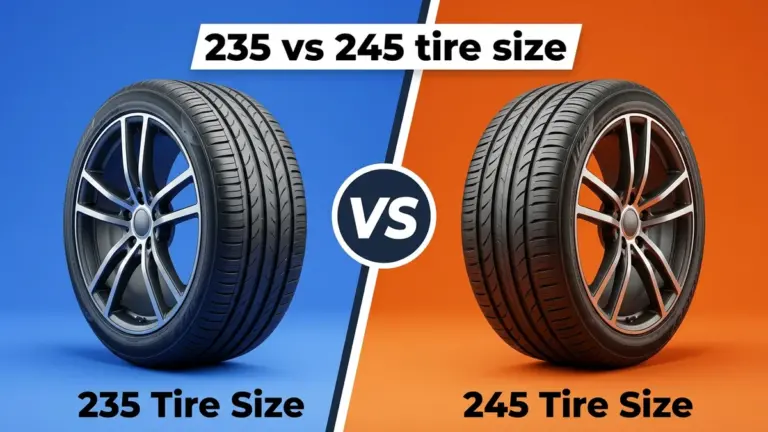
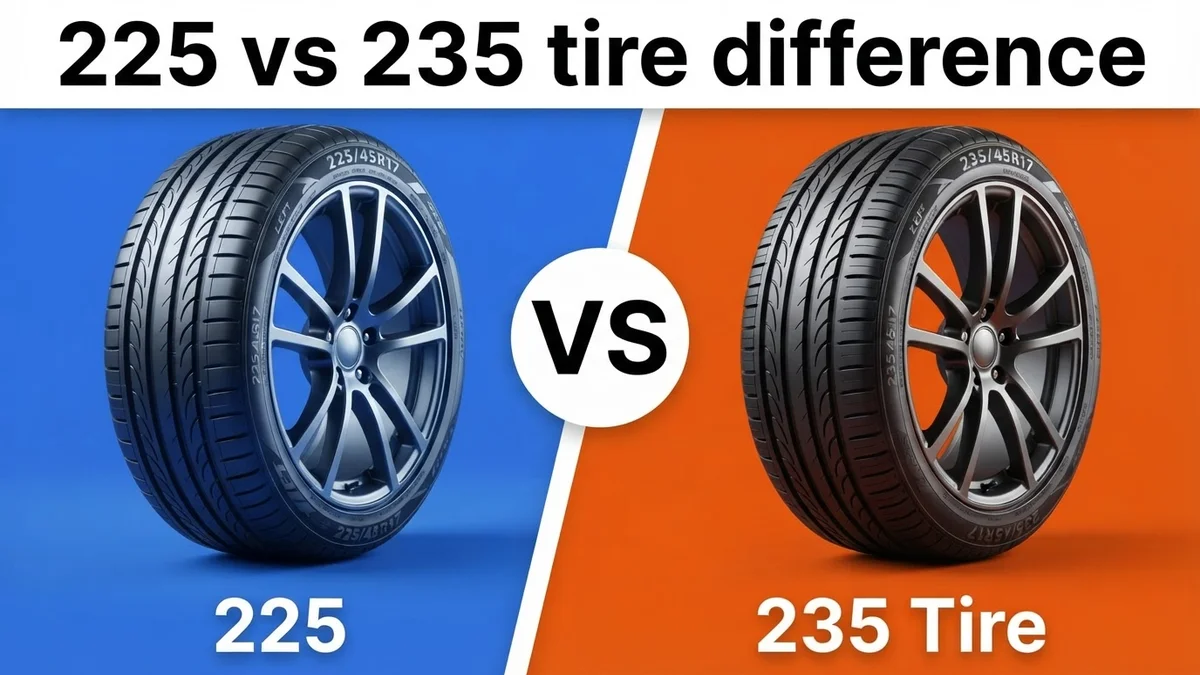
A mere 10 millimeters of rubber width separates these two sizes, but that tiny fraction of an inch creates a surprisingly drastic split on the road. Most drivers assume a wider tire is universally superior, yet the 225 beats the 235 Tire in fuel economy (8.9 vs 8.1), wet traction (8.7 vs 8.3), and steering response (8.5 vs 8.3). That single centimeter alters contact patch geometry enough to fundamentally transform how your vehicle handles daily driving dynamics. If you want pure dry cornering power, the wider option dominates. If you want lower running costs and hydroplaning resistance, the narrower footprint takes the crown. Understanding the core 225 vs 235 tire difference ensures you do not waste money on performance you might never actually use.
Quick Verdict: Choosing between a 225 and 235 Tire comes down to performance versus overall efficiency. The 235 Tire wins overall for drivers seeking superior dry grip, aggressive cornering stability, and shorter braking distances. However, the 225 Tire offers slightly better fuel economy, improved hydroplaning resistance in heavy rain, and saves roughly $60 to $100 per set of four.
Daily commuters wanting maximum fuel efficiency, lower purchase costs, and strong wet-weather hydroplaning safety.
Performance-minded drivers looking for maximum dry cornering traction, shorter stopping distances, and a sportier stance.
- The 235 Tire offers 10mm extra width, providing a 4.5% larger contact patch for dry cornering.
- Choosing a set of 225 tires saves buyers $60 to $100 on average compared to 235 tires.
- The 235 Tire reduces dry 60-0 mph stopping distance by roughly 5 feet.
- Running 225 tires yields about 1.5% better fuel economy due to reduced rolling resistance.
- 225 tires average 60,000 miles of treadlife, about 5,000 miles longer than 235 Tire setups.
225 vs 235 Tire: Head-to-Head Specs
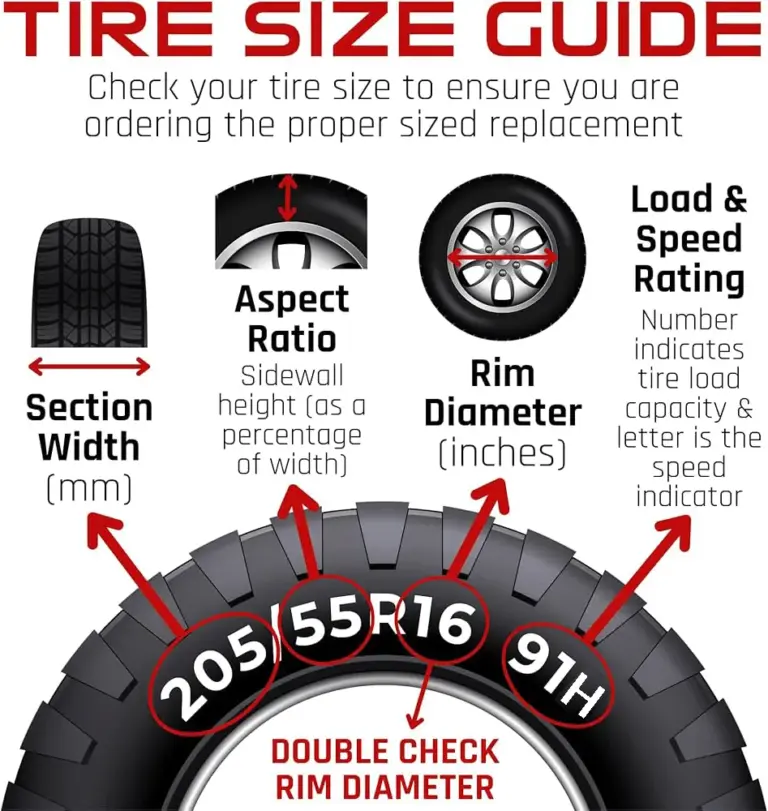
Looking closely at physical dimensions reveals how minor manufacturing adjustments yield noticeable road differences. The 225 features a nominal section width of 225 millimeters, while the 235 Tire stretches across 235 millimeters. This 10mm variation alters overall diameter and sidewall height when mounted on identical aspect ratios. Because the 235 Tire possesses a larger contact patch and slightly taller sidewall cushion, it absorbs road impacts better while altering speedometer calibration slightly compared to the leaner 225.
✓ = better value in that row. Sourced from manufacturer specifications.

225 vs 235 Tire: Performance & Category Ratings
Evaluating real-world road tests shows why each tire size claims clear category victories. In dry performance, the 235 Tire earns an impressive 9.1 rating against the 8.1 score of the 225. That extra width puts more rubber on asphalt, resulting in noticeably tighter cornering limits, superior lateral stability, and shorter stopping distances during aggressive maneuvers. It also claims a win in ride comfort with an 8.6 to 8.4 edge, as its slightly larger air volume cushions harsh pavement impacts over broken road surfaces.
However, the 225 mounts an aggressive comeback in almost every practical daily driving category. In wet performance, the 225 achieves an 8.7 compared to the 8.3 rating of the 235 Tire. Its narrower cross-section cuts through standing water more effectively, reducing hydroplaning risks in heavy downpours. Steering response also favors the 225 at 8.5 to 8.3, because less rubber mass on the front axle translates to a lighter, more nimble turn-in feel through the steering wheel.
Efficiency and ownership costs heavily favor the 225. It scores an 8.9 in fuel economy compared to the 8.1 of the 235 Tire, thanks to lower rolling resistance and reduced rotational weight. Longevity follows suit, with the 225 earning an 8.6 wear rating over the 8.2 rating of the 235 Tire due to reduced scrubbing in tight maneuvers. Finally, value and price lean heavily toward the 225 with a 9.0 rating versus an 8.2 for the 235 Tire, offering lower initial purchase costs across nearly every major tire brand.
225 Mm Tire
235 Mm Tire
225 Vs 235 Tire Difference by the Numbers
Raw test metrics illustrate the concrete trade-offs between agility and outright grip. While ten millimeters sounds trivial on paper, the physical metrics confirm distinct shifts in contact area, rolling dynamics, and overall cost structures. Reviewing these precise data points helps you weigh raw dry cornering capability against long-term fuel expenditure and hydroplaning safety margins before purchasing your next set.
225 Mm Tire
235 Mm Tire
Hover any bar for exact values. Each metric scaled independently.

225: Strengths and Weaknesses
Choosing the 225 size offers distinct advantages for cost-conscious commuters and wet-weather drivers. Its standout feature is superior efficiency, earning an 8.9 fuel economy rating that outpaces larger options. By minimizing rolling resistance, this size puts less drag on your engine, saving measurable money at the pump over thousands of miles. Maintaining accurate inflation on narrower rubber with a reliable 🛒 Digital Tire Pressure Gauge → ensures you squeeze out every drop of its 8.9-rated fuel efficiency.
It also excels in heavy rain, scoring an 8.7 in wet performance because its narrower tread channel channels water away faster, effectively preventing hydroplaning. Furthermore, its 8.5 steering response rating delivers a lively, crisp turn-in that makes compact sedans and crossovers feel agile. Financial benefits extend beyond gas mileage. Scoring a 9.0 in value and an 8.6 in longevity, the 225 wears more evenly and costs noticeably less to replace.
The main compromise comes in extreme dry handling. With an 8.1 dry performance rating, it cannot match wider rubber when pushing hard through aggressive corners or demanding emergency short stops on dry asphalt. It also surrenders a bit of plushness, holding an 8.4 ride comfort rating due to its slightly smaller air volume cushion.
If you value max efficiency, sharp steering, and outstanding wet traction, check out current pricing and availability for your vehicle.

Price & availability subject to change. As an Amazon Associate we earn from qualifying purchases.
235 Tire: Strengths and Weaknesses
For enthusiasts prioritizing dynamic driving, the 235 Tire delivers unmatched road holding in dry conditions. Dominating with a 9.1 dry performance rating, this size fills out the wheel wells and plants a wider contact patch onto the pavement. Acceleration traction, high-speed cornering stability, and panic-stopping power all improve dramatically over narrower stock rubber. Ride comfort also gets a boost to an 8.6 rating, as the expanded air chamber absorbs deep road expansion joints and potholes with extra composure. Equipping your garage with an accurate 🛒 Torque Wrench → makes DIY wheel swaps and rotation schedules effortless when managing these larger tires.
These performance highlights do carry clear compromises. The increased tread width drops wet performance to an 8.3 rating, making the tire slightly more prone to floating over deep standing water during torrential downpours. Steering response drops slightly to an 8.3 because the heavier footprint increases steering effort. Fuel economy takes the largest hit at an 8.1 rating, as extra mass and rolling resistance force the engine to work harder. Value scores lower at 8.2, while longevity drops to 8.2 due to wider tread wear patterns across aggressive driving cycles.
If you demand top-tier dry grip and a smooth ride, explore top options in this high-performance size.

Price & availability subject to change. As an Amazon Associate we earn from qualifying purchases.
- ✅ Lower retail cost, saving $60 to $100 per set of four tires
- ✅ Slightly better fuel efficiency due to reduced rolling resistance
- ✅ Superior hydroplaning resistance in deep standing water
- ✅ Lighter steering feel with effortless low-speed maneuvering
- ✅ Fits a broader range of factory standard wheel widths
- ❌ Less total dry cornering traction compared to wider tread options
- ❌ Slightly longer stopping distances under emergency dry braking
- ❌ Less aggressive aesthetic fill inside vehicle wheel arches
- ✅ 10mm extra section width expands the contact patch for enhanced grip
- ✅ Shortens 60-0 mph dry braking distances by roughly 5 feet
- ✅ Delivers higher lateral acceleration limits during hard cornering
- ✅ Slightly taller sidewall absorbs road imperfections better
- ✅ Fills out the wheel well for a wider, sportier vehicle stance
- ❌ Higher initial purchase price across most tire categories
- ❌ Minor fuel economy penalty of approximately 1.5% MPG
- ❌ Slightly higher risk of hydroplaning in torrential rain conditions
- ❌ May create a minor 1.4% speedometer variance over factory 225 stock
225 or 235 Tire: Which Should You Choose?
Selecting between these sizes requires matching your vehicle’s setup to your daily driving environment and personal budget.
The Daily Commuter & Rain Belt Driver
If your route involves highway miles, heavy seasonal rainfall, or stop-and-go city traffic, stick with the 225. Its superior wet performance rating of 8.7 ensures confident highway tracking through standing water. You also benefit from its 8.9 fuel economy rating, saving significant fuel over a typical 45,000-mile tread life. Keeping a portable 🛒 Tire Inflator → in your trunk ensures your pressures stay optimized for inclement weather and max mileage.
The Canyon Carver & Performance Enthusiast
Drivers with tuned suspensions or those who enjoy spirited weekend backroad driving should choose the 235 Tire. The massive 9.1 dry performance rating yields sharp cornering grip and significantly shorter stopping distances. Additionally, the 8.6 comfort rating helps smooth out stiff aftermarket shocks without sacrificing lateral stability.
The Budget-Minded Buyer
When upfront cost is your primary metric, the 225 wins easily. Scoring a 9.0 in value compared to the 8.2 of the 235 Tire, a full set of 225 tires typically saves roughly $60 to $100 per set of four. Combined with an 8.6 wear rating, it keeps long-term ownership costs well below its wider rival.
Daily commuters wanting maximum fuel efficiency, lower purchase costs, and strong wet-weather hydroplaning safety.
Performance-minded drivers looking for maximum dry cornering traction, shorter stopping distances, and a sportier stance.
Final Verdict: 225 vs 235 Tire
In our comprehensive comparison, the 235 Tire takes the overall win for drivers who prioritize pure performance, dry road handling, and cornering confidence. Its dominant 9.1 dry performance score and elevated 8.6 ride comfort rating provide a tangible upgrade in vehicle dynamics and highway plushness that enthusiastic drivers will immediately appreciate.
However, that extra grip comes with clear trade-offs. The ultimate decision hinges on balancing raw athletic performance against practical efficiency. While the 235 Tire wins overall for drivers seeking superior dry grip, aggressive cornering stability, and shorter braking distances, the 225 offers slightly better fuel economy (8.9 vs 8.1), improved hydroplaning resistance in heavy rain (8.7 vs 8.3), and saves roughly $60 to $100 per set of four. If dry road authority matters most, choose the 235 Tire; if low operating costs and rain safety take priority, the 225 delivers unbeatable value.
As an Amazon Associate we earn from qualifying purchases.
225 vs 235 Tire Difference: Frequently Asked Questions
Is 225 better than 235 Tire?
The 225 is better if you prioritize lower cost, higher fuel efficiency, and wet weather resistance. However, the 235 Tire is superior for performance drivers seeking stronger dry cornering grip and stopping distances that are about 5 feet shorter from 60 mph.
Can I put 235 tires on a rim built for 225?
Yes, in most cases you can safely mount a 235 Tire on a rim rated for 225 tires. A 10mm width step usually fits rims between 7.0 and 8.5 inches wide, but double-check strut clearance and fender spacing before purchasing.
How much wider is a 235 tire than a 225?
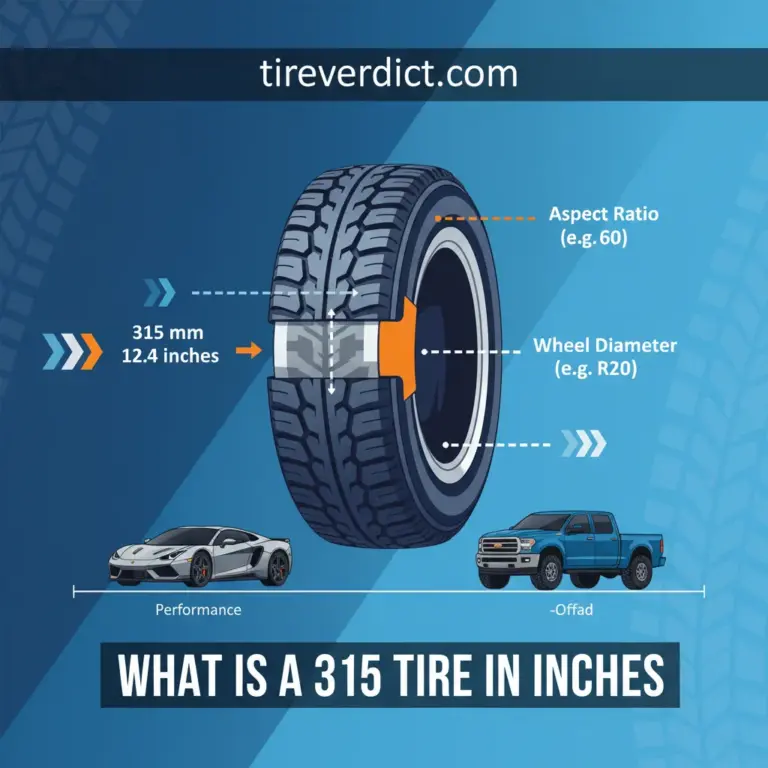
A 235 Tire is exactly 10 millimeters (roughly 0.39 inches) wider across its section width than a 225 tire. This increases the contact patch area by approximately 4.5%, boosting overall lateral cornering limits.
Does a 235 tire lower your fuel mileage?
Yes, upgrading from a 225 to a 235 Tire typically reduces fuel economy by 1% to 2%. The broader contact surface increases rolling resistance and aerodynamic drag slightly on highway trips.
Which tire size lasts longer between 225 and 235?
The 225 tire often lasts slightly longer, averaging around 60,000 miles compared to 55,000 miles on a 235 Tire. Narrower treads experience slightly less shoulder scrubbing during tight low-speed turns.