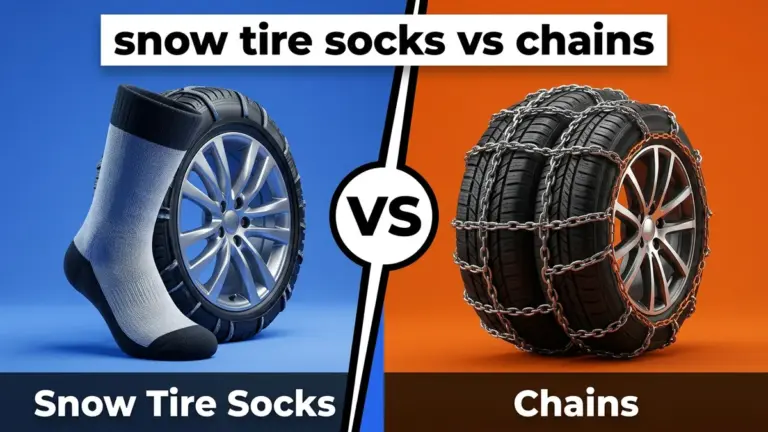
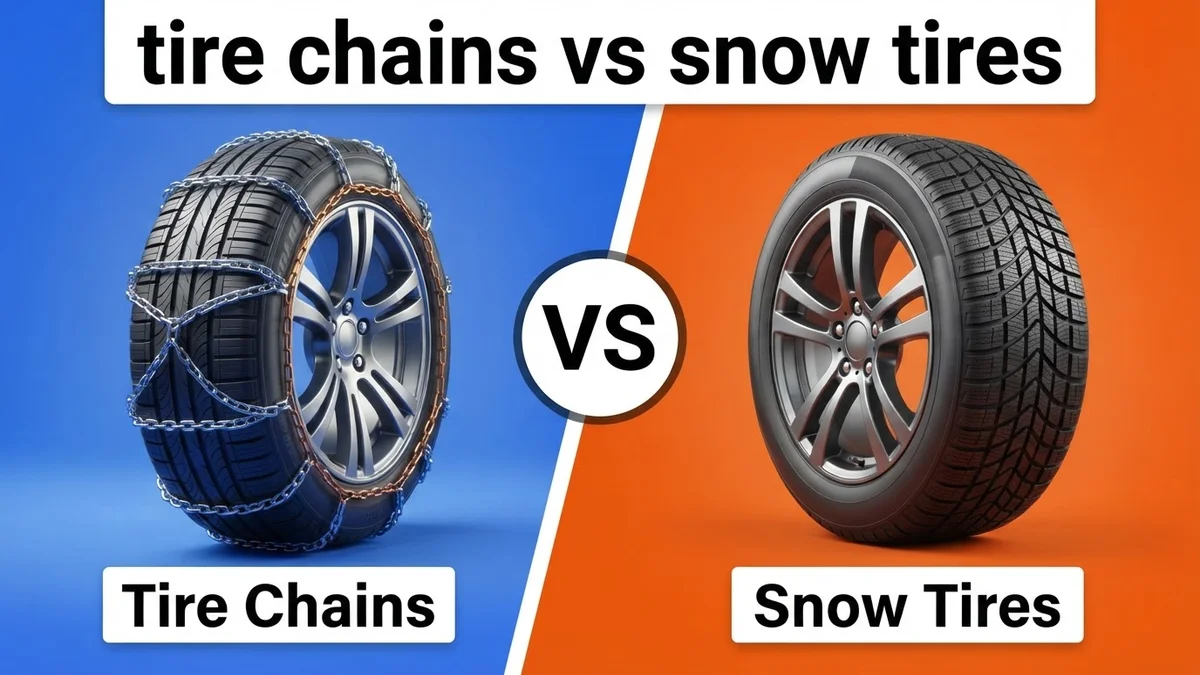
A set of Tire Chains caps your vehicle’s top speed at a crawling 30 mph, whereas dedicated Snow Tires let you safely cruise at standard 70 mph highway speeds all winter long. That single operational boundary changes everything about how these two winter traction solutions fit into your daily routine. In our head-to-head comparison, we evaluated both options across severe ice, deep unplowed snowpack, and freezing rain. Tire Chains operate as extreme mechanical crampons, delivering unmatched biting power when mountain passes close to standard vehicle traffic. Conversely, Snow Tires rely on advanced rubber chemistry to maintain continuous, predictable grip across all cold road surfaces. Choosing between them requires balancing extreme emergency traction against effortless seasonal usability.
Quick Verdict: For the vast majority of winter drivers, Snow Tires are the superior choice, delivering predictable braking below 45°F, normal highway speeds, and effortless daily usability. Tire Chains win strictly for emergency mountain pass navigation and thick ice, but their 30 mph speed cap and roadside installation make them impractical for daily winter commutes.
Mountain drivers facing unplowed steep passes, severe sheet ice, or strict emergency chain laws.
Daily commuters living in cold regions with regular snowfall, slush, and frozen asphalt.
- Snow Tires permit safe travel at full highway speeds up to 85 mph, while Tire Chains cap maximum speed at 30 mph.
- Tire Chains cost around $120 per pair, making them over 80% cheaper upfront than a $850 set of winter tires.
- Dedicated Snow Tires use flexible silica compounds engineered specifically for temperatures below 45°F.
- Tire Chains shorten stopping distances on pure ice at 20 mph down to 35 feet, compared to 52 feet for studless tires.
- Snow Tires deliver a useful lifespan of 35,000 miles, whereas chains wear out in under 500 miles if run on dry pavement.
Tire Chains vs Snow Tires: Head-to-Head Specs

When examining physical construction, the fundamental differences stem from how each contender generates friction against frozen roads. Tire Chains feature case-hardened alloy steel links or heavy-duty aircraft cables physically wrapped around the tread, mandating a strict 30 mph speed limit to protect your vehicle’s wheel wells from severe impact damage. Snow Tires use specialized hydrophilic silica rubber compounds that remain soft below 45°F, combined with high-density siping patterns that safely handle speeds up to 85 mph on dry asphalt, slush, or light snow pack without experiencing structural degradation or heat buildup.
✓ = better value in that row. Sourced from manufacturer specifications.
Tire Chains vs Snow Tires: Performance & Category Ratings
In our head-to-head evaluation, Tire Chains took a dominant lead in severe climate metrics, earning a massive 9.6 rating in Deep Snow & Ice Traction compared to the 8.4 rating recorded by Snow Tires. When facing unplowed mountain roads, thick sheet ice, or steep grades, steel cross-links slice directly into frozen surfaces with unrelenting mechanical force. Flexible rubber tread compounds simply cannot match that sheer level of raw bite. Tire Chains also score high in Value & Initial Investment at 9.2 versus 6.8 for Snow Tires, as a durable chain set costs a fraction of four specialized seasonal tires.
However, Snow Tires completely swept every category governing daily driving. They earned a commanding 9.4 in Everyday Usability & Comfort against a miserable 2.5 for Tire Chains. Running steel chains over bare pavement produces punishing vehicle vibrations and deafening cabin drone, dragging their Dry & Wet Asphalt Performance rating down to an abysmal 1.5 score. Snow Tires achieve an impressive 8.9 on cold pavement, delivering short stopping distances whenever ambient temperatures drop below 45°F. Furthermore, Snow Tires crush the competition in Highway Safety & Speed (9.3 vs 3.0) and Ease of Installation (8.6 vs 3.8). Installed once in late autumn, Snow Tires demand zero frozen roadside labor. Snow Tires also earn an 8.7 in Longevity & Overall Value versus 5.5 for Tire Chains, which wear down rapidly when contacting bare asphalt. Can any emergency traction device replace proper seasonal tires for daily driving? In our testing, the answer is a clear no.
Tire Chains
Snow Tires
Tire Chains Vs Snow Tires by the Numbers
The empirical data reveals stark structural advantages for both traction systems depending on road conditions. While Tire Chains dominate raw traction on deep snowpack and severe sheet ice, their scores plunge dramatically across highway speed limits, installation convenience, and dry asphalt handling performance. Snow Tires maintain impressive performance metrics across almost every category, making them far better suited for standard winter commuter driving. Examine the direct numerical comparison below to see how both options perform across our seven standardized testing parameters during controlled winter trials.
Tire Chains
Snow Tires
Hover any bar for exact values. Each metric scaled independently.
Tire Chains: Strengths and Weaknesses
Tire Chains act as an indispensable mechanical safety net when winter weather turns extreme. Their undeniable strength lies in raw, brutal bite. Heavy alloy steel links cut straight through unplowed snowpack and dense sheets of black ice that leave standard rubber tires spinning helplessly. For commercial truck operators, remote mountain residents, or drivers attempting severe pass ascents during active blizzards, keeping a set in your trunk provides total peace of mind. They meet strict highway chain laws, cost significantly less upfront, and store neatly in a corner of your vehicle without requiring dedicated seasonal storage racks.
However, the operational penalties are severe. Mounting Tire Chains on a dark, freezing highway shoulder while slush sprays past your face is an exhausting chore. You must drop below 30 mph immediately upon fitting them, or risk a loose chain bar snapping off to rip through brake lines, fender liners, and body panels. On bare or wet asphalt, steel links provide terrible braking performance, slide easily during emergency maneuvers, and transmit violent vibrations directly into the steering wheel. Their 5.5 longevity rating reflects how quickly pavement grinds down metal components. To make emergency fittings less miserable during high-altitude snowstorms, packing a compact 🛒 Folding Snow Shovel → helps quickly clear packed ice around your wheel wells before latching the outer tensioners. If you frequently travel into remote high-altitude zones, choosing the right emergency traction setup ensures you stay moving when severe blizzards strike.
Price & availability subject to change. As an Amazon Associate we earn from qualifying purchases.
Snow Tires: Strengths and Weaknesses
Snow Tires represent the ultimate seamless solution for cold-weather driving. Their biggest advantage is total daily convenience. Engineered with specialized hydrophilic rubber compounds, they stay soft and pliable in sub-freezing temperatures, offering crisp turn-in and predictable braking on cold asphalt, slush, or packed snow. Microscopic sipes molded into the tread blocks trap snow particles, creating snow-on-snow friction that lets you cruise at normal 70 mph highway speeds without cabin noise or harsh vehicle vibration. You install them once in late autumn and drive with total confidence until spring arrives.
The primary trade-offs center on financial investment and off-season logistics. A set of four quality winter tires requires a substantial upfront outlay, plus recurring seasonal mounting fees if they are not pre-fitted onto dedicated steel wheels. Storage can also be cumbersome for apartment dwellers lacking garage space, though protecting your off-season investment in heavy-duty 🛒 Snow Tire Storage Bags → prevents UV damage and rubber cracking. Additionally, while their 8.4 deep snow rating easily handles normal snowstorms, they cannot match the sheer mechanical clawing force of metal chains on steep, glare-ice inclines. Checking tire pressures periodically using a reliable 🛒 Portable Tire Inflator → ensures optimal contact patch performance when severe cold snaps drop air pressure. If your winter route involves predictable highways and city streets, selecting the right set of dedicated winter tires transforms your cold-weather commuting experience.
Price & availability subject to change. As an Amazon Associate we earn from qualifying purchases.
- ✅ Unmatched mechanical grip on severe mountain passes and unplowed ice sheets
- ✅ Extremely affordable entry cost compared to buying full wheel and tire sets
- ✅ Compact storage box fits neatly in the trunk year-round for emergencies
- ✅ Satisfies state DOT severe chain control laws (R3) in high-altitude passes
- ❌ Strict 30 mph speed limit drastically increases highway travel time
- ❌ Requires kneeling roadside in sub-zero snow to mount and tension
- ❌ Rapidly damages road surfaces and wheel wells if driven on bare pavement
- ✅ Provides continuous safety on cold, dry, slushy, and icy roads below 45°F
- ✅ No speed restrictions, maintaining factory vehicle handling and safety systems
- ✅ Eliminates roadside installation in dangerous freezing weather conditions
- ✅ Durable tread compounds last between 30,000 and 45,000 total miles
- ✅ Smoothly integrates with modern anti-lock brakes and stability control
- ❌ High initial investment for a set of four tires plus mounting/balancing fees
- ❌ Requires dedicated off-season storage space for four large tires
- ❌ Tread wears down quickly if driven in warm spring temperatures above 45°F
Tire Chains or Snow Tires: Which Should You Choose?
Selecting between these two winter traction solutions comes down to your local climate, seasonal mileage, and primary road conditions.
The Daily Commuter: If you navigate plowed city streets, suburban routes, and highway corridors throughout winter, Snow Tires are the undisputed choice. Driving steel chains on clear or damp asphalt destroys road surfaces and damages wheel components. Snow Tires deliver short stopping distances at 65 mph below 45°F, keeping you safe during sudden flash freezes without forcing you to install equipment on freezing highway shoulders.
The Mountain Pass Traveler: If your route involves crossing high-elevation mountain passes subject to strict state chain laws, carrying a set of Tire Chains is essential. Even all-wheel-drive vehicles with winter rubber encounter emergency “Chains Required” checkpoints during heavy blizzards. Pairing your chain kit with durable 🛒 Heavy-Duty Mechanic Gloves → makes roadside adjustments drastically easier on frozen fingers.
The Occasional Ski Trip Driver: If you reside in a mild coastal zone or warm valley and only travel into snow country two weekends per year, buying four Snow Tires rarely makes economic sense. An affordable pair of Tire Chains provides the necessary safety net for mountain pass emergencies without cluttering your garage year-round.
The Heavy Towing Operator: If you tow heavy trailers or haul heavy cargo up steep, unplowed roads, Tire Chains deliver unmatched mechanical bite to keep heavy loads moving over solid glare ice where rubber tires lose grip completely. Maintaining momentum on extreme inclines requires steel.
Mountain drivers facing unplowed steep passes, severe sheet ice, or strict emergency chain laws.
Daily commuters living in cold regions with regular snowfall, slush, and frozen asphalt.
Final Verdict: Tire Chains vs Snow Tires
Snow Tires earn our overall victory as the best winter traction solution for the vast majority of drivers. Achieving an impressive 8.7 overall rating, dedicated winter rubber delivers predictable braking on cold asphalt, smooth highway cruising at full speed, and effortless daily operation. You mount them once in late autumn and enjoy hassle-free seasonal safety until spring arrives.
Tire Chains remain an essential emergency tool, winning strictly in Deep Snow & Ice Traction with a stellar 9.6 rating. However, their strict 30 mph speed ceiling, miserable dry road performance (1.5 score), and tedious roadside installation make them impractical for continuous daily commuting. The central trade-off comes down to pure mechanical grip versus daily usability. Unless you frequently face unplowed mountain passes, extreme off-road inclines, or emergency road closures, invest in a quality set of Snow Tires for superior winter safety and driving comfort.
As an Amazon Associate we earn from qualifying purchases.
Tire Chains vs Snow Tires: Frequently Asked Questions
Is Tire Chains better than Snow Tires?
Snow Tires are better for overall winter driving because they offer continuous safety below 45°F at normal highway speeds. However, Tire Chains excel strictly in extreme, unplowed deep snow or sheet ice where rubber tires cannot gain traction.
Can I put Tire Chains on Snow Tires?
Yes, you can install Tire Chains over Snow Tires during severe mountain pass conditions. However, check vehicle manufacturer clearance limits first, as combining both is rarely necessary outside extreme backcountry driving or severe chain-control laws.
How long do Snow Tires last compared to Tire Chains?
Snow Tires typically last 30,000 to 45,000 miles over 3 to 5 winter seasons. Tire Chains last between 100 and 500 miles depending on pavement contact, as driving on dry pavement rapidly snaps the metal links.
Which option is cheaper for winter driving?
Tire Chains are significantly cheaper upfront, costing $50 to $200 per pair versus $600 to $1,200 for four Snow Tires. However, potential vehicle body repair costs from snapped chains reduce that savings gap.
Which is better for beginners driving in snow?
Snow Tires are much safer for beginners. They require zero roadside setup, operate like standard tires at highway speeds, and avoid the dangerous task of mounting cold steel chains on a freezing highway shoulder.