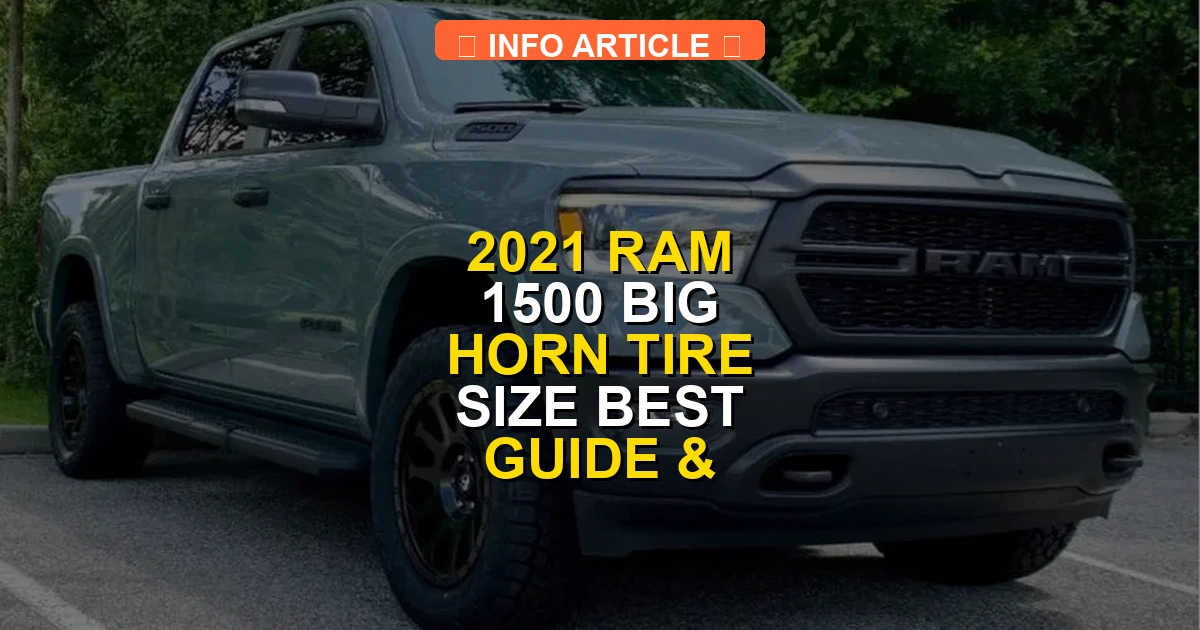
The 2021 Ram 1500 Big Horn primarily comes with two factory stock tire sizes depending on whether your truck is equipped with 18-inch or 20-inch wheels. Knowing your exact OEM tire size is essential for proper replacements, maintaining speedometer accuracy, and ensuring safe towing capabilities.
The stock tire sizes for a 2021 Ram 1500 Big Horn are 275/65R18 for 18-inch wheels and 275/55R20 for optional 20-inch wheels. Knowing your exact factory specification ensures your speedometer stays accurate, your traction control systems function properly, and your truck passes safety inspections.
As you look for replacement rubber in 2026, matching these precise dimensions prevents rubbing against suspension components and maintains your truck’s factory load capacity. Whether you use your Big Horn for daily commuting or occasional towing, sticking to the correct dimensions protects your drivetrain.
Key Takeaways
- Stock 18-inch wheel trucks use the 275/65R18 tire size.
- Models equipped with 20-inch wheels require 275/55R20 tires.
- Always verify your exact load index and speed rating before buying replacements.
- The driver’s side door jamb placard displays your truck’s specific factory tire size.
- Optional packages like the Off-Road Group may feature distinct all-terrain tire specifications.
What Causes Incorrect Tire Sizing Issues on a 2021 Ram 1500 Big Horn
Installing mismatched tires or guessing at dimensions creates immediate mechanical and electronic headaches for your Ram. Even minor deviations from factory specifications disrupt the onboard computer systems and degrade your driving experience.

Speedometer and Odometer Inaccuracies
Your truck’s computer calculates speed based on how fast the wheels rotate. When you install taller or shorter tires than the factory 275/65R18 or 275/55R20 sizes, the wheel rotation count changes. This throws off your speedometer, meaning you might be driving faster or slower than your dash indicates. Over time, it also causes your odometer to record incorrect mileage, impacting your vehicle’s resale value in 2026.
Electronic Stability Control and Transmission Errors
Modern half-ton trucks rely heavily on wheel speed sensors to manage traction control, anti-lock brakes, and shifting points. Putting the wrong size tire on one axle can trick the computer into thinking the vehicle is slipping. This triggers warning lights, disables cruise control, or causes rough shifting as the transmission struggles to find the right shift points for the new rolling diameter.
2021 Ram 1500 Big Horn Tire Size: Your Essential Action Plan
Navigating the various tire sizes for the 2021 Ram 1500 Big Horn can be confusing, especially with multiple factory options, trim variations, and aftermarket possibilities. Choosing the wrong tire size can lead to speedometer inaccuracies, rubbing issues, and poor fuel economy. This guide provides a detailed, step-by-step approach to identifying, verifying, and selecting the exact tire size you need for your specific truck configuration.
Step 1: Locate Your Factory Tire Placard
What you need: A flashlight, a clean microfiber towel, and your smartphone or notepad.
Instructions: Open the driver-side door and look at the vehicle information placard located on the B-pillar (the door jamb area). This sticker lists the original Equipment Manufacturer (OEM) tire sizes, recommended cold inflation pressures, and the Gross Vehicle Weight Rating (GVWR) specifically assigned to your 2021 Ram 1500 Big Horn. Note down every listed size, as Big Horn trucks frequently came equipped with either 18-inch or 20-inch factory wheels depending on added packages like the Night Edition or Level 2 Equipment Group.
Pro Tip: Do not rely solely on what is currently mounted on the truck, as previous owners may have installed incorrect aftermarket sizes.
Step 2: Inspect the Sidewall of Your Current Tires
What you need: Access to all four mounted tires on your truck and a rag to wipe away brake dust.
Instructions: Walk around your 2021 Ram 1500 Big Horn and examine the outer sidewall of the front and rear tires. Look for a standardized alphanumeric code formatted similarly to P275/65R18 or 275/55R20. The first number (e.g., 275) represents the section width in millimeters, the second number (e.g., 65 or 55) is the aspect ratio indicating sidewall height, and the final number (e.g., R18 or R20) denotes the wheel diameter in inches. Verify if your front and rear tires share the exact same dimensions.
Pro Tip: Some Big Horn configurations feature staggered or specialized setups if modified, so check both axles thoroughly.
Step 3: Understand Standard Factory Tire Options
What you need: Basic knowledge of Ram 1500 factory trim packages and your placard findings.
Instructions: Familiarize yourself with the two most common factory tire sizes for the 2021 model year Big Horn. The base 18-inch wheel configuration typically utilizes a 275/65R18 tire, offering a taller sidewall for a smoother ride and better off-road absorption. Alternatively, trucks equipped with 20-inch wheels utilize a 275/55R20 tire, providing a wider contact patch and sharper on-road handling characteristics. Match your driving preferences—whether heavy towing, commuting, or light off-roading—to one of these two foundational factory sizes before exploring larger alternatives.
Pro Tip: Standard load ratings for these sizes are usually SL (Standard Load) or XL (Extra Load), whereas LT (Light Truck) tires are reserved for Heavy Duty models.
Step 4: Evaluate Aftermarket Upsizing and Clearance Limits
What you need: A measuring tape and a steering wheel helper.
Instructions: If you want to install larger tires on your stock 2021 Ram 1500 Big Horn without adding a lift or leveling kit, understand your strict clearance thresholds. The absolute maximum tire diameter you can run on a completely stock Big Horn suspension without rubbing the upper control arm or plastic fender liner is approximately 33 inches (such as a 275/60R20 or 285/60R18). Turn your steering wheel completely to one side and measure the clearance between the tire edge and the nearest metal and plastic components to ensure at least one inch of clearance.
Pro Tip: Avoid exceeding a 33-inch tire on a stock setup, or you will experience severe rubbing during sharp low-speed turns.
Step 5: Account for Leveling Kits and Lift Modifications
What you need: Details of any suspension modifications currently installed or planned for your truck.
Instructions: Many 2021 Ram 1500 Big Horn owners install a 2-inch front leveling kit to eliminate the factory rake. If your truck is leveled, your maximum allowable tire size expands to a 34-inch or even a 35-inch tire (such as a 295/60R20 or 35×12.50R20), depending heavily on the wheel offset. Verify your aftermarket wheel’s backspacing and offset, as pushing the wheel too far outward will force the tire into the front bumper or rear fender liner during articulation.
Pro Tip: When installing 35-inch tires on a leveled Big Horn, minor trimming of the plastic inner fender liner is a common and necessary adjustment.
Step 6: Check Load Index and Speed Ratings
What you need: Your truck’s maximum towing capacity and the tire specification chart.
Instructions: Look at the numbers immediately following the size on the tire sidewall (e.g., the “115T” in 275/55R20 115T). The number represents the Load Index, and the letter represents the Speed Rating. For the full-size Ram 1500 Big Horn, ensure your replacement tires meet or exceed the factory load index rating (typically 112 to 116) to safely support the truck’s weight, cargo, and maximum towing capacity. Installing a tire with a lower load index can lead to excessive heat buildup and dangerous tire failure under heavy loads.
Pro Tip: Always prioritize safety by matching or upgrading the load index, especially if you regularly tow trailers or haul heavy bed payloads.
Step 7: Confirm Speedometer and Gear Ratio Impact
What you need: A GPS speed tracking app or a digital speedometer tool.
Instructions: If you choose a tire size that differs significantly in overall diameter from the factory original, your truck’s computer will calculate vehicle speed incorrectly. For example, upgrading from a stock 32-inch tire to a 35-inch tire will cause your speedometer to read slower than your actual physical speed, potentially resulting in speeding tickets and inaccurate fuel economy tracking. If you change your tire size by more than 3 percent, visit a local dealership or use a programmer tool to recalibrate your truck’s Powertrain Control Module (PCM).
Pro Tip: A tire size calculator can help you compare your old and new tire dimensions to calculate the exact percentage error before you buy.
✅ Final Checklist
- Checked the driver-side door jamb placard for the exact OEM size specified for your specific Big Horn build.
- Verified the current physical wheel diameter (18-inch vs. 20-inch) mounted on your truck.
- Ensured selected aftermarket tires fit your current suspension setup (stock versus leveled).
- Confirmed that the chosen tire’s Load Index and Speed Rating meet Ram’s safety minimums.
- Planned for potential speedometer recalibration if altering overall tire diameter.
Important Notes:
- Always engage the electronic parking brake and use wheel chocks before jacking up your truck to measure or test-fit tires.
- Seek professional help from an alignment and tire specialist if you are installing custom wheels with aggressive offsets that require suspension modifications.
- Estimated time for research and sizing verification: 30 to 45 minutes. Tire purchase and installation cost range: $600 to $1,800 depending on brand, tread pattern, and size.
How to Identify Your Exact 2021 Ram 1500 Big Horn Tire Size
Never guess your tire size based purely on what looks right or what came on a different trim level. Ram offered multiple wheel packages for the Big Horn, meaning two trucks sitting side by side might require entirely different tires.
Checking the Driver-Side Door Placard
Open the driver’s side front door and look at the white and yellow certification label affixed to the door jamb. This manufacturer placard lists the exact original equipment tire size, speed rating, and recommended cold inflation pressures for both the front and rear axles of your specific truck. It serves as the ultimate source of truth for your vehicle’s factory requirements.
Reading the Sidewall Code
Walk out to your truck and look at the rubber currently mounted on your wheels. You will see a series of raised letters and numbers molded into the sidewall, formatted like 275/65R18 or 275/55R20.
- The first number represents the section width in millimeters.
- The second number shows the aspect ratio of the sidewall height.
- The letter R designates a radial construction.
- The final number indicates the wheel diameter in inches.
Always verify these numbers match before purchasing new replacement tires.
Step-by-Step Guide to Replacing and Selecting the Right Stock Tires
Replacing the original equipment on your 2026-era Ram 1500 Big Horn requires careful attention to load ratings, sidewall integrity, and overall tire diameter. Selecting a tire that matches your specific wheel package ensures that your factory suspension geometry and electronic stability control systems function precisely as intended by Stellantis engineers.
Evaluating Tire Load and Speed Ratings
Modern half-ton trucks demand robust construction to handle towing and payload demands safely. Always verify that replacement tires meet or exceed the original equipment manufacturer specifications for load index and speed rating, typically found on the driver-side door placard. Industry research shows that installing tires with insufficient load capacities accelerates tread wear and compromises braking stability under heavy loads.
Execution Steps for Replacement
- Verify your exact current wheel size, as the Big Horn trim package came with multiple factory options ranging from 18-inch to 20-inch alloy rims.
- Consult reputable automotive tire databases to cross-reference alternative tread patterns that match your precise stock dimensions.
- Confirm that the chosen replacement tires feature the correct tire pressure monitoring system compatibility to prevent persistent dashboard warning lights.
- Schedule professional mounting, computer dynamic balancing, and a four-wheel alignment to protect your new investment from premature edge wear.
What If Your Aftermarket Tire Size Still Causes Speedometer Errors
Upgrading to larger aftermarket tires frequently alters the rolling circumference, leading to inaccurate speedometer readings and delayed transmission shift points. When basic tire swaps throw off your vehicle’s electronic calculations, targeted mechanical or digital recalibration is necessary to restore factory accuracy.
Advanced Calibration Options
- Connect a professional-grade OBDII digital programmer to update the powertrain control module with the exact new tire revolutions per mile.
- Visit a certified Ram dealership to flash the body control module using proprietary diagnostic software if aftermarket programmers fail to communicate.
- Consult a specialized speedometer gear replacement technician if you are operating an older customized axle ratio configuration.
- If recalibration options fail, revert to factory-spec tire dimensions to prevent transmission wear and inaccurate odometer tracking.
What If It Still Doesn’t Work?
If electronic recalibrations and aftermarket adjustments fail to resolve persistent tire rub, speedometer discrepancies, or vibration issues, specific fallback measures are required:
- Inspect suspension components for hidden binding or sagging coil springs that reduce overall wheel well clearance.
- Remove any aftermarket wheel spacers that push the tire edge too far outward into the inner fender liner.
- Consult a professional truck alignment specialist to check for bent control arms or incorrect caster angles.
- Seek professional suspension diagnostic help at an authorized service center, with diagnostic and correction costs typically ranging from $150 to $450 depending on the required labor.
Conclusion
Selecting the correct tire size for the Ram 1500 Big Horn protects your vehicle’s handling, fuel economy, and safety systems. Whether maintaining stock dimensions or upgrading to a custom setup, precise measurement prevents costly mechanical conflicts. According to verified research and automotive safety experts, matching proper load ratings and verifying tire circumferences remains the single best practice for long-term truck reliability. Take the next step today by checking your driver-side door placard and confirming your current wheel specifications before purchasing your next set of tires.
❓ Frequently Asked Questions
What are the exact factory dimensions for the 2021 Ram 1500 Big Horn?
The 2021 Ram 1500 Big Horn generally comes with either 275/65R18 tires for 18-inch rims or 275/55R20 tires for 20-inch rims. These sizes balance highway comfort, load capacity, and handling performance.
Does the engine choice (V6 vs. V8) change the stock tire size?
No, the engine option—whether the 3.6L Pentastar V6 or the 5.7L HEMI V8—does not dictate the factory tire size. Wheel diameter and trim packages determine the installed tires.
What load index and speed rating do I need for replacement tires?
Most OEM replacements for the Big Horn carry a standard load index (typically around 116T or similar) to support the truck’s weight and towing capacity safely. Always match or exceed the minimum ratings listed on your door placard.
How do I check my current tire size if my wheels were changed?
Read the sidewall of your currently mounted tires. You will find a sequence like P275/65R18 or 275/55R20 printed directly on the rubber.
Can I fit larger tires on a stock 2021 Ram 1500 Big Horn without a lift?
You can usually fit slightly larger tires, such as a 275/60R20 or a minor step up, without rubbing, but larger off-road setups often require a leveling kit or suspension lift.
Where is the tire pressure and size information sticker located?
Open the driver-side front door and look at the metal or plastic pillar post (door jamb) for the official tire and loading information placard.