
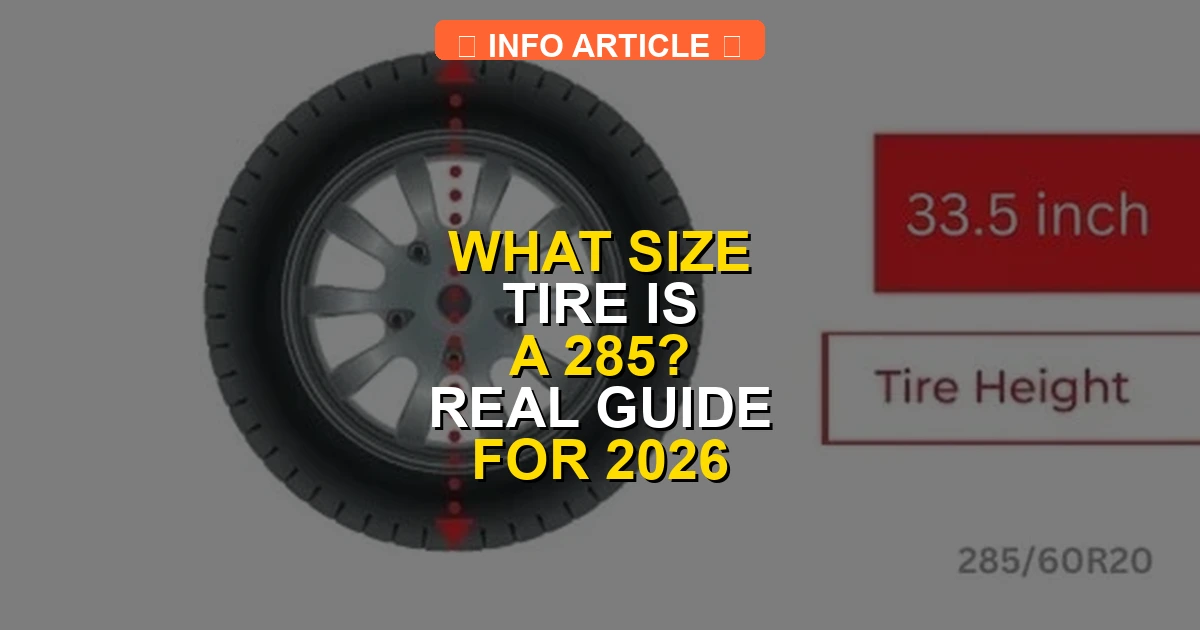
A 285 tire only defines the tread width in millimeters, which equals approximately 11.2 inches. To find the actual overall height and diameter, you must look at the full tire designation that includes the aspect ratio and wheel size. Without the complete metric code, determining the exact physical size of the tire is impossible.
A 285 tire has a section width of 285 millimeters, which is approximately 11.22 inches wide. If you are looking at a modern 285 tire in 2026, you need to know that this number only tells you how wide the tire is from sidewall to sidewall, not how tall it is.
Many drivers search for the size of a 285 tire expecting a single measurement for overall diameter. Because tire sizing relies on a metric code system, you cannot determine the total height or sidewall size without looking at the full tire designation, such as 285/70R17.
Key Takeaways
- The number 285 represents strictly the tire’s section width in millimeters.
- A 285 mm tread width converts to roughly 11.2 inches across.
- Overall tire height depends entirely on the aspect ratio and wheel diameter.
- Common full sizes include 285/70R17 and 285/75R16, which have different total diameters.
- Always check your vehicle placard before purchasing replacement tires.
What Causes Confusion About What Size Tire Is a 285
The Single-Number Misconception
When you ask what size tire a 285 is, you are usually looking for a straight measurement in inches. Tire manufacturers use the 285 as a standalone reference in casual conversation, which leads to confusion. You might hear someone say they are running 285s on their truck, but that only specifies the footprint width. It leaves out the aspect ratio and wheel diameter entirely.

Metric Versus Imperial Measurements
The core confusion stems from mixing metric and imperial units. Tire widths are always measured in millimeters, while wheel diameters and overall heights are typically discussed in inches in North America. When you try to picture 285 millimeters in your head, it does not immediately translate to inches unless you know the conversion formula. A 285 millimeter width converts to roughly 11.2 inches. Without the rest of the tire code, you simply do not know how tall that 11.2-inch wide tire actually stands.
How to Convert and Calculate a 285 Tire Size
Converting Millimeters to Inches for Width
To find the exact width of your 285 tire in inches, you have to divide the section width by 25.4, which is the exact number of millimeters in one inch.
- Start with the baseline metric number: 285 millimeters
- Divide 285 by 25.4
- The result is 11.22 inches of section width
This tells you the widest point of the tire when it is mounted and inflated to the correct pressure.
Why You Need the Full Code for Height
Knowing the width is only half the battle. To calculate the sidewall height and overall diameter, you must read the numbers that follow the 285 on your sidewall. For example, on a 285/70R17 tire, the 70 is a percentage. It means the sidewall height is 70 percent of the 285mm width. That gives you a sidewall height of about 199.5mm or 7.85 inches. Add that to the 17-inch wheel, and your total tire height comes out to roughly 32.7 inches.
Step-by-Step Guide to Reading Full 285 Tire Dimensions
Understanding a 285 tire requires looking beyond the nominal section width. Complete tire sizing involves a standardized metric code defined by the Tire and Rim Association. Every component of this string dictates physical constraints, load ratings, and compatibility with modern 2026 vehicle platforms.

Decoding the Sidewall Sequence
Reading the full specification demands breaking down the numerical sequence printed on the rubber sidewall. Follow this sequence to evaluate complete tire dimensions accurately:
- Locate the three-digit section width starting the code, which confirms the nominal 285mm cross-section.
- Identify the two-digit aspect ratio immediately following the forward slash, which calculates sidewall height as a percentage of the width.
- Check the internal construction letter, typically ‘R’ for radial ply design, which remains the industry standard in 2026.
- Read the wheel diameter ending the primary sequence, indicating the exact rim size in inches required for mounting.
According to automotive engineering data from the Society of Automotive Engineers, failing to verify the load index and speed rating listed directly after these dimensions can lead to premature tire failure or safety compliance issues during state inspections.
What If Your Specific 285 Tire Size Doesn’t Clear Your Fenders
Installing a 285-millimeter-wide tire sometimes leads to mechanical interference with inner fender liners, suspension struts, or exterior quarter panels. When standard fitment guides fail to prevent rubbing, drivers must implement corrective modifications to ensure safe, legal operation on public roads.
Practical Solutions for Clearance Issues
- Install high-grade hub-centric wheel spacers ranging from 5mm to 15mm to push the wheel assembly outward away from internal suspension components.
- Adjust factory or aftermarket suspension alignment specs to increase negative camber, tucking the top of the tire inward toward the chassis.
- Perform professional fender rolling to flatten internal sheet metal lips that frequently catch aggressive tire shoulders during compression.
- Consult a certified suspension technician if interference persists, as custom control arms or modified bump stops may be strictly required.
Professional labor rates for custom fitment adjustments and fender modifications generally range from $150 to $450 depending on regional shop fees and vehicle complexity.
Conclusion
A 285 tire delivers a robust 11.22 inches of nominal width, offering exceptional surface contact and aggressive styling when matched to the correct wheel offset. Successfully transitioning to this size requires careful evaluation of aspect ratios, rim widths, and physical fender clearances to prevent premature wear and mechanical damage. According to verified research and automotive safety experts, always prioritize proper load ratings and professional alignment over sheer aesthetic stance. Take the next step today by cross-referencing your vehicle manufacturer’s door placard with current 2026 tire load specifications before purchasing a new set.
❓ Frequently Asked Questions
What size tire is a 285 in standard inches?
The number 285 strictly refers to the section width in millimeters. When converted, 285 mm equals roughly 11.2 inches wide. However, this does not tell you the total height of the tire.
How do I find the full diameter of a 285 tire?
To find the overall diameter, you need the complete metric size code, such as 285/70R17. This includes the aspect ratio (70) and the wheel diameter (17 inches) required to calculate total height.
How tall is a 285/70R17 tire in inches?
A 285/70R17 tire has an overall diameter of approximately 32.7 inches. The 70 aspect ratio means the sidewall is 70% of 285 mm, doubled and added to the 17-inch wheel diameter.
How tall is a 285/75R16 tire in inches?
A 285/75R16 tire is taller, measuring roughly 32.8 inches in overall diameter. The taller 75 aspect ratio compensates for the smaller 16-inch wheel size compared to a 17-inch setup.
Are all 285 tires the same height?
No, two tires that both start with 285 can have drastically different overall heights. Height depends entirely on the aspect ratio and the rim diameter specified in the full tire size.
Can I replace a narrower tire with a 285 width tire?
You can, provided your wheel width is compatible and your vehicle has adequate clearance. Upgrading to a 285 width will result in a wider contact patch and may require suspension adjustments to prevent rubbing.