Finding a screw in your tire can be stressful, but you can often drive a short distance to a repair shop if the tire is holding air. Never pull the screw out, as it acts as a temporary plug preventing rapid deflation. Assess the damage immediately and monitor your tire pressure before driving.
No, you generally should not drive with a screw in your tire unless it is an absolute emergency to move out of traffic. Even if your tire still looks inflated, a foreign object compromises the structural integrity of the rubber and can cause a sudden, dangerous blowout at highway speeds. As tire safety standards and TPMS (Tire Pressure Monitoring Systems) evolve into 2026, catching these punctures early prevents costly roadside emergencies and keeps you safe.
When you spot a screw embedded in your tread, your immediate goal is to assess whether the tire is holding air or leaking rapidly. Driving even a short distance on an under-inflated tire can ruin the internal sidewalls beyond repair. This guide walks you through diagnosing the damage, running essential safety checks, and determining whether your tire can be patched or must be replaced.
Key Takeaways
- Never pull the screw out of your tire because it slows down air loss.
- Check tire pressure immediately to see if the tire is actively leaking air.
- Screws located in the tire sidewall cannot be repaired and require immediate replacement.
- Drive at low speeds to a nearby mechanic if the tire maintains pressure.
- Change to a spare tire or use roadside assistance if the tire is completely flat.
What Causes Tires to Puncture and How to Diagnose a Screw
Why Screws End Up in Your Tires
Construction zones, repaved highways, and residential driveways are the primary breeding grounds for loose hardware. As you drive, your tire tread acts like a magnet, catching stray screws and nails upright on the asphalt. The weight of your vehicle forces the sharp point directly through the rubber compound. In 2026, modern road debris tracking shows that urban construction projects contribute to a massive spike in localized tire punctures.
How to Spot and Assess the Puncture
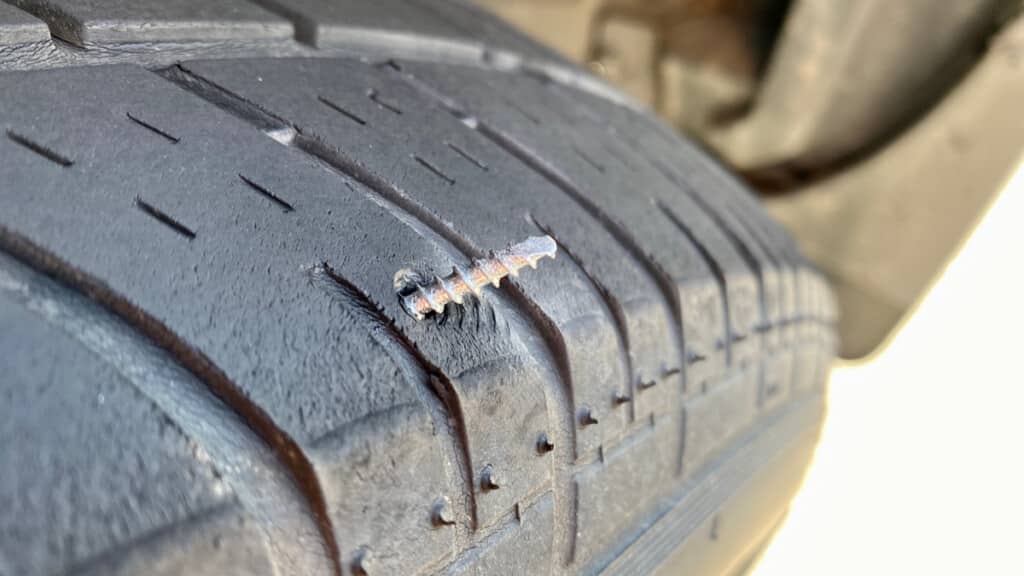
You might notice a rhythmic ticking sound as you drive, or your dashboard warning light might suddenly illuminate. To diagnose the situation accurately, follow these steps:
- Safely park your car on a flat surface away from moving traffic and engage the parking brake.
- Visually inspect all four tires, looking closely at the tread blocks for metal heads sticking out.
- Check your dashboard for real-time tire pressure readings to see if one tire is losing PSI compared to the others.
- Do not pull the screw out. Removing it will instantly release whatever air pressure is left inside the tire.
How to Fix a Tire With a Screw Using Step-by-Step Safety Checks
Evaluating Immediate Safety Before Movement
Before you attempt to drive your car to a nearby repair shop, you must evaluate the severity of the leak. Safety standards dictate that you never drive on a completely flat tire because the metal wheel rim will shred the rubber instantly. Use this quick evaluation checklist:
- The Spray Test: Mix a few drops of dish soap with water in a spray bottle and mist the screw head. If bubbles start rapidly expanding, air is leaking out fast.
- The Pressure Check: Use a digital tire pressure gauge. If the tire reads above 25 PSI and holds steady for 10 minutes, you can likely drive slowly to a local service center.
- The Distance Rule: Limit your drive to under 3 miles at speeds below 35 mph. If the shop is further away, call a mobile tire service or put on your spare.
Location Matters: Tread Versus Sidewall
Where the screw entered your tire determines whether a technician can save it or if you need to buy a brand-new replacement. Safety regulations in the automotive industry draw a strict line regarding repair locations:
- Tread Area Repair: If the screw is located in the flat central tread pattern, a professional can typically patch and plug the tire from the inside safely.
- Sidewall Replacement: If the screw has punctured the shoulder or the flexible sidewall, the tire cannot be repaired under any circumstances. Sidewalls flex constantly and cannot hold a patch safely.
What If It Still Doesn’t Hold Air or Is Located on the Sidewall
Finding a screw in your tire does not always mean a straightforward tread puncture repair. If the damage extends beyond the minor tread zone or if a temporary plug fails to hold pressure, safety protocols change drastically.
Sidewall and Shoulder Damage
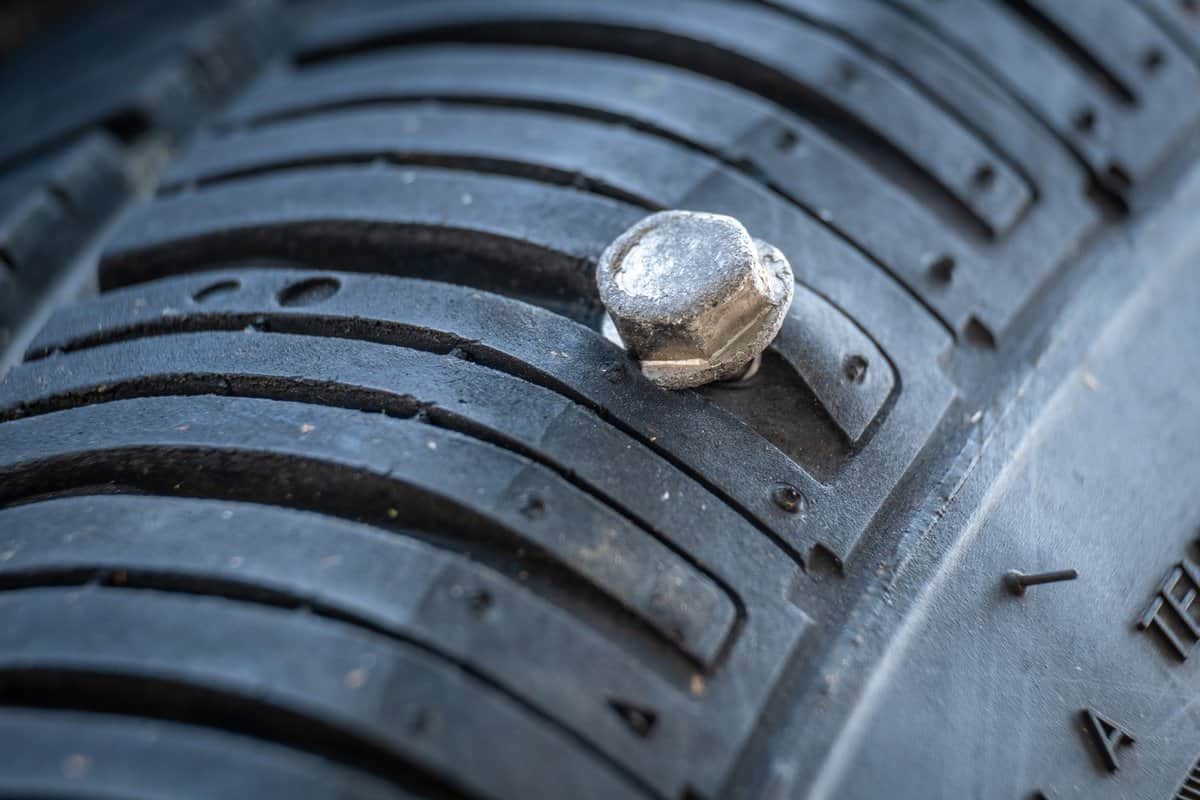
According to the Rubber Manufacturers Association (RMA) guidelines, any puncture located on the tire sidewall or the outer shoulder cannot be safely repaired. The structural integrity of a tire relies heavily on the sidewall flexing under vehicle weight and high speeds. Inserting a plug or patch in this area creates a high risk of catastrophic blowouts. If the screw is embedded outside the main tread pattern, do not attempt a DIY fix. You must replace the tire immediately.
Persistent Air Loss After Patching
Sometimes a screw puncture continues leaking air even after a proper plug-patch combination is applied. This usually indicates a secondary, hairline fracture, a bent wheel rim, or damage to the inner tire liner. Continuing to drive on a tire that slowly loses pressure compromises fuel economy and risks sudden failure on the highway.
Key Considerations for Professional Tire Repair Versus Replacement
When you visit a certified tire technician in 2026, industry standards dictate strict criteria for whether a tire can be saved or must be discarded. Understanding these parameters helps you make an informed financial and safety decision.
The Repairability Criteria
Professional repair shops follow the US Tire Manufacturers Association (USTMA) rules. A puncture must be smaller than one-quarter of an inch, located strictly within the tread area, and the tire must not have sustained prior internal damage from driving flat. Furthermore, tires with a speed rating of V, W, Y, or (Y) often have manufacturer restrictions that forbid traditional exterior plugs, requiring a combined plug-patch applied from the inside.
Cost and Time Estimates
Professional vulcanized patch-and-plug repairs typically cost between $20 and $40 and take approximately 30 minutes to complete. Conversely, if the screw caused irreparable damage, a brand-new passenger car replacement tire ranges from $100 to $250, excluding mounting and balancing fees. Investing in a professional assessment ensures that your vehicle complies with modern safety standards.
What If It Still Doesn’t Work?
If your temporary repair fails or a professional confirms the tire is beyond saving, follow these fallback steps to resolve the issue safely:
- Install the spare tire: If you are stranded, safely jack up the vehicle and swap the damaged wheel with your factory temporary or full-size spare tire.
- Limit your speed and distance: Drive under 50 miles per hour on a compact spare tire, and head directly to the nearest tire service center.
- Call roadside assistance: If you lack a safe location to change the tire or your vehicle does not come with a spare, contact your auto insurance provider or a service like AAA for a professional tow.
- Budget for replacement: Prepare for replacement costs ranging from $100 to $300 depending on your vehicle’s specific tire size and load rating.
- Check surrounding tires: Inspect the remaining three tires for uneven wear, low pressure, or hidden debris while the vehicle is being serviced.
Conclusion
Driving with a screw in your tire introduces immediate safety risks that should never be ignored. Whether you rely on a temporary roadside plug or visit a professional shop for a permanent interior patch, addressing the puncture quickly prevents severe tread separation and blowouts. According to verified research and expert sources from the USTMA, prioritizing prompt tread evaluation and adhering to strict repair limits are essential for maintaining vehicle control. Make your next actionable step a thorough tire pressure check and a visual inspection of all four treads today.
❓ Frequently Asked Questions
What is the very first thing I should do when I find a screw in my tire?
Leave the screw in place and check your tire pressure using a gauge. If the pressure is holding steady, you can carefully drive to a nearby repair shop at low speeds.
How can I tell if the screw puncture is repairable?
A puncture is generally repairable if it is located within the main tread pattern and is less than a quarter-inch in size. Punctures on the shoulder or sidewall are unsafe to patch.
Is it safe to use a can of fix-a-flat when there is a screw in the tire?
A sealant can provide a temporary fix to get you to a shop, but it can ruin the tire pressure sensors and make professional patching messy. A proper patch-and-plug from the inside is always preferred.
What happens if I ignore a screw in my tire and keep driving normally?
Ignoring the screw can lead to a slow leak turning into a sudden blowout at high speeds, which creates a severe safety hazard on the road.
Can I use a DIY plug kit on the side of the road?
If you have a plug kit and experience with it, you can plug the tire temporarily. However, driving to a professional mechanic ensures the internal structure of the tire is properly inspected.
Will driving on a tire with a screw damage the wheel or rim?
Driving on the tire while it is fully deflated or severely low on air can permanently damage your wheel rim, leading to much higher repair costs.