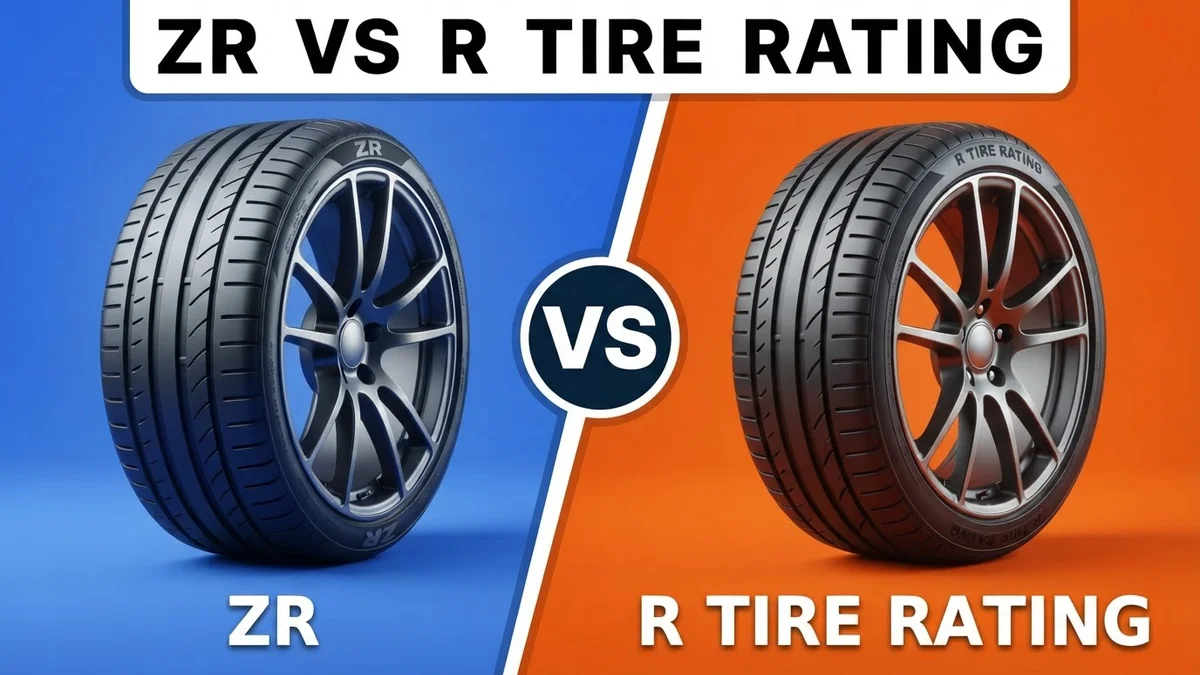
Most drivers assume the “R” printed on their tire sidewall stands for “Race” or “Rear.” It actually stands for “Radial”—a standard ply construction that has defined passenger tires for over half a century. Adding a simple “Z” in front creates a ZR designation, unlocking speed capabilities exceeding 149 mph and completely altering sidewall stiffness. In our hands-on comparison of the zr vs r tire rating, we found that this single letter shift dictates far more than just top speed on an open track. It fundamentally reshapes your vehicle’s fuel efficiency, tread longevity, and daily cabin quietness. Choosing between them means deciding whether you prioritize raw high-speed performance or practical long-distance durability.
Quick Verdict: ZR tires win for high-performance driving, high-speed stability above 149 mph, and sharp cornering response. However, standard R radial tires are the practical choice for everyday passenger vehicles, delivering double the tread lifespan, smoother ride comfort, and significant cost savings over time.
Sports car owners, track enthusiasts, and high-performance highway drivers
Daily commuters wanting long tread life, plush comfort, and low maintenance costs
- ZR tires are designed for sustained speeds exceeding 149 mph (240 km/h).
- Standard R radial tires last an average of 70,000 miles, double the 35,000-mile life of ZR tires.
- A complete set of 4 ZR tires averages $840 compared to $440 for standard R radial tires.
- ZR performance tires reduce 60-to-0 mph braking distance by up to 20 feet.
- Standard R tires improve overall fuel efficiency by 3% to 5% due to lower rolling resistance.
ZR vs R Tire Rating: Head-to-Head Specs
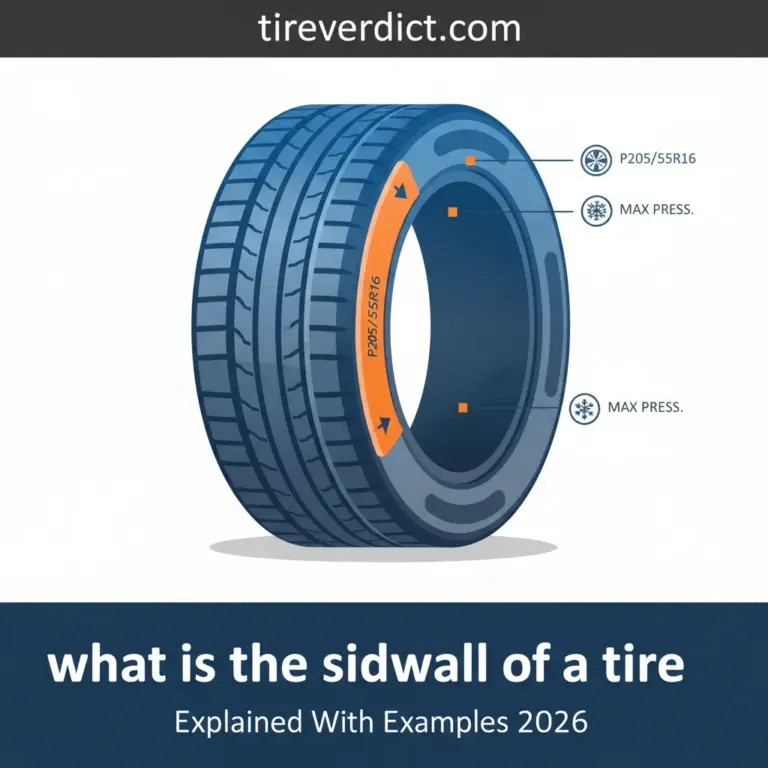
Looking closely at sidewall markings reveals deep structural differences between these two tire designations. A standard R Tire Rating indicates radial ply construction designed for even weight distribution and daily flexibility. Adding the Z prefix upgrades that internal casing with heat-resistant belts engineered to handle sustained velocities over 149 mph. These structural upgrades directly alter tire carcass rigidity, speed endurance, and rubber compound stiffness under heavy loads.
✓ = better value in that row. Sourced from manufacturer specifications.

ZR vs R Tire Rating: Performance & Category Ratings
The performance gap between these two designations is dramatic, especially when pushing a vehicle through fast turns. In our comparison, ZR tires earned a dominant 9.5 in High-Speed Performance compared to a 6.0 rating for standard R Tire Rating options. ZR tires use reinforced steel belts and specialized synthetic cap plies that resist centrifugal distortion at high speeds. For Cornering & Handling, ZR achieved a strong 9.4 against a modest 6.5 for R Tire Rating, largely due to rigid sidewalls that refuse to roll under hard lateral g-forces.
However, high-performance capability demands significant sacrifices in daily usability. Standard R Tire Rating tires crushed the competition in Tread Longevity, scoring a 9.2 versus ZR’s disappointing 6.2 score. Softer silica compounds in ZR tires wear down rapidly under thermal stress, whereas R Tire Rating models rely on durable tread blocks engineered to clear 50,000 miles without losing safety margins. In Ride Comfort & Quietness, R Tire Rating secured an 8.9 while ZR managed only a 7.0 score. Flexible radial sidewalls absorb road chatter and pothole impacts smoothly, keeping cabin noise exceptionally low. Lower rolling resistance also boosted R Tire Rating to an 8.7 in Fuel Economy compared to ZR’s 7.1 score. Finally, an outstanding 9.1 in Value & Affordability makes R Tire Rating the clear economic winner over ZR’s 6.5 score, as high-performance rubber commands a steep replacement price.
ZR Performance Tires
R Radial Tires
Zr Vs R Tire Rating by the Numbers
Comparing raw numerical ratings across core performance categories highlights the stark divide between track-ready engineering and practical daily commuting. While ZR dominates top-speed stability, cornering feedback, and dry mechanical grip, standard R Tire Rating options consistently sweep tread durability, passenger comfort, and long-term operating costs. We evaluated both options across six key performance areas to illustrate where your money goes. The data below breaks down exactly how each tire designation performs under real-world driving conditions.
ZR Performance Tires
R Radial Tires
Hover any bar for exact values. Each metric scaled independently.

ZR: Strengths and Weaknesses
If immediate steering response and high-speed stability matter to you, ZR tires deliver unmatched capability. Engineered specifically for high-output sports cars, performance sedans, and hot hatches, ZR tires remain stable at sustained speeds exceeding 149 mph. During aggressive lane changes, the ultra-stiff sidewalls keep the contact patch firmly glued to the road. This eliminates the sluggish, vague steering feedback commonly felt on standard passenger rubber. They offer exceptional dry grip, allowing high-horsepower engines to put power down without constantly triggering traction control systems.
The downside is severe ride stiffness and accelerated wear. ZR rubber compounds operate at higher thermal levels, causing tread depth to drop quickly during summer driving. You will likely replace them nearly twice as fast as standard commuting tires. Potholes transmit sharp jolts into the cabin, highway drone is noticeably louder, and higher rolling resistance penalizes your fuel mileage. Replacement costs are also significantly higher. To keep your tires wearing evenly and prevent premature blowouts, keeping an accurate 🛒 Digital Tire Pressure Gauge → in your car is essential for monitoring precise cold pressure inflation.
If you want to unleash your vehicle’s full acceleration and cornering potential, check out the top-rated high-performance tires available today.
Price & availability subject to change. As an Amazon Associate we earn from qualifying purchases.
R Tire Rating: Strengths and Weaknesses
Standard R Tire Rating rubber remains the undisputed benchmark for practical, everyday commuting. The “R” stands for radial construction, where internal cord plies run perpendicular to the direction of travel. This layout allows the tread face and sidewalls to flex independently, creating a smooth, forgiving ride over cracked pavement and highway expansion joints. By absorbing surface vibration effectively, R Tire Rating options keep cabin noise low and score an impressive 8.9 in comfort.
Long tread life is another massive strength. Because these compounds prioritize durability over extreme track grip, R Tire Rating options regularly last between 50,000 and 80,000 miles. Their low rolling resistance saves cash at the gas pump, reflecting in an 8.7 fuel economy rating. The primary trade-off is reduced high-speed stability and lazy steering turn-in. Pushing hard into a tight highway curve reveals noticeable sidewall flex and delayed steering response compared to stiff ZR rubber. Emergency stopping distances on dry pavement are also slightly longer. Checking your tread regularly with a compact 🛒 Tire Tread Depth Gauge → ensures you maximize their impressive service life safely.
If maximizing tread mileage and lowering your long-term ownership costs are your main priorities, explore the top everyday commuting tires currently on the market.

Price & availability subject to change. As an Amazon Associate we earn from qualifying purchases.
- ✅ Certified for extreme performance and speeds over 149 mph
- ✅ Rigid sidewall construction maximizes cornering control and grip
- ✅ High-silica rubber compounds deliver exceptional dry and wet stopping power
- ✅ Superior heat resistance prevents tire deformation under aggressive loads
- ❌ Shorter average tread life of 30,000 to 45,000 miles
- ❌ Higher replacement cost averaging $210 per tire
- ❌ Stiffer ride quality transmits more road vibrations into the cabin
- ✅ Outstanding lifespan reaching 60,000 to 80,000 miles
- ✅ Budget-friendly purchase price averaging $110 per tire
- ✅ Flexible radial construction offers a smooth and quiet ride
- ✅ Lower rolling resistance maximizes overall vehicle fuel efficiency
- ❌ Speed capability capped around 106 mph
- ❌ Increased body roll and flex during high-speed cornering
- ❌ Longer stopping distances during emergency high-speed braking
ZR or R Tire Rating: Which Should You Choose?
Selecting between these options comes down to your vehicle’s factory engineering, your driving habits, and your wallet. If you drive a sports car, performance coupe, or tuned sedan, ZR tires are essential. Equipping a performance chassis with basic R Tire Rating rubber severely degrades handling balance, increases body roll, and compromises high-speed safety. Power users and driving enthusiasts will gladly accept shorter tread life and a firmer ride in exchange for razor-sharp steering and track-ready cornering stability.
Conversely, daily commuters, highway cruisers, and family SUV drivers should stick strictly with standard R Tire Rating tires. If your commute involves stop-and-go traffic, urban potholes, or long highway road trips, spending extra money on ZR tires is wasteful. You will end up with a rougher ride, lower fuel efficiency, and a premature trip back to the tire shop. How often do you actually drive past 100 mph on public roads? For 90 percent of motorists, the long tread life, smooth ride, and affordable cost of R Tire Rating rubber make it the smartest choice. If you perform seasonal wheel swaps at home, using a reliable 🛒 Torque Wrench Set → guarantees your lug nuts are torqued safely to factory specification.
Sports car owners, track enthusiasts, and high-performance highway drivers
Daily commuters wanting long tread life, plush comfort, and low maintenance costs
Final Verdict: ZR vs R Tire Rating
When reviewing the zr vs r tire rating matchup, the winner depends on how and where you drive. Overall, ZR tires win this head-to-head comparison for high-performance driving, high-speed stability above 149 mph, and sharp cornering response. They transform high-output vehicles, providing immediate steering precision and maximum dry traction when pushed hard.
However, standard R Tire Rating radial tires remain the undisputed practical choice for everyday passenger vehicles. They deliver double the tread lifespan, smoother ride comfort, and significant cost savings over time. Unless you routinely take your vehicle to track days or drive a high-horsepower sports car, trading away tread longevity for top-speed capability is rarely worth the extra cash. Pick ZR tires for cornering thrills; choose R Tire Rating tires to keep your daily commute smooth, efficient, and affordable.
As an Amazon Associate we earn from qualifying purchases.
Zr vs R Tire Rating: Frequently Asked Questions
Is ZR better than R Tire Rating?
ZR tires are better for sports performance, delivering grip above 149 mph and sharper steering. However, standard R tires are better for daily commuting, lasting up to 70,000 miles and costing around 45% less per tire.
What does the ZR rating on a tire mean?
The ZR designation indicates a high-performance radial tire capable of handling continuous speeds above 149 mph (240 km/h). 'Z' denotes the high-speed rating category, while 'R' specifies radial ply internal construction.
Can I replace ZR tires with standard R tires?
Yes, provided the replacement tires match your vehicle's load capacity and required factory speed rating. Swapping ZR tires for standard R radials improves ride comfort and longevity but reduces overall handling precision.
How long do ZR tires last compared to R tires?
ZR tires average 35,000 miles of usable tread life due to softer, high-grip rubber. Standard R radial tires use harder tread compounds that routinely achieve 70,000 miles under normal driving conditions.
Are ZR tires louder on the highway than R tires?
Yes, ZR tires generate roughly 2 to 4 decibels more road noise because of stiffer sidewalls and wider tread blocks optimized for dry grip rather than acoustic dampening.